




One of the reasons why India lags in science research is the non-availability of scientific equipment and instruments. While national institutes and eminent university departments procure state-of-the-art instruments costing crores of rupees from generous funds they receive, remotely located small colleges, research institutes and labs can hardly do cutting edge research due to lack of funds for purchasing instruments. This lopsided scattering of research equipment facility in certain specific locations and structurally fragmented scenario further create imbalance by denying opportunity to bright minds, who have landed in institutions located in the backwaters and now languish there. Another phenomenon regarding the unauthorised gatekeeping of important equipment by a few scientists who do not allow others to use it, guarding it like personal property, is also prevalent. The acquisition of advanced tools is seen as both status symbol and substance of scientific capability and are often made inaccessible to others. Despite heavy investment in building research infrastructure over the last three decades, many of these instruments remain under-utilised, unknown to researchers beyond their host labs, or effectively inaccessible to scientists who might put them to productive use—factors detrimental to the research ecosystem.
This dynamic has been documented through numerous real-world accounts, including a series of case studies shared by I-STEM’s National Coordinator, Dr Harilal Bhaskar. In “The Vanishing NMR: A Rs 2 Crore Comedy of Errors in Indian Research”, an NMR spectrometer purchased at considerable expense remained effectively inaccessible because no trained operator was available and no booking system was in place. Another story, “The Curious Case of the Clone HPLCs”, describes how multiple neighbouring institutions purchased similar chromatography systems rather than sharing one located nearby. These narratives highlighted the acute challenge of optimum and fair use of lab equipment.
It was to address this challenge that the Indian Science, Technology and Engineering Facilities Map (I-STEM) was conceived. In 2019, the office of the Principal Scientific Adviser (PSA) initiated consultations across ministries and scientific departments, including Department of Science & Technology (DST), Department of Biotechnology (DBT), Council of Scientific and Industrial Research (CSIR) and Indian Council of Medical Research (ICMR), to explore ways to make laboratory instruments accessible beyond institutional walls. I-STEM was launched in January 2020 and is operationally hosted at the Indian Institute of Science (IISc), Bengaluru. I-STEM is an e-governance platform aimed at cataloguing publicly funded scientific instruments across the nation, making them discoverable and enabling transparent, online booking and utilisation by researchers, startups and industry users. It provides a single national portal through which scientific infrastructure funded by various ministries and agencies can be mapped, accessed and shared.
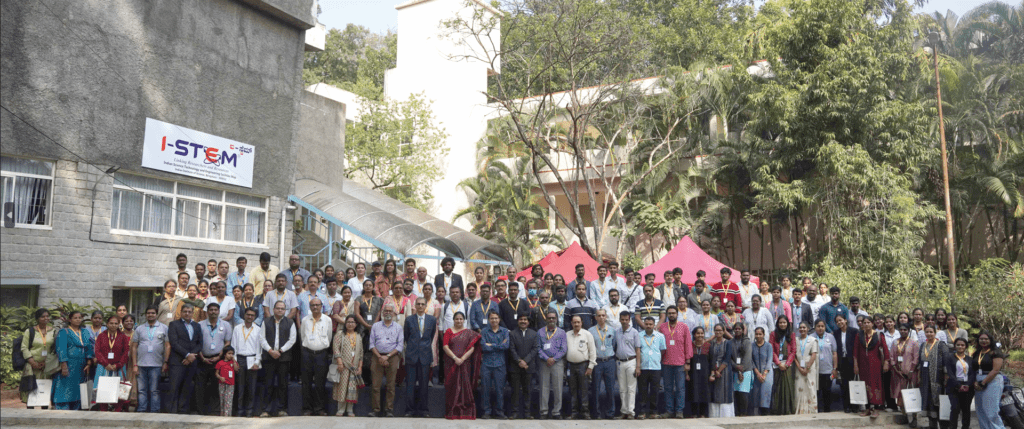
Image Courtesy: PIB
The vision of I-STEM is to move Indian science from the older practice of ‘every lab should own everything’ to a more collaborative, networked model in which scientific instruments are treated as shared national assets. In the language of modern platforms, I-STEM can be considered to be the ‘Zomato of instruments’—a searchable, transparent marketplace that connects users with appropriate facilities wherever they may be.
THE ARCHITECTURE OF I-STEM
The operational model of I-STEM consists of several key steps. Universities, research institutes, government labs and other funded entities register their laboratory and instruments on the portal. Each instrument is listed with details such as specifications, year of commissioning, funding source, location, operator contact, consumables and usage charges. Users can search for equipment by instrument type, location, availability and book time slots through an online reservation mechanism. Details of trained operators (if available) and consumables required are provided to help plan experiments. Online logs allow recording of bookings, usage hours and machine status. The portal also provides handbooks and Standard Operating Procedures (SOPs)-for institutions, operators and users- to standardise listing and booking protocols. Through these features, I-STEM streamlines access and ensures that instruments serve a wider community beyond their home labs.
I-STEM METRICS RELEASED IN MID-2025
Within five years, the portal has registered 80,000 user-researchers, including academicians, doctoral students, industry scientists and innovators associated with start-ups tens, of thousands of instruments and over a thousand institutions. Different government records and I-STEM dashboards reported more than 26,000 devices listed across disciplines including physics, chemistry, life sciences, materials science and engineering. Instruments listed came from grants awarded over the previous 15-20 years. These instruments were hosted by more than 3,300 institutions spanning all Indian states and union territories including central universities, state universities, IITs, NITs, research councils and private research entities as participants.
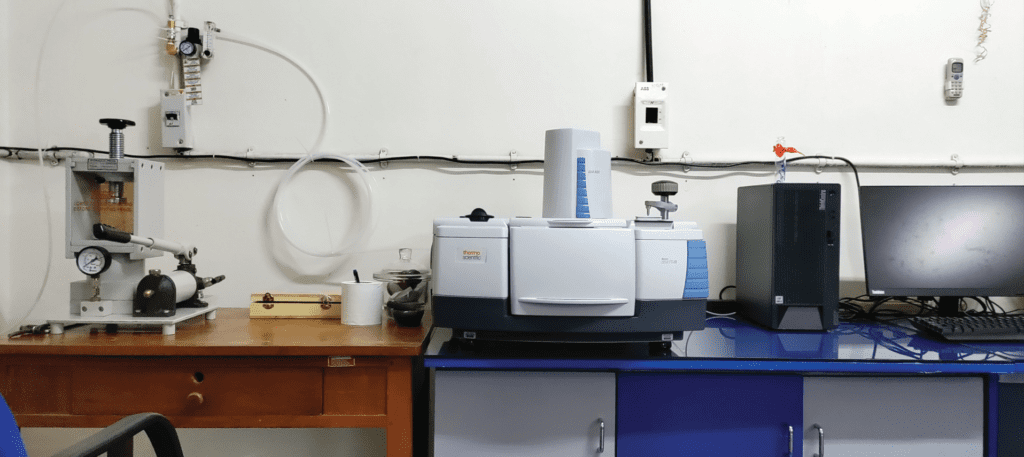
Image Courtesy: i-STEM
The catalogue on the I-STEM portal spans a wide range of domains. Users can find high-end analytical instruments such as Nuclear Magnetic Resonance (NMR) spectrometers, Transmission Electron Microscopes (TEMs), X-Ray Diffractometers, Mass Spectrometers and Genomic Sequencers, alongside mid-range equipment like HPLCs, GC-MS systems, FTIR spectrometers and clinical lab analyzers.
I-STEM is thus one of the largest central catalogues of scientific infrastructure in India’s history. In many cases, instruments that were previously unknown outside institute walls became visible to researchers nationwide via the portal’s search and filter functions.
THE INSTITUTIONAL MANDATE AND GOVERNMENT ENGAGEMENT
From its inception, I-STEM was intended to transcend institutional silos. This ambition reflected a broader shift in how the Indian government perceives research infrastructure: not as isolated assets owned by individual labs but as shared national resources. Multiple official documents and government releases emphasise this shift.
The portal itself emerged from coordination among multiple ministries and funding agencies. While each ministry continues to fund instruments within its sectoral research domain, their alignment on I-STEM demonstrates a shared commitment to transparency and access. Various government press releases (for example, from the Press Information Bureau in 2021 and 2022) noted that instruments procured from government funding must be registered on the platform as a condition of reporting and that the PSA’s office would convene inter-ministerial review meetings to encourage participation.
Guidelines published on the portal also identify user categories-research scholars, industry scientists, startups and innovators-and provide information on booking workflows, costing and payment mechanisms. Institutional participation is voluntary but strongly encouraged through grant conditions and reporting linkages. Some funding agencies explicitly ask grant recipients to list instruments on I-STEM as part of project compliance and institutional offices of research & development (ORD) often coordinate listings as part of annual reporting requirements.
In addition to its technical platform, I-STEM has organised workshops, webinars and operator training sessions across India, often in collaboration with state science and technology councils and university consortia. These outreach activities not only familiarise researchers with the portal’s features but also underscore the idea that scientific instruments can-and should-be discoverable and usable beyond individual labs.
USAGE PATTERNS AND RESEARCH IMPACT
Where instruments are listed and booked, the results can be transformative. Researchers from smaller universities, research institutes and even industry have reported successfully conducting high-value measurements through I-STEM bookings that would otherwise have been unviable due to cost or access limitations. For example, doctoral students from state universities have booked time on advanced scanning electron microscopes at national institutions, enabling high-resolution material characterisation as part of their thesis work. Similarly, researchers in biotechnology have accessed gene sequencers without having to procure their own expensive instruments.
Some patterns also emerge from instrument categories. Mid-range analytical equipment-like HPLCs, FTIR spectrometers and gel documentation systems-tends to have higher utilisation compared with ultra-specialised instruments such as high-field NMRs and cryo-electron microscopes. This is not surprising: the former are broadly applicable across disciplines and have shorter measurement times, whereas specialised instruments often require dedicated operators and long experimental setups.
In terms of geographic distribution, states with dense academic ecosystems—Karnataka, Tamil Nadu, Maharashtra and Delhi NCR—tend to have higher numbers of listed instruments. At the same time, participation has grown in states such as Odisha, Assam and Himachal Pradesh, reflecting the spread of research institutions beyond traditional centres. The portal’s ability to bring visibility to instruments in these regions is seen as a step toward reducing access inequalities.
CHALLENGES OF SHARED INFRASTRUCTURE: BEYOND THE PORTAL
While I-STEM has made remarkable inroads in cataloguing infrastructure, the gap between listing and active utilisation highlights broader challenges. Listing an instrument on a portal does not in itself guarantee its use; operational issues such as lack of trained operators, uncertainty about consumables, unclear pricing structures and local scheduling constraints continue to affect bookings.
Administrative processes within universities, such as multiple permissions, security requirements, or scheduling bottlenecks can delay or deter potential external users. Physical distance also matters. India’s vast geography means that a researcher in the northeast may find it difficult to physically transport samples or travel to a lab in the south. While the portal enables discovery, logistics remain a practical constraint in many instances.
TOWARDS A SHARED SCIENTIFIC LANDSCAPE
Today, I-STEM stands as a unique experiment in Indian e-governance, a national attempt to make scientific infrastructure available to all qualified users. Its existence reflects a shift in thinking about research instruments—from private resources held within institutional walls to shared assets that can amplify India’s scientific productivity. This is sure to have an impact on the culture of doing science in India.
The sheer scale of I-STEM’s catalogue—tens of thousands of devices listed and thousands of institutions participating—indicates broad engagement. At the same time, patterns of utilisation underscore that discovery must be complemented by operational readiness, responsive coordination and a work culture that views instruments not as trophies to be guarded but as tools to be applied wherever they are needed.
As the landscape of Indian science evolves—with new funding schemes, interdisciplinary research clusters, industry-academia collaborations and an increasingly mobile generation of researchers—the role of shared platforms like I-STEM is likely to grow. In this sense, I-STEM is not merely a portal; it is part of the infrastructure of knowledge itself—an attempt to weave individual laboratories into a national fabric of scientific work.
In bringing together visibility, booking and usage logs on a single platform, I-STEM demystifies what was once hidden. For researchers, this means access to tools they may never have known existed, for institutions, it means recognition of their contributions to a broader ecosystem and for Indian science as a whole, it means that the true value of publicly funded instruments begins to be realised not in isolation, but in collective use.
What remains clear is that Indian science is gradually moving toward a landscape in which shared infrastructure, transparent discovery and networked research are becoming practical realities. In that sense, I-STEM’s journey from an e-governance idea to a working national catalogue represents a significant cultural shift—one that reimagines how science gets done in India, one instrument at a time.
*Dr Jagdish Rai is Associate Professor, Forensic Biological Science, Panjab University, Chandigarh. He writes on institutional culture, e-governance and science popularisation, besides doing core research in applications of DNA and protein science in Forensics. Prof Jayanti Dutta is Professor at Panjab University, Chandigarh, and Programme Director, UGC-Malaviya Mission Teacher Training Centre at the University.