




S&T IN UNION BUDGET 2026-27
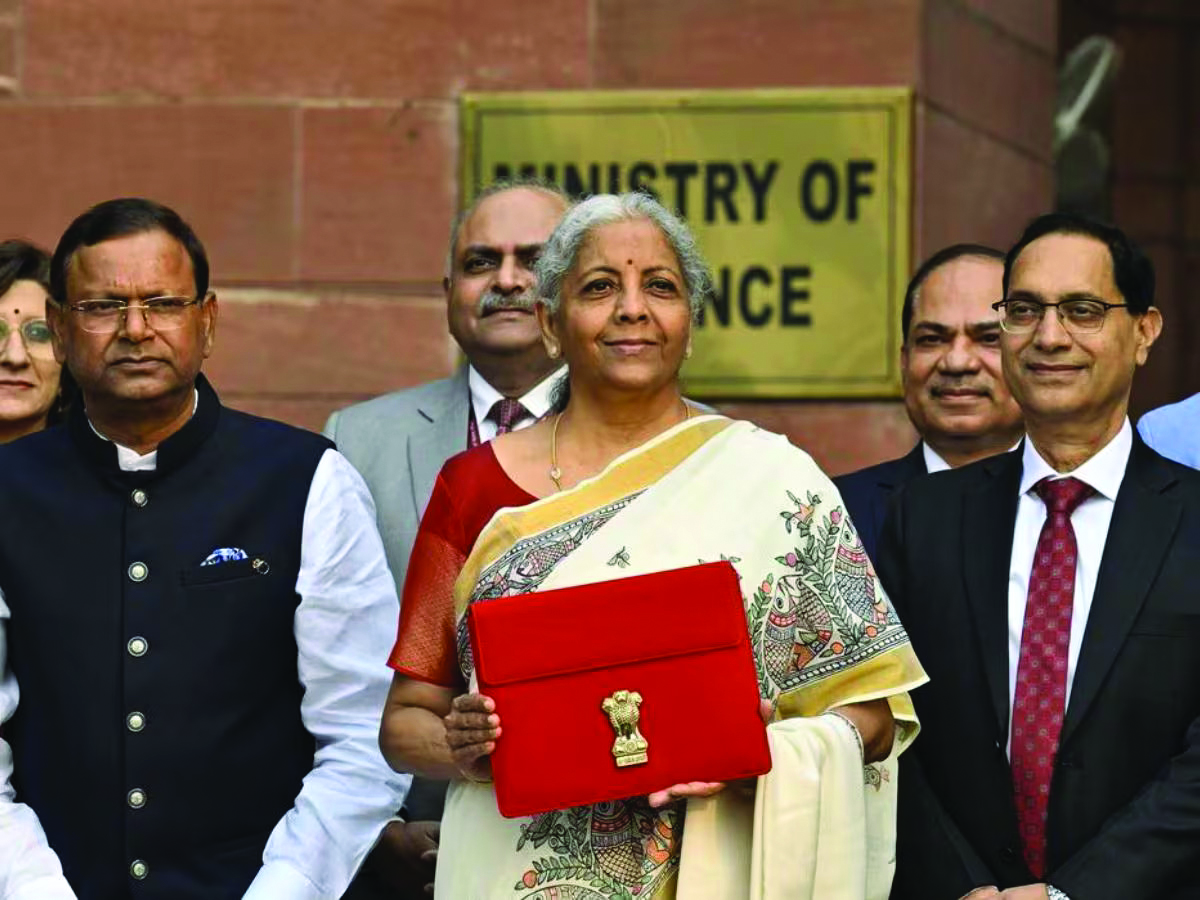
The Union Budget 2026-27 presented by Finance Minister Nirmala Sitharaman on 1 February has a special significance this time. Through this budget, the Narendra Modi government has given a push to strengthen tech education, industry, start-ups, healthcare, energy and national security—which indicates a model of state-led capacity building.
The Budget indicates India’s push for strategic self-reliance in minerals, energy and high-end science infrastructure.
Focussing on mission-mode programmes, the Department of Science and Technology has a Budget Estimate of about Rs 28,000 crore, while the Department of Biotechnology is allocated around Rs 3,400 crore and the space programme with a strong allocation exceeding Rs 13,700 crore.
The Department of Scientific and Industrial Research, which oversees the Council of Scientific and Industrial Research (CSIR), has been allocated Rs 6,765.62 crore, up from Rs 6,657.78 crore in the 2025-26 BE. The increase is largely directed towards strengthening national laboratories under CSIR, reinforcing the focus on enhancing existing capabilities.
The National Quantum Mission, crucial for advancing quantum technology, has witnessed a rise in allocation of Rs 900 crore, compared to Rs 600 crore in the 2025-26 Budget Estimates (BE).
The government has given priority to energy transition in order to reduce risks from intermittency and import dependence.
In the nuclear sector, the government has extended the basic customs duty exemption on specified nuclear power equipment, including reactor components and absorber rods until 2035. The benefit will now apply to all nuclear power plants, irrespective of capacity, signalling long-term policy backing for nuclear energy as a stable, low-carbon power source in India’s energy mix—which comes with the introduction of the Sustainable Harnessing and Advancement of Nuclear Energy for Transforming India (SHANTI) Act in December 2026 to allow private participation and meet India’s goal of 100 gigawatts of nuclear power.
Analysing the Budget, Dr Dinesh Kumar Aswal, Member, National Disaster Management Authority told Science India, “The extension of customs duty exemption on nuclear equipment till 2035, along with an allocation of ₹2,410 crore to the nuclear energy sector in Budget 2026, represents more than a routine fiscal measure—it is a strategic signal about India’s long-term energy architecture. Nuclear power, as a low-carbon, high-reliability baseload source, occupies a unique position in an electricity system increasingly dominated by variable renewables. By lowering the cost of importing critical, high-precision components and advanced systems that are not yet fully manufactured at scale within the country, the extended duty exemption directly reduces project costs, mitigates schedule risks, and improves the financial viability of new nuclear builds. Just as importantly, the long time horizon to 2035 provides policy stability—an essential ingredient for capital-intensive, technology-driven infrastructure sectors such as nuclear energy.”
Budget 2026 thus positions nuclear energy not merely as a power-generation option, but as a strategic scientific and industrial platform for a resilient, low-carbon India.
“From a scientific and technological perspective, these measures can accelerate three parallel objectives. First, they support energy security and grid stability by enabling expansion of firm, dispatchable, non-fossil power to complement solar and wind. Second, they strengthen India’s climate mitigation pathway, since nuclear energy offers large-scale, low-carbon electricity without the intermittency constraints of renewables. Third, they create a predictable demand environment for domestic industry to absorb advanced technologies, improve quality systems, and progressively indigenise critical components. In this sense, temporary facilitation of imports should not be seen as a retreat from self-reliance, but as a bridge toward building a deeper, more capable domestic nuclear manufacturing ecosystem,” added Dr Aswal, former Director, HS&EG, Bhabha Atomic Research Centre.
The FM announced the launch of India Semiconductor Mission (ISM) 2.0 to produce equipment and materials, design full stack Indian IP, and fortify supply chains. The focus will be on industry led research and training centres to develop technology and skilled workforce.
“The announcement of the launch of ISM 2.0 significantly strengthens India’s strategic build-up in the hardware ecosystems that underpin advanced AI systems. ISM 2.0 moves beyond fabrication incentives to address upstream and downstream vulnerabilities—equipment, materials, supply-chain fortification and, crucially, full-stack Indian intellectual property,” Uday Kumar Varma, former Secretary, Ministry of Information & Broadcasting (GoI) and an expert commentator on Public Policy and Media told Science India.

Image Courtesy: PIB
Regarding the provisioning of Rs 1,000 crore to this sector for FY 2026–27, Varma said, “Though modest relative to global semiconductor capital intensity, it signals policy continuity and institutional consolidation rather than episodic intervention. More consequential is the expansion of the Electronics Components Manufacturing Scheme (ECMS) outlay to Rs 40,000 crore, reflecting investment commitments already exceeding initial targets”.
In the Artificial Intelligence (AI) context, Varma added, “These measures are not peripheral but foundational. Advanced AI systems depend on high-performance accelerators, memory architectures, power management systems and advanced packaging technologies. Even partial domestic capability in design, materials science and supply-chain resilience reduces strategic exposure to external shocks. Complementing this, the new safe harbour provisions for IT and ITeS—including a substantially higher Rs 2,000 crore threshold and automated approval mechanisms—introduce tax certainty at scale, while the proposed tax holiday for foreign cloud providers operating data centres from India strengthens the country’s position as a global compute hub. Taken together, these measures integrate semiconductor policy, cloud infrastructure expansion, tax certainty and AI adoption into a coordinated industrial architecture.”
Another sector that the FM laid a special emphasis upon was India’s “Orange economy”. She highlighted that the country’s animation, visual effects, gaming and comics (AVGC) sector has been expanding rapidly and is projected to require two million professionals by 2030. To meet this demand, the Budget proposed supporting the Indian Institute of Creative Technologies, Mumbai, in setting up AVGC Content Creator Labs in 15,000 secondary schools and 500 colleges.
According to Prof Kishore M Paknikar, ANRF Prime Minister Professor at COEP Technological University and former Director, Agharkar Research Institute, Pune— at the core of the Budget is a clear shift that science is no longer viewed only as an academic pursuit, but as a capacity that must feed manufacturing, healthcare, energy, agriculture, and national security.
“One of the most explicit science-linked announcements in the Budget is the Biopharma SHAKTI initiative. It is designed as a multi-year effort to strengthen India’s capabilities in biologics, biosimilars, vaccines, and advanced biopharmaceutical manufacturing. The emphasis is not only on research, but also on clinical trials, regulatory science, and quality systems,” he said.
“This is a significant signal. India has long been strong in generic pharmaceuticals, but the future of healthcare lies in complex biologics, cell and gene therapies, and precision medicine. These areas require deep scientific expertise, long-term funding, and close coordination between laboratories, hospitals, regulators, and industry. If Biopharma SHAKTI is implemented with transparency and scientific rigour, it can help Indian universities and research institutes move closer to real-world health impact,” added Prof Paknikar, while speaking to Science India.
*The writer is Editor, Science India.