



NATIONAL SPACE DAY
On 23 August 2023, the world watched with admiration as India’s Chandrayaan-3 mission made a soft landing near the Moon’s south pole, a region no other country had reached. It was a moment of quiet triumph, a symbol of indigenous scientific strength, and a testament to India’s long-term commitment to building its own space programme. The government’s decision to declare this day as National Space Day was both symbolic and timely.
But as the celebration faded, it stirred an important question: Why do moments of indigenous scientific glory still seem so rare in India’s broader research and innovation landscape? Why must it take a lunar landing or a pandemic response to spotlight India’s deep potential? Can the spirit of Chandrayaan inspire breakthroughs across other vital sectors, from agriculture to artificial intelligence, from renewable energy to affordable healthcare technologies?
This article makes the case for multiplying such success stories by deepening support for original, fundamental, and locally relevant research. If we aspire to become not just a nation of scale, but a nation of bold scientific originality, we must act with urgency and clarity.
CHANDRAYAAN: A QUIET VICTORY OF SELF-RELIANCE
Chandrayaan-3’s achievement did not emerge overnight. It was built on decades of investment in Indian scientific institutions, a culture of frugality, and a belief in the long arc of mission-driven research. ISRO’s work shows how modest budgets and indigenous problem-solving can rival—and sometimes outshine—far better-funded global peers.
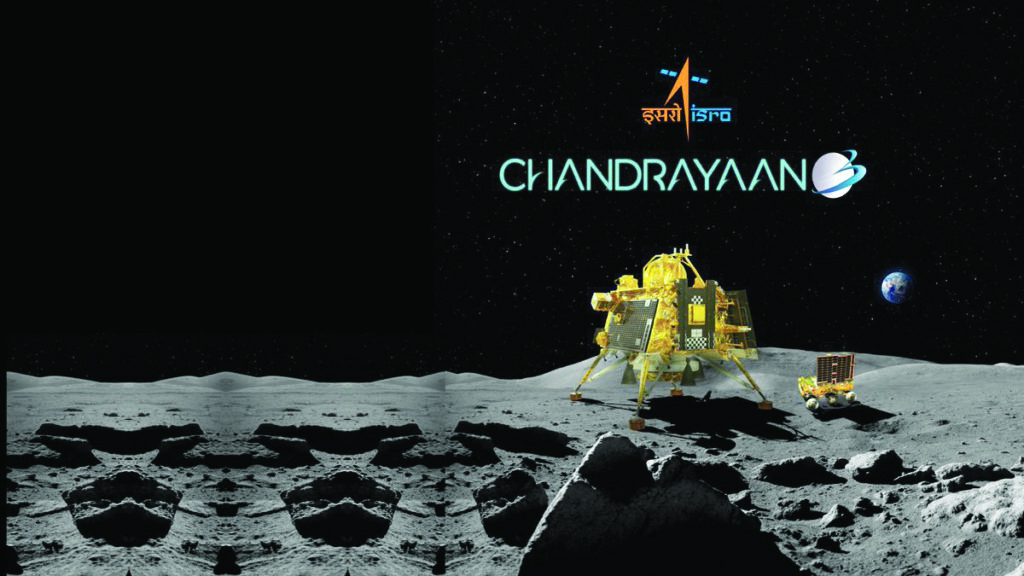
Image Courtesy: The European Space Agency
This was not just a technological feat. It was a validation of India’s ability to build complex, world-class systems through domestic talent and persistent institutional support. The success of Chandrayaan came without flashy declarations or billionaire-led space races. It was born from a publicly funded institution’s quiet, sustained effort.
Equally important is the model ISRO represents. Contrary to the belief that only private markets can drive innovation, ISRO has demonstrated that publicly funded, mission-oriented research backed by disciplined teams and ethical rigour can yield world-class outcomes. The scientific culture cultivated at ISRO deserves to be studied and replicated across other sectors.
COVAXIN: URGENCY MATCHED WITH SCIENTIFIC GRIT
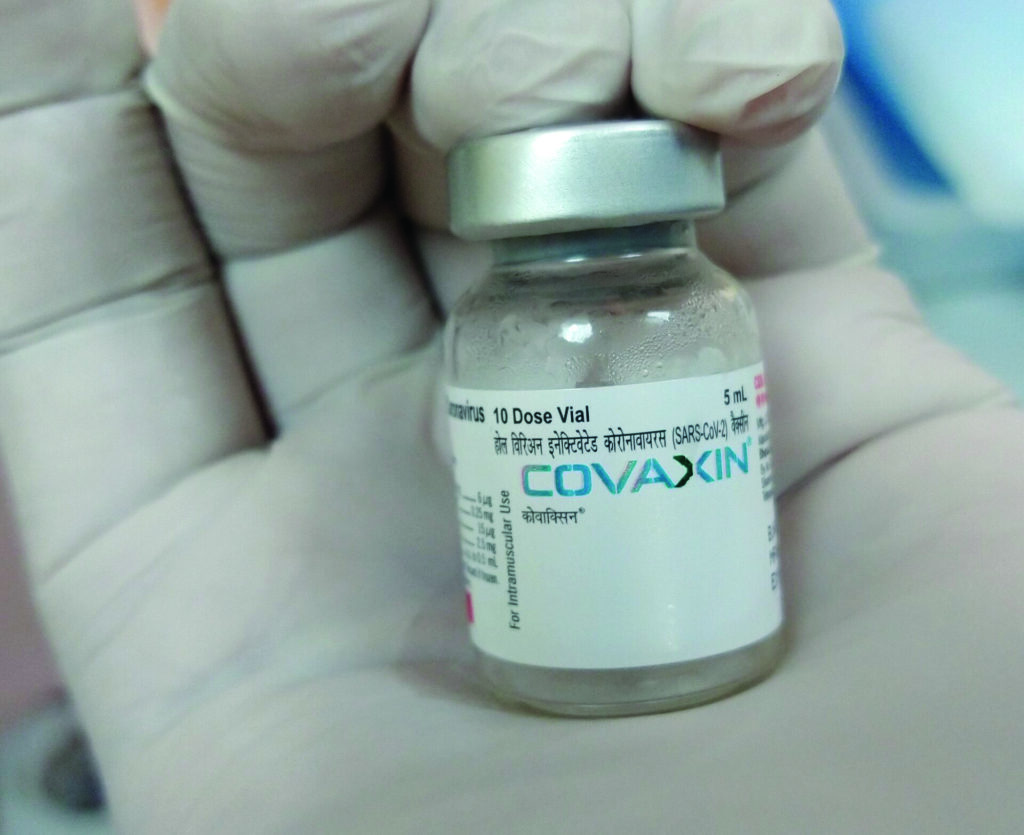
Amid a global pandemic, India once again demonstrated its capabilities through the development of Covaxin, its first indigenous COVID-19 vaccine. Bharat Biotech, in collaboration with ICMR (Indian Council of Medical Research) and the National Institute of Virology, built on time-tested vaccine platforms to develop, test, and manufacture Covaxin within months—an extraordinary achievement by any measure.
At a time when many nations waited for access to Western vaccines, India not only became self-reliant but also supplied millions of doses to developing countries through its Vaccine Maitri initiative. ‘Made in India’ became more than a label. It came to represent credibility, courage, and a commitment to global public health.
The stories of Chandrayaan and Covaxin—each remarkable in its own right—underscore a deeper truth: Indian science can deliver transformative results when institutions are empowered, talent is trusted, and missions are pursued with clarity and resolve.
BEYOND CELEBRATIONS: ADDRESSING SYSTEMIC GAPS
Despite these successes, such triumphs remain exceptions. In many strategic domains like artificial intelligence, semiconductor design, green technologies, and biotechnology, India continues to depend on imported tools, platforms, and frameworks. Even in sectors where India has global visibility, such as digital payments, our strengths are often rooted in adaptation rather than origination.
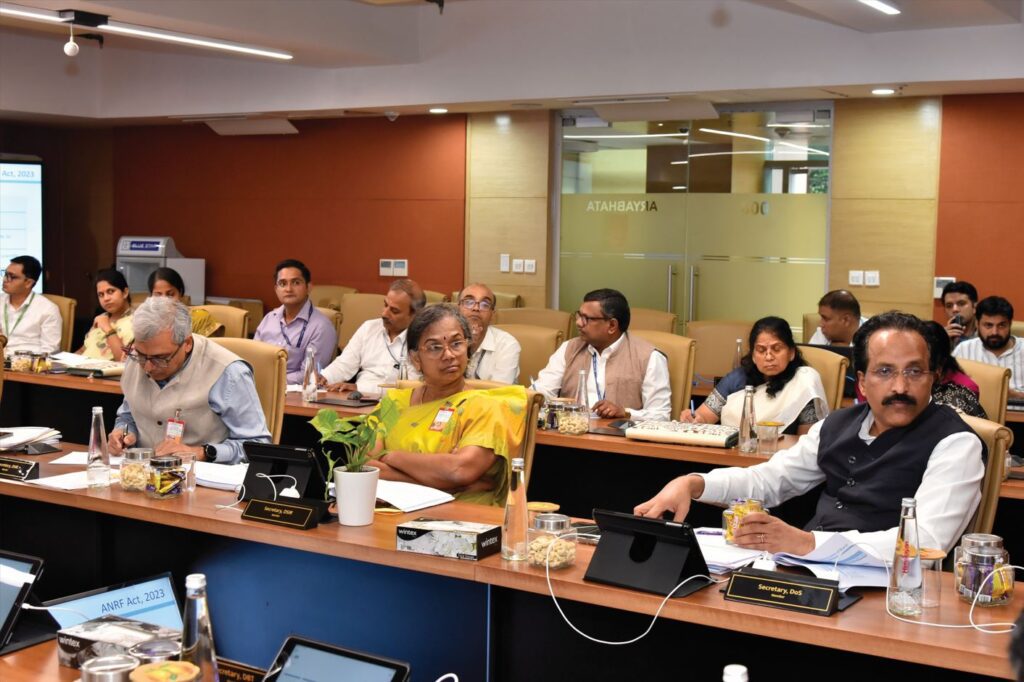
Image Courtesy: Anusandhan National Research Foundation
This paradox—abundant talent but limited originality—reflects structural constraints. Our research ecosystem is hindered by short-term pressures, bureaucratic complexity, fragmented funding, and a lack of coherent long-term priorities. Universities are overburdened with teaching loads, research labs lack modern infrastructure, and interdisciplinary work is still undervalued.
India’s definition of innovation is often distorted by metrics like startup valuations, unicorn counts, and foreign investment. However, true innovation also encompasses fundamental science, open-access knowledge, deep technology, and long-gestation ideas that may not yield immediate commercial success but are essential for national resilience.

Image Courtesy: Homegrown.co.in
There is also a psychological gap. Students are trained to crack entrance exams, not to ask original questions. The notion that scientific progress demands ambiguity, curiosity, and occasional failure has not fully taken root in most of our academic institutions.
RECLAIMING THE GROUND FOR FUNDAMENTAL RESEARCH
At the heart of every major breakthrough lies fundamental research—slow, uncertain, and often invisible. It may lack glamour, but it builds the intellectual and experimental foundation upon which applied science and technology rest. A scientific ecosystem without strong basic research is like a banyan tree without roots—large, but unsustainable.
India has a rich tradition of such scholarship. Aryabhata’s astronomy, Bhaskaracharya’s mathematics, Panini’s linguistics, and Sushruta’s medical texts reflect a time when knowledge was pursued for its own sake. This spirit of inquiry needs revival in contemporary laboratories.
Today, in areas like quantum mechanics, synthetic biology, energy storage, and cognitive science, Indian researchers show potential. But they frequently struggle with inadequate funding, insufficient facilities, and weak mentoring. Applied research is necessary, but it cannot substitute for the deep theoretical insights and conceptual clarity that fundamental research provides.
ISRO’s success was built on decades of capability development: Experimental platforms, simulations, indigenous codebases, and systems thinking. Similar long-term investment is needed in climate modelling, neuroscience, materials science, and frontier areas like brain-machine interfaces.
India must also prioritise scientific instrumentation. We continue to depend on imported lab tools, from microscopes to spectrometers. A focused initiative to design and manufacture research-grade scientific instruments domestically could transform both academia and industry.
CAN ANRF AND THE RDI SCHEME TRANSFORM THE LANDSCAPE?
Recent policy initiatives offer a rare opportunity to reshape India’s research future. The Anusandhan National Research Foundation (ANRF) is intended to fund high-impact research across disciplines and forge stronger links between academia, industry, and government.
The Rs 1 lakh crore Research and Development Innovation (RDI) scheme signals an ambitious commitment to strategic, outcome-driven, and mission-aligned research. If implemented thoughtfully, these reforms could address some of the long-standing bottlenecks in India’s innovation ecosystem.
These schemes must adhere to certain guiding principles: Autonomy in setting research agendas, free from micromanagement; stability of funding, enabling long-term, high-risk research; meritocracy in evaluation, rewarding originality over volume; inclusivity, with support extended to tier-2 cities and state universities; and learning from global models such as DARPA (Defense Advanced Research Projects Agency of the US), Fraunhofer Institutes of Germany, and Japan’s trust-based science funding.
ANRF must evolve beyond a grant agency into a national thought-leadership body. It should help define grand challenges for India’s future. Should India lead in next-generation antibiotics? In climate-smart agriculture? In multilingual and culturally rooted AI? These are not abstract questions but urgent strategic choices.
For instance, ANRF could pilot 10-year challenge grants, such as building a dengue-proof city using biotechnology, water engineering, and public health modelling. Such high-risk, high-reward missions could galvanise collaboration across disciplines.
A public database of funded projects, outputs, patents, peer-reviewed publications, and real-world impact could bring transparency, accountability, and inspiration for young researchers. This also strengthens trust in Indian peer review and regulatory expertise, building an ecosystem of scientific confidence.
LESSONS FROM OTHER SECTORS
India has already shown that indigenous innovation is possible. In agriculture, the Green Revolution changed food security, and more recent advances like neem-coated urea, drip irrigation, and Zero Budget Natural Farming have reached millions of farmers.
However, agricultural research remains risk-averse. We need breakthroughs in soil microbiomes, pest-resilient crops, biofertilizers, and agroecological models. India’s biodiversity, traditional crops, and ethno-botanical knowledge are underutilised as assets for sustainable innovation.
In environmental science, local solutions like the Nalgonda fluoride removal technique and solar cookers have existed for decades but remain poorly scaled. In the domain of frugal innovation, devices like the Mitticool clay fridge and the Jaipur Foot show how empathy can inspire design.
Digital infrastructure offers another bright spot. Platforms like Aadhaar, UPI, and ONDC have redefined public service delivery at scale. Indigenous technology programs, such as the Shakti processor from IIT Madras and the NavIC satellite navigation system, demonstrate a growing sense of self-reliance.
In defence, DRDO-led programmes such as the Light Combat Aircraft (Tejas), Akash missiles, and radar systems highlight growing confidence. To lead globally, India must now invest in cyber-physical systems, smart materials, autonomous platforms, and military-grade electronics.
REVITALISING RESEARCH THROUGH STRUCTURAL CHANGE
To produce many more Chandrayaans and Covaxins, India must encourage curiosity-driven inquiry in universities, offer flexible grants for young researchers and bold ideas, break disciplinary silos through joint projects and shared facilities, support failure-tolerant research ecosystems, expand research infrastructure beyond elite cities, establish innovation districts where academia, startups, and industry converge, and translate research into products, policies, public services, and public understanding.
PLANTING THE SEEDS OF IMAGINATION
Scientific imagination must begin early—in classrooms, homes, and public spaces. Initiatives like Atal Tinkering Labs, Vigyan Jyoti, and National Science Day are steps forward. However, they must be more closely linked to community participation and grassroots knowledge.
The story of a schoolgirl in Tamil Nadu who built a satellite model from scrap, or a Gujarat teenager who devised an irrigation sensor for his father’s farm, are not exceptions. They are signals of what is possible when curiosity meets encouragement.
Science communication in local languages, mobile science exhibitions, illustrated books, and village science clubs can bring abstract concepts to life. Artists, poets, storytellers, and scientists must collaborate to make science accessible and aspirational.
Folk wisdom, games, regional history, and local stories of invention can be integrated into teaching materials to create a uniquely Indian model of scientific literacy. We need not mimic others when we have our own repository of imagination.
TOWARDS A SELF-CONFIDENT SCIENTIFIC CULTURE
Union Minister Piyush Goyal’s appeal for startups to move beyond e-commerce is timely. Innovation is not imitation. It means asking questions no one else is asking and pursuing them with rigour and imagination.
India’s self-reliance mantra, Atmanirbhar Bharat, must now be coupled with Atmavishwasi Vigyan—a self-confident scientific culture. This confidence must come not from slogans, but from deep, sustained investments in original thinking.
Imagine India building a vaccine platform that responds to emerging zoonotic threats, or developing a climate-neutral fertilizer that transforms agriculture in the tropics, or pioneering an AI framework rooted in Indian languages and ethical systems. These visions are not fantasies. They are choices—waiting to be made.
CONCLUSION: FROM NATIONAL SPACE DAY TO NATIONAL ASPIRATION
As we celebrate the National Space Day, let it remind us of what India can achieve when science is trusted, talent is empowered, and missions are pursued with conviction. Chandrayaan was not just a moon mission. It was a message.
The real question now is not whether we can, but whether we will. Will we carry this spirit into our classrooms, our research labs, our policies, and our public conversations? Will we believe in our thinkers, fund our dreamers, and remove the barriers that stand in their way?
Let the next Chandrayaan not surprise us. Let it be the natural result of a culture that expects brilliance, supports it, and celebrates it. India’s next breakthroughs must not be rare. They must become the norm.
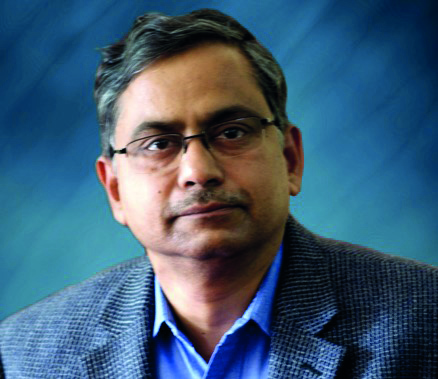
*The writer is the former Director, Agharkar Research Institute, Pune, and Visiting Professor, IIT Bombay and Adjunct Professor, Institute of Chemical Technology, Mumbai.