


Author: Dr Kishore Paknikar


Dr Mahendralal Sircar presents a fascinating puzzle in the history of Indian science. Trained at Calcutta Medical College, he became a successful physician and one of India’s early champions of experimental science. In 1876, he founded the Indian Association for the Cultivation of Science, better known as IACS. Yet the same physician became one of the strongest advocates of homoeopathy in India. How do we understand these two sides of the same man? Was a champion of experimental science somehow abandoning science when he embraced homoeopathy? Or did Sircar see no contradiction between questioning established medical opinion and cultivating experimental…
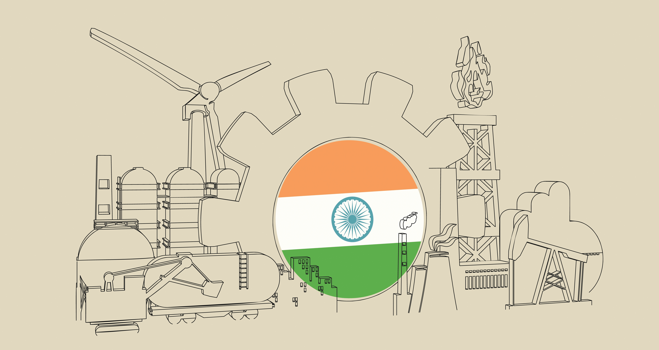
When India celebrates 100 years of independence in 2047, the nation envisions itself not only as an economic powerhouse but also as a global intellectual engine, confident in its science, proud of its technology, and open to sharing its innovations. Under the Viksit Bharat 2047 vision, a fully developed India is imagined as a place where prosperity is created through ideas and shared through collaboration. Becoming a developed nation requires more than high GDP or modern infrastructure. It requires scientific self-belief, resilient institutions, and a continuous cycle of learning and innovation. How effectively India builds and connects its research, development,…

The recent India AI Summit held in New Delhi has generated widespread interest across the country, particularly among students and young professionals. The discussions around indigenous AI platforms, emerging applications, and future possibilities have created a strong sense of excitement. For many, it marks a shift in perception, with India moving from being largely a user of artificial intelligence to becoming an active contributor. At the same time, this visibility has brought a new set of questions into homes, classrooms, and workplaces. Students are trying to understand what this means for their future. Parents are wondering how to guide their…

NATIONAL SPACE DAY On 23 August 2023, the world watched with admiration as India’s Chandrayaan-3 mission made a soft landing near the Moon’s south pole, a region no other country had reached. It was a moment of quiet triumph, a symbol of indigenous scientific strength, and a testament to India’s long-term commitment to building its own space programme. The government’s decision to declare this day as National Space Day was both symbolic and timely. But as the celebration faded, it stirred an important question: Why do moments of indigenous scientific glory still seem so rare in India’s broader research and…

IN FOCUS: | MACS-AGHARKAR RESEARCH INSTITUTE, PUNE In a country where science is often discussed in terms of missions, mega laboratories, and cutting edge technologies, it is easy to forget that enduring scientific institutions are not built overnight. They grow through patience, purpose, and a steady commitment to society. Few Indian institutes embody this spirit as clearly as the Agharkar Research Institute (ARI), Pune, functioning under the Maharashtra Association for the Cultivation of Science (MACS). Nestled in the heart of Pune’s academic precinct, ARI stands today as one of India’s oldest continuously functioning multidisciplinary research institutes in the life sciences.…
TRIVIA Certain dates acquire a quiet distinction in the history of science, and February 28 is one such day. In India, it is observed as the National Science Day to commemorate the announcement of the Raman Effect on 28 February 1928 by C V Raman at the Indian Association for the Cultivation of Science (IACS) in Kolkata. By demonstrating that a small fraction of scattered light changes its wavelength after interacting with matter, Raman revealed how light can carry a molecular signature of substances. This insight laid the foundation of modern spectroscopy and earned him the Nobel Prize in Physics…