





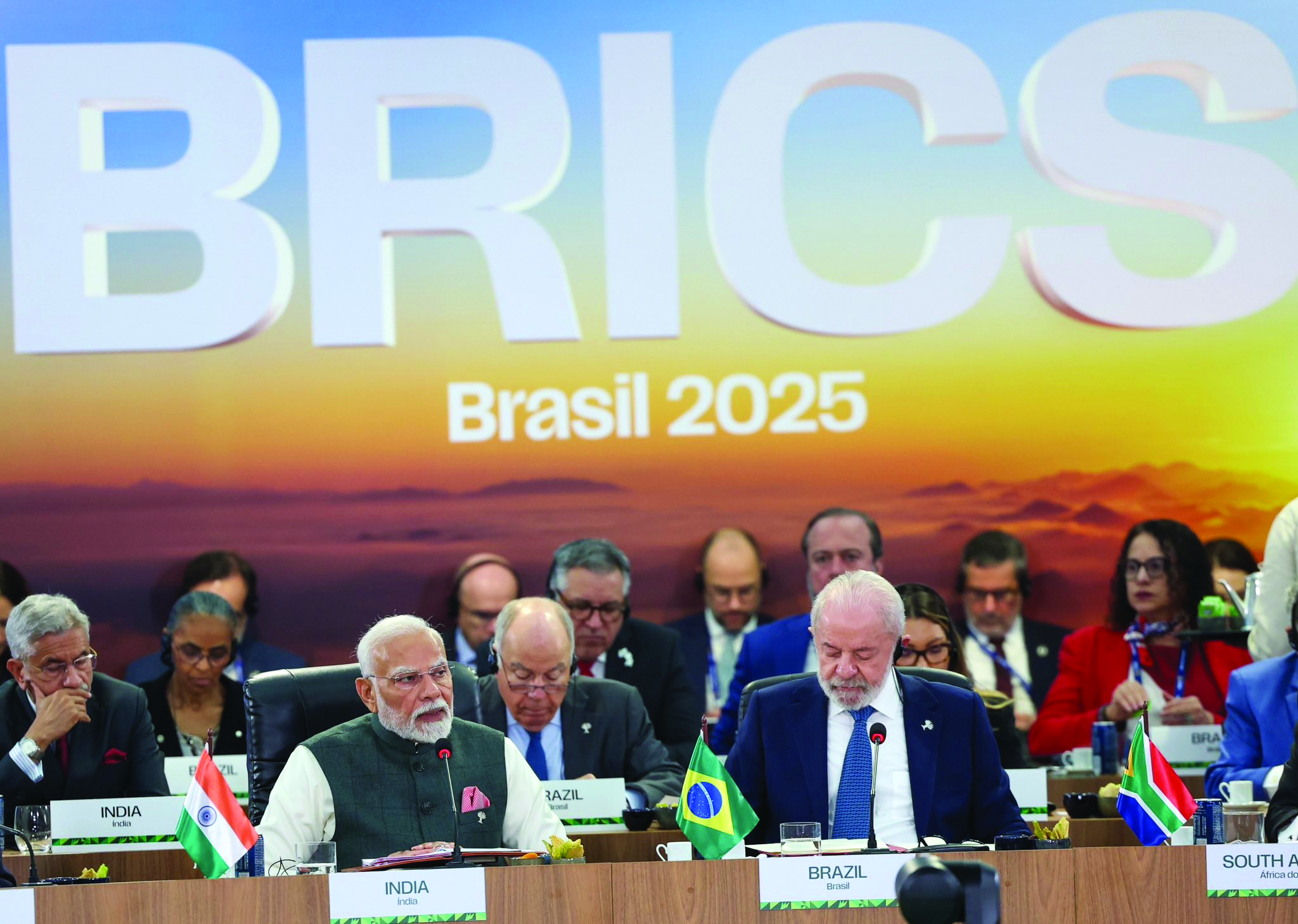
Image Courtesy: PIB
SCIENCE DIPLOMACY
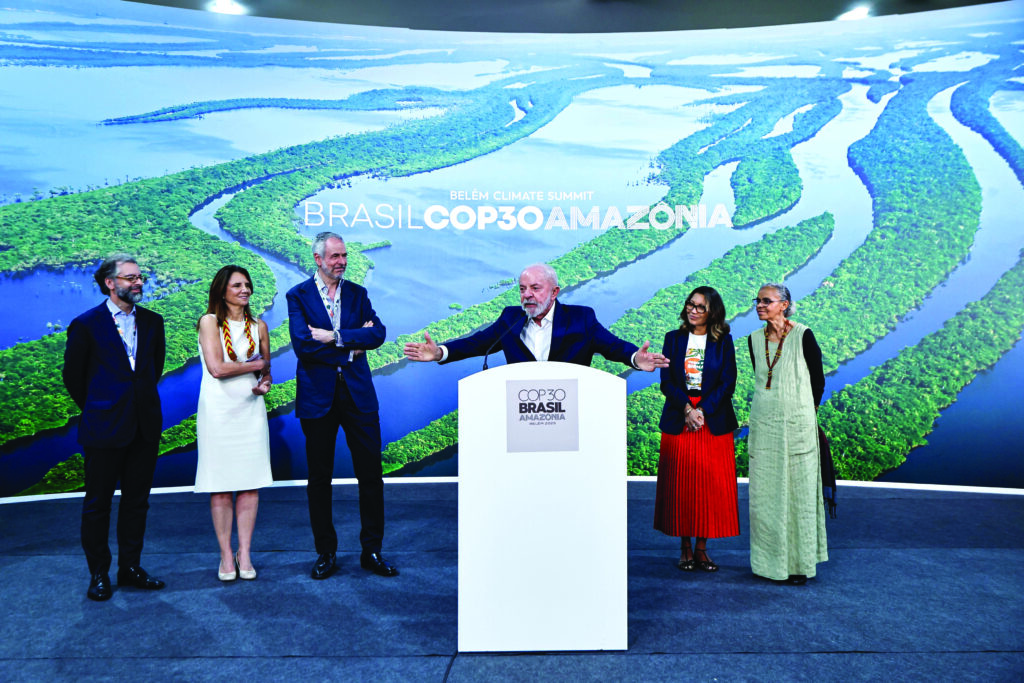
When the world’s climate negotiators assembled in Belém, at the threshold of the Amazon rainforest in Brazil, the moment seemed laden with historical and moral significance. COP30 was heralded as the “COP of Truth”—a forum where science, urgency, and political will would finally converge. The choice of Belém was deliberate: few places embody the stakes of the climate crisis as starkly as the Amazon, a living regulator of the planet’s climate now under unprecedented stress.
Yet as the conference drew to a close, a sense of unease lingered. What many had hoped would be a decisive turning point appeared instead as a familiar choreography of restraint and postponement. Activists and analysts described COP30 as a ‘Theatre of Delay’, a phrase that captured the widening gap between scientific clarity and political caution. Inside the conference halls, disappointment hung thick in the air—an irony heightened by the hum of diesel generators powering pavilions devoted to decarbonisation.
Even the moral appeals of Pope Francis, urging delegates to act with compassion for both the Earth and its poorest inhabitants, failed to dislodge entrenched negotiating positions.
FROM RIO TO PARIS TO BELÉM: THE LONG ARC OF CLIMATE DIPLOMACY
The dissonance of COP30 becomes clearer when viewed against the broader evolution of climate negotiations. The COP process, inaugurated by the 1992 Rio Earth Summit, was founded on a deceptively simple premise: climate change is a global challenge requiring collective action, but responsibility must be differentiated according to historical emissions and economic capacity.
Early COPs grappled with recognition and obligation. The Kyoto Protocol attempted binding commitments for industrialised nations but faltered under geopolitical resistance. The Doha Amendment sought to revive Kyoto’s architecture, yet its impact remained limited.
The Paris Agreement of 2015 marked a conceptual shift. Instead of top-down mandates, it relied on Nationally Determined Contributions (NDCs)—voluntary pledges shaped by national circumstances. Paris succeeded in inclusivity, but flexibility came at a cost. Ambition became uneven, enforcement elusive, and accountability diffused.
Subsequent COPs oscillated between urgency and hesitation. Glasgow’s qualified reference to coal “phase-down,” Sharm el-Sheikh’s recognition of loss and damage, and Dubai’s cautious acknowledgment of fossil fuels all pointed to incremental progress. Belém was expected to convert these acknowledgments into firmer commitments.
It did not—at least not decisively.
THE POLITICS OF LANGUAGE AND THE RETREAT FROM CLARITY
The clearest signal of COP30’s limitations lay in its final text. Early drafts had explicitly called for a transition away from fossil fuels—coal, oil, and gas. In the negotiated outcome, this specificity vanished, replaced by the carefully neutral statement that the global transition toward low-emission, climate-resilient development is “irreversible.”
For climate scientists, this omission was not rhetorical; it was consequential. Every major assessment by the Intergovernmental Panel on Climate Change underscores that limiting warming to 1.5°C requires a rapid, managed decline in fossil fuel use. Without timelines or sectoral pathways, ambition risks dissolving into abstraction.
Colombia’s refusal to endorse parts of the final decision underscored this anxiety. Accusing negotiators of ignoring scientific evidence, its delegation briefly disrupted the plenary, exposing the fragility of consensus when truth itself becomes negotiable.
INCREMENTAL GAINS AND THE LIMITS OF CONSENSUS
Yet COP30 was not devoid of achievement. Two developments stood out. First was tangible movement toward operationalising the Loss and Damage Fund, a mechanism long demanded by climate-vulnerable countries bearing the brunt of extreme weather events. Though modest relative to need, the fund marks an ethical acknowledgment that climate impacts impose real, uncompensated losses. Second was progress on a just transition framework, aimed at ensuring that workers and communities are not abandoned as economies decarbonise. Former Irish President Mary Robinson described these outcomes as imperfect but meaningful—evidence that multilateralism, while strained, remains functional. Brazilian negotiators repeatedly invoked the indigenous concept of ‘mutirão’—collective, voluntary action undertaken for the common good. It became both a metaphor and a quiet rebuke: climate action cannot succeed through compulsion alone; it must be cooperative.
INDIA’S CLIMATE POSITION: DEVELOPMENT AS AN ETHICAL IMPERATIVE
For India, the core debate at COP30 was not merely about fossil-fuel phrasing. It was about the ethical architecture of global climate action. India’s stance has remained consistent since Rio: climate ambition must be inseparable from equity.
India reiterated that poverty eradication, industrial growth, and universal energy access are non-negotiable foundations of development. For hundreds of millions, energy is not a lifestyle choice but a prerequisite for dignity, health, and opportunity. Climate action that undermines these goals risks becoming socially unsustainable.
This perspective explains India’s persistent emphasis on adaptation. For much of the Global South, climate change is not a future projection but a lived reality—manifest in heat stress, water scarcity, agricultural disruption, and coastal erosion. Adaptation, therefore, is not secondary to mitigation; it is existential.
INDIA’S NDCS: SUBSTANCE OVER SYMBOLISM
India has faced criticism for the timing of its updated NDCs. Yet such critiques often miss the deeper context. India’s climate commitments are tightly interwoven with domestic transformations—energy markets, infrastructure lifecycles, employment patterns—that cannot be recalibrated overnight.
More importantly, India’s climate credibility rests less on announcements than on outcomes. Over the past decade, India has emerged as one of the world’s fastest-growing clean-energy markets, consistently aligning policy with execution.
INDIA’S LEADERSHIP IN CLEAN ENERGY: ACTION AS COMMITMENT
Nowhere is India’s climate seriousness more evident than in its clean-energy trajectory. India today hosts one of the world’s largest renewable-energy expansion programmes. Solar power has become a cornerstone of this transition. Through ambitious initiatives such as large-scale solar parks, rooftop solar deployment, and the International Solar Alliance—conceived and led by India—solar energy has moved from peripheral to central in India’s energy planning.
Wind energy, both onshore and offshore, has complemented this growth, while grid modernisation and battery storage initiatives are addressing intermittency challenges. India is also exploring tidal and ocean energy, recognising its long coastline as an untapped resource for future decarbonisation.
Perhaps most consequential is India’s strategic push toward green hydrogen. Recognising hydrogen’s potential to decarbonise hard-to-abate sectors—steel, fertilisers, shipping—India has launched a national mission to scale clean hydrogen production using renewable power. This effort positions India not merely as a consumer but as a potential global supplier of affordable green hydrogen.
Equally significant are gains in energy efficiency, electric mobility, and emissions-intensity reduction. India has already met—and exceeded—several of its climate targets ahead of schedule. These achievements are not symbolic; they reshape the emissions trajectory of a country still in the midst of development.
HISTORICAL RESPONSIBILITY AND CLIMATE JUSTICE
India’s insistence on fairness is grounded in arithmetic, not rhetoric. Its per capita emissions remain well below the global average and a fraction of those in industrialised economies. The atmospheric concentration of greenhouse gases reflects over a century of fossil-fuel-driven growth elsewhere.

For developed countries to now demand uniform decarbonisation—without commensurate financial and technological support—risks perpetuating inequality. India’s position is not an abdication of responsibility, but a call for responsibility to be allocated honestly.
FINANCE, TECHNOLOGY, AND THE TRUST DEFICIT
The credibility of global climate action hinges on finance and technology—areas where delivery continues to lag behind promise. The long-standing commitment to mobilise $100 billion annually remains unmet and inadequate. Adaptation finance, despite being critical for vulnerable populations, receives a fraction of mitigation funding.
Technology transfer remains constrained by intellectual-property regimes that restrict access to advanced solutions. Without addressing these structural barriers, calls for accelerated transition risk sounding hollow.
MUTIRÃO AND INDIA’S
QUIET TRANSFORMATION
The Brazilian idea of mutirão finds a natural resonance in India’s transition. India’s climate action is not solely state-driven; it is cumulative—shaped by entrepreneurs, engineers, farmers, researchers, and local communities. It is decentralised, adaptive, and pragmatic.
This quiet transformation underscores a central truth: development and decarbonisation need not be opposing forces.
WHAT COP30 ULTIMATELY REVEALED
COP30 may not have fulfilled its promise as the ‘COP of Truth’, but it revealed truths the world can no longer ignore—about the limits of consensus, the costs of delay, and the urgency of cooperative courage.
COPs move slowly by design. Consensus rarely produces bold language. Yet this is the grammar of multilateralism. Progress emerges incrementally, negotiated word by word.
INDIA’S ROAD AHEAD
India stands at a confluence of great opportunity and massive responsibility. Its development aspirations—to lift millions out of poverty, power its growing economy, modernise infrastructure—must now coexist with the imperative of climate stability, global equity, and durable sustainability.
For India, the path forward is demanding but hopeful: expanding renewables, scaling green hydrogen, strengthening adaptation, deepening innovation, and ensuring that the poorest benefit first. Internationally, India will continue to argue for equity and realism—while demonstrating, through action, what balanced low-carbon development can look like.
WAITING, BUT NOT IDLY
In the end, the world waits for COPs to deliver clarity.
But the climate does not wait.
And neither, increasingly, does India.
*The writer, a Harvard educated civil servant, is a former Secretary to the Ministry of Information and Broadcasting, Government of India. He also served on the Central Administrative Tribunal and as Secretary General of ASSOCHAM. He commands extensive expertise in the fields including Media and Information, Industrial and Labour Reforms, and Public Policy.