


In January 1935, Sir Chandrasekhara Venkata Raman wrote a remarkable letter to the German physicist Max Born, inviting him to join the Indian Institute of Science (IISc), Bangalore, as a visiting faculty member in Theoretical Physics. At first glance, the letter may appear to be a routine academic invitation. In reality, it was a bold and visionary intervention, one that revealed Raman’s deep grasp of the unfolding quantum revolution and his determination to anchor India firmly within its intellectual core. This single act, among many others, helped lay the conceptual and institutional foundations for what we today recognise as India’s quantum science and technology ecosystem.
The early 1930s were a defining epoch in the history of physics. Quantum mechanics had shattered classical assumptions about determinism, continuity, and causality. Matter and radiation were no longer described by smooth trajectories but by probabilities, wave functions, and operators. Figures such as Max Born, Werner Heisenberg, Erwin Schrödinger, Paul Dirac, Wolfgang Pauli, and Niels Bohr were collectively reshaping humanity’s understanding of reality. Among them, Max Born occupied a central position. His probabilistic interpretation of the wave function, now known as the Born rule, became one of the cornerstones of quantum theory, redefining how measurement, uncertainty, and physical prediction were understood.
Raman, though globally celebrated for the discovery of the Raman Effect in 1928, was acutely conscious that the future of physics lay beyond experimental spectroscopy alone. He understood that without sustained engagement with theoretical physics, particularly quantum mechanics, Indian science risked remaining peripheral to the deepest transformations of modern knowledge. His invitation to Born was therefore not merely an attempt to strengthen IISc’s faculty, it was an effort to transplant the very roots of quantum thinking into Indian soil.
At a time when colonial attitudes routinely questioned India’s capacity for abstract theoretical work, Raman asserted intellectual parity. He envisioned India not as a passive recipient of Western discoveries, but as an active participant in shaping the foundations of science. By inviting Born, Raman was effectively declaring that India deserved direct access to the architects of the new physics, not diluted versions of their ideas.
Although Born ultimately could not accept the position, owing to the rapidly deteriorating political situation in Europe and personal circumstances, the invitation itself was profoundly consequential. It sent a powerful signal, both within India and abroad, that Indian institutions aspired to operate at the highest theoretical levels. Raman’s insistence on integrating quantum mechanics, wave theory, quantum statistics, and atomic structure into Indian scientific training bore long-term fruit. In subsequent decades, India developed strong traditions in theoretical physics, mathematical physics, and quantum foundations, producing figures who would later contribute to nuclear science, condensed matter physics, and quantum optics.
Crucially, the Born invitation was not an isolated gesture. It was part of a broader pattern of international engagement pursued by Raman throughout his career. Long before and after his Nobel Prize in 1930, Raman cultivated active scientific relationships across Europe and beyond. He rejected the notion that science should be bound by geography or politics, even while he remained deeply committed to national scientific self-reliance.
One of Raman’s earliest and most influential intellectual relationships was with Lord Rayleigh, whose work on light scattering directly inspired Raman’s own investigations. Raman’s correspondence with Rayleigh and other British physicists was marked by critical engagement rather than deference. This intellectual independence proved decisive in the discovery of the Raman Effect, which was rapidly confirmed and celebrated by laboratories across Europe and the United States.
Raman also interacted with leading quantum physicists such as Niels Bohr, Arnold Sommerfeld, and Paul Dirac. His travels to Europe during the 1920s and 1930s were not ceremonial tours but working visits. He presented experimental results, debated interpretations, and positioned Indian physics within contemporary global discourse. Just as importantly, Raman actively encouraged Indian students to train abroad. He wrote recommendations that placed Indian scholars in the laboratories of Sommerfeld, Born, and other leading figures, creating a two-way intellectual exchange. Students returned with advanced theoretical training, helping seed modern physics in India.
A striking parallel to Raman’s vision appears in another remarkable but lesser-known episode from the 1930s. In 1937, the princely state of Travancore (in present-day Kerala) invited Albert Einstein to become the first Vice-Chancellor of its proposed university. The initiative was led by Sir C P Ramaswami Aiyar, the Dewan of Travancore, who sought to elevate the institution’s global standing by recruiting the most celebrated scientist of the age.
Einstein ultimately declined the invitation. Having recently escaped Nazi Germany, he was focused on rebuilding his life in the United States and had accepted a position at the Institute for Advanced Study in Princeton. The prospect of a distant administrative role in India, however prestigious, did not align with his circumstances. While formal documentation of the offer is limited, the episode is well recorded in regional histories of Travancore and in the writings of historians such as Prof A Sreedhara Menon.
Einstein’s connections with India were, in any case, deep and enduring. His collaboration with Satyendra Nath Bose led directly to the formulation of Bose—Einstein statistics, a foundational pillar of quantum theory with profound implications for modern quantum technologies, including Bose-Einstein condensates. Einstein also engaged in profound philosophical dialogues with Rabindranath Tagore, meeting him multiple times to discuss the nature of reality, consciousness, and scientific truth. Despite these intellectual ties, Einstein never visited India, a reminder of how close India came to hosting the central figures of quantum science.
It is also important to recall that Einstein himself was a quantum pioneer. His explanation of the photoelectric effect using quantum concepts earned him the Nobel Prize in 1921, and his work laid essential foundations for modern quantum electronics and photonics.
Beyond Born and Einstein, several other leading physicists of the quantum era interacted with India. Arnold Sommerfeld trained multiple Indian students, Paul Dirac visited India later in the mid-twentieth century, and Niels Bohr maintained intellectual exchanges with Indian physicists. Each interaction contributed incrementally to embedding quantum thought within Indian scientific culture.
Indian philosophical ideas exerted a subtle yet profound influence on some of the architects of quantum mechanics, notably Werner Heisenberg and Erwin Schrödinger. Heisenberg acknowledged his encounters with Indian philosophy, mediated through conversations with Rabindranath Tagore and his exposure to Vedanta during his visits to India in the late 1920s. Schrödinger’s engagement was even more explicit. Deeply influenced by the Upanishads, especially the concept of unity underlying apparent multiplicity, he drew philosophical inspiration from Vedantic ideas while formulating wave mechanics.
Today, as India invests heavily in quantum technologies, these early gestures remind us that technological revolutions do not begin with devices or policies alone, but with courageous commitments to fundamental science and fearless engagement with ideas. In revisiting Raman’s 1935 letter, we are not merely commemorating a historical correspondence but reaffirming a vision of science that is ambitious, intellectually sovereign, and future oriented, a vision that continues to guide India’s journey from quantum ideas to quantum technologies.
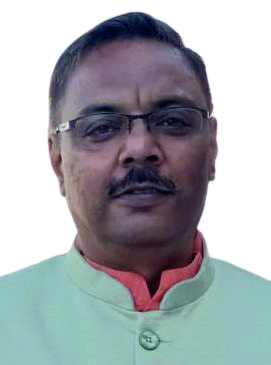
*Dr Punit Kumar is Professor at the Department of Physics, University of Lucknow.