





Author: Prof Punit Kumar

In recent years, the term ‘Net Zero’ has become central to discussions about climate change, energy security, and sustainable development. Governments, industries, scientists, and environmental organisations across the world are working toward reducing greenhouse gas emissions and building a cleaner future, but achieving Net Zero is not an easy task. It requires revolutionary technologies capable of transforming the way we produce energy, manufacture goods, manage waste, and protect the environment. The Earth’s average temperature is rising due to increasing greenhouse gases such as carbon dioxide (CO₂), methane, and nitrous oxide. Fossil fuel combustion, industrial processes, transportation, agriculture, and waste disposal…
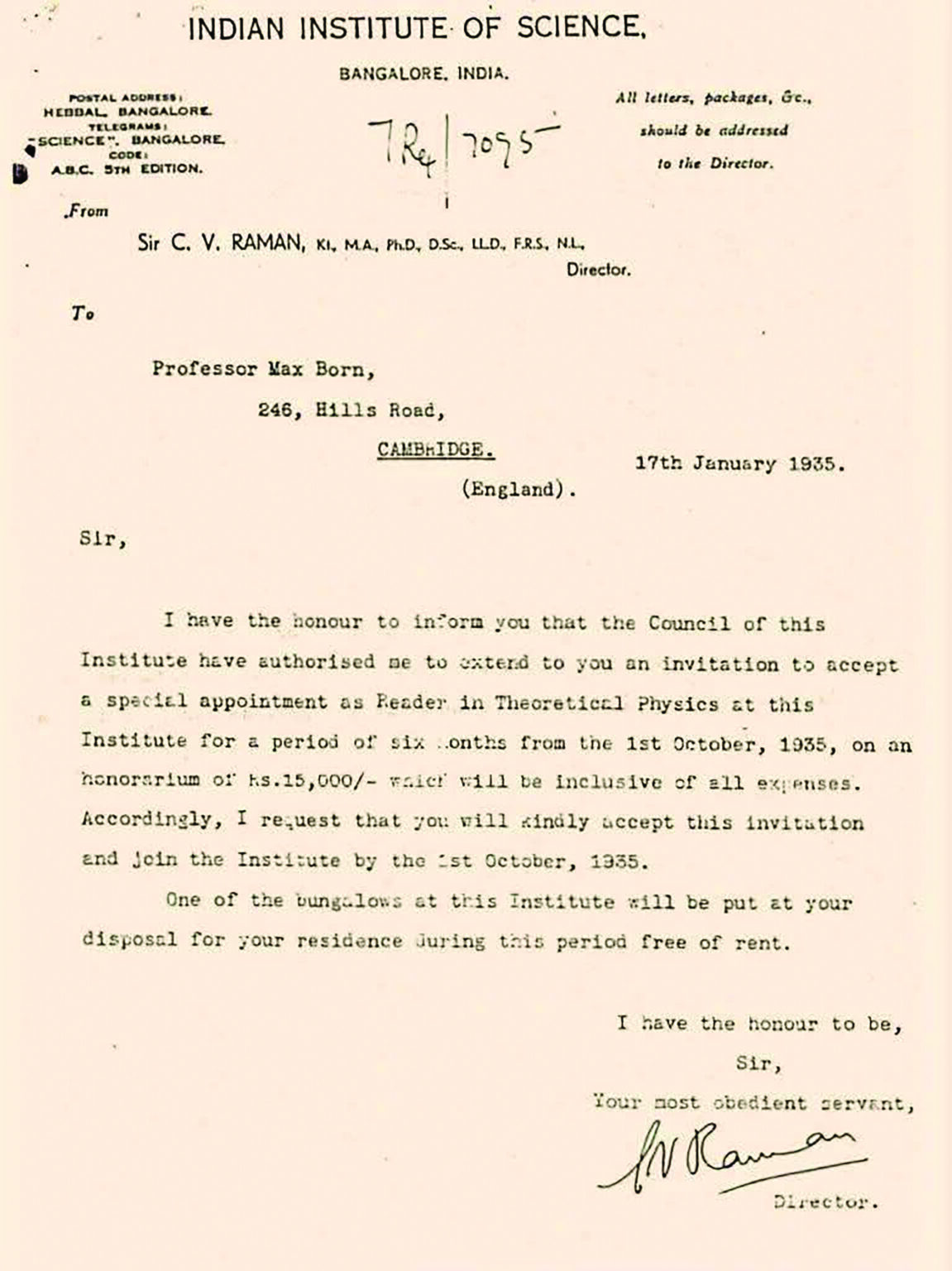
In January 1935, Sir Chandrasekhara Venkata Raman wrote a remarkable letter to the German physicist Max Born, inviting him to join the Indian Institute of Science (IISc), Bangalore, as a visiting faculty member in Theoretical Physics. At first glance, the letter may appear to be a routine academic invitation. In reality, it was a bold and visionary intervention, one that revealed Raman’s deep grasp of the unfolding quantum revolution and his determination to anchor India firmly within its intellectual core. This single act, among many others, helped lay the conceptual and institutional foundations for what we today recognise as India’s…