



International News
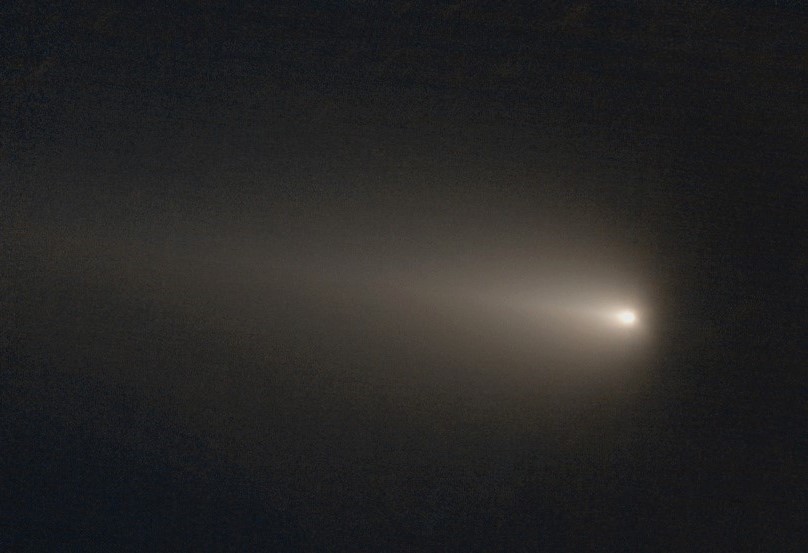
A newly discovered comet is moving toward the Sun for a super close encounter. Designated C/2026 A1, this comet was found on 13 January and it will make its closest approach to the Sun (perihelion) on 4 April. Astronomers estimate that it will get within 8 lakh kilometres of the Sun on a ‘hairpin’ trajectory and may disintegrate due to the immense heat and tidal forces.
MAPS
According to the published news reports, the comet was first spotted by amateur astronomers Alain Maury, Georges Attard, Daniel Parrott and Florian Signoret at the AMACS1 observatory in San Pedro de Atacama, Chile. Their initials form the ‘MAPS’ acronym. Hence it is also called C/2026 A1 (MAPS).
Comet MAPS belongs to the Kreutz family of comets which are said to have originated from a ‘progenitor’ comet that was ripped apart during its encounter with the Sun thousands of years ago.
The NASA-ESA Solar and Heliophysics Observatory (SOHO) have reportedly discovered over 4,500 Kreutz comets which are relatively smaller in size. Comet MAPS has an estimated width of 2.4 kilometres and it was 299 million km from the Sun at the time of its discovery. This makes it the farthest sungrazer comet ever found.
SUNGRAZER COMET
A sungrazer is a comet that passes dangerously close to the Sun during its orbit. When they do fly close to the Sun, the star’s intense heat causes the ice inside them to rapidly turn to gas, often making them glow brilliantly, sometimes bright enough to be seen in daylight. There is, however, also a downside. The heat from the sun that can make these comets shine bright can also, at times, rip apart the comets entirely.
If the comet manages to hold together during its close encounter, it could brighten so dramatically that it becomes visible during the daytime with the naked eye. Observers may witness a unique turquoise tail formed by exotic gases. Even if it fragments, solar observatories like SOHO are expected to capture spectacular imagery of its fiery dive.
The visibility is expected to improve when the comet gets near perihelion and grows a tail. Scientists say if the comet survives perihelion without disintegrating, it can grow significantly brighter, even more than Venus. But if Comet MAPS doesn’t disintegrate, observers in the northern hemisphere will be in for a treat after 4 April as the comet’s tail will be visible for several days during mid-twilight.
VIEWING TIPS FOR INDIANS
For skywatchers in India, the best chances for a glimpse will occur in early April, specifically in the southern regions. The comet will likely appear low in the southwest sky approximately 30 to 45 minutes after sunset. While it may be visible to the naked eye, using binoculars or small telescopes is recommended to help cut through the solar glare near the horizon. Observers in northern India may find viewing more challenging due to potential horizon obstructions and clutter.
*Curated from various news sources published on the Internet.