


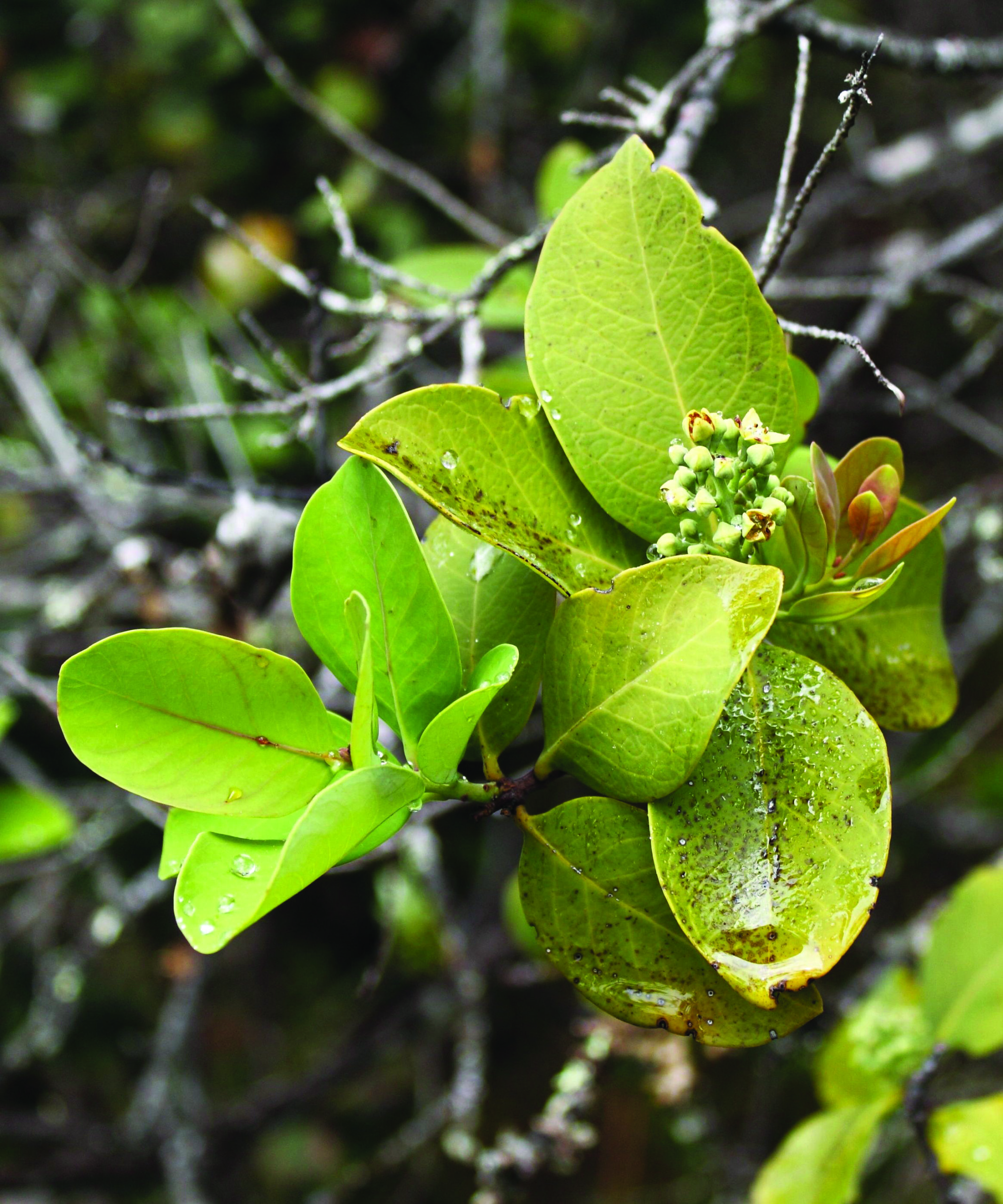
HERB HERITAGE: CHANDAN
Chandan, the sacred sandalwood of India, is a quintessential example of how Ayurveda integrates spirituality, sensory experience, and pharmacological intelligence. Its cooling touch soothes the heat of inflammation, the fire of anger, and the burden of disease. From ancient yajnas to modern clinical skincare, Chandan continues to serve as a symbol of healing, sanctity, and serenity. In an era seeking natural, holistic solutions, rediscovering Chandan is a return to balance—of body, mind and spirit.
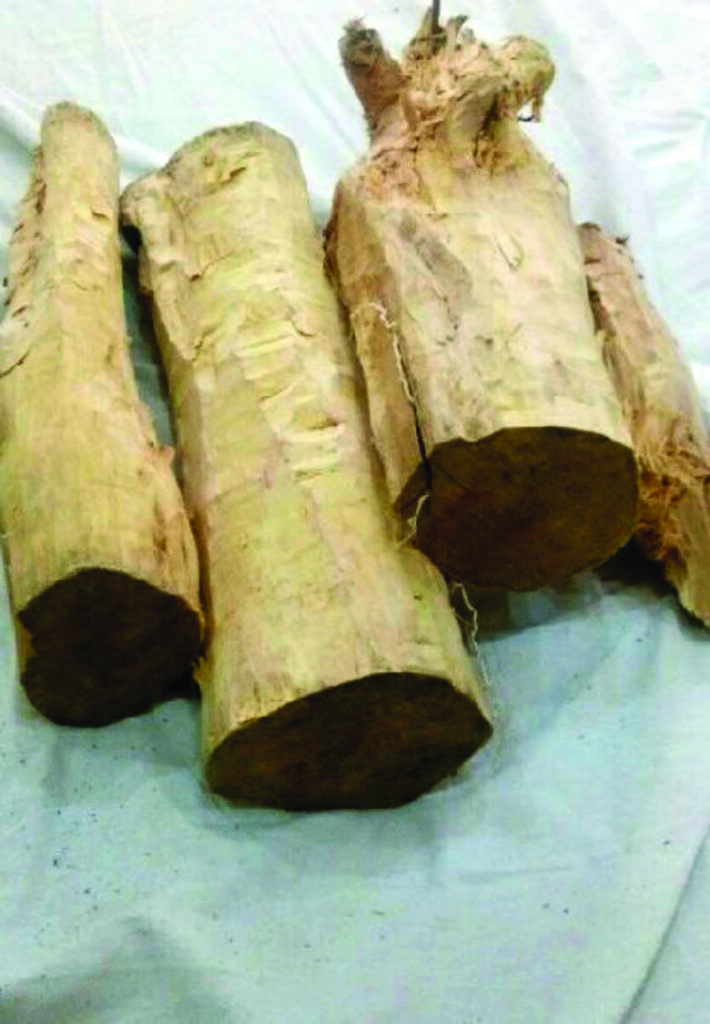
The Indian sandalwood tree (Santalum album), revered as Chandan in Ayurveda, holds a deep-rooted significance in the cultural, spiritual, and medicinal heritage of India. For millennia, sandalwood has been an essential part of daily rituals, temple ceremonies, classical art, and Vedic traditions. Its sacred aroma is considered purifying and uplifting, used in religious rites, meditation practices, and temple architecture. In ancient times, kings and sages applied Chandan paste on their foreheads as a mark of wisdom and devotion.
The wood was used to carve idols of deities and perform yajnas (sacrificial rituals), reflecting its sanctity in Dharmic traditions. Alongside its spiritual use, Chandan has been extensively praised in Ayurvedic literature—including the Charaka Samhita, Sushruta Samhita, and Bhavaprakasha Nighantu—for its cooling, anti-inflammatory, and mind-calming effects. Today, as global interest in plant-based wellness rises, the timeless value of Chandan continues to be rediscovered and validated through modern scientific research.
Historical and Cultural Significance
Sandalwood is deeply interwoven with Indian history and spirituality. It is considered an essential element in Hindu rituals, symbolising purity, tranquility, and sanctity. It is mentioned in texts as early as the Milinda Panha (circa 2nd century BCE) and in Kautilya’s Arthashastra (200 BC). Chandan is also referenced in the epics Ramayana and Mahabharata, where it was used in anointing rituals, temple offerings, and funeral rites. Its use in spiritual consecration, embalming, and meditation signifies its role not only as a botanical medicine but also as a bridge between the material and spiritual planes.
Synonyms of Chandan in Ayurveda
The prominence of Chandan in Ayurveda is evident from the fact that it is described with over 34 synonyms across various classical Nighantu texts. These synonyms capture its qualities (guna), therapeutic actions (karma), appearance (varna), aroma (gandha), and cooling potency (shita virya). Some of the most well-known and widely cited synonyms include:
- Gandha: Refers to its natural fragrance
- Sugandhi / Sugandhika: Highly fragrant
- Shweta: Refers to the white variety
- Hima: Cooling in nature
- Sharva / Sharvabhadra: Auspicious and divine
- Mangalya: Associated with sacredness and well-being
- Ananta: Everlasting, indicating its long-lasting scent
- Chandan: The most common name, used generically
- Surasugandha: Divine fragrance
- Amrita: Nectar-like, suggesting rejuvenating qualities
- Hridaya: Pleasing to the heart
- Trishna-jit: Quencher of excessive thirst
- Dahashamana: Relieves burning sensation
According to Bhavaprakasha Nighantu (Haritakyadi Varga), Raja Nighantu (Gandhadi Varga), and Dhanvantari Nighantu, the total number of synonyms attributed to Chandan across various sources reaches 34, each emphasising a specific medicinal, sensory, or spiritual quality. This elaborate nomenclature not only highlights its multidimensional therapeutic value but also its integral role in the Vedic way of life.
Types of Chandan Described in Ayurveda
Ayurveda recognises several varieties of Chandan, classified primarily by colour, region, and utility:
- Shweta Chandan (White Sandalwood): Santalum album—aromatic, cooling, and therapeutically superior. Most widely used in Ayurveda.
- Rakta Chandan (Red Sandalwood): Pterocarpus santalinus—though botanically distinct, used for skin and blood disorders.
- Harichandana/ Pitachandan (Yellow Sandalwood): Regional names for light yellow variants of Santalum album.
- Krishna Chandan (Black Sandalwood): Rarely mentioned; sometimes denotes aged or darker heartwood.
Among these, Sweta Chandan is considered medicinally and spiritually supreme due to its aroma, shita virya, and gentle action on all three doshas.
Ayurvedic Properties (Guna-Karma) of Chandan
| Property | Description |
| Rasa | (Taste) Madhura (sweet), Tikta (bitter) |
| Guna | (Quality) Laghu (light), Ruksha (dry) |
| Virya | (Potency) Shita (cooling) |
| Vipaka | Madhura (sweet post-digestive) |
| Prabhava | Manashshamaka (calms the mind), Dahashamaka (relieves burning) |
Sheetalam tiktamadhuram raktapittapradahanut | Hridyam tridoshashamakam vishagham Surabhi sada ||
– Bhavaprakasha Nighantu
Chandan is tridosha-shamaka, especially pacifying to Pitta and Rakta. It is used in:
- Jwara (fever), Daha (burning), Trishna (thirst)
- Raktapitta, Mukhapaka, Kandu, Vatarakta, Manovikara
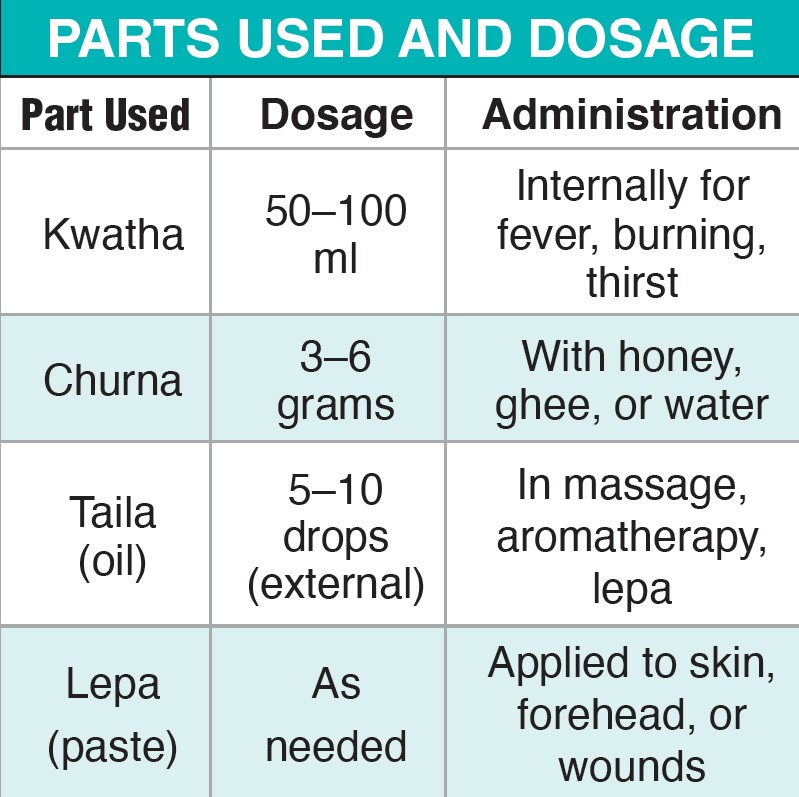
Note: Dosage may vary based on individual prakriti, disease condition, season, and form used. Always consult a qualified Ayurvedic physician for appropriate administration.
Chandan in Classical Formulations and Indications (as per Charaka Samhita and other texts)
Chandan features extensively in various formulations across the Charaka Samhita and other classical Ayurvedic compendia, owing to its cooling, aromatic, anti-inflammatory, and psycho-calming properties. It is included in ghritas (medicated ghee), tailas (medicated oils), rasayanas (rejuvenatives), kashayams (decoctions), and asavas for a wide range of therapeutic applications.
Key Formulations Containing Chandan:
- Anu Taila, Brahma Rasayana, Chyawanprash Avaleha
- Nagabala Rasayana, Amalakayasabrahma Rasayana, Indrokta Rasayana
- Shadangapaniya, Trayamanadya Ghrita, Tiktashatpalaka Ghrita
- Mahatiktaka Ghrita, Kalyanaka Ghrita, Patolamooladi Kashaya
- Hriveradi Ghrita, Sunisannaka Changeri Ghrita, Chandanadya Ghrita
- Kiratadya Churna, Madhukasava, Katukadhya Ghrita
- Mruta Sanjeevani Agada, Amrita Ghrita, Baladhya Taila
- Khadiradi Gutika, Khadiradi Taila, Shriveshtayakari Yoga
- Bala Taila, Amrita Taila, Madhuparnyadi Taila
- Amrutadhya Taila, Mahapadma Taila, Khuddaka Padma Taila
These formulations use Chandan for its multi-action benefits across doshas, particularly its effectiveness in Pitta and Rakta disorders.
Diseases and Conditions Indicated:
- Siroroga (head disorders), Daha (burning sensation), Kandu (itching) • Sharira Dourgandhya (body odour), Raktapitta (bleeding disorders), Jwara (fever)
- Vatarakta, Vatika Roga, Shotha (inflammation), Vrana (ulcers)
- Apasmara (epilepsy), Unmada (psychosis), Trishna (thirst), Swasa (asthma)
- Urdhwajatru Gata Roga (diseases above clavicle), Chardi (vomiting), Atisara (diarrhoea)
- Pandu (anemia), Kamala (jaundice), Madatyaya (alcohol intoxication)
- Gudabhramsa (anal prolapse), Krimi (worm infestation), Pleeha Roga (splenomegaly)
- Urustambha (stiffness in thighs), Visarpa (erysipelas/viral infections)
These references showcase the breadth of Chandan’s use in systemic and localised conditions, reflecting its unique balance of fragrance, cooling potency, and anti-dosha action.
Modern Scientific Validation
Contemporary research supports many Ayurvedic claims:
- Antimicrobial: Effective against Staph. aureus, Candida, and acne-causing bacteria
- Anti-inflammatory: COX-inhibition by alpha-santalol confirms traditional daha-shamana use
- Antioxidant: Reduces oxidative stress and supports skin healing
- Anxiolytic: In aromatherapy, sandalwood reduces anxiety and improves sleep
- Anticancer (preliminary): alpha-santalol shows apoptosis-inducing effects in skin and prostate cancer models
It is also widely used in modern cosmeceuticals for pigmentation, acne, rashes, and in anti-aging treatments.
*The writer is an Ayurveda physician, DST Woman Scientist A, AIIMS New Delhi, and founder of Pratha Ayurveda.