




BIRTH ANNIVERSARY / 2 AUGUST
In the 21st-century India, reaping the benefits of three decades and more of economic liberalisation, one of the coolest professionals amidst us are those that we know as Science Entrepreneurs, those who have created Science Startups. These are new terms that have found their way in our daily lexicon since the rise of science entrepreneurship, on the strength of whose shoulders this country is going to elevate its status from a developing economy to one of the largest in the world, with a GDP of more than $5 trillion in near, foreseeable future.
But are these terms—‘Science Entrepreneur’ and ‘Science Startups’—really as new as they appear, just like other new-fangled imports from the West? Not exactly.
More than a century ago, an Indian scientist trained at the University of Edinburgh, and who had been called the ‘Master of Nitrites’ by British chemist Henry H Armstrong, set up India’s first pharmaceutical company, the Bengal Chemical and Pharmaceutical Works Ltd in 1901. That was Acharya Prafulla Chandra Ray, who set up the enterprise to foster a spirit of entrepreneurship among the Bengali youth and provide employment option other than British colonial government jobs. The company that he set up, could be called ‘bootstrapped’—to use a term from the terminology of our times—as it was set up by him with his own capital of Rs 700. As per various estimates available on the internet, that is an amount equivalent to Rs 2.70 lakh in 2023.
Acharya PC Ray was, indeed, India’s first science entrepreneur, who set a precedent for Indians to follow—combining nationalistic integrity with scientific brilliance. At a time when the nation had awakened to the atrocities and immorality of British rule in full vigour, he showed a novel means of protest.
Born on 2 August 1861, he grew up in a liberal and nationalistic family that was actively involved in amelioration of the lot of Indians through social reforms. While a student at Metropolitan Institution in Calcutta (later Vidyasagar College), Ray attended chemistry and physics lectures at the Presidency College as an external student. He next won one of the two all-India Gilchrist Prize Scholarships that earned him a seat at the BSc course of University of Edinburgh, Scotland. He went on to obtain a doctorate from the same university.
Due to his upbringing and extensive personal research, Ray was aware of the highly developed Indian industry before the onset of colonial rule. The British had systematically and progressively finished off all Indian industry, through prohibitive taxes and other measures, in order to fuel their Industrial Revolution and later sustain British industry.
By the time Ray returned to India, the political situation in the country had become vociferously anti-British. In nearly half-a-century since the First War of Independence of 1857, Indians had undergone great political and social transformation and were increasingly getting eager to break free of colonial rule. Calcutta, the hub of freedom fighters and revolutionaries, and other anti-colonial activities, also gave birth to the Swadeshi movement at the opening of the 20th century, which called for boycotting colonial goods and setting up Indian enterprises. Matters reached a nadir when in 1905, then British Viceroy Lord Curzon partitioned Bengal along colonial lines, leaving the population indignant and distressed.
BENGAL CHEMICAL AND PHARMACEUTICAL WORKS LTD.
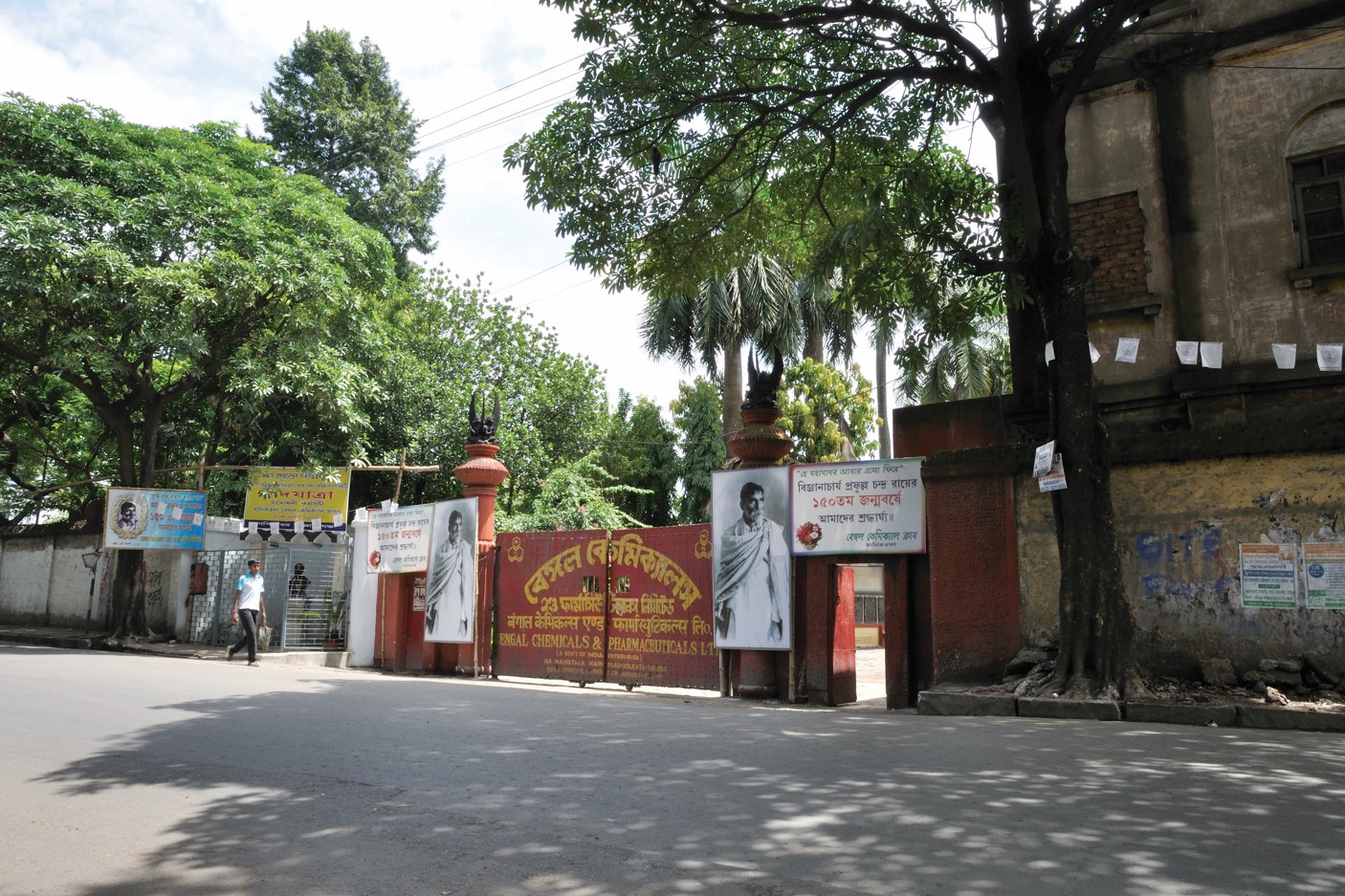
It was in this scenario that Ray set up Bengal Chemicals and Pharmaceuticals in 1901, which was born out of the factory, Bengal Chemical Works, that he had set up in 1892 in a rented house at 91, Upper Circular Road, Calcutta. The company presented its herbal products at the 1893 session of the Indian Medical Congress in Calcutta. The reputation of the company grew, and Ray added additional funds of Rs 2 lakh (equivalent to Rs 7.2 crore or US$850,000 in 2023) to increase the scale of production. The business was converted into a Limited Company, and on 12 April 1901 the company was renamed Bengal Chemical and Pharmaceutical Works Ltd. (BCPWL).
In 1908, John Cumming wrote in the Review of the Industrial Position and Prospects in Bengal, that the ‘enterprise shows signs of resourcefulness and business capacity, which should be an object lesson to capitalists of this province’.

All Images Courtesy: Wikimedia Commons
Beginning with one factory in Calcutta’s Maniktala in 1905, three more factories were established—one each in Panihati (1920), Mumbai (1938), and Kanpur (1944), with its registered office at 6 Ganesh Chandra Avenue, Calcutta.
This Swadeshi venture proved successful and created new job opportunities. Encouraged, he set up and supported new ventures like Acharya Prafulla Chandra Cotton Mills; Bengal Salt Manufacturing Company; Bengal Potteries; Bengal Enamel Works; Bengal Steam Navigation; Bengal Paper; Bengal Canning and Condiment; National Tanneries; Chuckervertty, Chatterjee & Company Ltd (Publishing House); and Bharati Scales and Engineering Company. Even as the owner of various industries, ne never took any salary and distributed his share among the workers.
While initially successful, BCPWL started making losses in the mid-1950s. Its struggles, in fact, had begun after Ray’s death in 1944. The management of the company was taken over by the Union government on 15 December 1977, and the company was nationalised on 15 December 1980. It became a central Public Sector Undertaking under the Ministry of Chemicals and Fertilizers, Government of India, manufacturing industrial chemicals, pharmaceuticals like antibiotic injectables, tablets and capsules; and household products. After 63 years of losses, it became profitable in the financial year 2016-17, posting an annual profit, of Rs 4 crore. In 2021, the government announced that it would strategically disinvest Bengal Chemicals & Pharmaceuticals Ltd (BCPL).
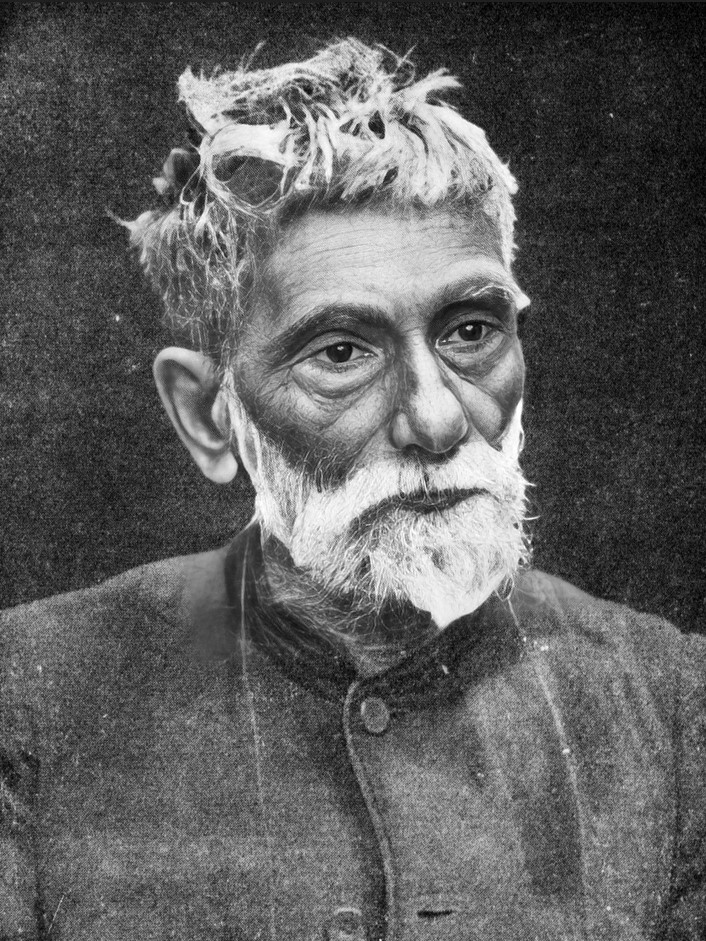
In his autobiography, Life and Experiences of a Bengali Chemist, Acharya Ray writes in Chapter 20, titled ‘Industrial Enterprises’ about India’s indigenous industries from Bengal Pottery to Scindia Steam Navigation Company.
DEEPENING SCIENTIFIC ROOTS
Acharya Ray’s desire to deepen the modern scientific roots of the country extended beyond entrepreneurship. He established the first research laboratory at Presidency College from scratch, established the Indian Chemical Society (1924), and launched the first research journal of India, The Journal of Indian Chemical Society. He closely affiliated himself with the National Council of Education (NCE), a pedagogic organisation based on Swadeshi spirit.
The Government records of that time mention him as a “Revolutionary in the garb of a Scientist.”, as they believed he was sympathetic towards the revolutionaries and would make arrangements for their shelter and food at his factories. After his death, many revolutionaries and his colleagues mentioned about his indirect support and help in manufacturing explosives.
Acharya Ray was a visionary ahead of his times, and must be widely recognised as India’s first science entrepreneur who created a Swadeshi startup.
*The writer is Editor, Science India.