

BIRTH ANNIVERSARY: 1 JANUARY / PROF SN BOSE
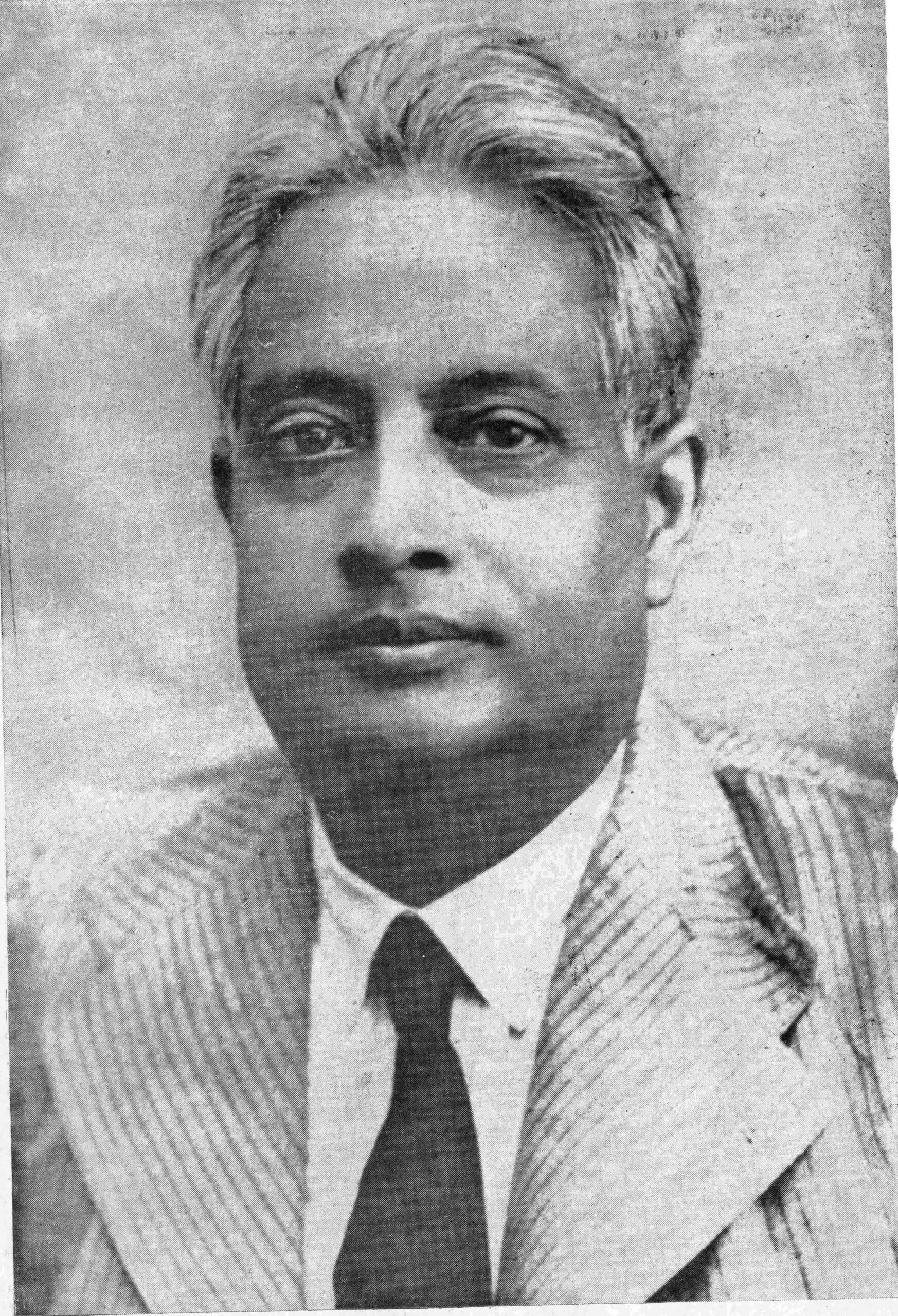
At 22, Iswar Mill Lane in North Calcutta, a quiet home awoke to destiny on the first dawn of 1894. Laughter and light filled its rooms—not for the turning of the calendar, but for a far deeper miracle. Surendranath Bose and Amodini Devi were no longer just husband and wife; they had become parents. In their arms rested a newborn son, whom they named Satyendranath Bose. In that tender moment, no one could have known that the child cradled so gently would one day reshape humanity’s understanding of nature itself. Surendranath Bose could not have foreseen that his humble family surname would one day echo across the cosmos. Through the brilliance of his eldest son, the hidden laws of the quantum world would unfold, and the scientific community would honour that legacy by naming half of the fundamental particles in the universe—bosons. Thus, from a small house in North Kolkata, it was the starting of the journey of Father of Bosons—Satyendranath Bose.
Time flew, from the year of 1894 to 2026. Last year—2025—the world celebrated International Year of Quantum Science and Technology, when several programmes, deliberations, discussions and conferences were arranged by the scientific community to celebrate100 years of quantum science, and to try and understand the new area of opportunity put forward by quantum science, mainly in the most celebrated technological application called quantum computing. As citizens of Bharat, we became part of these discussions and brainstorming as we had an icon in this field. But how much did we celebrate his name and were inspired by his works? We can revisit the works of Satyendranath, and the hardships he faced on the road to success, which will be an inspiring story to anyone.
A BRILLIANT COHORT
Back in the early 20th century, our country was struggling to break free of colonial rule. Bengal was the epicentre of all freedom movements, from young children to elderly citizens, students to professors, and artisans to masters, everyone had joined the fight for independence. At the same time, scientific thoughts and newly introduced modern science education were illuminating the minds of aspiring Indians. Calcutta was the hub of modern science education in India during that era. The British, using science as a tool to rule India, were met with a response from the Indians. The college streets of Kolkata were filled with brilliant minds, we can imagine classrooms where brilliant students sat on the benches, while the greatest minds of science in history stood and delivered lectures to them. Satyendranath Bose was one of the fortunate students at Presidency College who was in this dream class room. He joined the college in 1909 and was part of a remarkably brilliant cohort. His most prominent classmates and contemporaries included Meghnad Saha, a lifelong friend, collaborator, and celebrated astrophysicist; Jnanchandra Ghosh, later a renowned chemist; J N Mukherjee, a distinguished chemist; and Nikhilranjan Sen, a mathematician. With these brilliant minds sitting in classrooms, their teachers had to be of a much higher stature. As a blessing to these students, their teachers were the likes of Acharya Prafulla Chandra Ray and Acharya Jagadish Chandra Bose, under the visionary leadership of the vice chancellor Ashutosh Mukherjee. SN Bose learned modern chemistry from Acharya Prafulla Chandra Ray in the first year and the basics of modern physics from Acharya Jagadis Chandra Bose in the third year. SN Bose graduated from Calcutta University with a record mark sheet that remains unbroken in the University till this day.
Bose’s first significant work was his collaborative effort with Meghnad Saha to translate Einstein’s theory of relativity. This monumental task was further propelled by the historic foreword by Prashanta Chandra Mahalanobis. The book, a joint endeavour of three eminent Indian scientists, was published by the University of Calcutta in 1920.
Prior to this, Bose’s first paper, co-authored with Saha, was published in a philosophical magazine in 1918. Subsequently, his next two papers were based on pure mathematical problems and were published in The Bulletin of the Calcutta Mathematical Society. In 1920, his paper on the deduction of the right-hand rule from the quantum theory of spectral emission in the same philosophical magazine gathered the attention of appreciative physicists.
On 15 June 1924, Bose sent his second paper to Einstein, marking the beginning of their communication. In that letter, Bose attempted to address a flaw in quantum theory that Einstein had been trying to solve for several years. Einstein understood that Bose had provided a better solution. The problem concerned a fully satisfactory derivation of Max Planck’s law, which describes the spectrum of radiation from a black body. This law showed that the radiation does not rise to infinity at ever-shorter wavelengths as classical physics suggests, but instead peaks before falling back.
Einstein then translated Bose’s paper into German and published it in the Zeitschrift für Physik. This kind gesture by Einstein helped Bose’s paper gain acceptance and was published in the journal in August 1924. However, before Einstein’s intervention, Bose had been attempting to publish his paper in various journals through different publishers, but unfortunately, no one recognised the importance of his work and it was not published.
IN LIKE-MINDED COMPANY
Bose embarked on a journey from Bombay on 1 October 1924, aboard a ship. He arrived in Paris on October 18th and set out on a mission to visit the cutting-edge laboratories of Europe, particularly those specialising in radioactivity and x-ray crystallography. Initially, he worked in the x-ray laboratory with Maurice de Broglie. However, his primary objective was to collaborate with Madame Curie at the Radium Institute. Upon meeting Curie, she advised Bose to spend several months learning French before commencing work in her laboratory. Despite his proficiency in French, Bose was too humble to correct her and followed her advice. He spent months honing his language skills while simultaneously conducting measurements on the piezoelectric effect in her lab. After a year in France, Bose journeyed to Berlin, where he immersed himself in German culture, attending seminars and engaging in intellectual discussions with prominent physicists. Max Planck and Walther Nernst were present during a seminar where Bose presented his groundbreaking work, marking a significant milestone in the history of quantum physics. Werner Heisenberg and other physicists also shared their ideas and perspectives with Bose during his stay in Germany. Bose’s frequent visits to Albert Einstein allowed him to engage in discussions beyond physics, exploring various other subjects.
In 1945, Bose resigned from Dacca University and joined Calcutta University, where he held the prestigious chair Khaira professor of Physics. The Khaira Laboratory refers to a research facility at Calcutta University, where Satyendranath Bose served as the professor from 1945 to 1956. He began his experimental investigations in crystallography and radiation physics, and soon, the Khaira laboratory was developed into a well-equipped centre for crystal structure analysis.
A GENIUS SCIENCE COMMUNICATOR
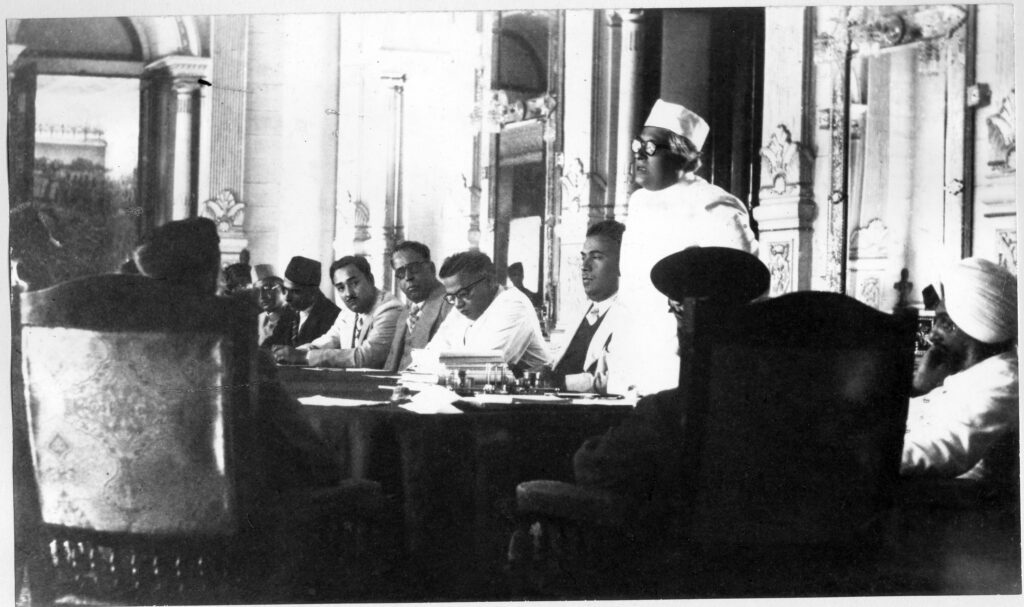
All these achievements were overshadowed by Bose’s growing commitment to science communication. He became the president of the Indian Physical Society from 1945 to 1948, the president of the National Institute of Sciences from 1948 to 1950, and was also nominated a member of the Rajya Sabha from 1952 to 1954 by the President of India. In 1954, he was honoured with the title of Padma Vibhushan and became the president of the Asiatic Society in 1959.
Throughout these periods, Satyendranath Bose strongly advocated the study of science in one’s own mother tongue. He believed that this approach would attract more youngsters from diverse social backgrounds to science. His dream was partially realised when he founded the Bangiya Bijnan Parishad in 1948, with the primary objective of popularising science in Bengal. On the same day, the Parishad was founded, Bose launched Jnan-O-Bijnan, a monthly popular science journal in Bengali. It was one of the first journals of its kind in a vernacular Indian language.
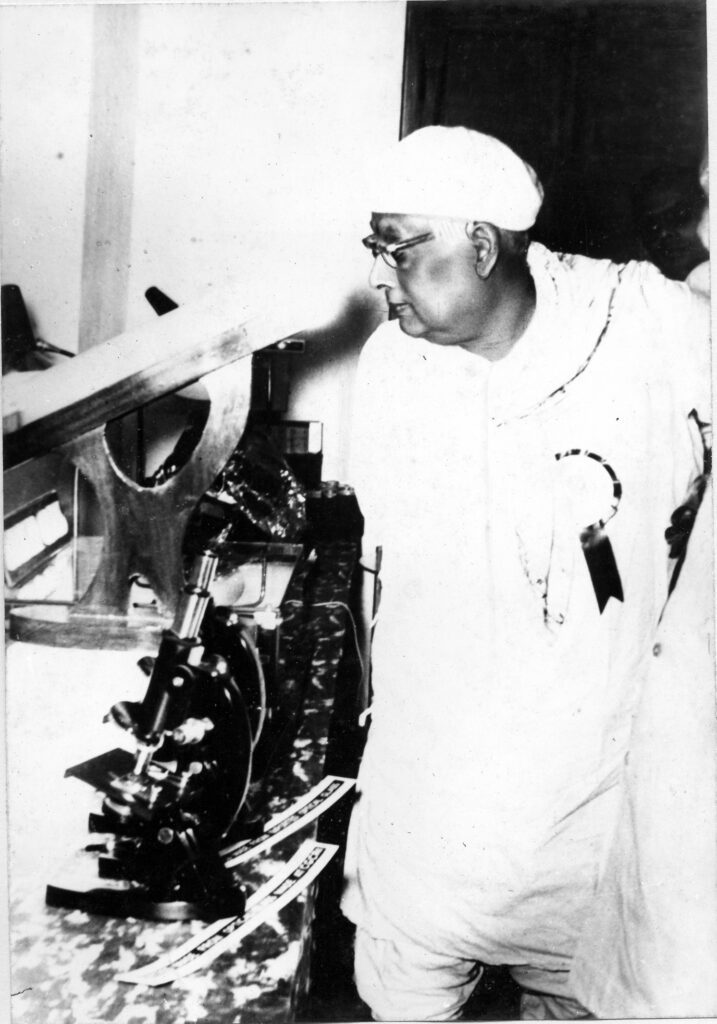
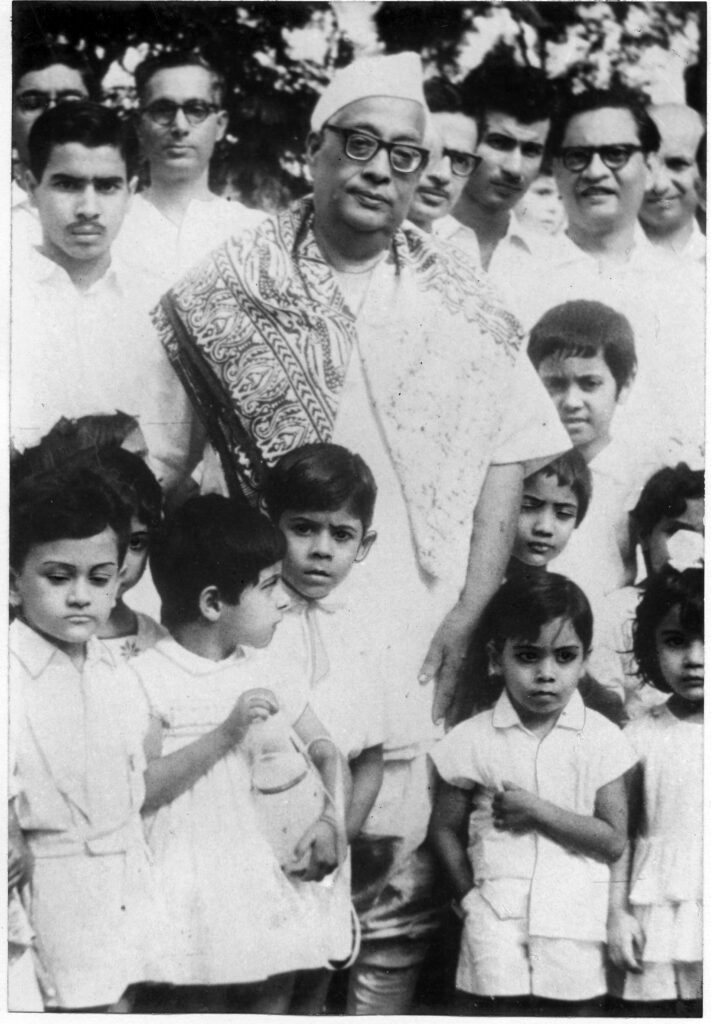
Bose maintained close relationships with individuals from diverse social circles. His social circle included singers, musicians, actors, filmmakers, and many more. Their interactions extended beyond literature, as they engaged in discussions about science and technology. Consequently, the renowned poet of Bharat, Rabindranath Tagore, wrote his only book on science, titled Biswa Parichay, and dedicated it to Satyendranath Bose.
Bose actively worked with the organisation to translate complex scientific concepts into easy-to-understand Bengali. He published science books and magazines specifically designed for school and college students. Bose used the Parishad as a platform to deliver scientific lectures and keynote addresses in classic Bengali, completely avoiding foreign technical terms where possible. He even extended this practice to academic settings, teaching postgraduate classes on subjects like Relativity and X-ray crystallography in colloquial Bengali.
Bose’s work with the Parishad was very different from the usual academic practice of his time, when English was preferred for scientific communication. He strongly believed that using Indian languages was not an elitist idea, but essential for national development and the spread of scientific thinking. Such was his commitment that his colleagues observed him carefully writing even complex scientific calculations in Bengali script so that his students could understand them better. While celebrating the genius of Satyendranath Bose the physicist, we should also remember what a great science communicator he was as well.
*The writer is Regional Organising Secretary, Vijnana Bharati, Western Region, and Coordinator, Science India Forum–Gulf Countries.