



OCEANS: THE INNERSPACE
Oceans cover about 71% of the planet earth. It means 71% of the earth’s resources are still unexplored and unexploited whereas terrestrial resources are diminishing rapidly. Oceans or the ‘Innerspace’, our own backyard, is a treasure trove of living and non-living resources.
With a good telescope one can watch the Saturn rings from one’s terrace. A Mars rover can be controlled, from your laboratory. But one cannot observe or control something a few metres below the water surface. Electromagnetic waves do not travel long distances in water, especially in seawater. Systems like radars, GPS, communication systems, using EM waves, do not work underwater. Each ten metres of depth adds to one atmosphere pressure. Oceans are dynamic and conditions like temperature, salinity, density vary both temporally and spatially. Corrosive environment adds to the difficulties. We use sound as an alternative to light. But it is 0.2 million times slower, can carry very limited information and refracts easily making it difficult to use. Naturally, there is almost two millennia lag between space and ocean observations.
GETTING TO THE BOTTOM OF OCEANS
With the advent of Sonars (Sound Navigation And Ranging) it became possible to explore the ocean depth. Development of submersibles to take them closer to the ocean bottom resulted in exploration of large spaces in oceans. Underwater vehicles or submersibles can be broadly categorised into manned and unmanned varieties. Unmanned submersibles are robotic systems designed for underwater exploration, research, and engineering intervention. Advances in robotics and materials science have made them ubiquitous.
Unmanned submersibles fall into two main categories: ROVs (remotely operated vehicles), which are tethered and controlled remotely, and autonomous underwater vehicles (AUVs) or underwater drones, which operate independently. Equipped with sensors, cameras, and data loggers, they collect real-time information on oceanographic parameters and also for engineering interventions.
Submarines are specialised watercraft capable of operating underwater, playing crucial roles in military defence, scientific research, and deep-sea exploration. A military submarine is a watercraft designed for underwater warfare and defence operations. Equipped with advanced technology, it can remain submerged for extended periods, carrying weapons such as torpedoes and missiles.
MAN IN THE LOOP
It has always been left to indirect techniques for exploring the oceans, their resources and assessing the performance of underwater systems. A manned submersible with scientists onboard with suitable observation, sampling and intervention devices can be a tool for deep ocean exploration/intervention.
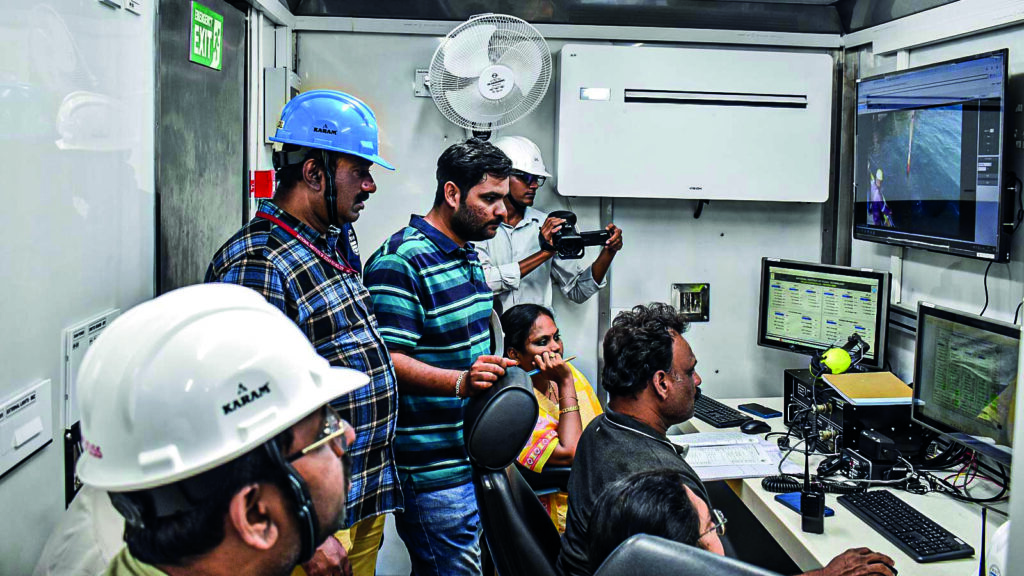
Ocean research at the bottom is expensive and a fully trained researcher making observations and sampling on the seafloor using a manned submersible is more effective and accomplishes much more than the equivalent hours spent observing and sampling using current ROVs.
One may wonder why a human is needed in the ocean depths when more and more tasks are being carried out by robots. But lack of penetration of electromagnetic waves makes it difficult to visualise and communicate in the oceans. This may prevent or delay in taking informed decisions during the exploration. Hence, human presence is of definite advantage in chartering unexplored depths.
Several nations have developed advanced scientific human-occupied submersibles (HOVs) to explore the deep ocean. The United States pioneered with Alvin, launched in 1964 and operated by the Woods Hole Oceanographic Institution; it has made over 5,000 dives, including the discovery of hydrothermal vents and the exploration of the Titanic wreck. The erstwhile Soviet Union (later Russia) developed Mir-1 and Mir-2, twin submersibles capable of diving to 6,000 meters, which have supported extensive geological and biological studies in the Atlantic and Arctic Oceans.
France contributed with the Nautile, operated by IFREMER, also rated to 6,000 meters and instrumental in deep-sea research and recovery missions. Japan leads in technological innovation with the Shinkai 6500, capable of exploring most of the world’s ocean trenches and conducting long-duration scientific missions. Meanwhile, China has advanced rapidly with the Jiaolong (7,000 m class) and Fendouzhe (10,909 m), the latter reaching the Challenger Deep in 2020, demonstrating China’s growing capability for full-ocean-depth manned exploration. Together, these submersibles represent milestones in global oceanographic research and deep-sea engineering.
Many of the significant underwater discoveries made during the past two decades have been the direct result of the submersible dives. In the field of resource surveys too, manned submersibles proved their effectiveness. Manned submersibles are equally useful in search and recovery operations. In 1966, Alvin, a US humanly operated vehicle successfully recovered a hydrogen bomb which had been lost by the US military at a depth of 914m off the Spanish coast.
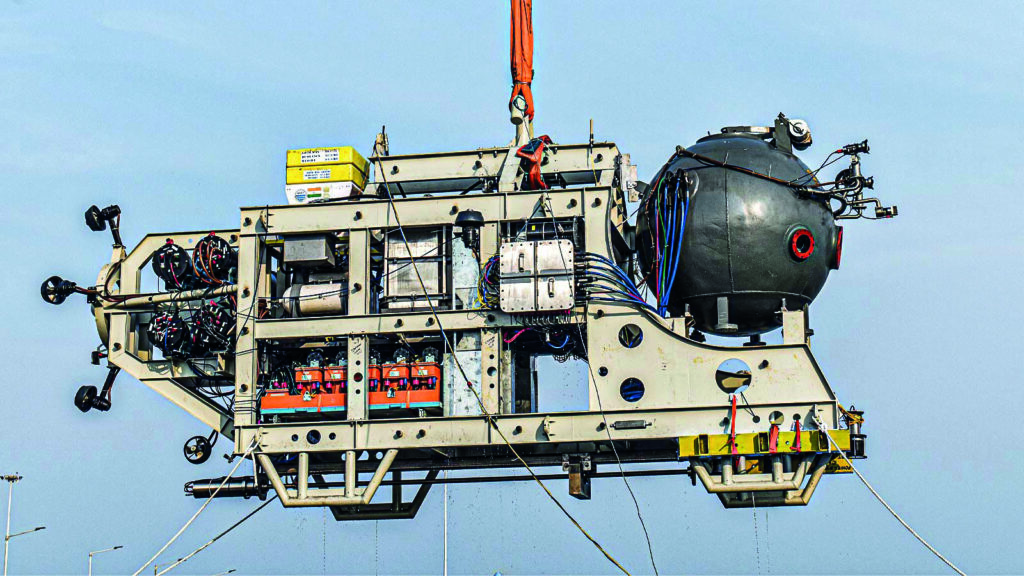
Manned underwater exploration has reached extraordinary depths not only through the efforts of scientists and engineers but also by individual explorers. In 2012, James Cameron, a celebrated Hollywood film director, piloted the Deepsea Challenger submersible to the bottom of the Mariana Trench’s Challenger Deep—about 10,908 meters below sea level—becoming the first person to make a solo dive to the ocean’s deepest known point. His mission demonstrated the potential of custom-built, one-person deep-diving vehicles for scientific exploration and high-resolution imaging. Later, in 2019, Vescovo’s DSV Limiting Factor of the Five Deeps Expedition broke multiple records by repeatedly descending to Challenger Deep and other oceanic trenches, reaching depths of nearly 10,935 meters. Unlike Cameron’s one-time descent, Vescovo’s missions emphasised repeatable, crewed access to the hadal zone, marking a transformative shift toward sustained deep-sea exploration and mapping of the Earth’s most inaccessible frontiers.
DEEP OCEAN MISSION
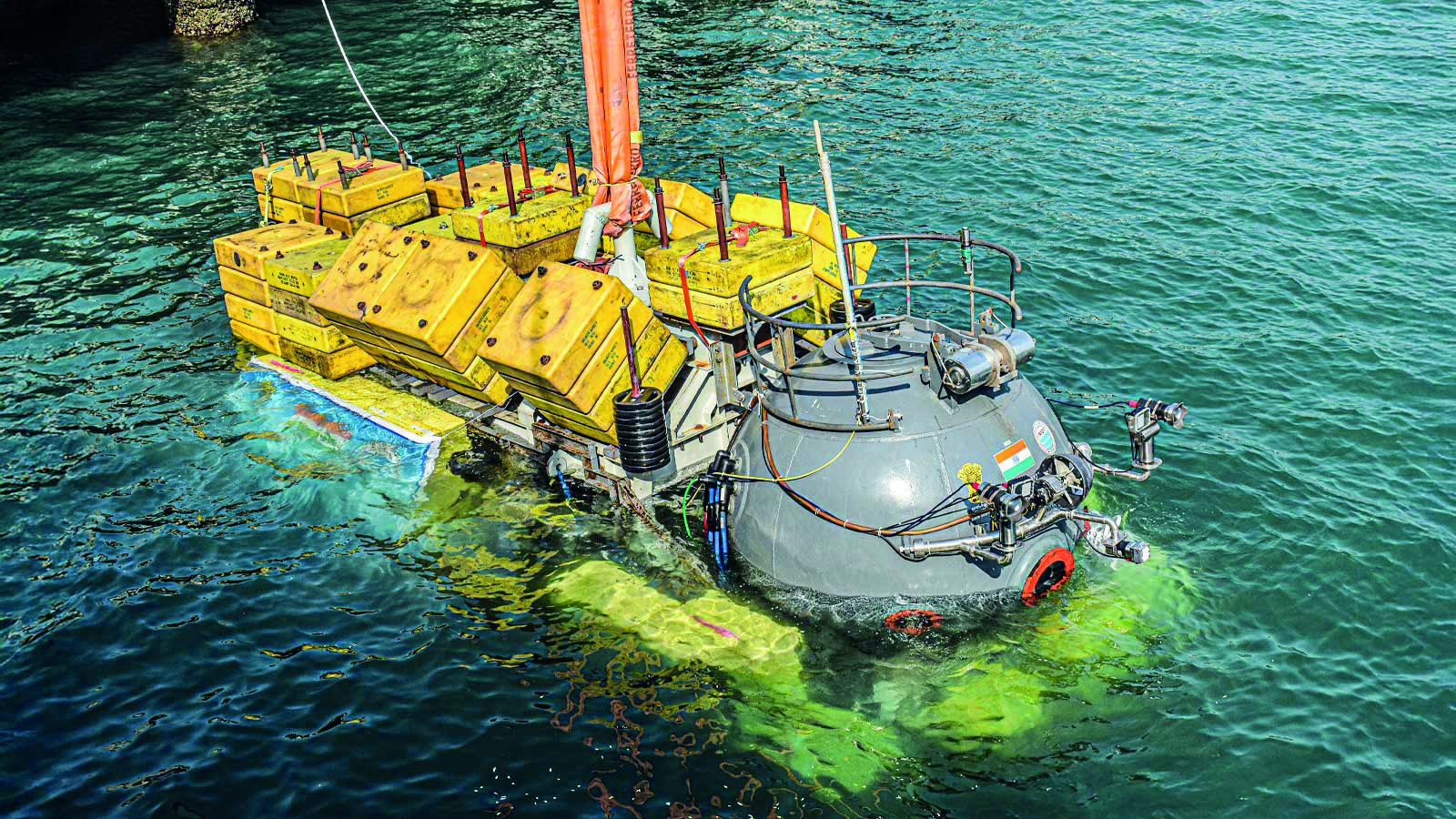
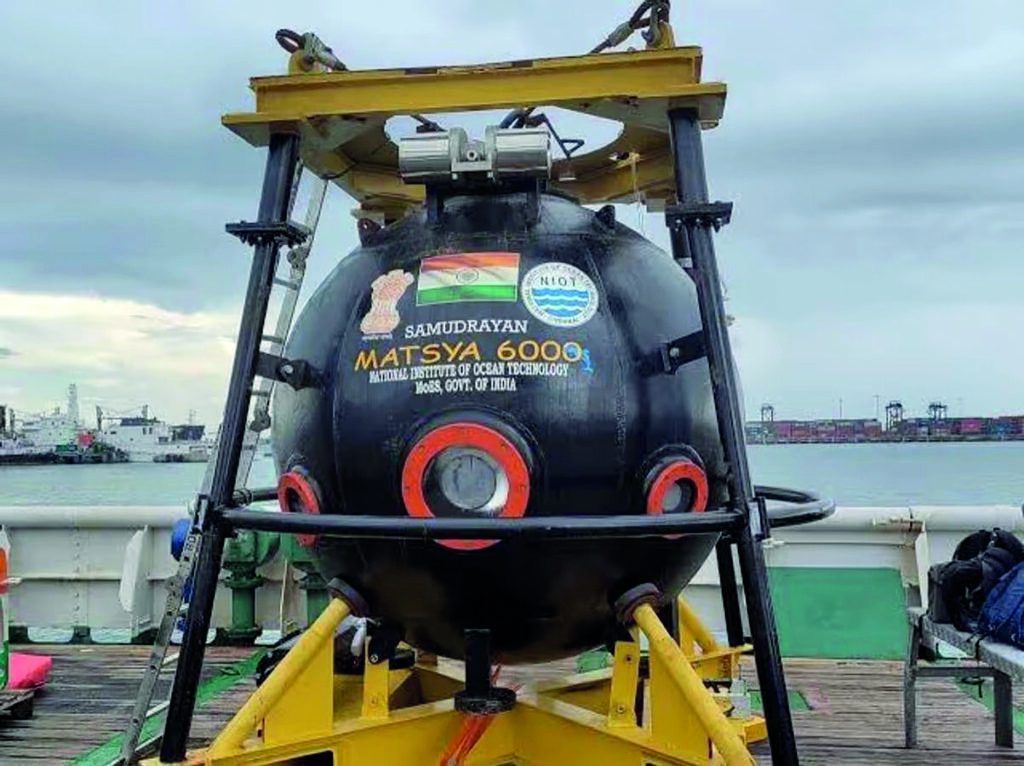
In 2021, the Government of India launched the Deep Ocean Mission, a major mission-mode initiative focused on both living and non-living ocean resources. The mission seeks to develop advanced technologies for ocean exploration and scientific understanding for national benefit. As part of this initiative, the Samudrayaan programme aims to design, develop, and deploy the manned submersible Matsya 6000, capable of carrying three aquanauts to a depth of 6,000 metres.
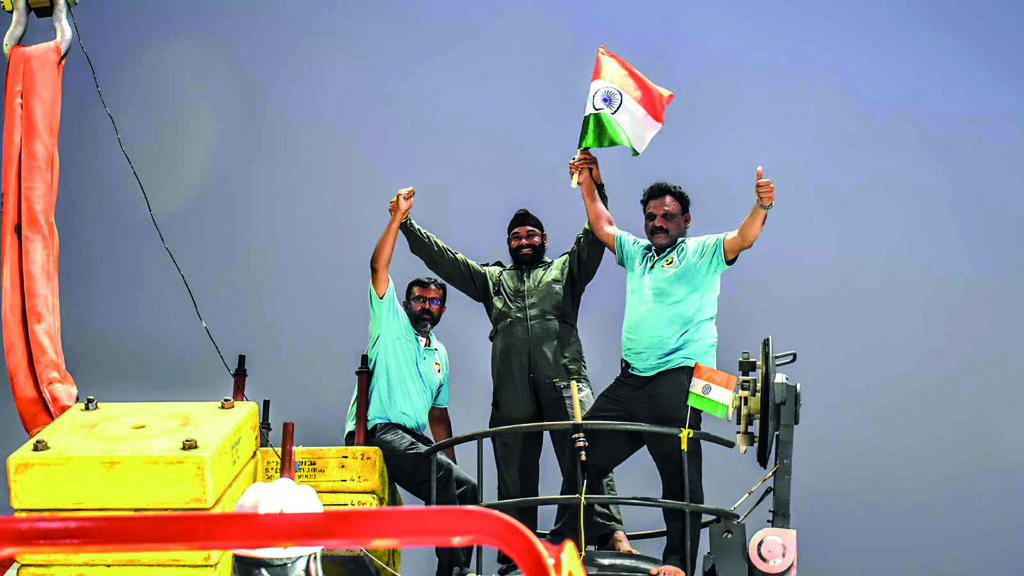
OBJECTIVE
The objective of Samudrayaan programme is to design, develop, and deploy a manned submersible (named Matsya 6000) capable of carrying three persons to ocean depths for direct observation and exploration. The human submersible is expected to be deployed:
• To facilitate deep-sea scientific research, including the study of:
– Marine biodiversity, ecosystems, and genetic resources.
– Polymetallic nodules, hydrothermal sulfides, and cobalt crusts.
– Deep-sea geology and oceanic processes.
• To enhance India’s technological capability in areas such as deep-ocean robotics, underwater materials, high-pressure systems, and ocean instrumentation.
• To support the Deep Ocean Mission, contributing to India’s Blue Economy initiatives by enabling resource exploration and sustainable utilisation of deep-sea resources.
SPECIFICATIONS
As the maximum depth available in the waters surrounding India is about 5400 metres and the underwater assets and resources fall within this range, the following broad specifications for Matsya 6000 have been arrived at:
• Design Depth: 6000 m (considered as full ocean depth)
• 3-member crew space with 3 View Ports
• Endurance: 10-12 hours. Emergency support: 72 hours
• Maximum vehicle speed in forward direction: 2.5 to 3 knots
• Personnel sphere material of construction: Titanium Alloy
• Weight approximately 20 tons
• State of the art instrumentation propulsion and navigation system
• Scientific Payload: 300 kg (internal + external)
• Digital and video cameras with appropriate lights
• Life support system (Oxygen supply and CO2 scrubber)
• Variable and fixed ballast system
• Jettisionable manipulators for sampling and intervention
• Third party certification from ABS, DNV, German Lloyds, etc., or equivalent
CRITICAL TECHNOLOGIES
Human submersible is designed to host three human beings in normal one atmospheric pressure by supplying oxygen for breathing and removal of carbon dioxide exhaled for a normal duration of 12 hours and 96 hours of emergency duration. They should be shielded from the huge crushing pressure of ocean waters above them. Each component should have a large margin above the maximum possible pressure and enough redundancies are to be provided. Each component and the complete system have to be certified by a competent agency for man rating. The following are the critical technologies involved.
• Design and classing of titanium alloy sphere rated for 6000 m
• Fabrication of human sphere of 2.1 m diameter and 80 mm thickness
• Electron beam welding, heat treatment and machining of titanium alloy hemispheres
• Acrylic View Ports rated for 6000 metres depth
• Life support systems
• Underwater telephony
• Launching, recovery and emergency rescue operations of deep sea vehicles
Under the aegis of Ministry of Earth Sciences (MoES), National Institute of Ocean Technology (NIOT) developed underwater vehicles like Underwater Mining Machine, Soil Tester, Underwater Coring System, Deep Water Work Class Remotely Operated Vehicle, Polar and Remotely Operated Vehicle, etc. for a maximum depth of 6000 metres. These vehicles have been used not only to explore ocean minerals and habitats but also for the search and recovery operations of last torpedoes and missing aircraft. This positioned MoES to endeavour to develop human submersible with the collaboration of other organisations like ISRO, Indian Navy, IITs, CSIR labs and Indian and international industries and certification agencies. The progress is overseen by a national committee involving experts from different scientific and technological organisations and the process is critically examined and certified by an agency with an experience of certifying human submersible for 12000 metres depth.
REVISITING DESIGN STRATEGY
After the mishap and tragedy of the OceanGate submersible Titan in 2023 which resulted in the tragic loss of human lives, the entire strategy has been revisited and reviewed. It is ascertained that the following precautions make Matsya 6000 intrinsically safe.
• Spherical human sphere
• Titanium alloy for construction
• Adequate redundancies for breathable air, power, emergency recovery plans and communications
• Rigorous review and certification
• Dedicated and man rated Launching Recovery System (LARS)
KEY MILESTONES AND TECHNICAL PROGRESS
Design stage has been completed and major subsystems under development and indigenous fabrication are underway. NIOT–MoES has mobilised efforts in metallurgy (titanium hull) in association with VSSC, ISRO. Many components like batteries and propulsion systems, buoyancy modules, control and communication systems, lights, cameras are being procured and tested. As a first step towards the goal, a 500-metre depth rated steel human sphere has been fabricated with the help of Indian industry and was fitted with life support and electronics for the control system tested at NIOT tank. Harbour trials were successfully conducted at Kattupalli shipyard of M/s Larsen & Turbo.
The pilot with adequate experience in operating manned submersibles has been recruited. Four NIOT engineers participated in deep water diving exploration operations onboard the Nautile, built and operated by IFREMER, France.
The next step is to conduct full-fledged trials up to 500 metres depth by 2026. This will prepare Indian scientists for the final leap or dive, to be precise, with full confidence.
STRATEGIC POSITIONING
India is on track to develop world-class deep-ocean manned vehicle resilience, reinforcing its maritime research and resource access capabilities.
This will catapult India to the elite club of nations, comprising USA, France, Japan, Russia and China to have manned submersibles which can dive up to 6000 metres depths.
CURRENT STATUS SUMMARY
By around 2027-28, India may deploy its first crewed deep-ocean dive via Matsya 6000 under Samudrayaan, unlocking new scientific frontiers, contributing to mineral resource surveys, biodiversity studies, and strengthening indigenous marine-tech capabilities. Attention now will need to focus on keeping to the schedule, ensuring safety and certification, and building associated infrastructure such as a support research vessel, launch/recovery systems, and deep-sea sensor platforms.
*The writer is Retired Director, MoES-NIOT (Ministry of Earth Sciences-National Institute of Ocean Technology, Chennai), and Professor of Practice at IIT Madras.