


The thick blanket of toxic smog chokes the National Capital Region again, forcing authorities to implement stringent emergency measures. The Air Quality Index (AQI) exceeded 400-mark, falling under the ‘severe’ category. In response, the Commission for Air Quality Management (CAQM) had to activate Stage III of the Graded Response Action Plan (GRAP) across the National Capital Region (NCR) on 11 November, mandating a complete ban on non-essential construction and demolition activities, restrictions on the operation of older-model BS-III petrol and BS-IV diesel four-wheelers, and the closure of stone crushers and industries using unapproved fuels. As the air remains toxic, the Supreme Court also sought reports from Punjab and Haryana on efforts to curb stubble burning, another major contributing factor to the winter smog. The crisis demands collective accountability and action for strict adherence to policy and governance without any gaps. An emergent action plan includes use of water sprinklers and mechanised road sweeping to mitigate dust.
Top culprits include vehicular emissions, construction dust and urban development, industrial emissions and seasonal stubble burning. Together these produce particulate matter, carbon black, sulphur dioxide, nitrogen oxides, carbon monoxide, and volatile organic compounds. These are responsible for respiratory and cardiovascular diseases, acid rains, production of ground-level ozone and smog, reduction in oxygen delivery in the body and related long-term toxicity. Children, elderly, and those with respiratory conditions face severe health risks. Visitors entering Delhi report symptoms like headaches, burning eyes, and breathing difficulty within hours of arrival.
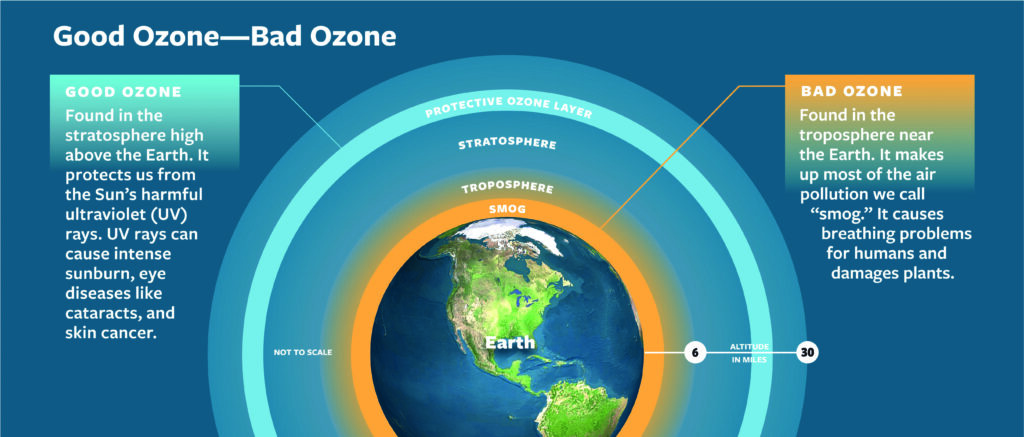
Major sources of industrial emissions in NCR are brick kilns, thermal power plants, small-scale industries, metal processing and electroplating units and chemical and paint industries. The nitrogen oxides and volatile organic compounds mainly produced from diesel generators, burning of rubber, plastic, or low-grade fuels; are the initiators of ozone formation. The properties of this chemical compound of three oxygen atoms, ozone, are quite different from the oxygen we breathe. It is highly reactive because of its structure. And this ground level ozone of the troposphere is bad ozone and is to be blamed for respiratory tract, eye irritation and other related disorders. Yeah, this is the ‘Bad Ozone’!
Choking of Capital by Annual Air Pollution Crisis Return is a reminder to control the emissions of industry, vehicles and stubble burning. The event has taken a cyclic mode that needs to be broken down otherwise many would suffer.
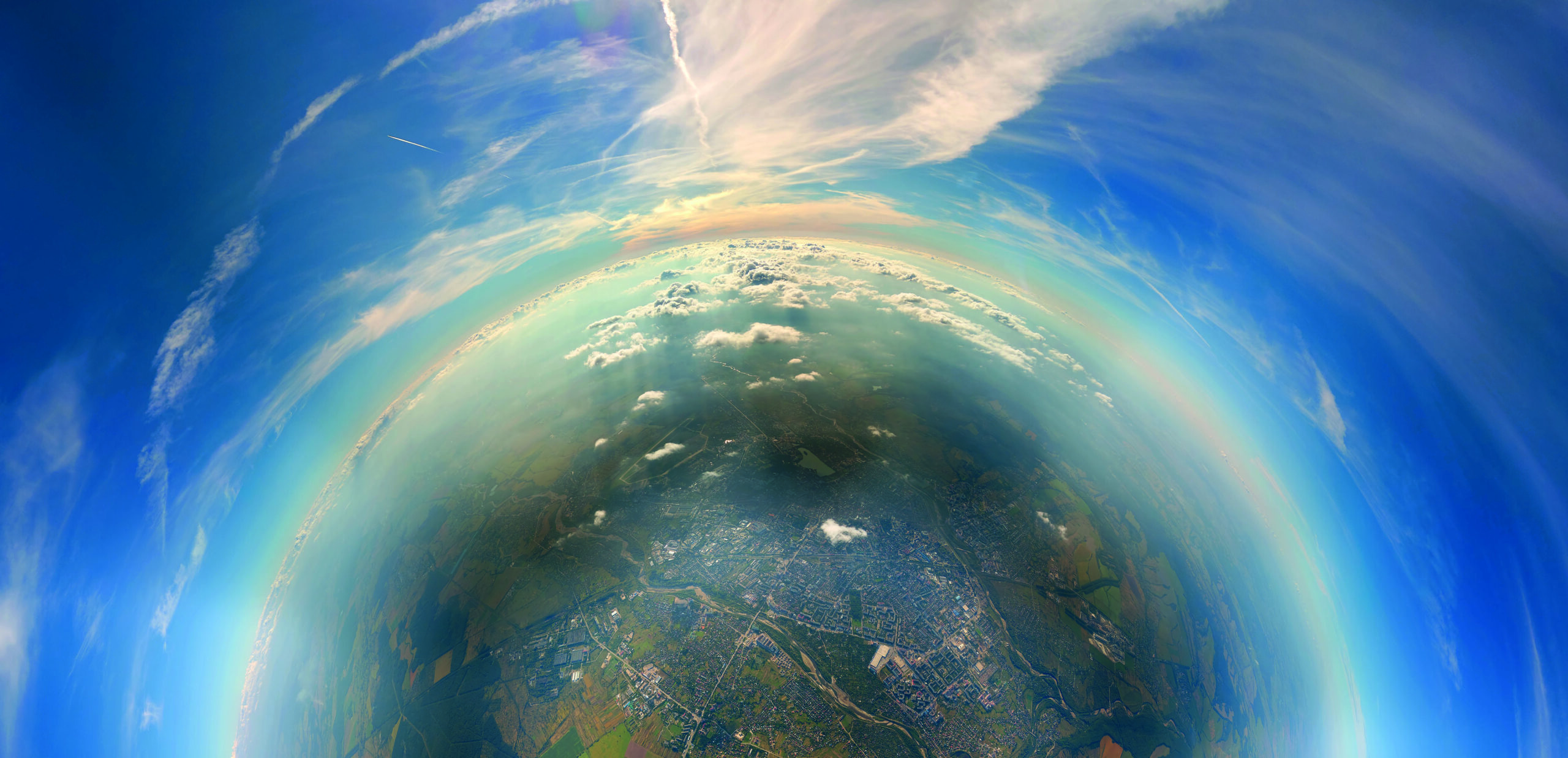
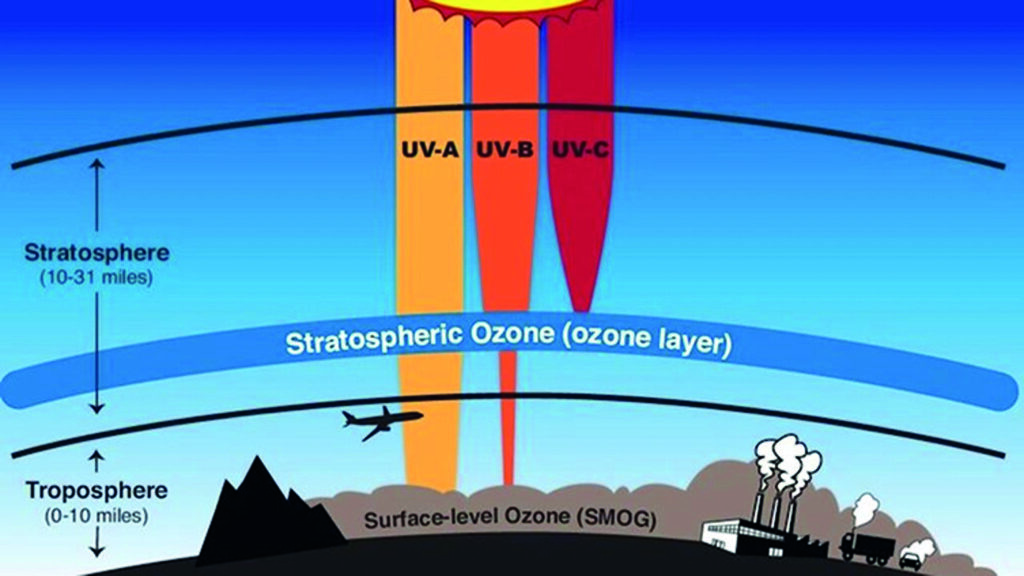
The same ozone which is dangerous in the troposphere makes a protecting shield of thickness 1/8 inches (if compressed) with about three ozone molecules for every 10 million air molecules. This ozone layer, located in the stratosphere at around ~15-35 km above the Earth’s surface and up to 50 km in some zones is the ‘Good Ozone’. It filters Sun’s harmful ultraviolet (UV) radiation and is thicker over the poles than the equator.
Initially observed absence of peaks at wavelengths below 310 nm in the spectrum of air in 1913 by French physicists Fabry and Buisson, on further analysis by British Meteorologist Dabson using Dabsonmeter, was attributed to ozone. Ozone monitoring devices were then installed all over the world during 1928- 1958 to measure it in ‘Dabson’ unit.
Images Courtesy: NASA
OZONE, OZONE LAYER AND ITS SIGNIFICANCE
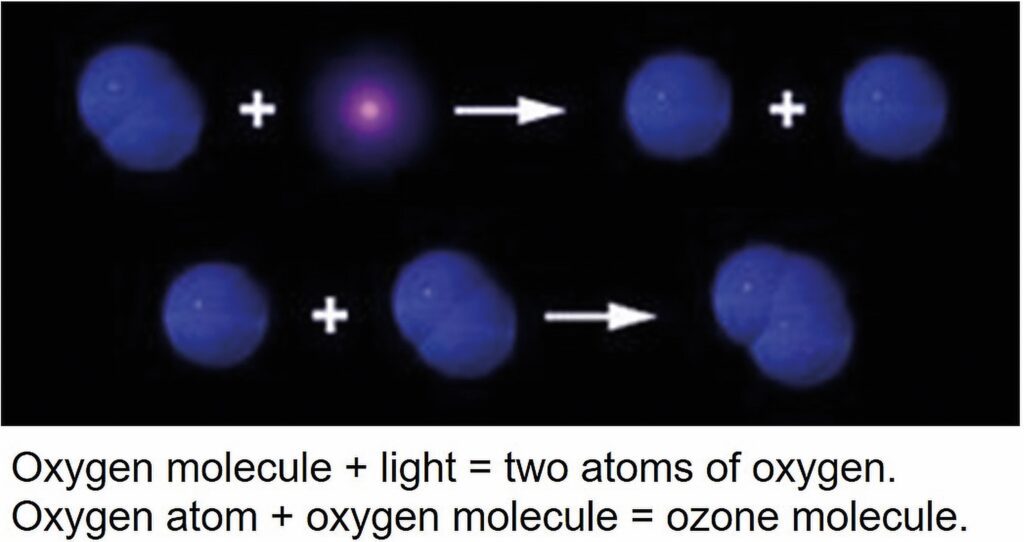
Ozone layer, a resultant of oxygen-ozone cycle with oxygen atom as an intermediate was described by Chapman in 1930.
The mechanism occurring in the stratosphere silently protects all living processes by absorbing highly energetic harmful UV-C radiations of wavelength 280-100 nm completely and 90% of UV-B radiations (315-281 nm).
EFFECTS OF OZONE LAYER DEPLETION
Ozone layer is not just a scientific curiosity. It is a vital shield that makes life on Earth possible. Its destruction would be like removing the planet’s protective armour. The ozone layer acts like the Earth’s sunscreen, absorbing most of the harmful ultraviolet B radiation. Without it, UV-B levels at the surface would skyrocket leading to skin cancer epidemic. UV-B is a major cause of melanoma and other skin cancers. Cataracts and other eye conditions would also become far more common due to increased UV exposure. Most importantly, excess UV-B can weaken the immune system, making people more vulnerable to infections. The environment will be drastically affected. The crops can undergo stunted growth, reduced yields, and damaged DNA. Phytoplankton, the base of the ocean food chain, is highly vulnerable to UV-B. Their decline would ripple through marine life. The effects are not limited to the living world, but the material world is also equally affected. UV-B accelerates the breakdown of plastics, wood, fabrics, and other materials, shortening their lifespan.
Furthermore, altered climate patterns and other drastic atmospheric effects will be observed. The ozone layer influences temperature distribution in the stratosphere. Its loss could disrupt global weather systems in total. Some ozone-depleting substances (ODS) are also potent greenhouse gases, and can result in compounding of climate change.
OZONE HOLE AND THE CULPRIT-CHLOROFLUOROCARBONS (CFCs)
All the stakeholders got worried when the ozone hole was discovered at the south pole and thus marked 16th September as the World’s Ozone Day as an annual reminder for our responsibility towards the atmosphere since the year 1995 as an outcome of Vienna Convention on Ozone Layer Depletion.
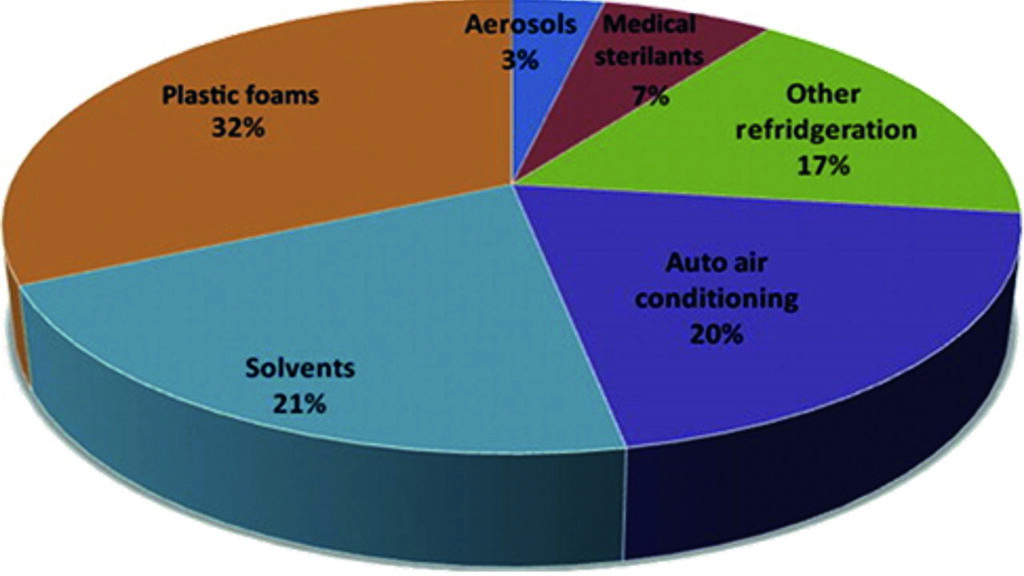
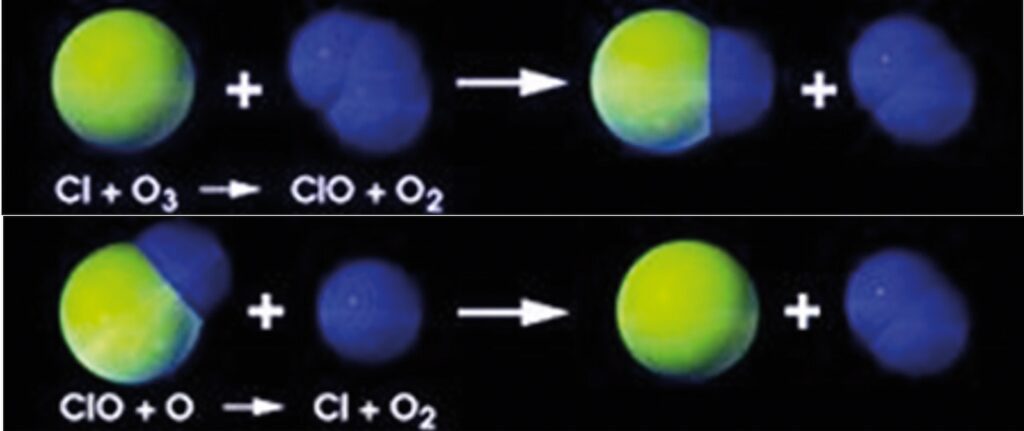
There exists a usual winter-spring cycle of ozone at the South Pole. In 1985, British scientists at the Halley Research Station in Antarctica reported alarming thinning of the Ozone layer, named as Ozone Hole, over the continent. In the year 1974, Chemists Mario Molina and Sherwood Rowland found that CFCs destroy ozone gas in the stratosphere (Nobel Prize, 1995). CFCs are the compounds mainly used in aerosol spray cans, Styrofoam preparation, air conditioner units and refrigerators, etc.
Degrading these substances naturally accounts for 17% of the chlorine and 30% of the bromine in the stratosphere. One chlorine atom can break apart 100,000 ozone molecules, and bromine is 40 times more destructive.
The ozone layer damaging effects of CFCs were emphasized to explore their Green alternatives and the focus shifted to Hydrofluorocarbons (HFCs) and Hydrochlorofluorocarbons (HCFCs). Although these had no ozone depletion potential, they are potent greenhouse gases, thus under the Montreal Protocol, as a part of the continuum strategy, are to be phased out. More environmentally benign Next-Generation alternatives such as Ammonia, Carbon Dioxide, and water are the ideal choice for the future. Technologies for their effective use are being developed. Hydrocarbons like propane, isobutane, and ethane are used in some applications.
INTERVENTIONS TO PROTECT OZONE LAYER
The Vienna Convention was adopted on 22 March 1985 where countries agreed to cooperate and participate in areas of scientific research, systematic observations, and information exchange on the effects of human activities on the ozone layer. The Montreal Protocol was laid on 16 September 1987 to set specific targets for phasing out ODS. Both the Vienna Convention and the Montreal Protocol achieved universal ratification, demonstrating a global commitment to ozone layer recovery and are among the first treaties in UN history to achieve universal ratification by all UN members.
Kigali Agreement 2016 was an international agreement as modification of the Montreal Protocol to phase down the production and consumption of HFCs by 2100. Additionally, COP to the UN Framework Convention on Climate Change (UNFCCC) mission is to limit global temperature rise to 1.5°C and achieve net zero emission by 2050.
INDIA’S COMMITMENT
India became a party to the Montreal Protocol in June 1992 and its amendments to meet the phase-out targets of all the ODS as per the Montreal Protocol Schedule. India is one of the first countries in the world to launch a cooling action plan in 2019, of 20 years’ duration. India ratified the Kigali Amendment in 2021, committing to a four-step phasedown with 10-20-30-80% reduction by the year 2032-2037-2042-2047.
INDIVIDUAL RESPONSIBILITIES
We have to own responsibility for both, to protect good ozone layer and prevention of bad ground level ozone. The collective efforts can certainly make a large difference. Selecting eco-friendly cleaning products, supporting ozone-friendly technology over products can be one aspect.
Aerosols, cleaning products, and refrigerants that contain CFCs or HCFCs should be avoided. While purchasing new refrigerators, air conditioners, or fire extinguishers, one must ensure that they do not use ODS. Proper maintenance for appliances to prevent leakage of refrigerants should be a regular feature. While disposing of old appliances, we must be sure that they will be disposed of properly so that the refrigerants do not leak into the atmosphere. Sharing common air conditioned places, switching off the devices when not in use, using public transport or walking or cycling, can also be our small contribution.
Alternative natural, non-toxic cleaning products or solutions like vinegar and baking soda instead of chemical-based sprays.
Planting trees helps absorb greenhouse gases and other pollutants, contributing to overall air quality.
Advocacy for the actions needed, spreading awareness, supporting government policies and international agreements that aim to phase out ozone-depleting chemicals can bring change.
Discussions only won’t serve any purpose. Timely attention, effective work plan and its execution to save climate from further damage (if possible to heal it) must be collectively worked upon by climate scientists, indigenous people, civil societies, business leaders, young people and governments.
‘NEED TO SAVE ENVIRONMENT FOR FUTURE GENERATIONS’
*The writer is a Professor in the Department of Chemistry, Kurukshetra University, Kurukshetra, and believes in the holistic way of teaching and has a strong inclination towards Indian Traditional Knowledge.