
Space Farming
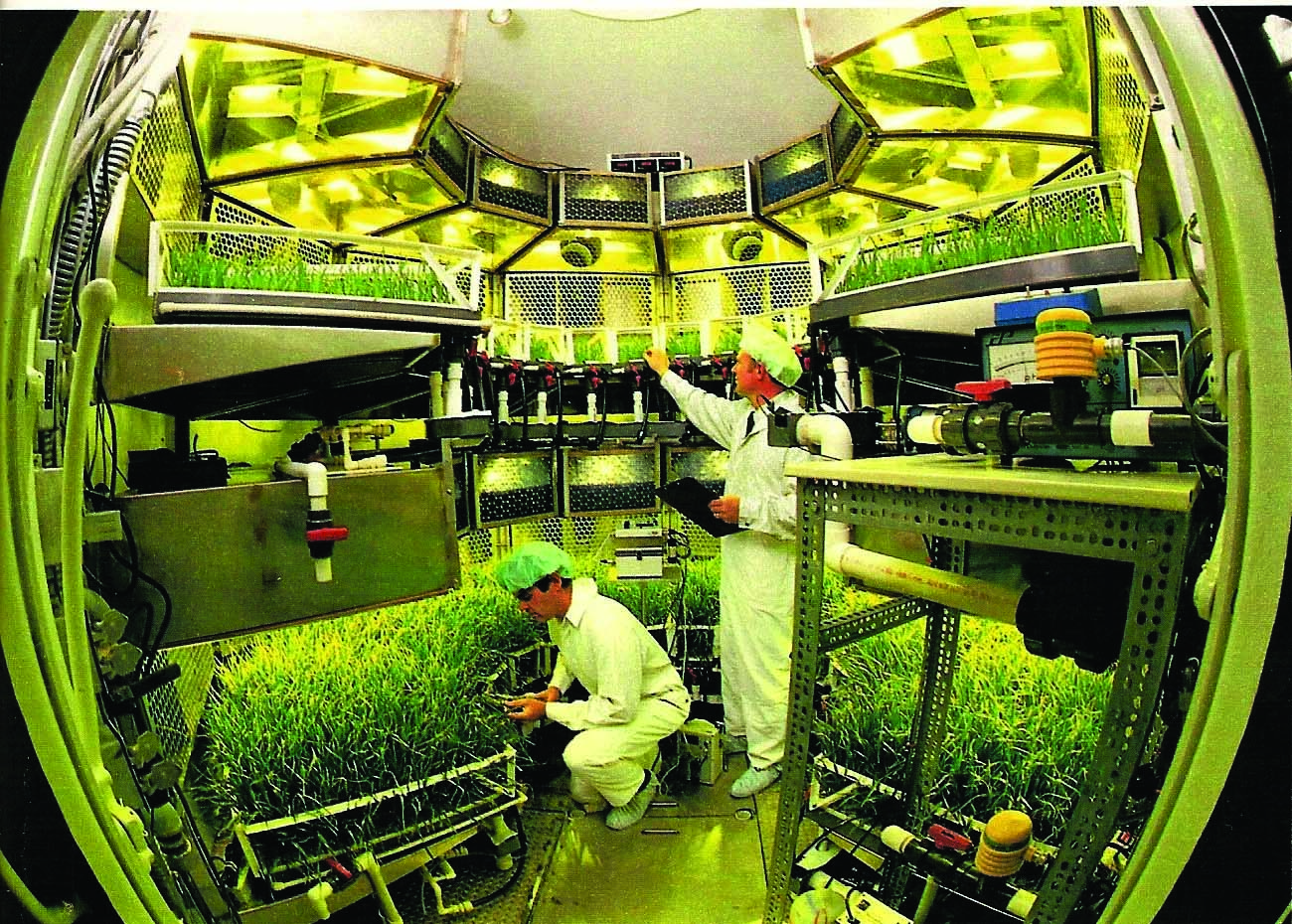
Image Courtesy: NASA
As India moves toward establishing its indigenous pace station, the Bharatiya Antariksh Station (BAS), and envisions to make human space travel a reality, we need to focus on how we are going to feed our future space colonisers. Consequently, space farming or space agriculture emerges not merely as an experimental curiosity, but as mission-critical infrastructure for sustained human presence in Low Earth Orbit (LEO) that would be needed for the success of future human space missions. It also becomes essential for reducing logistical dependence on Earth, enabling closed-loop life-support systems, and ensuring crew health, autonomy, and psychological well-being.
Unlike short-duration missions, sustained habitation aboard BAS will demand bioregenerative life-support systems in which plants play a central role—recycling carbon dioxide into oxygen, purifying water through transpiration, stabilising cabin humidity, and supplementing astronaut diets with fresh, nutrient-rich food. Space farming thus directly supports India’s long-term human exploration ambitions, including a future Indian landing on the Moon and deeper space missions, as articulated in India’s Space Vision 2047.
WHY SPACE FARMING MATTERS FOR LONG-DURATION HUMAN SPACEFLIGHT
Packing every meal for long-duration missions quickly becomes a challenge of mass, cost, storage, and nutrition. In long duration space missions, especially in inter-planetary missions, crews spend months or years away from the Earth. In such situations, reliance on pre-packaged food supplied from earth alone becomes impractical. We need to find a sustainable method for providing food to the astronauts and space colonisers. Rather than pre-packed foods, the astronauts prefer fresh fruits and vegetables grown in space. In a life that kept them aloof from mother earth, the freshness of plants makes them psychologically fit.
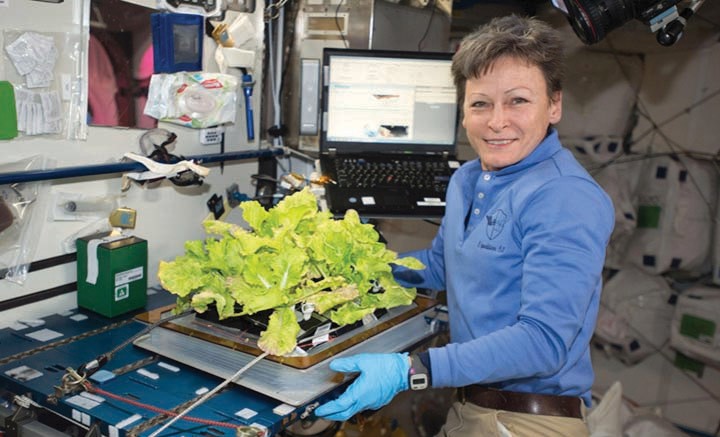
For future missions involving sustained habitation, including India’s proposed Bharatiya Antariksh Station (BAS), space farming will no longer be an experiment but an essential subsystem. Crops are increasingly viewed as infrastructure—biological components that recycle carbon dioxide into oxygen, purify water through transpiration, convert waste into usable biomass, and supplement crew diets with fresh nutrients that degrade in stored foods over time. As India advances toward long-term human presence in Low Earth Orbit (LEO) and beyond, agriculture in space becomes indispensable.
FROM SPROUTS TO SYSTEMS: WHAT WE’VE LEARNED ON THE ISS
NASA’s veggie garden compressed decades of know‑how into a carry‑on‑sized growth chamber that uses a clay‑based ‘seed pillow’ to meter water and oxygen around roots in microgravity, while magenta LEDs (red+blue) deliver photosynthetically efficient light. Veggie has grown romaine lettuces, cabbages, mustard greens, kales, and even flowers, with crew eating part of the harvest and freezing other samples for rigorous safety and nutrition analysis back on Earth. NASA’s plant‑research portfolio has broadened from “can a seed sprout in zero‑g?” to a full Space Crops roadmap covering growth media, crop genetics, horticultural methods, disease control, and integration with life‑support. A planned lunar surface study—LEAF (Lunar Effects on Agricultural Flora)—will probe how partial gravity and lunar day‑night cycles shape plant physiology, while the ISS experiment APEX‑12 tests whether boosting telomerase activity can protect plant DNA from spaceflight stressors.
A recent systems‑level review in Agriculture (MDPI) catalogs the intertwined stresses of growing beyond Earth: reduced or microgravity, high radiation, thermal swings, dust, low‑buffer regolith, constrained water and nutrients, altered plant physiology, and the need for tightly engineered closed‑loop operations. Because every subsystem affects the others, changing CO₂ setpoints, lighting spectra, or irrigation triggers can cascade into transpiration rates, habitat humidity control, nutrient uptake, and microbial stability, which is why space farms demand coordinated biology, environmental control, robotics, and AI. NASA’s primers compare the ISS (~0 g), Moon (1/6 g), and Earth (1 g) to underscore how irrigation, lighting schedules, and atmosphere management must be tuned to each environment’s sunrise/sunset cycles, radiation levels, and gravity.
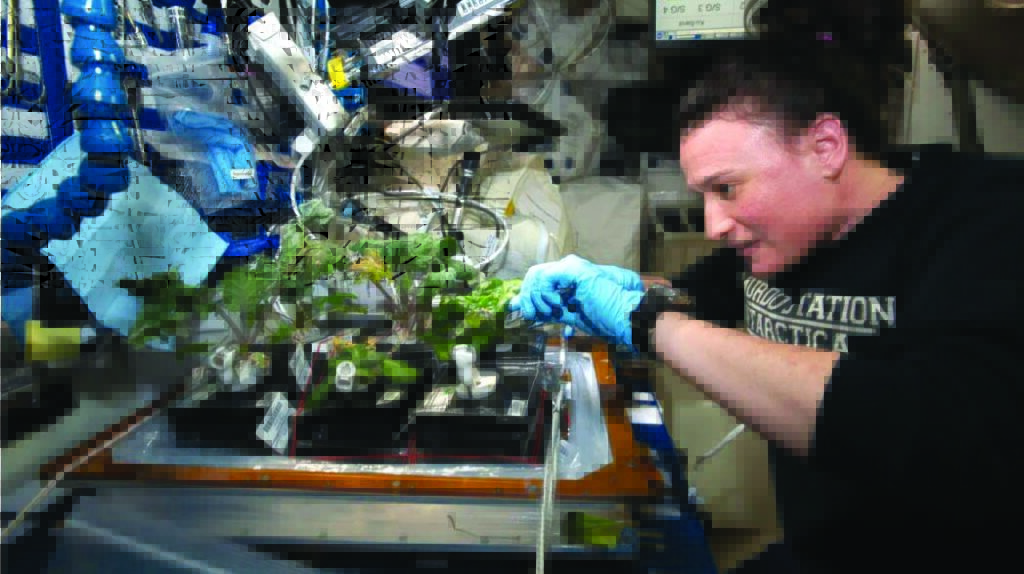
On Earth, gravity helps water drain and air rise; in microgravity, liquids bead and cling, and gases don’t separate, so roots can drown in trapped bubbles or desiccate unless water and oxygen are actively balanced at the root zone. Veggie’s solution—porous clay in seed pillows—spreads water and air uniformly around roots, while LED spectra favour red and blue wavelengths plants use most, making photosynthesis efficient per watt and simplifying heat removal from the habitat. On the Moon, multi‑day “nights,” radiation, and dust mean farms must be insulated, spectrum‑tuned, and power‑frugal; on Mars, partial gravity, CO₂‑rich air, and perchlorate‑laden regolith pose their own constraints, pushing designs toward shielded, sealed, hydroponic or aeroponic systems with careful nutrient dosing.
Healthy soils teem with microbes that cycle carbon and nutrients, but we know little about how these communities behave in orbit. NASA’s DynaMoS investigation compares microbe‑rich soils flown to the ISS with ground controls, testing how microgravity, altered gases, and radiation reshape community structure and metabolism—knowledge that could stabilise nutrient cycling in long‑lived space greenhouses. Biological controls will also be essential for pest management in closed habitats. USDA’s Agricultural Research Service (ARS) sent beneficial entomopathogenic nematodes to the ISS and found they can still locate and infect insect pests in microgravity—promising for pesticide‑free control—although nematodes that completed their life cycle in space struggled on return to Earth, a clue for planning multigeneration biocontrols away from home.
These insights are vital for future platforms like BAS, where India aims to utilise the unique microgravity environment of LEO for advanced scientific research and technology development. Long-term plant studies in orbit will enable Indian scientists to explore plant genetics, metabolism, stress responses, and reproduction under space conditions—knowledge that will directly support future Indian human exploration missions, including a planned Indian landing on the Moon, as envisioned in India’s Space Vision 2047.
SPACE FARMING: A FOUNDATION FOR BHARATIYA ANTARIKSH STATION
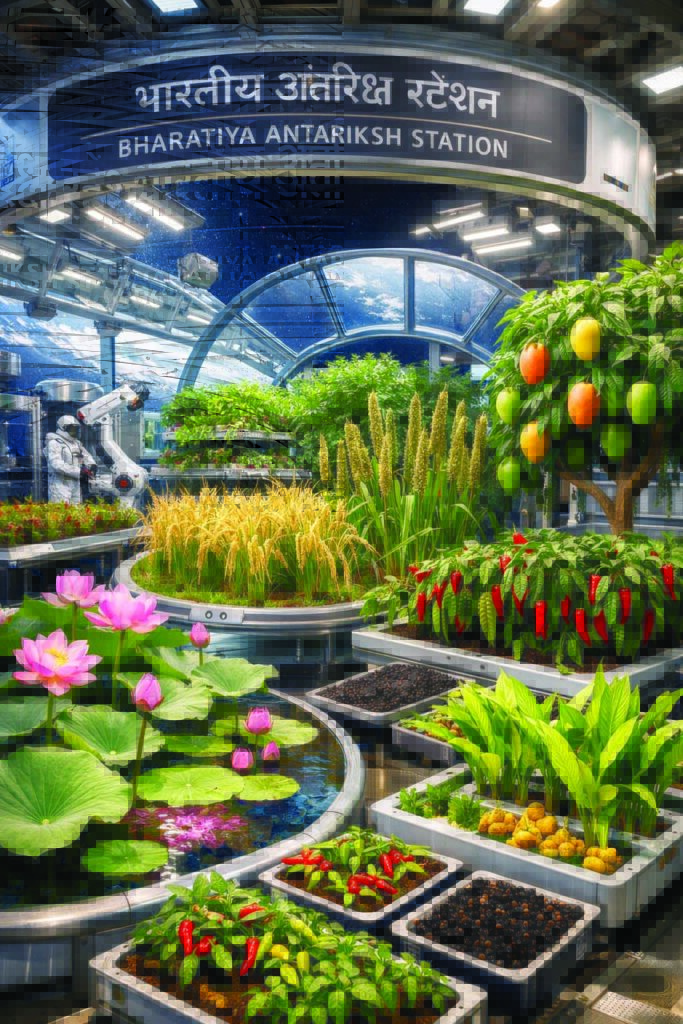
The Bharatiya Antariksh Station represents a remarkable journey in India’s space programmes. From short duration missions, we are moving towards the ambitious human spaceflight mission which will involve long term stay in space environment. In such an environment, space farming will play a pivotal role in ensuring sustained supply of foods for the astronauts. BAS is expected to host modular laboratories were biological systems, including plant growth facilities, can mature from small experimental units into semi-autonomous food-production racks.
All Images Courtesy: Dr Jyothish Madambikattil Sasi and Dr Biju Dharmapalan
The microgravity conditions aboard BAS will allow India to refine closed-loop life-support systems in which plants act as biological engines—producing oxygen, recycling water, stabilising cabin humidity, and providing fresh food. These capabilities will be crucial stepping stones for future lunar habitats and deep-space missions, where Earth resupply will be limited or impossible.
CROPS AND FUTURE OF INDIA’S HUMAN MISSIONS
ISRO’s Compact Research Module for Orbital Plant Studies (CROPS) marks the beginning of India’s first dedicated attempt to study plant growth in space. CROPS is designed as an airtight, unmanned mini-greenhouse that supports seed germination and early growth under microgravity conditions by maintaining proper temperature, humidity, gas composition, and water delivery.
Within the framework of the Gaganyaan human spaceflight programme, such experiments establish the biological foundation for longer missions. BAS represents the next phase of this continuum—where plant growth systems transition from short-term demonstrations to permanent station infrastructure. Each iteration brings India closer to reliable, scalable space agriculture.
INDIA’S FIRST CURATED CROP BASKET OF INDIGENOUS SEEDS FOR SPACE
India’s space biology research got a momentous when Shubhanshu Shukla visited ISS as part of Axiom-4 mission. During the mission he carried indigenous Indian crop seeds curated from various parts of the country. The initiative “Crop Seeds on ISS” spearheaded by the Space Biology Lab of the Indian Institute of Space Science and Technology (IIST), Thiruvananthapuram, represents India’s first systematic evaluation of native crop varieties in the space environment.
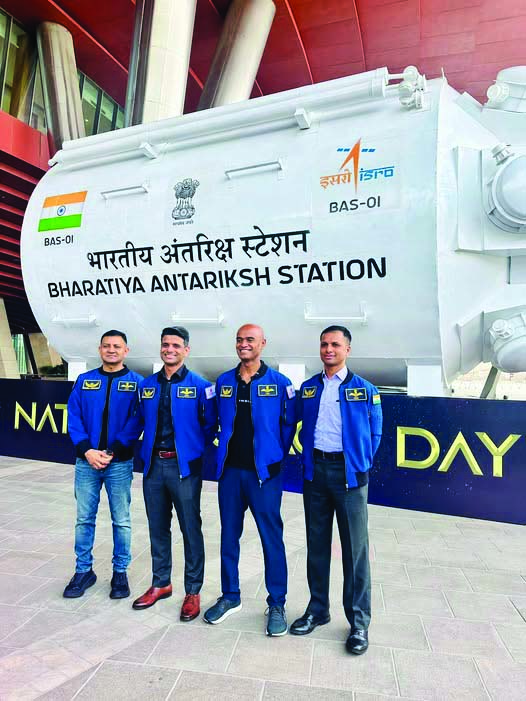
The seed payload included Jyothi and Uma rice varieties, Kanakamani (horse gram), Vellayani Vijay (tomato), Thilakathara (sesame), and Soorya (brinjal/eggplant). These crops were chosen strategically, reflecting a blend of nutritional value, agronomic resilience, short growth cycles, and cultural relevance. Rice and horse gram represent staple foods with high caloric and protein content, essential for future crew diets. Tomato and brinjal offer fresh produce rich in vitamins and antioxidants, while sesame provides oil-rich seeds with long storage potential.
Beyond symbolism, the experiment aims to generate empirical data on seed viability, germination behaviour, early developmental changes, and genetic stability after exposure to microgravity and space radiation. The findings of this research will assist us in crop selection and plant growth system design for the Bharatiya Antariksh Station. In effect, these seeds represent the first generation of potential ‘Indian space crops’, carrying India’s agricultural heritage into orbit.
FUTURE CROPS FOR SPACE AND LUNAR HABITATS
While leafy greens dominate early experiments, sustained missions aboard BAS and future lunar habitats will require greater crop diversity:
• Leafy greens: Spinach, amaranth, fenugreek (methi), lettuce, and mustard greens—fast-growing, nutrient-dense, and low-maintenance.
• Legumes: Dwarf varieties of peas and beans that provide protein and support nitrogen cycling.
• Cereals and pseudo-cereals: Compact forms of millets and quinoa, aligned with India’s traditional food systems and nutritional needs.
• Medicinal and functional plants: Tulsi (holy basil), turmeric, and ashwagandha—valuable for their therapeutic properties and stress-mitigating compounds.
• Fruit crops: Dwarf, continuous-flowering, or parthenocarpic varieties of tomatoes, peppers, strawberries, and apples, which enhance dietary diversity and crew morale.
Screening and selection of the crops for space requires systematic studies on genetics, controlled environmental studies and microbiome management.
SPACE FARMING AND INDIA’S SPACE VISION 2047
India aspires to become the leading spacefaring nation that can undertake human space missions, space manufacturing, and interplanetary missions. In order to become the global leader in human space missions, we need to develop a technology for sustainable agriculture in space. We need to build autonomous precision agriculture that maintains a closed-loop ecosystem. This is the first step to gain success in building human space colonies in space.
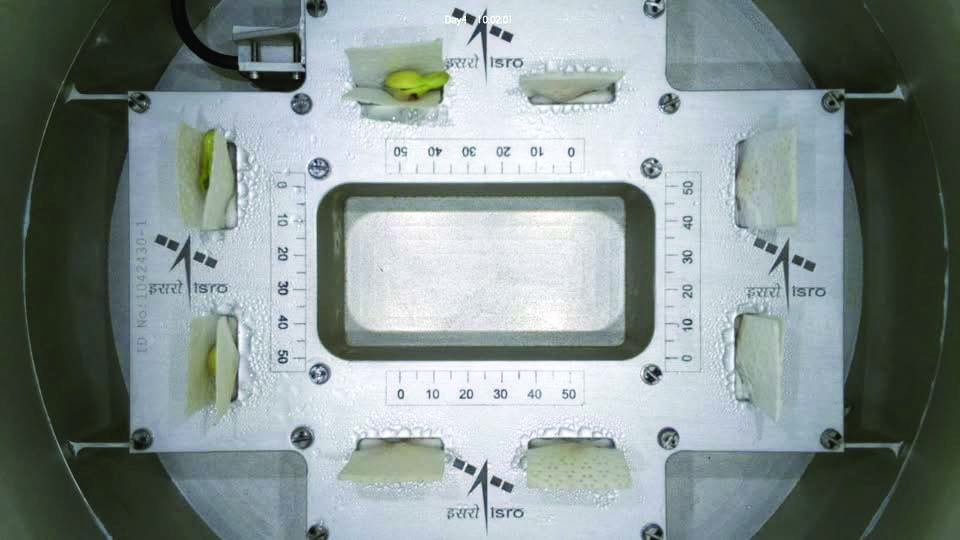
For the Bharatiya Antariksh Station, it will function as both life-support backbone and scientific frontier. From CROPS and Gaganyaan to BAS and future Moon missions, India’s human spaceflight programme will increasingly depend on plants as partners in survival.
As India moves toward the aspirations of Space Vision 2047, cultivating crops in orbit symbolises a deeper commitment—to sustainability, autonomy, and responsible exploration. Wherever Indians travel in space, life will follow, rooted in seeds that carry not only nutrition, but culture, continuity, and hope.
*Dr Jyothish Madambikattil Sasi is an assistant professor (RIC) at Garden City University, Bengaluru. He can be reached at jyothishmadambi@gmail.com. Dr Biju Dharmapalan is the Dean-Academic Affairs, Garden City University, Bengaluru, and is an adjunct faculty at the National Institute of Advanced Studies, Bengaluru. He can be reached at bijudharmapalan@gmail.com.