




Author: Dr Jyothish Madambikattil Sasi


Image Courtesy: Authors The origin of life remains one of the science’s most enduring mysteries. How did a planet filled with relatively simple chemicals cross the extraordinary threshold from chemistry to biology? How did molecules that could exist independently begin to organise, compartmentalise, process matter and eventually reproduce? The answer is unlikely to lie in a single dramatic moment when ‘life’ suddenly appeared. Instead, life probably emerged through a long sequence of chemical transitions in which increasingly complex molecules and structures acquired some of the properties we associate with living systems. Understanding that transition—from non-living chemistry to life-like organisation—is therefore…

Food is fundamental to life—nourishing body and soul—so how it’s accessed, prepared, and consumed can fundamentally change societies. The way we eat is undergoing a radical transformation, driven by a perfect storm of technological innovation, environmental concerns, and changing consumer preferences. From the fields to our forks, technology is disrupting every aspect of the food industry, promising a future where our plates are more sustainable, nutritious, and personalised than ever before. As many of us are looking for ways to eat a little better and tread a little lighter on the planet, it’s worth watching how food production is changing.…

Image Courtesy: Twitter In the current volatile geopolitical climate—marked by conflicts such as the Russia–Ukraine war and tensions in West Asia—energy insecurity has once again become a global concern. Among the most affected sectors is the cooking fuel, particularly Liquefied Petroleum Gas (LPG), which millions of households depend on daily globally. In India, where LPG is the backbone of domestic cooking, even minor disruptions can rip through the society. To understand the significance of this fuel, it is essential to trace the fascinating history of LPG and its bottling in cylinders that made its widespread use possible. A VALUABLE WASTE…
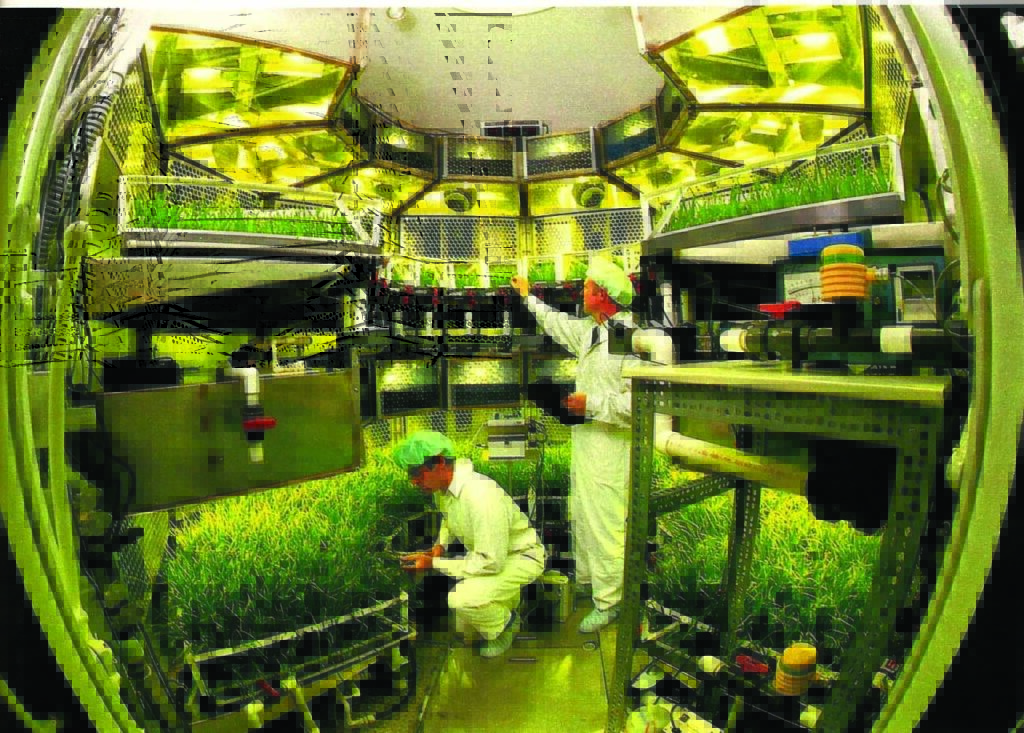
Space Farming Image Courtesy: NASA As India moves toward establishing its indigenous pace station, the Bharatiya Antariksh Station (BAS), and envisions to make human space travel a reality, we need to focus on how we are going to feed our future space colonisers. Consequently, space farming or space agriculture emerges not merely as an experimental curiosity, but as mission-critical infrastructure for sustained human presence in Low Earth Orbit (LEO) that would be needed for the success of future human space missions. It also becomes essential for reducing logistical dependence on Earth, enabling closed-loop life-support systems, and ensuring crew health, autonomy,…

In 1993, Steven Spielberg’s film Jurassic Park captivated audiences worldwide with its intriguing idea, the potential of resurrecting extinct species through advancements in genetic engineering. While entirely fictional, the film sparked curiosity and inspired scientific investigation into reviving ancient creatures like the woolly mammoth or passenger pigeon. Thirty years later, researchers are exploring what was once considered science fiction. Techniques like cloning, genetic engineering, and selective breeding are becoming part of fundamental conservation strategies. Several companies and institutions are at the forefront of these de-extinction efforts. Colossal Biosciences, a US-based biotech company, has gained wide attention for its ambitious projects…

The Thirty Meter Telescope (TMT) stands as one of the most ambitious and transformative scientific projects of the 21st century. TMT is set to be constructed on Mauna Kea, Hawaii, US, one of the premier locations on the earth for astronomical observations. The clarity and stability of the atmosphere above Mauna Kea facilitate incredibly detailed visual observations of the night sky, allowing TMT to capture the precise data required to test fundamental theories of physics and detect the faint signatures of life on distant worlds. Our perception of the universe is poised to experience a significant transformation as a result…