

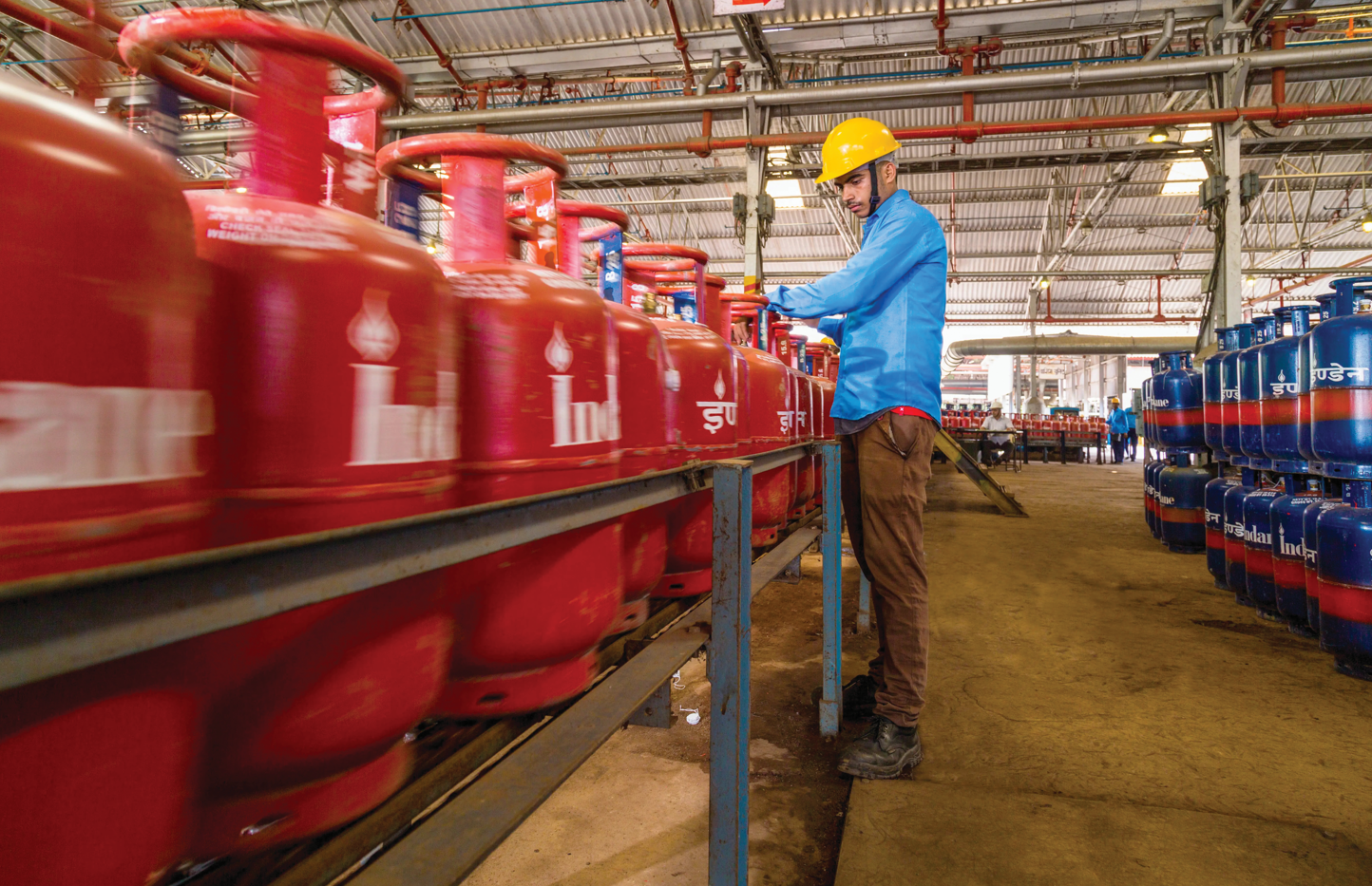
Image Courtesy: Indian Oil
With the US-Israel-Iran conflict bringing the Strait of Hormuz to a near-standstill, the narrow chokepoint through which nearly 20 per cent of the world’s LNG (Liquefied Natural Gas) trade transits, the Liquefied Petroleum Gas (LPG) supply in India has become a serious challenge to the government and a deep concern for cooking gas consumers in the country.
The ongoing West Asia conflict which has caused supply chain disruptions, has prompted India to create its own homegrown sustainable and eco-friendly cooking fuel. Now is the time that India must seriously focus on developing an indigenous cooking gas that can act as a substitute to LPG in the long run.
The US-Israel war on Iran that began on 28 February escalated the oil prices and constrained the supply chain after Tehran shut down tanker traffic through the Strait of Hormuz—a critical maritime chokepoint for 20% to 25% of the world’s seaborne crude trade.
Though India’s crude oil supplies have been hit, its import dependence is greater for LPG and LNG. The country depends on imports to meet around 60% of the fuel needs, and 90% of those imports came through the Strait of Hormuz.
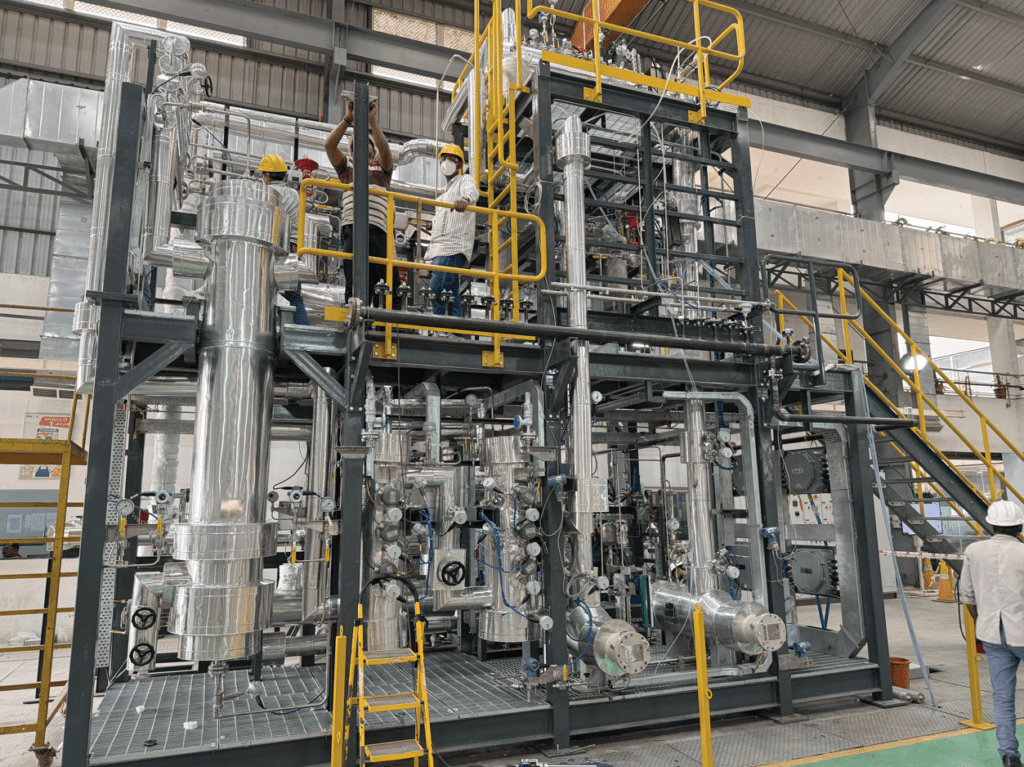
Image Courtesy: CSIR-NCL
Energy security has now become an emergency. Unfortunately, global chokepoints are threatening these energy supplies today; as a result, the supply chain of LPG—a widely used cooking fuel in India, which is also a big source of cooking fuel in rural India under the Pradhan Mantri Ujjwala Yojana (PMUY), has been facing pressure.
India is the world’s fourth-largest importer of Liquefied Natural Gas (LNG), and its demand for the fuel is growing fast. It is not entirely dependent on imports, though. In 2023, India’s total domestic gas production reached 36.4 billion cubic metres, meeting roughly half of the country’s gas demand. This domestic output meets roughly 50% of India’s total natural gas demand, with the other half imported primarily as LNG.
In a bid to reduce pressure on LPG supply, the quest is on to find an alternative that can be used either as a substitute for LPG or can be blended with it, to reduce the import burden.
One such promising contender is Dimethyl Ether—a clean-burning fuel with the potential to revolutionise cooking fuel and other sectors.
Under a pilot project, the scientists at the CSIR-National Chemical Laboratory (CSIR-NCL) in Pune have developed an indigenous technology to produce Dimethyl Ether (DME), that can be used as an alternative to LPG. This initiative may act as a small yet a significant breather for India’s heavy dependence on imported cooking fuel.
HOW DME CAN HELP AS AN ALTERNATIVE FUEL?
“The DME can be used as a substitute fuel for blending with LPG and to achieve this, there are three steps of progression. We have to move gradually to achieve 100% independence from LPG,” Dr Ashish Lele, director of CSIR-NCL, told Science India.
The first step is to blend 8% of DME with LPG like in the case of petrol, where ethanol is blended. In this case, no change in LPG infrastructure—such as the cylinders, gaskets, regulators, hose and burners—is required.
With this 8% blending, the country can save two million metric tonnes of LPG import, and to achieve this, 5000 to 7000 metric tonnes of DME needs to be produced per day.
A mere 8% blending of DME with LPG would amount to annual forex savings of Rs 9500 crore. Interestingly, replacing 8% LPG by DME to cater to the 10.50 crore gas connections under the PMUY would lead to 1300 tonnes per day DME production capacity.
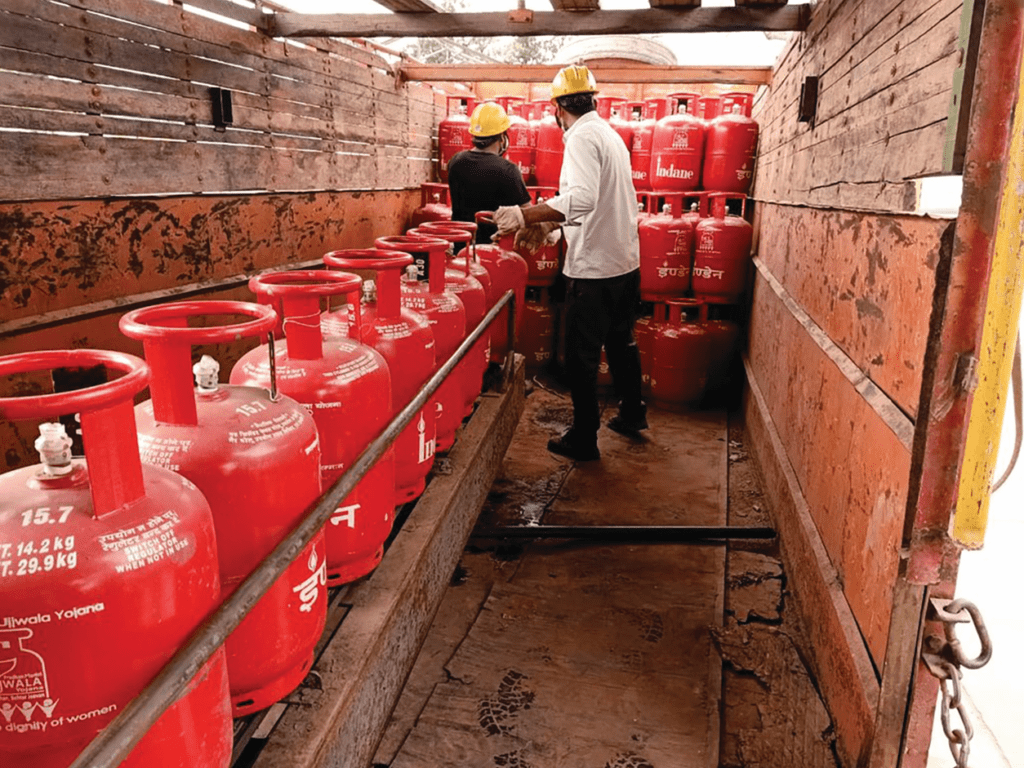
Image Courtesy: Indian Oil
LPG STAT IN INDIA
India— World’s sixth largest
LPG producer
India — third biggest LPG
consumer
Annual Consumption
— 33 million tonnes
Share of Domestic Production
— 13 million tonnes
60% — India’s import
dependency
90% — of these imports came
through Strait of Hormuz
The second step is to blend 20% DME with LPG, which is permissible as per IS standards. This is similar to the case of petrol, where 20% ethanol is added to it.
The scientists at CSIR-NCL believe that with the blending of 20% of DME, the country can save up to 4 MT of LPG import.
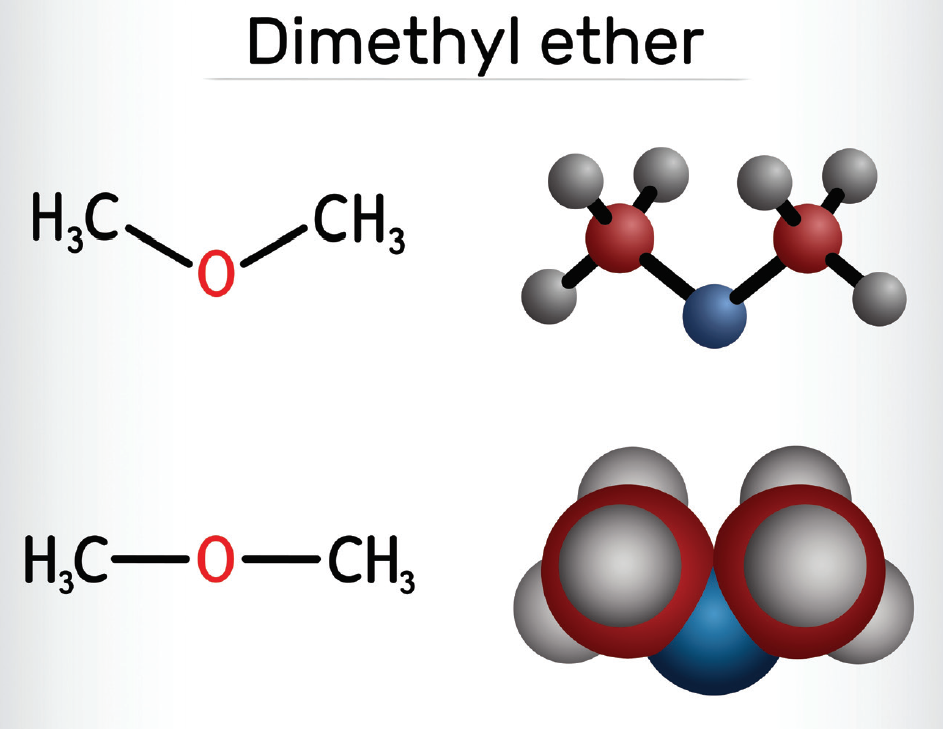
The third and the last step, which is a long-term plan, is to replace LPG 100% with DME. In this case, the stove burner and the gasket inside the regulator need to be changed.
“It is a long-term process and we may not need 100% replacement,” said Dr Lele.
IS DME SAFE?
“DME is absolutely safe for the consumer. We have got DME tested at LPG Equipment Research Centre (LERC), a government laboratory in Bengaluru, and the report is positive. It burns cleaner, emitting minimal amounts of soot, Nitrogen Oxides (NOx), Sulphur Oxides (SOx), and particulate matter. Furthermore, DME exhibits thermal efficiency that is comparable to traditional fuels, making it a viable substitute,” said Dr Lele while discussing the pilot project.
DME can be blended with LPG over a wide range, potentially reducing India’s dependence on LPG imports. The Bureau of Indian Standards (BIS) has established IS18698:2024 for up to 20% blending of DME with LPG for domestic, commercial, and industrial use.
USES OF DME
Besides blending DME with LPG for cooking fuel, it can also be used as certified automotive fuel (IS 16704:2018). According to CSIR-NCL, it can replace ozone-depleting chlorofluorocarbons (CFCs) as a propellant in aerosols. Furthermore, DME serves as a valuable chemical building block. It can be a key intermediate in the production of essential chemicals like lower olefins, dimethyl sulphate and methyl acetate.
FROM LAB TO LIFE: SCALING UP THE INNOVATION
CSIR-NCL has developed a patent protected DME production process technology that utilises an indigenously invented highly active, selective and cost-effective catalyst, ensuring efficient conversion of methanol to DME.
Headed by Dr Thirumalaiswamy Raja, Chief Scientist, Catalysis Division at NCL, the research team began integrating catalyst chemistry with reactor engineering—an approach that later became the hallmark of this technology. The novel operational philosophy of CSIR-NCL’s technology allows production of DME at 10 bar pressure with minimal opex penalty so that it can be directly filled in LPG cylinders.
Image Courtesy: CSIR-NCL
This technology has already been successfully scaled up to a pilot capacity of 250 kg per day.
CSIR-NCL has further developed a burner prototype that can work on flex mode, from 100% LPG to 100% DME and all the compositions in between. This patented burner design has been tested for its efficiency at the LERC.
“There are four to five companies who have shown interest in setting up of plants and talks are on with them. The next big step will be production of 2500 kg per day in future,” said Dr Lele.
FROM RESEARCH TO COMMERCIALISATION
CSIR-NCL in collaboration with a processing engineering partner is ready to scale up the technology to an industrial scale demonstration plant of 2.5 ton per day within six to nine months. The demonstration plant would clear the way for setting up commercial plants of 500-1000 tonnes per day capacity.
CSIR-NCL is keen to explore partnerships with major oil PSUs and bioenergy companies for commercial scale production.
CHALLENGES IN IMPLEMENTATION OF DME PROJECT
The implementation of DME project developed by CSIR-NCL has its own set of challenges.
First, approval is needed from the Ministry of Petroleum and Natural Gas (MoPNG) for blending DME in LPG cylinders.
Second, according to industry experts, so far price fluctuation of methanol is a challenge, if imported methanol is used. Here it is worth mentioning that methanol is the primary raw material for producing DME, which is produced indirectly through the catalytic dehydration of methanol or directly from synthesis gas (CO + H2). India’s current methanol production capacity is limited, at approximately 0.7 to 1 million metric tonnes (MMT) per annum, but the country has vast potential to scale this up to 20 MMT in near future by utilising available resources such as coal and biomass.
Third, financing a demonstration scale plant had been a problem in the past, which is not the case with NCL now. “We’ve in-principle approval for the same,” Dr Lele informed.
A PAST INITIATIVE THAT NEVER TOOK OFF
It was in 1955, the then director of Regional Research Laboratory, Hyderabad (RRLH), now CSIR-Indian Institute of Chemical Technology, Dr Syed Husain Zaheer, who later became the director-general of CSIR submitted a plan to Prime Minister Jawaharlal Nehru for a national gas grid. As per the plan, the fuel gas produced from gasifying of coal, would be supplied through pipelines to domestic and industrial consumers — similar to today’s piped cooking gas. It was named as ‘Town Gas Supply Scheme’ for Hyderabad.
The technology broadly involved gasifying coal using high pressure to form hydrocarbons, and oxygen was used to maintain a high thermal efficiency. The sulphur compounds were removed from gas stream and the gas was further cleaned using water to remove particulate matter.
Image Courtesy: Shutterstock
Dr Zaheer as CSIR director-general wanted to develop a pilot plant for this project at RRLH. Besides other policy factors causing impediments, the 1962 and 1965 wars acted as severe roadblocks to this project.
According to a news story in The Hindu, the RRLH in 1972, received a go-ahead in the coal gasification project. But by the time RRLH erected the pilot plant, the technology had moved to next level. The pilot plant was used as a test bed for research on Integrated Gasification Combined Cycle. The town gas project of supplying piped gas to Hyderabad households didn’t happen; instead, it was used to run a power plant for generating electricity.
INDIA’S AMBITIOUS MISSION
The National Coal Gasification Mission which was launched in 2021, aims to gasify 100 million tonnes of coal by 2030. It will be pivotal in strengthening India’s energy security, reducing import dependence, and supporting industrial growth.
“Research, Development, Demonstration and Deployment (RDD&D) of indigenous technologies that are critical to India has become absolutely imperative if we want to achieve the dream of Viksit Bharat and place ourselves in the comity of developed nations. Funding for chaperoning technologies across the valleys of death requires talent, trust and will. We have no dearth of the former. We need to strengthen the trust factor, which is necessary for collaborations and financing of patient capital. We also need the will to overcome all difficulties and succeed,” asserted Dr Lele.
BEACON OF HOPE FOR A SUSTAINABLE FUTURE
CSIR-NCL’s DME technology offers a compelling vision for a cleaner and more sustainable future. By harnessing this innovation, India can achieve energy independence, reduce reliance on fossil fuels, and contribute to a cleaner environment. The widespread adoption of DME has the potential to transform various sectors, from transportation and cooking to power generation and chemical production. With continued research, development, and collaboration, DME can pave the way for a more sustainable and prosperous future for India and the world.
“This technology could help reduce the country’s reliance on imported LPG while supporting India’s push for energy self-reliance and support the government’s broader goal of Atmanirbhar Bharat to strengthen domestic energy capabilities,” added Dr Lele.
*The writer is Editor, Science India.