



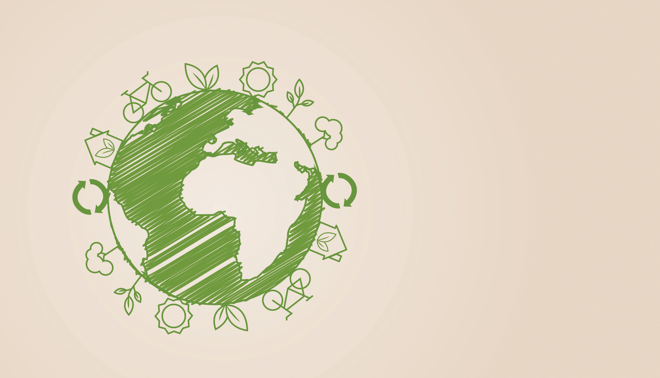
Nowadays, when everyone craves a little appreciation, let us welcome ourselves and give us a standing ovation for the revolutionary achievements during the Industrial 1.0 to 5.0 by working tirelessly. But wait! Look around, we at the same time sabotaged Earth’s health. A time to rethink as we replaced blue skies with grey filters of smog, water contamination factories everywhere have transformed rivers into chemical cocktails, pumping out greenhouse gases, industrialisation has gifted Earth a free heating system where global warming comes as a subscription service nobody asked for, and above all, biodiversity reduction with forests and animal ecosystems are being streamlined right out of existence, thinking them as clutter with efficiency at its best! Urban overcrowding and waste mismanagement have been making cities masterpieces of smog, noise, and garbage, a true triumph in making human habitats as stressful as possible.
OUR PLANET IS IN DEEP PERIL
Glaciers retreat, oceans rise, and forests fall silent under the relentless march of human progress. Earth Day, once a symbolic observance, an annual reminder, now stands as a planetary alarm. Scientific reports warn of climate tipping points where carbon thresholds are breached, biodiversity is collapsing, and ecosystems are unraveling. In these messy times, Earth Day no longer remains a commemoration but requires a call to action exigently, urging humanity to rethink its relationship with the planet.

Image Courtesy: Flicker
Earth Day was initially founded by US Senator Gaylord Nelson (first observed on 22 April 1970) as their National ‘Environmental Teach-in’ Day to raise awareness about pollution and environmental degradation. Approximately 20 million Americans constituting about 10% of population participated in rallies, marches and cleanup activities across the country. Denis Hayes, the original national coordinator of the event, expanded the celebrations of Earth Day to global level in 1990 by mobilising 200 million people in approx. 141 countries. And in 2009, United Nations officially designated April 22 as the ‘International Mother Earth Day’.
This insight has consistently been accessible within ancient Indian texts. ‘Mata bhumih putro aham’ (Atharvaveda 12.1.12), means nothing other than that ‘The Earth is my mother and I am her son’. The Yajurveda too contains reference (9.22) for the reverence of Mother Earth: ‘Namo Matre Prthivye, Namo Matre Prthivyah’.
THE EARTH’S CALL
According to the Intergovernmental Panel on Climate Change (IPCC, founded in 1988), global warming must be limited to 1.5°C above pre-industrial levels to avoid catastrophic consequences. The Paris Climate Accord, a legal binding international treaty adopted in December 2015 at COP21 in Paris, was aimed at limiting global warming to well below 2°C, with efforts to cap it at 1.5°C. Though realized long ago, the World Meteorological Organization reported that 2023 was the hottest year on record, with average global temperatures nearly 1.45°C above pre-industrial levels.
Global glaciers are melting at an accelerating rate, losing approximately 6,542±387 Gt of ice between 2000 and 2023, contributing significantly to sea-level rise. Annual mass loss increased by 36% between 2000–2011 and 2012–2023 (World Meteorological Organization (WMO), ESA (European Space Agency) Data). The highest annual losses, exceeding per year, occurred in four years between 2019 and 2023. This widespread retreat and increased frequency of Glacier Lake Outburst Floods (GLOFs) and ice-patch collapses are driven by a rise in air and ocean temperatures. Himalayan glaciers are also retreating at the rate of 15-20 meters per year and are expected to lose up to 75% of their volume by 2100. This will largely affect long-term reduction in water supply for over 1.3 billion people dependent on Himalayan rivers.
Global greenhouse gas emissions reached roughly 53.2 Gt CO2 eq in 2024 and Global fossil CO2 emissions have increased by over 70% since 1990. China, the world’s largest emitter, produces over 25% of global emissions, followed by the U.S. and India.
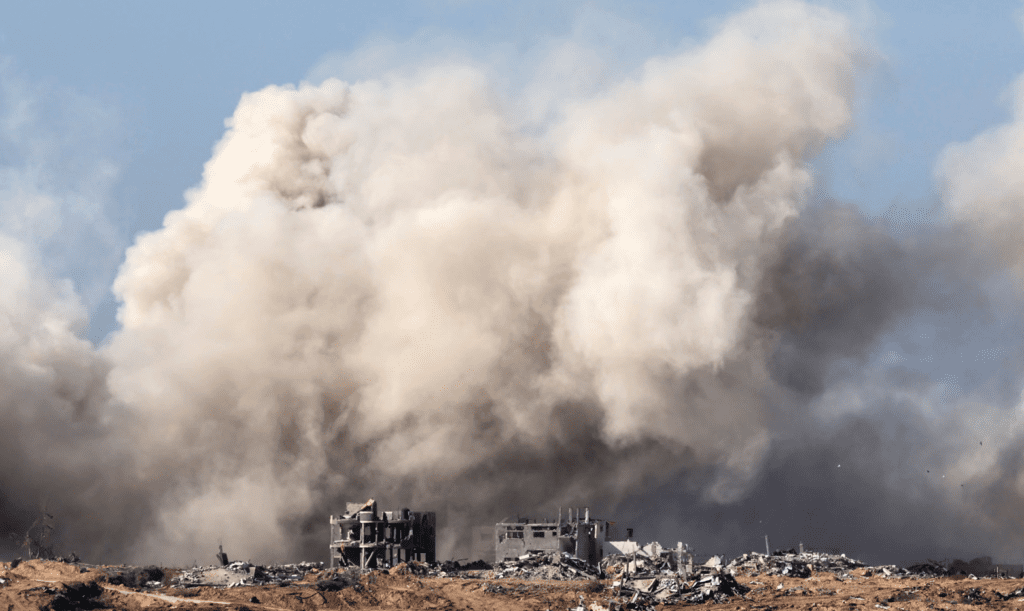
Image Courtesy: Twitter
For whatever intertwined reasons, wars are going on globally, and their emissions have had immense effect on climate catastrophe. An article published in One Earth suggests that carbon emissions exceeded 30 Mt only from Israel-Gaza conflict, and since last five years, three-four wars of same intensities or higher have been or are going on. Militaries are estimated to be responsible for approx. 5.5% of global greenhouse gas emission. During wars, other contributing disastrous impacts include reconstruction emissions, destruction of carbon sinks, industrial and energy infrastructure destruction, increased use of polluting energies (diesel), long term toxic legacies and ecocide remnants that affect the ecosystem for generations. How far is it appropriate to exhaust natural resources in the battle for supremacy? To tackle the climate crisis, these wars have to stop and other solutions to resolve the conflicts should be explored. The climate cost of wars should no longer be overlooked.
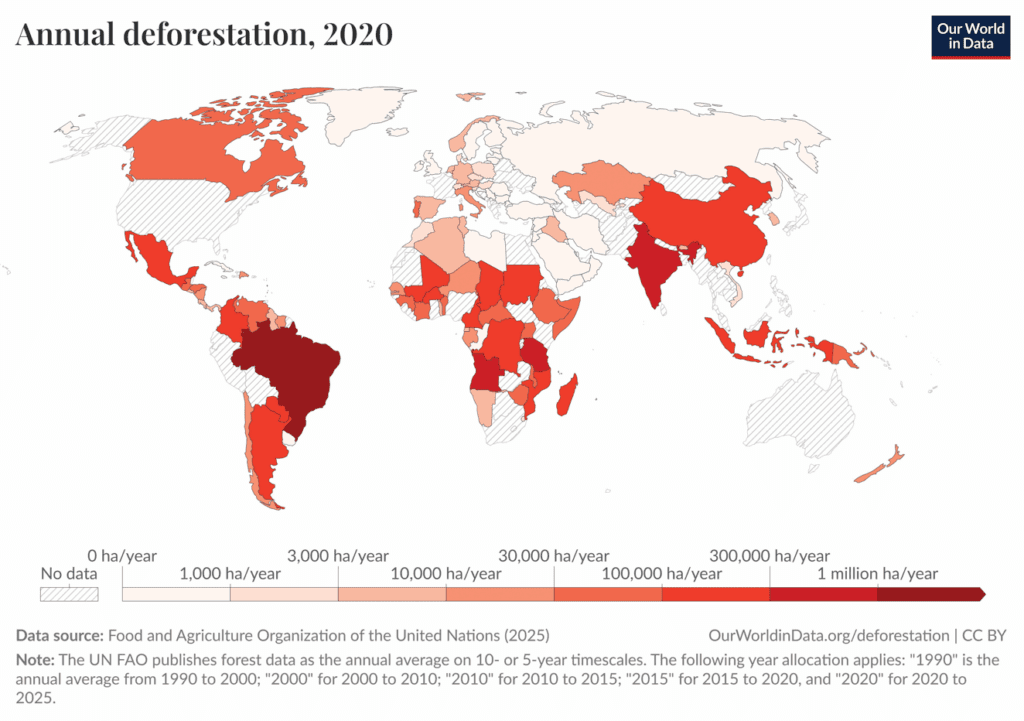
The world loses almost six million hectares of forest each year due to deforestation. That’s like losing an area the size of Portugal every two years. UN Environment Program (UNEP) has warned about accelerated biodiversity loss, with one million species at risk of extinction. In the past 50 years, some species have already gone extinct.
Earth Day, therefore, is not merely about awareness; it is about the survival of not only humans but of the ecosystem too, particularly when we have monitored the devastating effects with developed technologies.
MONITORING TOOLS
Modern science provides us with tools to measure and mitigate damage. Satellites like NASA’s Landsat series, ESA’s Sentinel PlanetScope and MODIS are monitoring deforestation while ICESat-2, CryoSat-2, Sentinel-1, GRACE-FO identifying ice loss. Deforestation devices require long-term records, high resolution, frequent revisits, while ice loss measurements are mainly focused on thickness measurement, radar penetration, and gravity-based mass detection. These provide high-resolution, frequent imagery that helps track forest degradation and polar ice changes. Together, these systems provide a comprehensive global picture of climate change impacts.
India has also been steadily building its own capacity to monitor deforestation and ice/glacier loss through ISRO’s Earth observation satellites. India’s satellites provide regional precision for forest and glacier monitoring, while international missions offer global continuity. Together, they form a robust network to track climate change impacts. India contributes data to FAO’s Global Forest Resources Assessment and collaborates with NASA/ESA missions. ISRO’s satellites like Landsat, Sentinel, ICESat-2, and CryoSat-2, complement global systems ensuring regional coverage of South Asia and the Himalayas. The Forest Survey of India (FSI) relies heavily on Resourcesat and Cartosat data for its biennial forest reports. Using the satellite imaging it has been possible to monitor annual deforestation between 1991 and 2025 as per Our World In Data. (figure on the following page)
Currently it is possible to calculate lifestyle emissions and household-level emissions so as to focus on lifestyle choices like diet, travel, consumption, etc., due to the available variety of tools by Carbon Footprint Calculators of United Nations, WWF and EPA, Carbon Footprint Ltd and Global Footprint Network.
With the help of technologies, we could quantify the damages, and with the use of remedies like renewable technologies of solar, wind, and green hydrogen seems promising for cleaner futures but such solutions alone will not be enough for this transition. Individual efforts by over 8 billion people can drastically reduce the carbon footprint and will help restore balance in nature. The lifestyle emission data (United Nations-Act Now Campaign) ranges between 50-55Gt CO2 annually. Major reductions in energy use, transport, diets and help in increasing forest conservation can serve the purpose. This directs us to lead a simpler life, plant-based diets, reliance on local resources, minimum travel and maintaining harmony with nature. Biggest change can be brought about with minimal use of fossil fuel and long-distance transport. These small efforts can shift the equilibrium on the right track, and forests would act as carbon sinks, potentially making human society get near to carbon neutral.
Despite all efforts, the pressing question remains: Are we truly prepared for such a shift? Are we willing to let go of our greed, and do we genuinely wish to share Earth’s resources with future generations? Individual will power is required to contribute toward sustenance.
This Earth Day, can we pledge to find real solutions for this crisis so as to live in harmony? The Rigveda and Atharvaveda sing hymns to rivers, forests, and the Earth itself and portray nature as sacred and indivisible from human existence. Ancient indigenous knowledge envisioned the Earth not as inert matter but as a living cosmos, governed by interconnected forces and treat the environment as integral part of human life. These echoes of wisdom resonate today, offering timeless guidance for a world in crisis.
Health, according to Ayurveda (Charaksamhita, Vrikshayurveda and Pashuayurveda), is sustained only when ecological harmony is preserved, covers the concept of One Health, and resonates with modern ecological medicine. The Panchamahabhutas mirror today’s environmental systems theory. Vedic hymns foreshadow ecological ethics. Arthashastra’s sustainable governance finds echoes in contemporary environmental policy.
The Earth is not merely soil beneath our feet, but she breathes life into our existence. She is the river that nourishes, the fire that warms, the air that sustains, and the space that shelters. Indian poetry often personified Earth as Bhumi Devi, the goddess of fertility and sustenance. This literary vision aligns with modern ecological ethics, which increasingly recognizes the intrinsic value of nature beyond its utility to humans.
A CALL TO ACTION
Earth Day is a reminder that the Earth should not be looked upon as a resource but as mother, not as commodity but as cosmos. In a fractured age, the path forward lies in reclaiming this balance. As we stand at the crossroads of crisis and renewal, Earth Day calls us to act not just with technology, but with philosophy, ethics, and reverence. In the echoes of Earth, we find not only the memory of harmony but the blueprint for survival. On this Earth Day, let us recognise the suffocation faced by trees trapped beneath concrete with only a narrow ring of soil around left to breathe in the name of cleanliness. The absence of rainwater harvesting disrupts groundwater levels, the air we breathe is increasingly compromised, and the entire ecosystem is inappropriately entrapped in this. Earth Day embodies the fusion of science and civic responsibility, reminding us that planetary health is inseparable from human progress.
To honour Earth Day, coordinated globally by EARTHDAY.ORG with more than 1 billion people in over 190 countries, let us pledge to embrace our responsibility toward Mother Earth not for a single day but for every moment of life that remains.
*The writer is a Professor in the Department of Chemistry, Kurukshetra University, Kurukshetra, and believes in the holistic way of teaching and has a strong inclination towards Indian Traditional Knowledge.