




HERB HERITAGE: BALA
WHAT DOES IT REALLY MEAN TO BE STRONG?
In modern wellness culture, strength is often measured in muscle mass, physical performance, endurance or the ability to push the body harder. Ayurveda approaches the idea differently. Bala, literally meaning ‘strength’, represents something much broader—the body’s capacity to perform its functions, withstand physiological challenges, recover from illness and maintain resilience.
Perhaps no medicinal plant illustrates this Ayurvedic understanding better than Bala (Sida cordifolia).
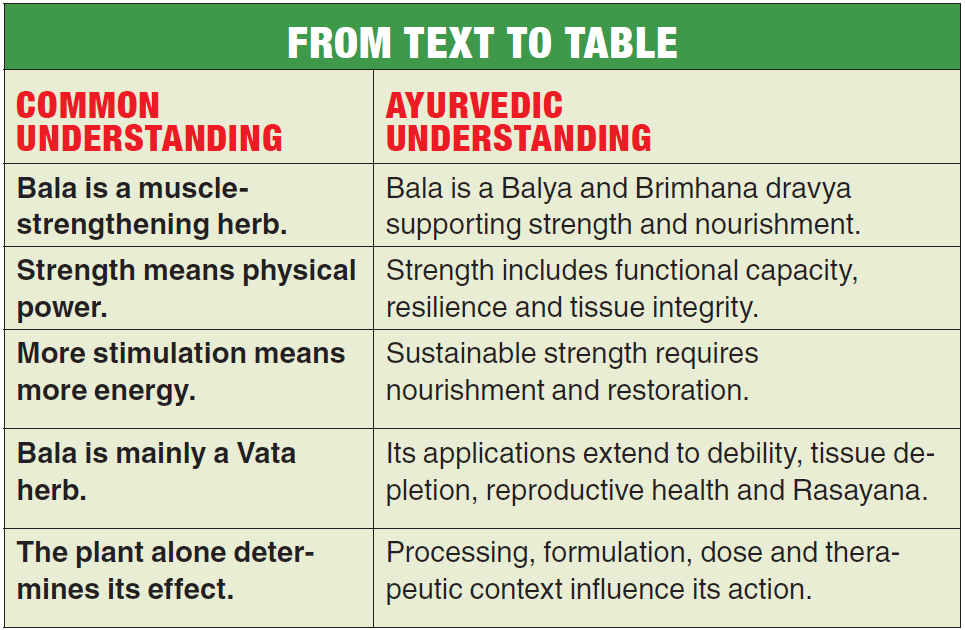
Today, Bala is often introduced as an Ayurvedic herb for weakness, muscle strength or general vitality. But its classical identity is considerably richer. Ayurvedic texts place Bala among important Balya and Brimhana drugs and associate it with Rasayana and Vrishya actions. Its applications extend across Vata disorders, debility, tissue depletion, musculoskeletal conditions and restorative therapies.
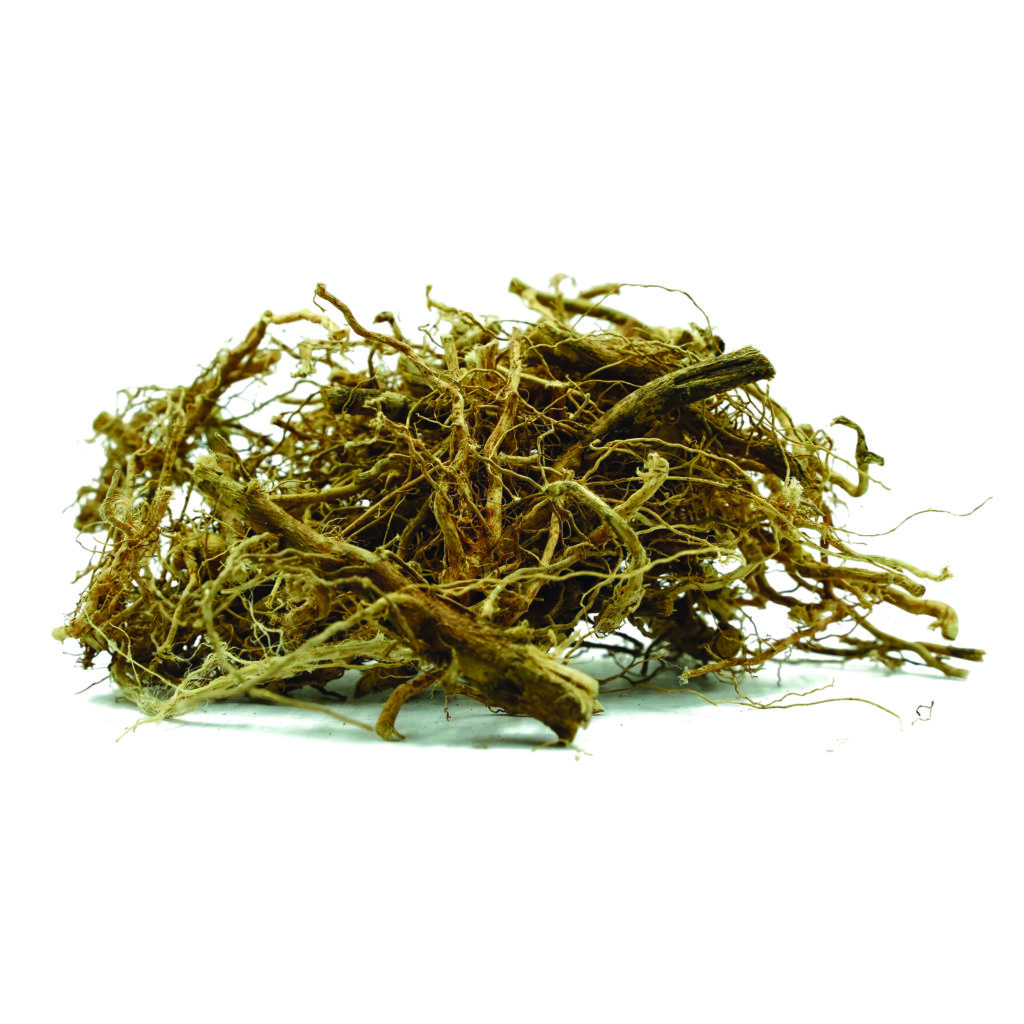
The distinction becomes particularly interesting when Bala is viewed through the lens of modern science. Sida cordifolia has attracted research attention for its pharmacological activities, while certain preparations have also raised questions about ephedrine-type alkaloids and the safety of concentrated extracts.
This creates an important opportunity to revisit what Ayurveda actually meant by Bala. Because, classical Bala was never simply about stimulation. It was about building the capacity to sustain function.
A SMALL HERB WITH A SIGNIFICANT NAME
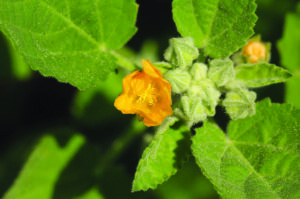
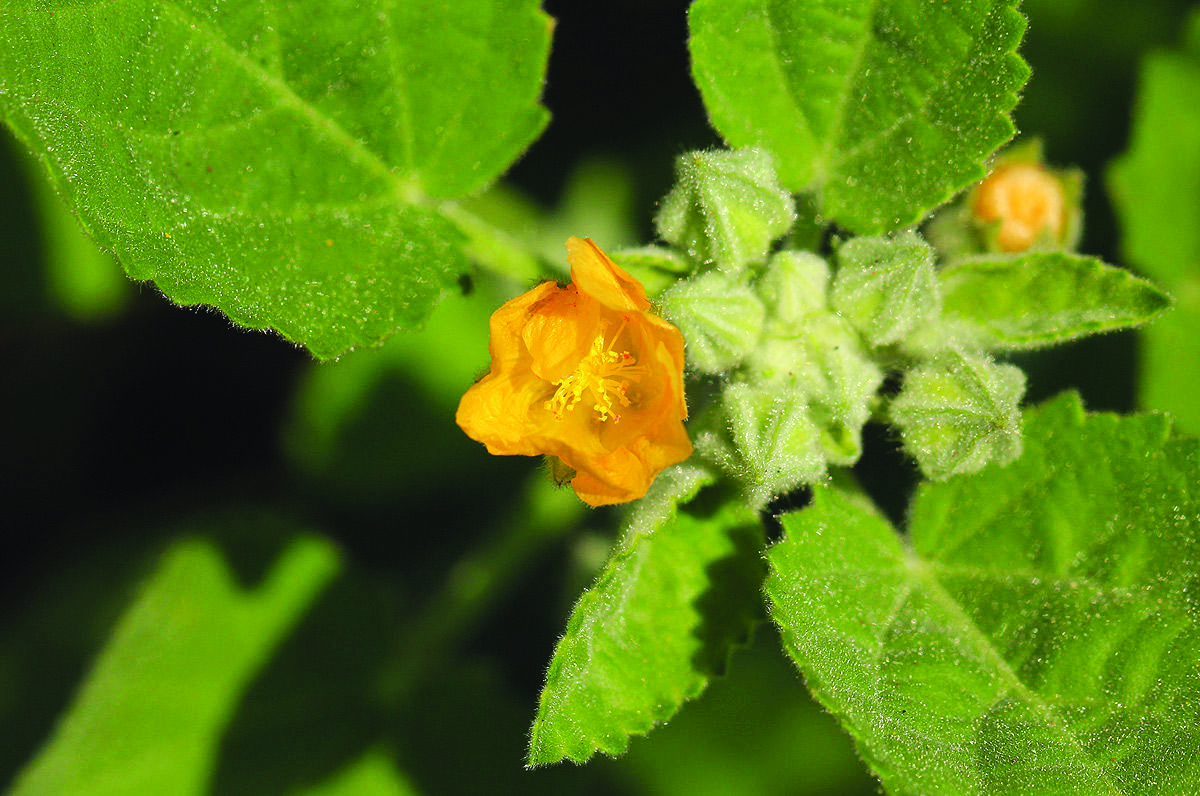
Bala is a modest-looking herb, commonly found in fields, roadsides and moist habitats across tropical and subtropical regions. Its botanical identity is Sida cordifolia Linn., belonging to the family Malvaceae. But its Sanskrit name carries more significance than its appearance suggests. Bala means strength.
Ayurvedic nomenclature often preserves observations accumulated through generations of clinical experience. In the case of Bala, the name itself points towards the principal therapeutic quality for which the plant became valued.
Classical literature therefore presents not merely a single ‘strength herb’, but a broader group of botanicals associated with the concept of Bala. This is an important reminder that Ayurvedic classification was not based solely on botanical similarity. Therapeutic action, qualities and clinical utility were equally important in determining how plants were grouped and understood.
BALA IN THE AYURVEDIC LITERATURE
The history of Bala within Ayurveda is extensive.
The Charaka Samhita places Bala in important therapeutic groups including the Balya and Brimhaniya Mahakashayas, linking it with the promotion of strength and nourishment. It is also included in the Prajasthapana Mahakashaya, reflecting its traditional association with reproductive health.
The Sushruta Samhita recognizes Bala among groups used for pacifying Vata and describes its application in oleation-based therapies. The Ashtanga Hridaya also includes it within the Madhyama Panchamula.
Its importance continues through the later Nighantu tradition. Bala is described in works including Dhanvantari Nighantu, Madanapala Nighantu, Kaiyadeva Nighantu, Raja Nighantu and Bhavaprakasha Nighantu, where its properties, synonyms, varieties and therapeutic applications are elaborated.
UNDERSTANDING STRENGTH THROUGH AYURVEDIC PHARMACOLOGY
The Ayurvedic pharmacology of Bala offers an interesting explanation for its traditional use.
Classical descriptions generally characterise Bala as predominantly Madhura in Rasa and Vipaka, with Guru and Snigdha qualities and Sheeta Virya. These properties are fundamentally different from those of a stimulant.
Madhura Rasa and Madhura Vipaka are associated with nourishment, while Guru and Snigdha qualities support the Ayurvedic concept of Brimhana—building or restoring tissues. Its Sheeta Virya further distinguishes it from herbs whose effects are primarily heating or stimulating.
This pharmacodynamic profile helps explain why Bala is traditionally described as Balya, Brimhana, Rasayana and Vrishya.
In Ayurveda, therefore, strength is not simply the ability to produce greater physical output. It is closely connected with adequate nourishment, tissue integrity and functional resilience.
This is why Bala becomes particularly relevant in conditions where the body has been weakened or depleted.
WHEN THE BODY NEEDS STRENGTH
Bala has traditionally been employed in a range of Vata-dominant conditions, particularly where pain, weakness, stiffness or loss of function are prominent.
Classical references associate it with conditions such as Vatarakta, while its broader Balya and Brimhana properties make it relevant to states of debility and tissue depletion. Its importance also extends into Vajikarana, where its nourishing and strengthening qualities are traditionally employed in support of reproductive health. Bala is not restricted to internal administration. It appears in multiple Ayurvedic dosage forms and therapeutic procedures, including Taila, Ghrita and Basti preparations and external therapies.
One of the best-known examples is Kshirabala Taila, in which Bala is processed with milk and sesame oil. The formulation itself is an excellent illustration of Ayurvedic pharmaceutical reasoning: the properties of the herb are integrated with those of the accompanying substances to create a preparation specifically suited to particular therapeutic objectives.
BALA AND MODERN SCIENCE
Modern research on Sida cordifolia has explored a surprisingly broad range of biological activities, including anti-inflammatory, analgesic, antioxidant, metabolic, hepatoprotective and neuropharmacological effects. Phytochemical studies have identified compounds belonging to several groups, including alkaloids, flavonoids, steroids, terpenoids and other secondary metabolites.
Among the constituents that have received considerable attention are ephedrine-type alkaloids, although their occurrence and concentration in authenticated Sida cordifolia material have not been entirely consistent across studies.
This is scientifically important because it demonstrates the challenges involved in translating a traditional plant into a standardized modern product. Differences in geographical origin, botanical authentication, plant part, extraction method and processing can substantially influence the chemical profile of an herbal preparation.
BALA IS NOT A STIMULANT
The discussion around ephedrine also provides an important opportunity to distinguish Bala from stimulation. Ephedrine acts primarily as a sympathomimetic stimulant. Its physiological effects can include increased heart rate and blood pressure, and concentrated ephedrine-containing products have raised significant safety concerns. This should not be confused with the Ayurvedic concept of Bala.
Ayurveda’s idea of strength is fundamentally different from temporarily stimulating the body to increase output. Stimulation asks the body to do more; nourishment and restoration help the body become capable of doing more.
This distinction is especially relevant today, when herbal products are marketed as performance enhancers. Bala should not be reduced to such claims.
A DRUG WITH A BROAD FORMULATION FOOTPRINT
Bala occurs across a considerable range of Ayurvedic formulations, reflecting the breadth of its therapeutic identity. The formulation diversity also tells us something about classical drug development. A medicinal plant was rarely considered useful simply because it possessed a particular chemical constituent. Physicians and pharmacists explored how processing, combination, dosage form, vehicle and route of administration could influence its therapeutic application. For modern formulation scientists, this is an important area of research: does the pharmaceutical form of a traditional drug alter its clinical behaviour?
DID YOU KNOW?
Bala is included by Charaka among the Balya and Brimhaniya Mahakashayas, while its inclusion in the Prajasthapana Mahakashaya connects the same herb with reproductive health. This provides an early illustration of how Ayurveda could recognise multiple therapeutic dimensions within a single plant.
Perhaps Bala’s most relevant message for modern healthcare is therefore simple: Strength is not merely the ability to push the body harder. True strength is the capacity to function, recover and sustain itself. And that is a concept Ayurveda understood long before the modern language of resilience entered medicine.
*The writer is an Ayurveda Physician, founder of www.prathaayurveda.in, co-founder of www.indiainnings.in, and general secretary, NASYA India.