


There was a time in the recent past when nanotechnology was not equally prevalent as it is today. Both the emergence and growth of this scientific yet technological domain have brought numerous advancements in terms of India’s technological growth. As India is moving ahead towards achieving the goals of Viksit Bharat by 2047, smarter, cleaner and sustainable technologies will be of paramount interest in the coming decade, where nanotechnology will play a key role to meet India’s developmental vocations.
As far as the twenty-first century is concerned, nanotechnology, as a whole, is possibly the most important enabling technology. Even in the last five years, as India has emerged as one of the outstripping suppliers in terms of self-made vaccines during the COVID-19 outbreak across the globe, the advancements in nanotechnology are truly unprecedented. Statistically, India showed its huge potential regarding the number of high-quality publications in the domain of nanoscience and technology. Globally, around 2,13,000 research publications came out in 2020 and that of 2,78,000 in 2025. Amongst this, India contributed with nearly 33,700 publications in 2025. Over a period of more than 24 years, from 2000 to 2024, there was a more than 16-fold increase in nanotechnology research publications worldwide. At this juncture, if we look at the figures of India, in the aforementioned 24 years of the span, India’s publications jumped from 384 to 31,600.
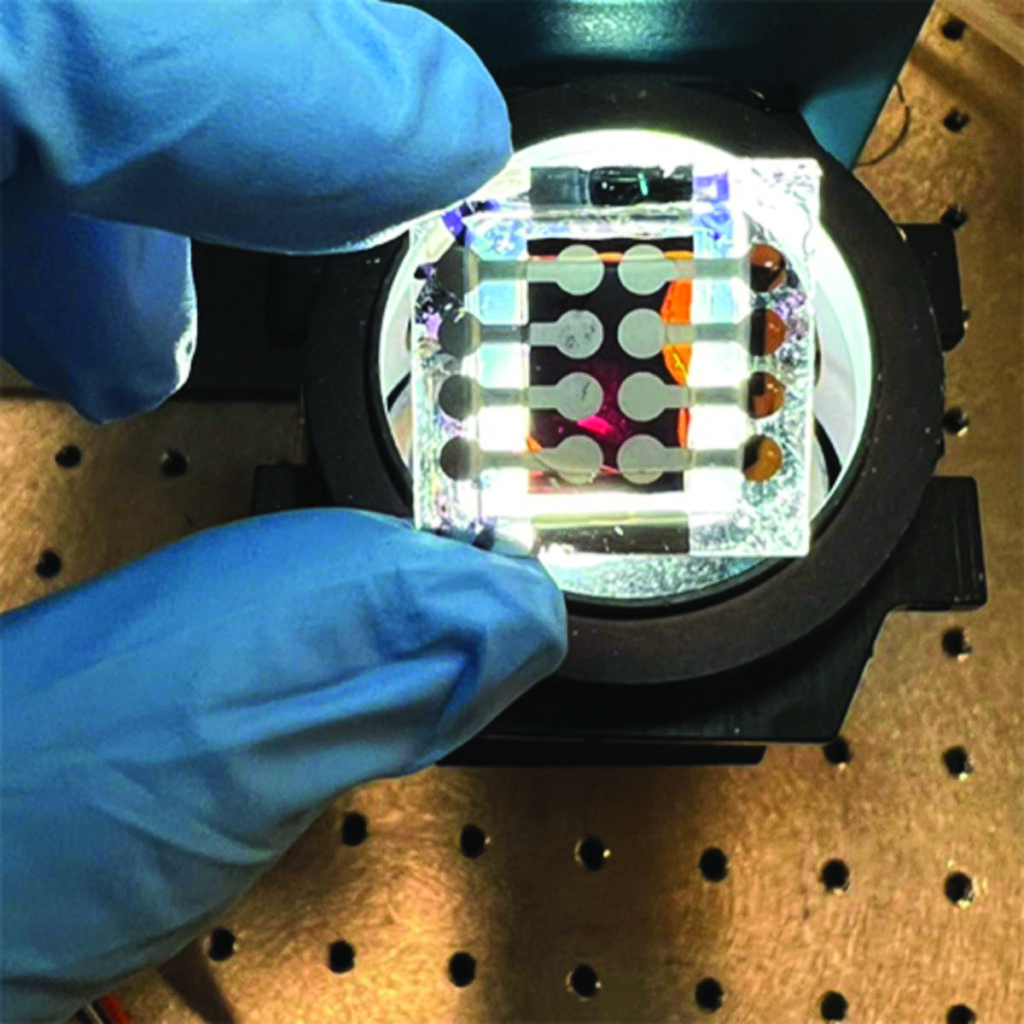
Evidently, nanotechnology is not confined to the laboratories merely, but it has penetrated into the domain of clinical applications, large-scale commercial products, and other real-world applications. In 2026, the projected domestic market in India is around 2 billion dollars, which may even increase exponentially in the coming years, and almost 250 start-ups are working dedicatedly on bringing solutions through nanotechnology. India’s deployment of nanotechnology is seemingly abstemious, translational and intensely tied to national missions, which made India a formidable architect of the field. In the realm of harvest, nano-engineered photovoltaics like quantum dots, perovskite nanocrystals, are behaving promisingly and thereby capture the sun’s fleeting kiss with exceptional avidity, converting photons to power with an efficiency which erstwhile bulk silicon could scarcely envisage.
This field has engrossed many top-notch researchers of the country because, at the nanoscale, specifically between 1 and 100 nanometers, the properties of the materials can be engineered minutely. As the surface-to-volume ratio at the nano-level is very high, the magnetic, optical, mechanical and electrical properties can be altered with high precision. As nanotechnology is an interdisciplinary domain technology, it draws on approaches from a range of scientific branches, including chemistry, physics, materials science, polymer science, quantum chemistry, robotics, biotechnology, medicinal chemistry, and many others.
In 2001, the Government of India took the initiative to start the Nano Science and Technology Initiative (NSTI), followed by the Nano Mission in 2007 under the Department of Science and Technology (DST). With over 30 nanotechnology-dominant research centres, projecting an amount of around $10 billion by 2030, India has shifted its primary mandate from lab research to commercial products. The modern rockets developed by the Indian Space Research Organisation (ISRO) possess innumerable nano-components. Carbon nanotube (CNT) composites, graphene-aluminium alloys, and nano-ceramic coatings made at the Vikram Sarabhai Space Centre (VSSC) and IISc Bangalore make PSLV and Gaganyaan rockets much lighter, heat-resistant up to 3000°C temperature, and almost 10 times more durable against atomic oxygen in low Earth orbit.
Five key areas are highlighted where recent advancements in nanotechnology in India are truly significant, fast-paced and unprecedented.
1. Energy Storage and Sustainability Aspects
Indian laboratories are focusing more on perovskite quantum dot and nano-silicon solar cells to gain extraordinary efficiency and reduce the expenses as compared to ordinary silicon cells. Nanowires and nano-textured surfaces encapsulate more light, pushing efficiency above 24-25% while reducing material cost. As India is shifting towards the industrial scale-up of the sodium ion battery from the lithium-ion battery, a Bangalore-based start-up named NoPo Nanotechnologies is manufacturing High-Pressure Carbon Monoxide (HiPCO) single-walled carbon nanotubes (SWCNTs) to improve the conductivity and life of sodium-ion batteries, reducing the existing dependence on lithium.
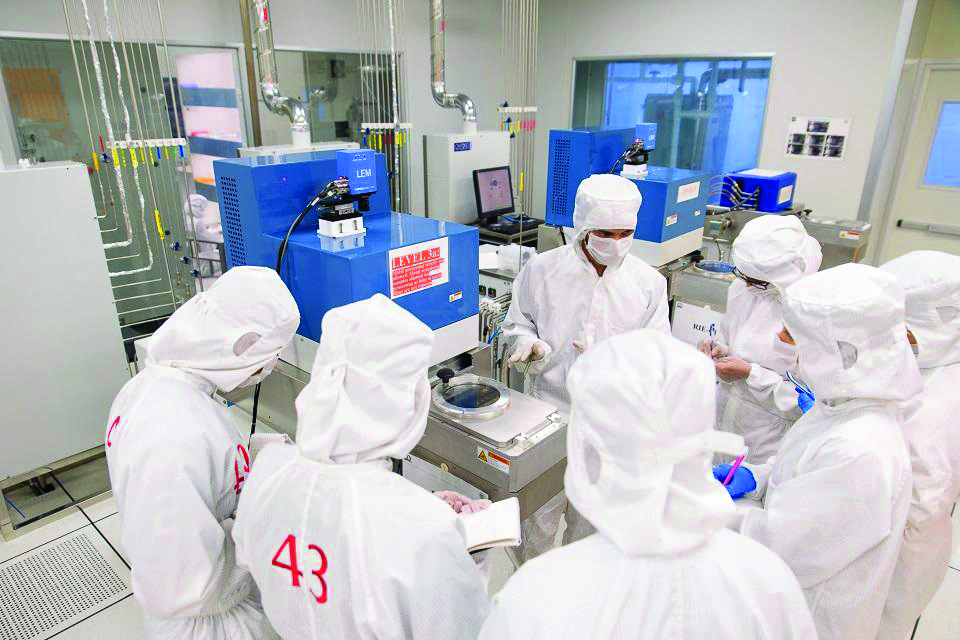
Image Courtesy: cense.iisc.ac.in
Nano-based biosensors can precisely detect diseases at very low concentrations. During COVID, India developed nano-gold-based rapid test kits. Quantum dots and iron-oxide nanoparticles are now used in India for early detection of tuberculosis, cancer biomarkers and diabetes.
Again, the team led by Prof Premkumar Senguttuvan at Jawaharlal Nehru Centre for Advanced Scientific Research (JNCASR), Bangalore, engineered a sodium-ion battery that charges to 80% in 6 minutes and lasts more than 3000 cycles. Even as per the recent announcements made by DST, as of August 2026, sodium-ion technology in India has reached Technology Readiness Level 7 (TRL-7) and could hit commercial production in a couple of years.
On the other hand, Centre for Nano and Soft Matter Sciences (CeNS), yet another Bangalore-based autonomous research institute under the Department of Science and Technology, Government of India, has developed a single-device photo-rechargeable supercapacitor. As their findings, the binder-free nickel cobalt oxide (NiCo2O4) nanowires on nickel foam can harvest sunlight and store charge as well.
2. Nanomedicine and Pharmaceutical Advancements
As the health sector in India is discussed, rapid advancements in nanotechnology in recent years have made citizens of India the primary beneficiaries. A team of scientists from IISc Bangalore, JNCASR and IIT Bombay developed liposomal and polymeric nano-carriers that release drugs only inside tumour tissue. Hyderabad-based renowned player in the domain, Dr Reddy’s Laboratories Ltd., has invested in this project.
Nano-coated stents, orthopaedic implants with hydroxyapatite nano-coating, and tissue engineering scaffolds show better biocompatibility and longer life. Dr Sharmistha Sinha’s laboratory at the Institute of Nano Science and Technology (INST) Mohali, is working on the use of bacterial protein as a biodegradable semiconductor. They discovered that bacterial shell proteins, which self-assemble into flat sheets, absorb UV and generate photocurrent without any dyes or metals.
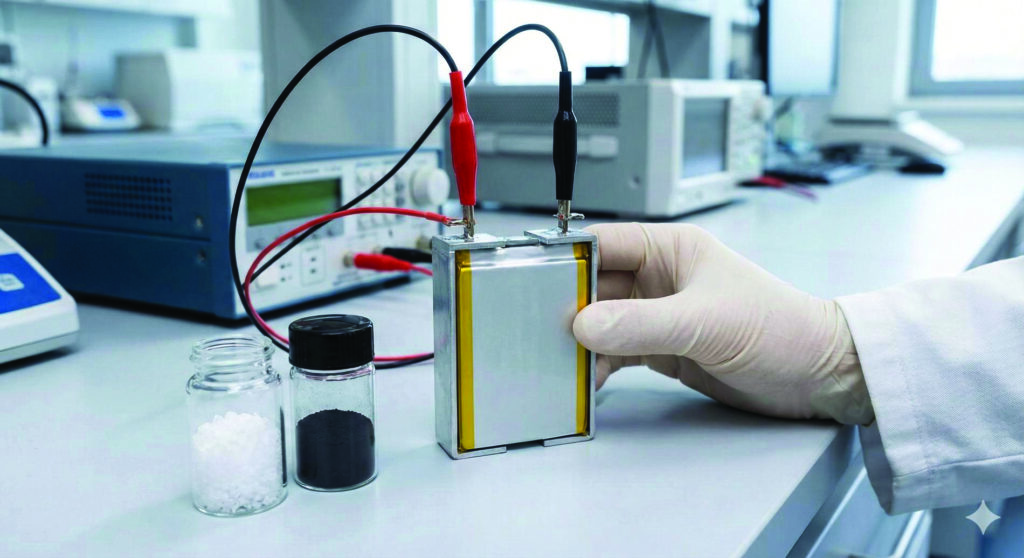
Image Courtesy: Internet
It is a curtain-raiser innovation in the field and possibly the first scaffold-free, protein-based semiconductor that will be biocompatible, and a green alternative to silicon for wearables and implantable sensors.
The convergence of nano and bio is now a national priority, with DBT, ICMR and DST jointly funding advanced drug delivery, nanoscale diagnostics and tissue engineering.
3. Intersection of the Semiconductor Technology and Nanotechnology
Recently, Indian Institute of Science Education and Research (IISER) Bhopal developed a pen-like direct-write technology utilising a sharp metal probe to control an electrochemical reaction on a thin chromium layer. It directly depicts nanometer-to-micron patterns without photoresist, UV lasers, e-beam machines, or harmful chemicals, combining lithography and etching in a single step. As the patents have already been filed, an indigenous chip prototyping is accessible to academic and research institutions of India without $10M cleanrooms.
Indian Institute of Technology (IIT) Bhubaneswar took a commendable lead in terms of generating a synchronised nano-oscillator network with the collaboration of researchers working in foreign universities. In this project, they synchronised around 105,000 magnetic nano-oscillators (10-20 nm wide) in 45 nanoseconds and published the work in the July 2026 issue of the famous journal, Nature Nanotechnology. Unlike conventional chips that process sequentially with billions of transistors, these spin-Hall nano-oscillators interact via spin waves and organically sync to solve complex AI problems at high speed with far less power.
As domestic manufacturing of semiconductors is now a top priority in India, the participation and intent of the leading enterprises along with MSMEs is really propitious. India’s first indigenous semiconductor fab & ATMP (Assembly, Testing, Marking and Packaging) production commenced by the joint venture of Tata Dholera, Micron Sanand and Kaynes Semicon. Equipment is being installed to roll out the first 28nm-110nm chips by December 2026 for auto, telecom, and power that may cover approximately 75-80% of India’s demand. In the meantime, Micron Sanand validated a 500k-square-ft cleanroom for advanced memory, and Kaynes Semicon shipped India’s first commercial Multi-Chip Modules (MCM) to Alpha & Omega Semiconductor in late 2025. India is moving towards complex power semiconductor packaging with a moderate pace.

Image Courtesy: Wikimedia Commons
On 7 February 2026, a well-known multinational enterprise called Qualcomm unveiled its 2nm wafer at Bengaluru that dies with around 20 billion transistors each, integrating CPU & GPU for edge AI like cameras, networking. Ashwini Vaishnaw, Union Minister for Railways, Information & Broadcasting, and Electronics & Information Technology, articulated that Indian teams successfully developed an end-to-end design from product definition to silicon validation, thereby pushing India’s journey from back-end services to an advanced design hub.
NITI Aayog’s report explains that India can disrupt the global semiconductor race using 2D materials like graphene and MoS2 easily. These are less than 1 nanometre thick with unique electronic and optical properties. Alongside, 2D transistors can operate at less than 0.3V threshold, and 2D synaptic arrays cut chip area by more than 40% for neuromorphic computing. As recommended by the experts, integrating the India Semiconductor Mission with 2D research will be fruitful for India’s growth to meaningfully compete with the global markets.
4. Nanorobotics and AI in Nanotechnology
Prof Ambarish Ghosh and the team at the Centre for Nano Science and Engineering (CeNSE), Indian Institute of Science (IISc), Bangalore, are working on many challenging projects on nanotechnology. As is known, at the nanoscale, one cannot put radio or electronics on each bot. That is why global fields move the whole swarm together. Prof Ghosh and the team solved it with intermittent randomisation that briefly disrupts each nanobot’s orientation at random intervals, so that each of them moves forward differently under the identical global field. It is a breakthrough in recent research for targeted drug delivery to individual cells, nano-surgery, and nano-assembly on chips.
Scientists from the S N Bose National Centre for Basic Sciences (SNBNCBS), Kolkata, and NITTTR (National Institute of Technical Teachers’ Training and Research) worked on AI-mimicking synaptic nanorobotics and neuromorphic memristors, which earned them accolades. As reported in Advanced Functional Materials, they demonstrated Morse code generation and synaptic plasticity by enabling smarter, faster, ultra-low-power AI hardware that learns like a brain rather than rigid algorithms.
In Bengaluru India Nano 2026, the theme was AI-Nanotech Convergence for Commercialisation. The 14th edition of India Nano took place from Aug 3-5, 2026 and was officially themed ‘Nanotech’s Next Frontier: AI & Beyond — Conceive, Converge, Commercialise’. The main focus is on AI-driven nano-fabrication, AI for property prediction, and accelerating lab-to-market for nanobots in semiconductors, agriculture & health, and energy.
During the AI Impact Summit 2026, New Delhi, IIT Kanpur showcased its translational research conducted jointly with L&T Technology Services (LTTS), by making an indigenous robot dog with an aluminium alloy body, advanced 3D mapping, thermal imaging, threat detection for hazardous areas, power stations, and construction sites.
5. Trailblazing Policies on
Nanotechnology by Government of India
Anusandhan National Research Foundation (ANRF) and the National Mission on Interdisciplinary Cyber-Physical Systems (NM-ICPS) are working with multiple government stakeholders to ensure the fulfilment of the targets set for the next 20 years. ANRF is governing the Research, Development & Innovation Scheme (RDI) and is providing funds for high-risk nano research. Under NM-ICPS, DST funded IISER Pune with ₹170 crore for quantum nanotech testbeds, which is a 20-qubit ion-trap system with in-house nanofabrication, quantum crypto, sensing, NMR, and quantum computing labs.
As approved by the Union cabinet on July 1, 2025, the RDI scheme will have a total corpus of ₹1 lakh crore. It is a 6-year scheme to fund private-sector deep tech at TRL-4 and above with long-tenor, low- or no-interest loans and equity. DST is the nodal agency for implementation. The explicit targets are on nanotechnology-adjacent sunrise sectors like quantum computing, robotics, AI, biotech, and energy transition. In this case, the Technology Development Board (TDB) and the Biotechnology Industry Research Assistance Council (BIRAC) are serving as Second-Level Fund Managers as of February 2026.
India Semiconductor Mission (ISM) has an outlay of Rs 76,000 crore and it is committed to provide fiscal support to the right players for building nano-fab facilities in India. National Quantum Mission (NQM) has been sanctioned with a corpus of Rs 6,003.65 crore for 2023-2031. Under this, four thematic hubs are being set up, which are at IISc Bengaluru (Quantum Computing), IIT Madras and Centre for Development of Telematics (Quantum Communication), IIT Bombay (Quantum Sensing & Metrology) and IIT Delhi (Quantum Materials & Devices).
Without the abundance of pure materials, nanotechnology research will face a number of impediments. As we talk about Atmanirbhar Bharat frequently, the raw material security will be an important task. As per the announcements by the Ministry of New and Renewable Energy (MNRE), Government of India, in August 2026, a new policy target has been set to achieve 30 Gigawatts (30 GW) of polysilicon capacity by 2030. In terms of rare earth elements, a simultaneous push on gallium (Ga), germanium (Ge), and scandium (Sc) is underway, with refinement under the Critical Minerals Mission by controlling the bottom of the nano-value chain, not solely the top-end designs.
*The writer, currently working at the Indian National Science Academy (INSA), New Delhi, holds an MTech in Materials Science and Nanotechnology from Jadavpur University, Kolkata, and an MSc in Applied Chemistry from Ramakrishna Mission Vidyamandira, Belur Math. Earlier, he worked as a Researcher (R&D) with BR Specialities LLP, a textile chemical enterprise based in New Delhi. He can be reached at atrimallick@gmail.com