



TECH TALK / MULTIFUNCTIONAL SENSOR
Sensors have quietly become integral to modern life, embedded in smartphones, wearables, medical devices, and agricultural systems. Yet, most commercially available sensors are built on rigid substrates, depend on precious metals such as gold or platinum, and require sophisticated cleanroom fabrication. These factors make them expensive, difficult to scale, and impractical for large-area or disposable applications, especially in sectors like agriculture and community healthcare.
Addressing this challenge, a research team led by Dr Hemen Kumar Kalita, along with doctoral researchers Rajnandan Lahkar and Biswajit Dehingia, at the Department of Physics, Gauhati University, has developed an ultra-low-cost, flexible, and multifunctional sensor using an unconventional combination of pencil, paper, and graphene.
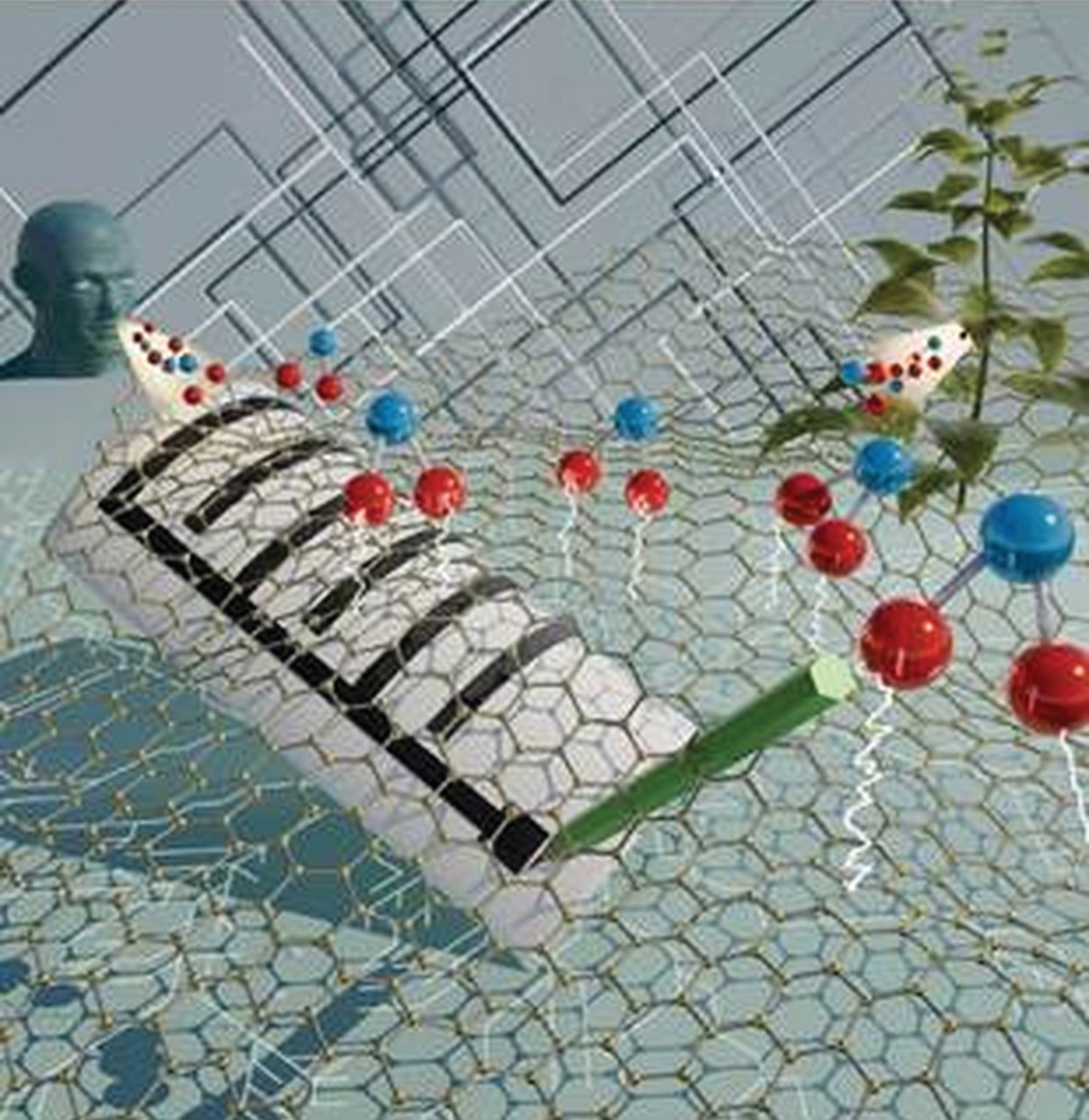
The team designed a graphene-based capacitive sensor on an ordinary paper substrate. Instead of using metal electrodes fabricated through industrial processes, they drew interdigitated electrodes directly onto paper using common graphite pencils. These pencil-drawn patterns act as conductive pathways, while graphene oxide (GO) functions as the active sensing layer.
This minimalist approach removes the need for expensive raw materials, chemical-heavy processing, or specialised fabrication facilities. The resulting device is lightweight, bendable, biodegradable, and remarkably economical—qualities that make it suitable for disposable sensors and large-scale deployment.
Despite its simplicity, the sensor delivers impressive performance. Published in the international peer-reviewed journal ACS Applied Electronic Materials, the study reports a humidity and moisture response exceeding 1500 per cent at high relative humidity, a level that rivals or surpasses many existing flexible and paper-based sensors.
Earlier low-cost sensors often struggled with limited sensitivity or were designed for a single purpose. In contrast, this sensor combines high sensitivity with broad functionality, marking a significant step forward in paper-based electronics.
One Sensor, Many Applications
The versatility of the device is one of its most striking features. The same sensor has been successfully tested for:
- Soil moisture measurement, crucial for precision irrigation
- Monitoring plant drought stress by analysing transpiration patterns
- Human breath tracking, useful for respiratory assessment
- Skin moisture sensing for wearable health monitoring
- Non-contact proximity detection
- Smart diaper wetness detection, offering a low-cost healthcare solution
Integrating such diverse applications into a single, inexpensive platform highlights the technological novelty and real-world relevance of the research.
By combining paper substrates, pencil-drawn graphite electrodes, and graphene oxide, the study demonstrates that high-performance sensors can be developed through locally adaptable, environment friendly methods. This approach aligns strongly with the need for sustainable technologies in resource-constrained settings, particularly in rural agriculture and public healthcare systems.
The research also underscores a broader message: Innovation does not always require complex machinery or imported materials. Sometimes, transformative solutions emerge from reimagining the potential of everyday objects.
The work received support from multiple government science initiatives, including DST-INSPIRE, the DST Early Career Research Award, and DST-PURSE. The DST-PURSE programme, in particular, played a crucial role by providing laboratory consumables, chemicals, and manpower support, enabling smooth execution of the research.
This pencil-on-paper sensor platform opens new possibilities for scalable, affordable sensing technologies tailored to India’s needs. With further development, such innovations could empower farmers, reduce healthcare costs, and make advanced diagnostics accessible far beyond laboratories and hospitals. In an era dominated by high-tech solutions, this research serves as a reminder that simplicity, when guided by scientific insight, can be just as powerful.