





As India prepares to unveil its annual India International Science Festival between December 6 and 9 in Panchkula, Haryana, the moment is ripe to reflect on a larger phenomenon. Science and technology in India have begun to transcend their domestic role; they are quietly emerging as a defining arm of diplomacy and global influence.
Under the visionary leadership of Prime Minister Narendra Modi, India has travelled far, from being a technology importer to becoming an innovator, manufacturer, and strategic partner. The theme of the festival—“Science to Prosperity: Towards a Self-Reliant India”—speaks not merely of national self-sufficiency, but of a confident nation ready to share its scientific power with the world. India’s message today is clear: Atmanirbhar Bharat does not mean excellence in isolation; it means over-reaching capabilities—capabilities that strengthen global collaboration, global well-being.
THE DIPLOMACY OF INNOVATION
The idea of “science diplomacy” has gained new depth in India. From outer space to ocean floors, from semiconductors to synthetic biology, India’s scientific achievements are shaping partnerships and perceptions across continents. They are enhancing India’s credibility, expanding its soft power, and, in many cases, offering tangible technological solutions to the world’s most pressing problems.
Consider how these missions—spanning advanced materials and manufacturing, artificial intelligence, bio-manufacturing, the blue economy, agriculture, clean energy, health, quantum science, and space—are now being leveraged not just to transform India, but to forge new pathways of global cooperation.
ADVANCED MATERIALS AND MANUFACTURING
India’s manufacturing ecosystem is evolving at a pace unseen in decades. In aerospace, automotive, defence, and electronics, the country is developing its own alloys, ceramics, and composite materials while embracing 3D printing, robotics, and digital-twin technologies. These advancements not only reduce dependence on imports but also build exportable expertise.
When India supplies composite materials for aircraft or advanced components for clean-energy systems, it exports not merely goods but trust—a new foundation of technological diplomacy. Many developing countries look to India as a model for accessible and affordable advanced manufacturing, bypassing the costly industrialisation curves that defined the West.
ARTIFICIAL INTELLIGENCE: HUMAN-CENTRIC AND ETHICAL
Artificial Intelligence is the new strategic frontier, and India’s vision of AI is notably distinct: it is inclusive, ethical, and people-centric. The IndiaAI Mission, with an outlay exceeding Rs 10,000 crore, is rapidly expanding national AI infrastructure and talent. More than mere algorithms, India’s AI is being applied to agriculture, healthcare, logistics, and digital governance—fields directly impacting human welfare.
This experience makes India a natural partner for other developing nations that seek to digitise their economies responsibly. As the architect of the globally acclaimed Digital Public Infrastructure—the Aadhaar identity system and the UPI payment network—India is well-placed to share frameworks of inclusive digital growth. “Make AI work in India, and Make AI Work for Humanity” could well be the credo of India’s emerging AI diplomacy.
BIO-MANUFACTURING AND HEALTH TECHNOLOGIES
India’s bio-economy has grown from USD 10 billion in 2014 to about USD 140 billion today, a phenomenal rise powered by vaccines, diagnostics, bio-fertilisers, and synthetic biology. The lessons learned during the pandemic, when India supplied vaccines to more than a hundred countries, have reinforced the idea of science as solidarity.
Images Courtesy: ISRO
Through modular bio-manufacturing units, portable diagnostic devices, and cost-effective health innovations, India can help other nations build their own biomedical capacity. This is not aid—it is partnership through knowledge, creating a durable bond between nations based on shared scientific progress.
THE BLUE ECONOMY AND DEEP-OCEAN SCIENCE
India’s long coastline gives it a natural advantage in ocean science. The Deep Ocean Mission, launched with an outlay of about Rs 4,000 crore, explores seabed minerals, biodiversity, and marine energy. These are areas of growing global interest, especially for small island and coastal nations vulnerable to climate change.
By offering collaboration in ocean mapping, marine-resource management, and under-sea technology, India can play a pivotal role in shaping a sustainable and equitable blue economy. Maritime science thus becomes an avenue for regional cooperation and trust-building across the Indian Ocean community.
SEMICONDUCTORS AND DIGITAL COMMUNICATIONS
Few sectors reveal India’s new self-confidence as clearly as electronics and semiconductor manufacturing. The India Semiconductor Mission, with an investment of Rs 76,000 crore, aims to make India a global hub for chip and display fabrication. Major international companies have joined hands with Indian partners, and multiple state-level projects are underway.
Semiconductors are the lifeblood of the digital era and the anchor of technological sovereignty. By emerging as a trusted source of chips and electronics—especially for nations seeking to diversify beyond existing manufacturing centres—India enhances its strategic relevance. In diplomacy, trust in supply chains is as vital as trust in treaties.
AGRICULTURE AND FOOD SECURITY
India’s innovations in agriculture are increasingly science-driven. Precision-farming technologies, AI-based crop monitoring, bio-fortified seeds, and soil-health sensors are transforming productivity and sustainability. India’s success in creating low-cost, scalable solutions for small farmers can benefit much of the developing world.
By sharing agri-technology platforms and research with Africa and Southeast Asia, India strengthens both food security and diplomatic bonds. Science, in this context, becomes a tool of empathy—a means of ensuring that the prosperity India seeks for itself radiates outward to others.
CLEAN ENERGY: THE HEART OF SELF-RELIANCE
Among India’s most remarkable scientific achievements is its revolution in non-conventional energy. Over the past decade, India has become the third-largest producer of renewable power in the world, with solar and wind capacities growing more than twentyfold.
The National Solar Mission has turned arid landscapes into fields of light, while offshore and onshore wind farms now power millions of homes. Research into tidal and ocean energy, once peripheral, is gathering momentum through pilot projects in Gujarat and the Andaman coast.
Meanwhile, the National Green Hydrogen Mission, launched in 2023, seeks to make India a global hub for the production, storage, and export of clean hydrogen. The implications extend far beyond domestic sustainability. Many nations, particularly in Africa and the Pacific, lack affordable renewable-energy expertise. India can now offer not only technology but experience—micro-grids for villages, low-cost solar pumps, and scalable hydrogen infrastructure.
This combination of science, affordability, and goodwill is redefining energy diplomacy. The International Solar Alliance, co-founded by India, already embodies this vision: collective prosperity through shared sunlight.
ENERGY, ENVIRONMENT, AND CLIMATE SYNERGY
Closely allied to clean energy is India’s growing competence in environmental science and climate resilience. Indian research institutions are developing new materials for carbon capture, advanced batteries, and eco-friendly building components. When such technologies are transferred or jointly developed with partner countries, they strengthen India’s standing as a leader in climate action.

At international climate negotiations, India’s voice now carries the credibility of a nation that is not merely pledging but performing—backed by laboratories, startups, and a robust policy ecosystem.
QUANTUM SCIENCE AND FRONTIER TECHNOLOGIES
The National Quantum Mission, with funding of Rs 6,000 crore, represents India’s entry into one of the most sophisticated scientific frontiers. The mission’s goals—building quantum computers, satellite-based quantum communication, and ultra-precise sensing—may appear esoteric, but their geopolitical importance is immense. Quantum technology is central to cybersecurity, navigation, and even space exploration.
By collaborating with nations on quantum-safe communication and sensing for environmental and defence applications, India demonstrates that it is not merely catching up with the world but shaping the future of high science. The same applies to the growing ecosystem around photonics, advanced sensors, and new materials research that complement quantum development.
SPACE: INDIA’S CELESTIAL DIPLOMACY
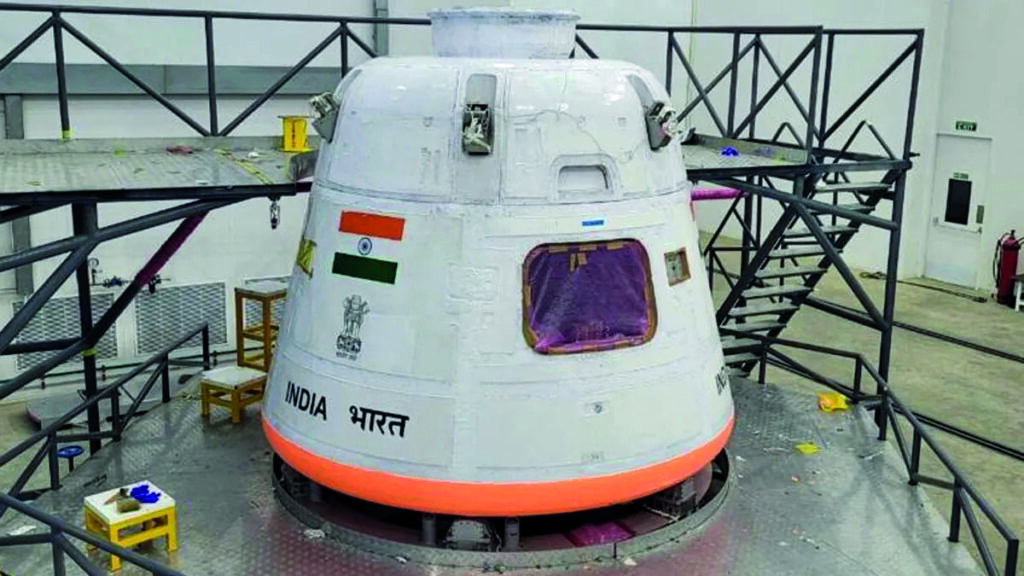
Nothing captures the imagination or prestige of Indian science more vividly than space. The success of Chandrayaan-3 and the planned Gaganyaan human-spaceflight mission have cemented India’s reputation as a space power that achieves excellence at a fraction of global costs.
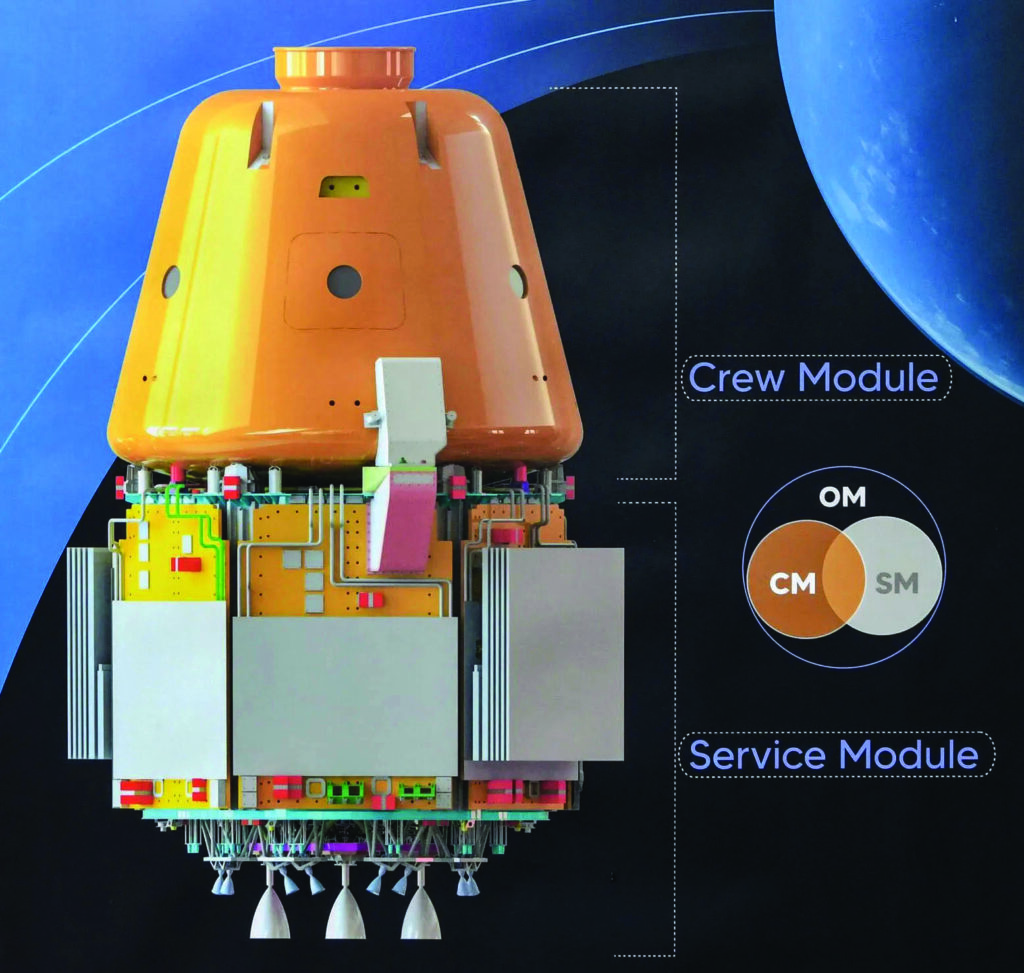
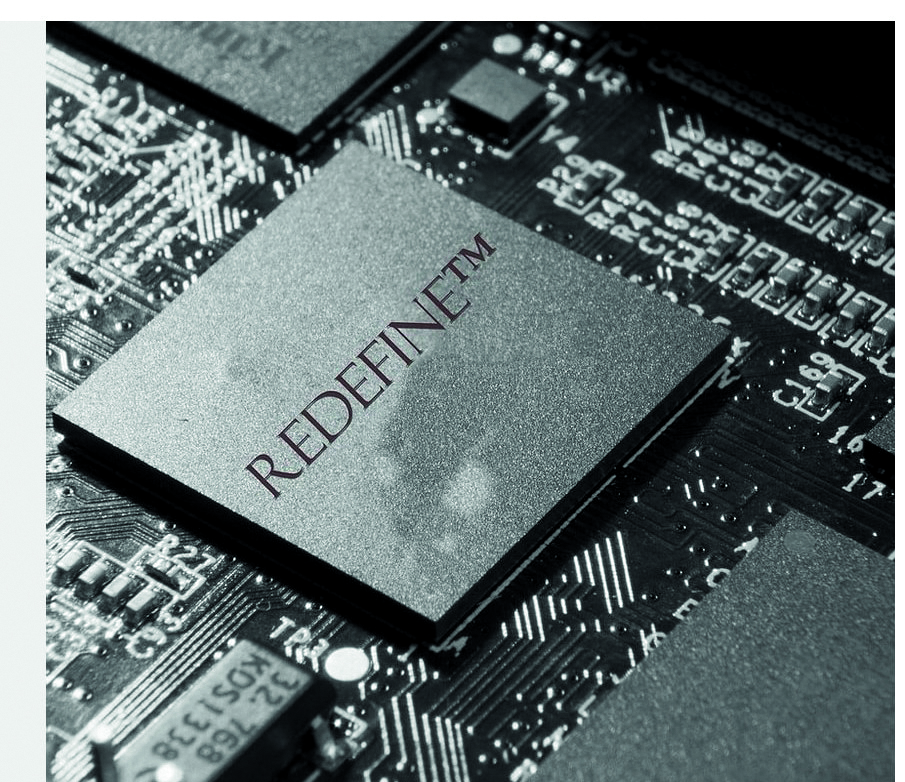
Today, India’s space programme is becoming increasingly global. Its satellites provide data for weather, agriculture, and disaster management to countries across Asia, Africa, and Latin America. The Vikram 3201 space-grade microprocessor, developed indigenously at the Semi-Conductor Laboratory in Chandigarh, symbolises this new autonomy. Through launch services, capacity-building, and open-data initiatives, India is transforming space exploration into a field of cooperative diplomacy.
TOWARDS A GLOBAL SCIENCE LEADERSHIP
What gives this moment historic significance is the convergence of scale, purpose, and timing. India’s R&D spending has doubled in a decade; patents and startups have multiplied; digital public infrastructure has reached every household. The global supply chain is realigning, and nations are looking for trusted partners outside traditional blocs. India, with its blend of innovation and integrity, fits that search perfectly.

Image Courtesy: Shutterstock
Science-based diplomacy can operate at multiple levels. Bilaterally, India signs technology-partnership agreements in AI, quantum, and space with like-minded nations. Regionally, it sets up centres of excellence and training institutes across Asia and Africa. Globally, India contributes to shaping norms—on AI ethics, blue-economy governance, and climate technologies—ensuring that the world’s new rules of science carry the imprint of inclusivity.
THE CHALLENGES AHEAD
To sustain momentum, India must continue to convert research into scalable applications and accelerate the “ease of doing research.” Infrastructure, regulatory clarity, and skilled manpower will be crucial. Frontier domains like semiconductors and quantum computing demand deep talent and consistent funding. But these are challenges of success—signs that India has entered a stage where scientific ambition must be matched by institutional agility.
CONCLUSION: SCIENCE AS INDIA’S GLOBAL SIGNATURE
As the India International Science Festival opens, India stands on the threshold of a new era. Its scientific renaissance is not confined to laboratories; it is visible in power grids, satellites, coastal waters, farms, and digital corridors. The narrative of “Science to Prosperity” is, in truth, the story of a nation using knowledge as an instrument of dignity and diplomacy.
Every solar panel that lights an African village, every AI tool that assists an Asian farmer, every vaccine that saves a distant child, becomes a silent ambassador of India’s scientific ethos. Science, once a domain of national aspiration, is now a bridge of international friendship.
If the 20th century belonged to nations that mastered industry, the 21st will belong to those that master innovation with conscience. In that world, India is ready—not merely as a participant but as a pioneer, turning the power of discovery into the potential of partnership.
* The writer, a Harvard educated civil servant, is a former Secretary to the Ministry of Information and Broadcasting, Government of India. He also served on the Central Administrative Tribunal and as Secretary General of ASSOCHAM. He commands extensive expertise in the fields including Media and Information, Industrial and Labour Reforms, and Public Policy.