




NEW FRONTIERS OF SCIENCE
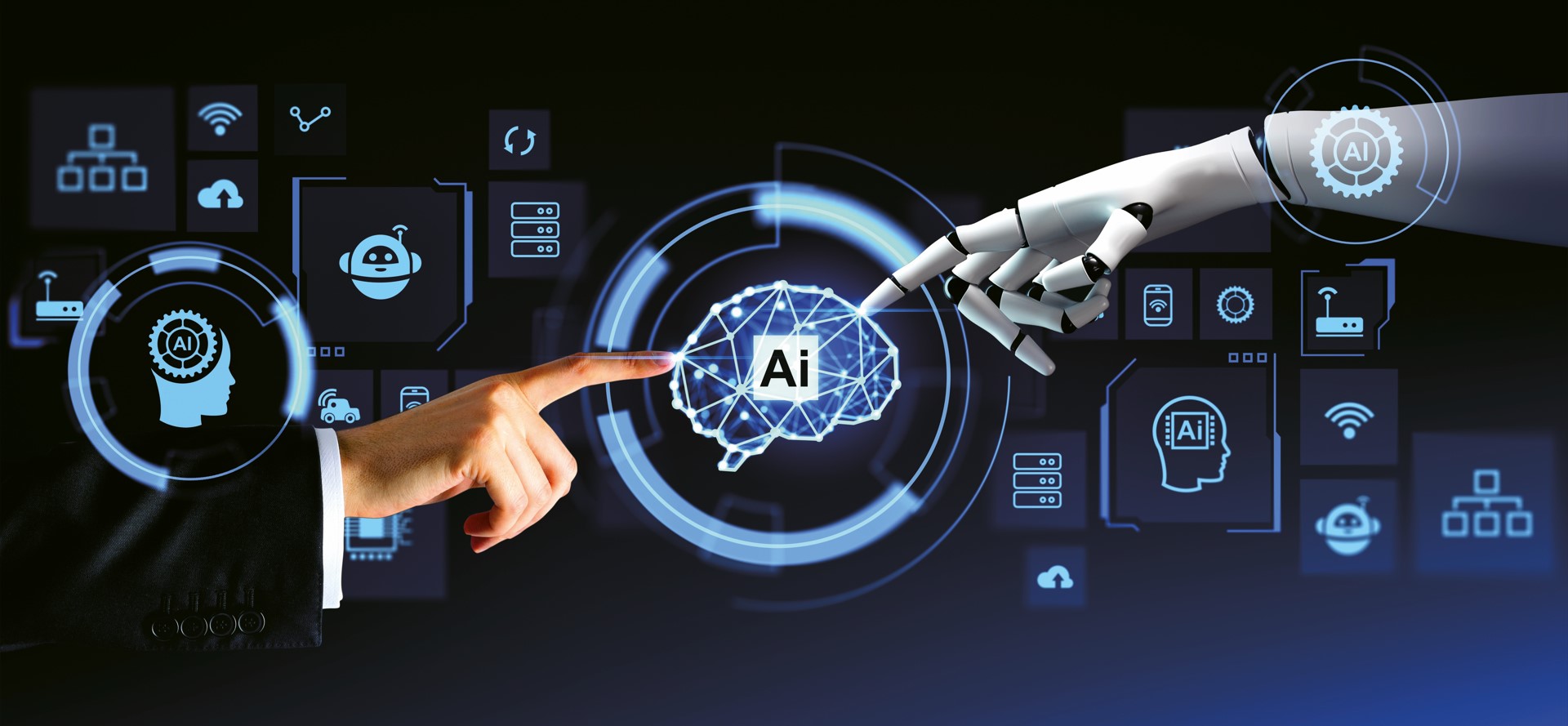
The term Artificial Intelligence (AI) refers to a set of functions that enable computers to execute tasks similar to those of human intelligence through computer-based algorithms. It utilises various computational programmes to simulate human intelligence, enabling the solution to complex problems and the development of reasoning cycles.
AI is divided into several sub-areas including machine learning (ML), deep learning (DL), neural networks (NN), natural language processing (NLP), computer vision, and cognitive computing. In the case of ML, it involves identifying patterns and analysing previous data to make a potential conclusion. Another subset of ML is Deep Learning, which uses various multi-layered neural networks to analyse complex patterns in data. Through this approach, a computer learns to draw a conclusion and make decisions based on prior knowledge. While in NN, it is a collection of algorithms to mimic the process of the human brain functioning. NNs work through understanding the connection between several key variables and suggesting the most suitable output based on those. Other than data, the ability to understand, summarise, and read different languages is performed by Natural Language Processing (NLP). Through this, the computer will react logically and understand the user’s intended meaning. Apart from language, AI uses computer vision tools to enable computers to classify and promote learning from a collection of visual data (photos). This also helps the machine to produce more reliable results based on previously given information. Ultimately, all data, including text, audio, images, and other inputs, are analysed using cognitive computing algorithms to simulate human intelligence and deliver insightful predictions. Owing to its unique blend of tradition, innovation, and talent, India and the whole world could ride in this remarkable journey in near future. We provide a key summary (Figure 1, on page 34) of advancements in major scientific areas that involve core concepts of AI and ML in advancing some frontier areas of science and technology.

Image Courtesy: Shutterstock
AI AND OMICS SCIENCES
Inside every cell, millions of tiny biochemical reactions occur constantly, forming, reacting, and communicating to support life. Understanding this vast chemical cross-talk is the goal of metabolomics, a branch of science that studies the small molecules responsible for sustaining life. The advancement in metabolomics has led to the emergence of fields like fluxomics, which utilises the isotopomer pattern of downstream metabolites to measure the real-time metabolism of cells and organs under disease conditions and for therapeutic monitoring. But there’s a catch: the enormous size of the data generated by these studies is too large and complex for humans to analyse manually or by any traditional methods. AI algorithms can sift through thousands of chemical fingerprints to find patterns that are very difficult or far beyond human empirical cognition.
Machine Learning (ML) can predict how a disease alters the body’s chemistry, how microbes interact in soil or in our gut, and even how traditional Ayurvedic herbs work at a molecular level. AI-guided fluxomics and real-time metabolism using stable isotope tracers are remarkable methodologies for measuring changes in metabolism over time in live cells and organs. Throughout the world and in India, scientists/researchers are using AI to explore plant-based metabolites with pharmacological/ nutritional/ or any other physiological effects, study stress tolerance in crops, and design metabolite-based therapies. Various research groups, including ours, are building AI-powered metabolite libraries, digital catalogues, and metabolic predictive modelling of nature’s chemical treasures that can guide future drug discovery, agriculture, industrial, and environmental research.
Astrobiology: AI and that great quest of humanity, where have we come from?
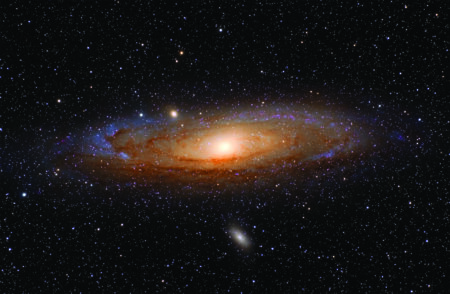
For as long as humans have looked up at the night sky, they have wondered: Are we alone? Where have we come from? Thanks to AI, that question is no longer confined to human imagination. When rovers like Curiosity and Perseverance roam the Martian surface, it’s AI that decides where to look, what rocks to study, and what data to send home. These machines don’t just follow instructions from the station; they learn, adapt, and explore autonomously. AI is also central to the Search for Extraterrestrial Intelligence (SETI). It listens to cosmic radio signals, filters through the noise of space, and hunts for patterns that might indicate intelligent life. What once took astronomers years can now be done in hours. But beyond images and radio waves, a new kind of science is joining the search: omics biology, powered by AI. Genomics, proteomics, and metabolomics are helping scientists predict what life’s molecular signatures might look like beyond those available on Earth, as well as what could be the earliest ‘life molecule’ that seeded life on Earth during the Archean era (approximately 4.0–2.5 billion years ago).
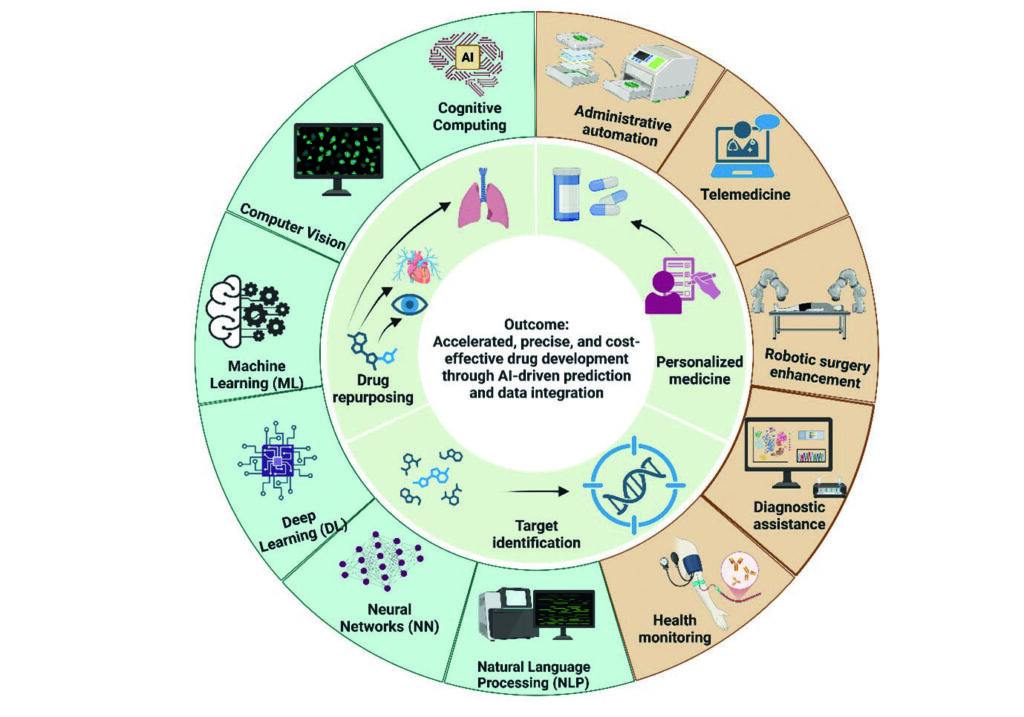
Image Courtesy: Dr Hemwati Nandan
By studying how life adapts to extreme environments on Earth, such as boiling springs, frozen tundras, and deep ocean vents, AI-trained omics models can forecast the types of biomolecules that might exist in extreme environments on Mars, Europa, or exoplanets orbiting distant stars. For example, AI can compare the chemical fingerprints of amino acids, lipids, nucleotides, and metabolites found in the Earth’s microbes with those of organic molecules detected in meteorites or planetary atmospheres. If a pattern matches, it might suggest not proof, but the possibility that the chemistry of life is universal. Such AI-guided insights help astrobiologists design better instruments for upcoming missions, capable of detecting even minute molecular traces of living systems. India, too, is taking steps into extraterrestrial life research in deep space. The important discoveries involve the Chandrayaan-3 and the upcoming Gaganyaan mission, whereby the Indian scientists are utilising AI for spacecraft navigation, robotic exploration, and life-detection experiments in distant space.
EXPLORING THE ADVANCEMENTS OF AI IN PHARMACEUTICAL SCIENCES
The scope of AI and ML in pharmaceutical science is a diverse area, encompassing advisory roles, telemedicine, diagnostic assistance, robotic surgery enhancements, and the monitoring of various key health indicators. Additionally, it is used in next-generation technologies, such as the optimisation of 3D-printed medicine. These models help to promote personalised medicine and the replacement of one-size-fits-all concepts. A combination of AI and nanotechnology may result in the development of a more effective drug delivery system. It may help in multiscale modelling approaches for the development and production of nanomedicines. Beyond this, AI models can also be used for predicting new treatments, such as the development of new drug regimens or novel combinations of existing drugs to treat new or rare diseases. Another role of AI in drug discovery is the generation of predictive models for target identification, repurposing of drugs, de novo drug design, and lead optimisation. In drug discovery, the basic idea is to modulate the target (protein) to cure the disease condition. Therefore, finding new targets that are both effective and safe is the first and one of the most challenging steps in the drug development process.
The AI/ML provides advanced tools to analyse vast and complex data, enabling more accurate predictions. For example, these can refine drug likeness parameters by accurately analysing various data (RO5 and metabolic stability). ML can be used to study gene expression, networks, and genetic association data to find genes and pathways linked to disease. There are specific AI tools, such as AlphaFold (DeepMind), that predict protein 3D structures. Additionally, Text-mining and NLP systems extract structured facts from the scientific literature. AI has been applied to propose new disease targets in other platforms (e.g., the PandaOmics platform of Insilico Medicine). In the case of drug repurposing, AI/ML aids by utilising diverse datasets to predict new drug–disease matches and by building pipelines to test numerous hypotheses in silico. Many AI-based algorithms and web tools have emerged recently (DrugNet, DRIMC, DPDR-CPI, PHARMGKB, PROMISCUOUS 2.0, DRRS), which facilitate large-scale drug repurposing and target discovery.

In the field of pharmaceutical science, the use of AI and ML presents numerous ethical challenges, primarily related to data privacy, fairness, and transparency. As mentioned in the preceding section, AI tools require a large amount of patients’ data for precise analysis and accurate prediction. This may raise concerns about how this sensitive information is collected and protected. Additionally, there is a risk of bias in AI, which can lead to inaccurate outcomes. Protecting patient privacy is a primary concern when using AI in healthcare. With the help of strong encryption, data anonymisation, and other secure access controls, the risk of unauthorised access to data or data leakage can be mitigated.
AI ADVANCEMENTS IN QUANTUM SCIENCES
AI is also making inroads into quantum technologies, most notably in the field of Quantum Intelligence, which is described as the process through which physics may learn to think and gain consciousness. It would not be an exaggeration to say that if AI is the brain of the modern age, then quantum computing could soon become its superbrain. Unlike ordinary computers that process simple 0s and 1s, quantum computers can hold multiple possibilities simultaneously, viz. reading every page of a book at once instead of turning them one by one. Now, imagine combining that power with AI. The impact could revolutionise everything from drug discovery and material design to industry, environmental sustainability, and agricultural research.
Though the fusion of quantum physics and AI is still in its infancy, India has already joined the global race. For instance, India’s National Quantum Mission brings together leading institutions, research labs, and industries to jointly develop quantum systems capable of performing specific computational tasks millions of times faster than today’s most advanced supercomputers. Quantum computing can model novel bioactive molecules, smart materials, and biological systems with astonishing capabilities and widespread applications. At the same time, artificial intelligence is refining quantum circuits, making them faster and more efficient. Together, they create a partnership that blends logic with probability, offering a glimpse into what these intelligent machines might truly become. For India, with its long and rich tradition in theoretical physics and mathematics, this is more than a technological endeavour; it’s an opportunity to lead a field where science and philosophy converge, challenging our very understanding of intelligence and consciousness.
AI IN CLIMATE AND ATMOSPHERIC SCIENCES
Just as AI helps us explore the human body and the cosmos, it is now enabling a deeper understanding of our own planet. The climate crisis is no longer a distant threat, as it is an immediate reality. To safeguard the future, scientists must predict floods, droughts, storms, and temperature fluctuations with unprecedented accuracy. AI also offers a powerful means to achieve this. Unlike traditional models that depend on fixed equations, AI systems learn directly from vast datasets. They can analyse satellite imagery, temperature records, and oceanic patterns to forecast weather and climate variations days or even months in advance. In India, the India Meteorological Department (IMD), along with leading research and academic institutions, is leveraging AI to improve monsoon predictions, track cyclones, and study air pollution dynamics. These data-driven AI models and associated forecasts are more efficient and precise in making weather forecasts, as well as predicting extreme weather events (such as droughts, cyclones, floods, and cloudbursts), which helps policymakers prepare and conduct rescue operations in advance. These AI-based weather models are also crucial for predicting annual rainfall in different regions of the country, enabling farmers to plan their cropping systems effectively. In addition, AI is also being used by various regional laboratories to monitor changes in the fragile ecosystem of the Indian Himalayan region, particularly the receding glaciers and forest cover, providing early warnings of associated environmental risks and informing policy development.
Image Courtesy: Pixabay
SUMMARY
In brief, the lines between disciplines are becoming increasingly blurred. AI is linking biology with physics, space with medicine, and human consciousness with machine intelligence. India’s Digital India Mission, National AI Strategy, and National Quantum Mission are laying the foundation for a future where science is interconnected, accessible, and benefits the welfare of all by empowering people. The next generation of Indian scientists won’t just use AI; they will collaborate with it. Together, they’ll ask new questions, design smarter experiments, and maybe, they can answer some of humanity’s oldest mysteries: Where have we come from? When the history of this century is written, it may not be remembered as the age of machines or data. It may be remembered as the time when two intelligences, i.e., ‘human and artificial’, came together to expand the boundaries of understanding. Herein, we wish to reiterate again, AI is not about building smarter machines but rather making a wiser humanity. For this, philosophers, scientists, engineers, social scientists, and policymakers should come together to consider ways and means for the ethical and moral use of AI in promoting an equitable and egalitarian social order.
*Dr Digar Singh is an Assistant Professor in Microbiology at HNB Garhwal University, Srinagar Garhwal, Uttarakhand. He has expertise in metabolomics, microbial interactions, and systems biology. He can be reached atsinghdigar1986@hnbgu.ac.in. Dr Rohit Mahar is an Assistant Professor in Chemistry at HNB Garhwal University. He has expertise in fluxomics, lipidomics, and metabolomics, and associated techniques. He can be reached at rmahar@hnbgu.ac.in. Dr. Gaurav Joshi is an Assistant Professor in the Department of Pharmaceutical Sciences at HNB Garhwal University. He has vast expertise in the field of drug design and discovery, synthetic medicinal chemistry and cancer biology. He can be reached at garvjoshi@hnbgu.ac.in. Dr Hemwati Nandan is a Professor of Physics, and Director, Research & Development Cell, HNB Garhwal University. He can be reached at hemwati.nandan@hnbgu.ac.in.