


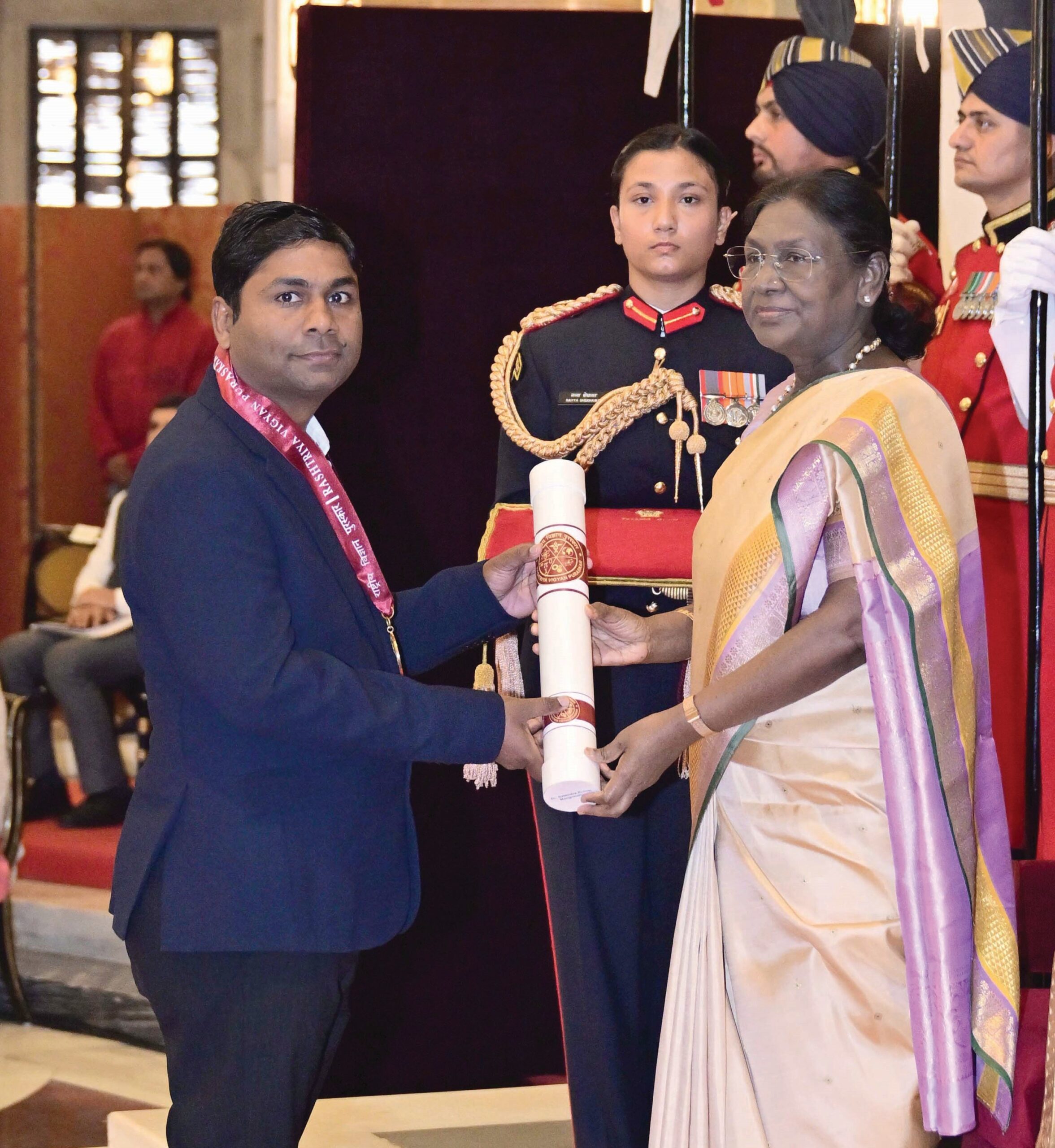
Image Courtesy: PIB
YOUNG SCIENTIST / DR SATENDRA KUMAR MANGRAUTHIA
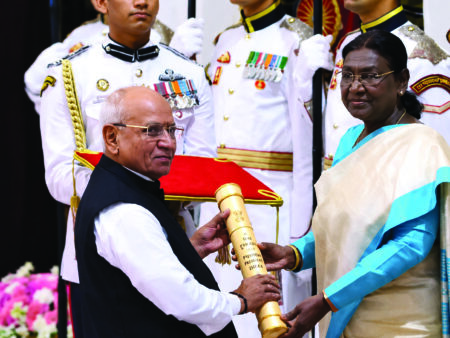
The conferment of the Vigyan Yuva Award upon Dr Satendra Kumar Mangrauthia marks a significant moment in India’s rapidly evolving agricultural research landscape. Dr Mangrauthia’s recognition is rooted in his pioneering contributions to rice biotechnology, genome editing, and climate-resilient agriculture, areas that are central to India’s food security in the 21st century.
Dr Mangrauthia’s research centres on molecular biology and biotechnology of rice, with a strong focus on genome editing, RNA interference (RNAi), and functional genomics. His work addresses some of the most pressing challenges faced by Indian agriculture today—declining productivity, climate stress, lodging (crop falling due to weak stems), and the need for higher yields without increasing input costs.
One of the most notable aspects of his research is the application of genome-editing technologies to precisely modify rice traits. Unlike conventional genetic modification, genome editing allows scientists to make targeted changes within the plant’s own genome, accelerating breeding while maintaining crop safety and adaptability. Dr Mangrauthia has been at the forefront of adapting these technologies for Indian rice varieties, ensuring that advanced science does not remain confined to laboratories but reaches farmers’ fields.
His work has contributed to the development of next-generation rice varieties with improved plant architecture, stronger stems, and better yield potential. These traits are particularly important in the context of climate change, where extreme weather events such as heavy rainfall and storms often lead to crop lodging and yield losses.
Dr Mangrauthia’s research directly supports national goals such as sustainable agriculture, nutritional security, and farmers’ income enhancement. By focusing on yield stability and resilience rather than only maximum productivity, his work aligns with India’s broader vision of climate-smart agriculture.
Dr Mangrauthia serves as a Principal Scientist at the ICAR–Indian Institute of Rice Research (IIRR) in Hyderabad, one of India’s premier institutions dedicated exclusively to rice research. Under the umbrella of the Indian Council of Agricultural Research (ICAR), IIRR plays a crucial role in developing technologies and varieties that reach farmers across diverse agro-climatic zones.
At IIRR, Dr Mangrauthia has not only led high-impact research projects but has also mentored young researchers and scholars. His laboratory has emerged as a hub for advanced molecular research in rice, fostering a new generation of scientists trained in modern biotechnological tools.
Dr Mangrauthia’s academic foundation lies in biochemistry and molecular biology, fields that form the backbone of modern plant biotechnology. After completing his doctoral research, he gained international exposure through postdoctoral and collaborative research assignments abroad, including in the United States and Europe. These experiences allowed him to engage with global best practices in genome editing and functional genomics.
Rather than remaining overseas, he chose to bring this expertise back to India, adapting global technologies to local needs. Dr Mangrauthia has authored numerous research papers in reputed international journals, with his work widely cited by peers in plant science and biotechnology. The recognition for Dr Mangrauthia comes at a time when India is redefining its scientific priorities— moving from incremental progress to innovation-driven solutions. As India faces the dual challenge of feeding a growing population and coping with climate uncertainty, scientists like Dr Mangrauthia will play a decisive role.