



Image Courtesy: Wikipedia/ NASA
In a remark that has reignited a long-simmering debate in the scientific community, Jared Isaacman, the Administrator of NASA, has voiced support for restoring Pluto’s status as a full-fledged planet, saying it is “time to reconsider” the controversial 2006 decision that demoted it to a dwarf planet. The statement has triggered fresh discussions among astronomers, educators, and space enthusiasts worldwide, reopening a question many thought had been settled nearly two decades ago.
Pluto, once celebrated as the ninth planet of our solar system, was reclassified in 2006 by the International Astronomical Union. The IAU introduced a new definition of what constitutes a planet, requiring that celestial bodies orbit the Sun, be spherical, and have “cleared the neighbourhood” around their orbits. Pluto met the first two criteria but failed the third, leading to its reclassification as a “dwarf planet.”
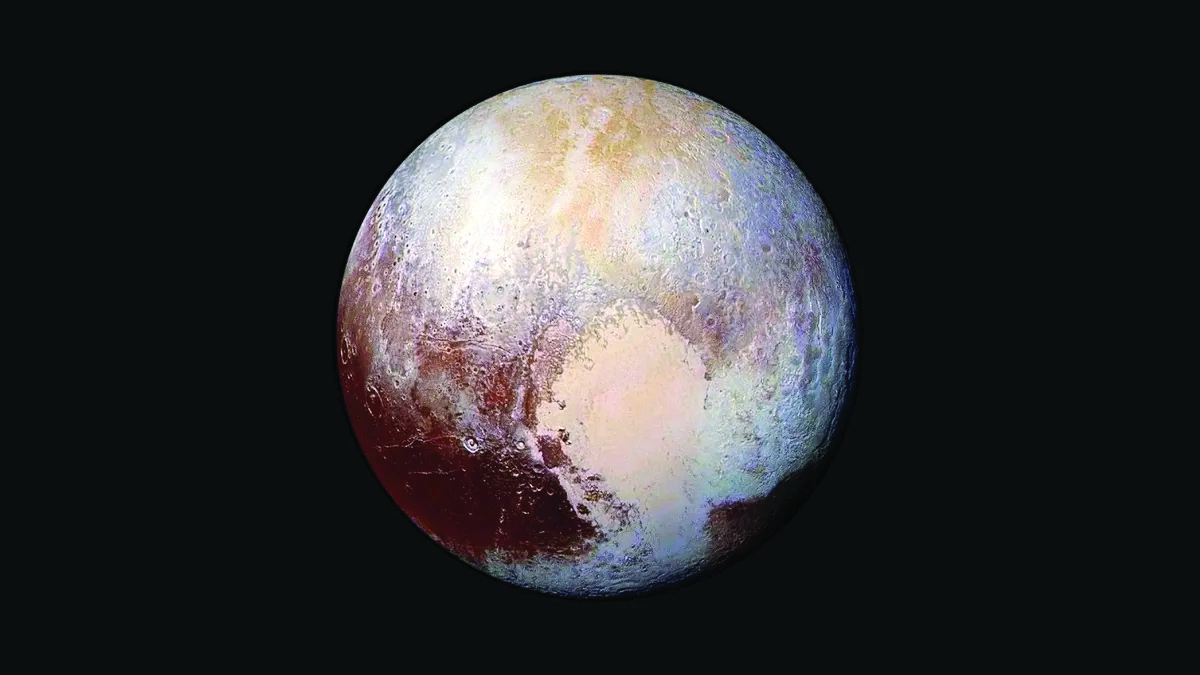
Isaacman, speaking at a recent public event, questioned whether that definition still holds up in light of new scientific discoveries. “Our understanding of the solar system has evolved significantly,” he said, suggesting that the criteria used nearly 20 years ago may be too restrictive. He emphasised that Pluto’s complex geology, atmosphere, and system of moons make it far more dynamic than previously believed.
The NASA chief’s comments carry weight due to growing scientific evidence gathered over the past decade. The 2015 flyby of Pluto by NASA’s New Horizons mission revealed a surprisingly active world. The spacecraft captured images of vast plains of nitrogen ice, towering mountains of water ice, and possible cryovolcanoes, features that challenged earlier assumptions about Pluto as a frozen, inactive body at the edge of the solar system.
Many planetary scientists have since argued that the “clearing the neighbourhood” criterion is problematic. Some point out that even Earth shares its orbital zone with thousands of near-Earth objects, while gas giants like Jupiter coexist with Trojan asteroids. Critics of the IAU definition say that if applied strictly, it could call into question the status of other recognised planets.
Supporters of Pluto’s reinstatement also argue that classification should reflect intrinsic properties rather than orbital dominance. In this view, Pluto’s spherical shape, differentiated interior, and geological activity qualify it as a planet in every meaningful sense. Several scientists have proposed alternative definitions that would expand the number of planets in the solar system to include other dwarf planets like Eris and Ceres.
However, not everyone agrees with Isaacman’s stance. Defenders of the current classification maintain that the IAU’s definition brings clarity and consistency, especially as astronomers discover more objects in the Kuiper Belt. They argue that without a strict framework, the number of planets could balloon into the dozens, complicating scientific communication and education.
The debate also carries a strong emotional dimension. Pluto’s demotion in 2006 sparked widespread public backlash. School textbooks had to be revised, and the decision became a rare example of a scientific ruling that captured global attention beyond academic circles.
Isaacman acknowledged this cultural connection, noting that Pluto’s story is not just about classification but about how humanity relates to space exploration. “Pluto inspired generations,” he said, adding that revisiting its status could help renew public interest in planetary science.
While Isaacman’s comments do not immediately change Pluto’s classification, the authority to do so still rests with the IAU; they signal a growing willingness within parts of the scientific community to revisit established definitions. Whether this leads to a formal reconsideration remains to be seen, but one thing is clear: the question of Pluto’s planetary status is far from settled.