
Profile of the Month: Prof Prahalad Chunnilal Vaidya
Prof Prahalad Chunnilal Vaidya, generally known as P C Vaidya, was a great Indian mathematician who worked in the area of Einstein’s General Relativity. Born on 23 May 1918, in Gujarat, Vaidya’s significant contributions to the subject of General Relativity range from the radiating stars, energy flows in spacetimes, null fields and gravitational collapse.
Prof Vaidya exhibited an inclination toward mathematics from the young age with exceptional ability to address problems in mathematics in an analytical way. During his higher education, which he pursued at the University of Mumbai (then the University of Bombay), he developed a keen interest in classical, theoretical and mathematical theories to address the structures underlying the physical processes in our universe. This curiosity guided him further to work in the area of complex yet fascinating field of General Relativity, proposed by Albert Einstein in 1915. Later in 1942, he joined Prof V V Narlikar, who was the leading figure of Relativity and Mathematical Physics at that time at the Banaras Hindu University, for his PhD in Mathematics, where he stayed only about ten months. His guidance further shaped the ideas of Prof Vaidya with a discovery of Vaidya Metric (spacetime) for radiating stars; he eventually obtained his PhD in the year 1949.
One may note that Prof V V Narlikar was the father of Indian physicist Prof Jayant Narlikar (founder of IUCAA, Pune). Prof Jayant Narlikar, who passed away in May 2025, was awarded the Padma Shri and the Padma Vibhushan for his contributions to science and is also well-known globally for Hoyle-Narlikar theory of steady universe in cosmology.
Both Prof V V Narlikar and Prof P C Vaidya nurtured the next generation of scientists working in the area of Relativity, Mathematical Physics and Astrophysics. He left Banaras for Bombay to work with Dr Homi Bhabha at the Tata Institute of Fundamental Research (TIFR). But due to the accommodation problems over there, he shifted to Gujarat as a Professor of Mathematics at Vallabh Vidyanagar after a year-and-a-half in Mumbai. Later, he shifted to Visnagar College as Principal and finally settled as Professor of Mathematics at the Gujarat University.
VAIDYA SPACETIME
In General Relativity, Einstein’s field equations are of prime importance and they relate the spacetime curvature to the matter energy distribution. These equations are highly nonlinear and it is not an easy task to solve them analytically and to have exact solutions. The solutions obtained with different initial conditions are incredibly important to understand the nature of universe in diverse contexts. The first such solution was obtained by Karl Schwarzschild in 1916 which describes a spacetime outside a spherical non-rotating object (mass) which predicts the existence of a black hole with an event horizon. The generalisation of this solution for a rotating massive object was later obtained by Roy Kerr in 1963 and this spacetime is known as Kerr black hole solution, which is appropriate to real black holes from the view point of Astrophysics. Further, the solution for a charged spherical non-rotating object is known as Reissner-Nordström black hole and the solution for charged spherical rotating mass is known as Kerr-Newman black hole. Each solution of Einstein’s equation corresponds to a peculiar physical scenario.
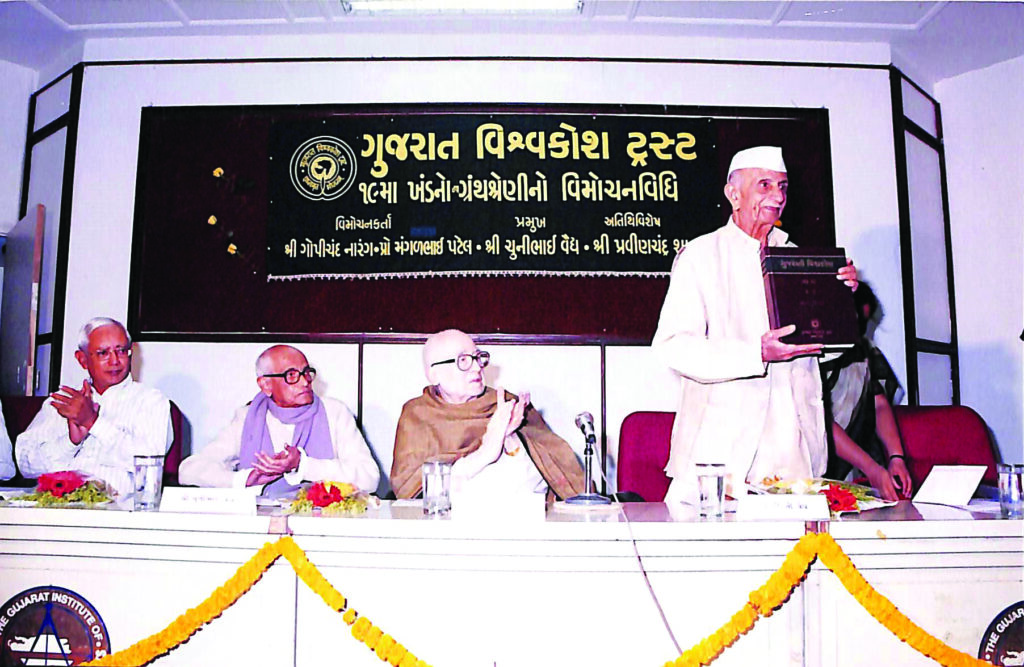
Image Courtesy: Wikimedia Commons
Prof Vaidya was fascinated with the difficult and complex structure of Einstein’s field equations in General Relativity and developed an interest in finding the solutions of these equations with different conditions. Like the abovementioned solutions, Vaidya spacetime is also a fundamental and unique exact solution of Einstein’s field equations in General Relativity, bearing the name of Prof P C Vaidya who discovered it at the age of 24. The Vaidya spacetime, a solution of Einstein’s field equations in General Relativity, is a unique blend of mathematical theory and precision in Physics. This spacetime generalises the well-known Schwarzschild spacetime where the mass of a gravitating object varies with time due to the emission or absorption of radiation from a gravitating object. In the case of Schwarzschild spacetime the mass is constant. Vaidya spacetime is useful to model radiating stars, black hole evaporation processes, and gravitational collapse with outgoing or ingoing energy flux. There are generalised forms of Vaidya metric where the spacetime include matter fields and rotation. In order to obtain this solution, Vaidya introduced some specific class matter field which is known as Null Dust. This matter represents incoherent radiation which moves with the speed of light as compared to an ordinary (pressure less) dust. The null dust travels along null geodesics, i.e., the motion is lightlike. Vaidya spacetime reduces to the usual Schwarzschild spacetime when mass function is kept constant which means the Schwarzschild spacetime is a special case of Vaidya spacetime itself. With the variation of mass, the spacetime becomes dynamic which makes it suitable to capture the physically viable processes like radiation loss. Vaidya spacetime plays a crucial role in defining some of the key aspects of gravitational physics.
APPLICATION OF VAIDYA SPACETIME
One of the most significant applications of the Vaidya spacetime is in modelling gravitational collapse and black hole formation. Vaidya spacetime also provides an explanation to how a star loses its mass and evolves to form an event horizon associated with a black hole. It also provides an explanation to Hawking radiation where black holes lose their mass slowly over a considerable period time. It allows the Schwarzschild spacetime, which is the first solution obtained in General Relativity, to include time-dependent mass due to radiation of stars. The inclusion of Null Dust as the matter source on Einstein field provides a much realistic picture of radiating gravitational objects. One must remember that Prof Vaidya faced several challenges to produce this work of global significance since there was a limited access to resources with infrastructural constraints during the mid-20th century India as compared today.
SCIENTIFIC RELEVANCE
Vaidya spacetime is crucial in General Relativity to understand the behaviour of dynamic gravitational systems in nature. It is noteworthy that the Schwarzschild solution that describes the geometry of a spherical star assumes its exterior to be empty, however, Prof Vaidya generalised the case to incorporate the radiation from the star in the exterior.
With the emergence of modern technology, the detectors like LIGO observing the gravitational waves (GWs) with the black hole merger as a source on the one hand while the Vaidya spacetime provides the useful theoretical model to understand the dynamic black holes where they emit and absorb radiation on the other. Various Vaidya-type models are used today to study black hole evaporation and shadow analysis of black holes. These aspects of the Vaidya models are crucial to connect theoretical predictions with the observational data.
ROLE AS AN EDUCATOR
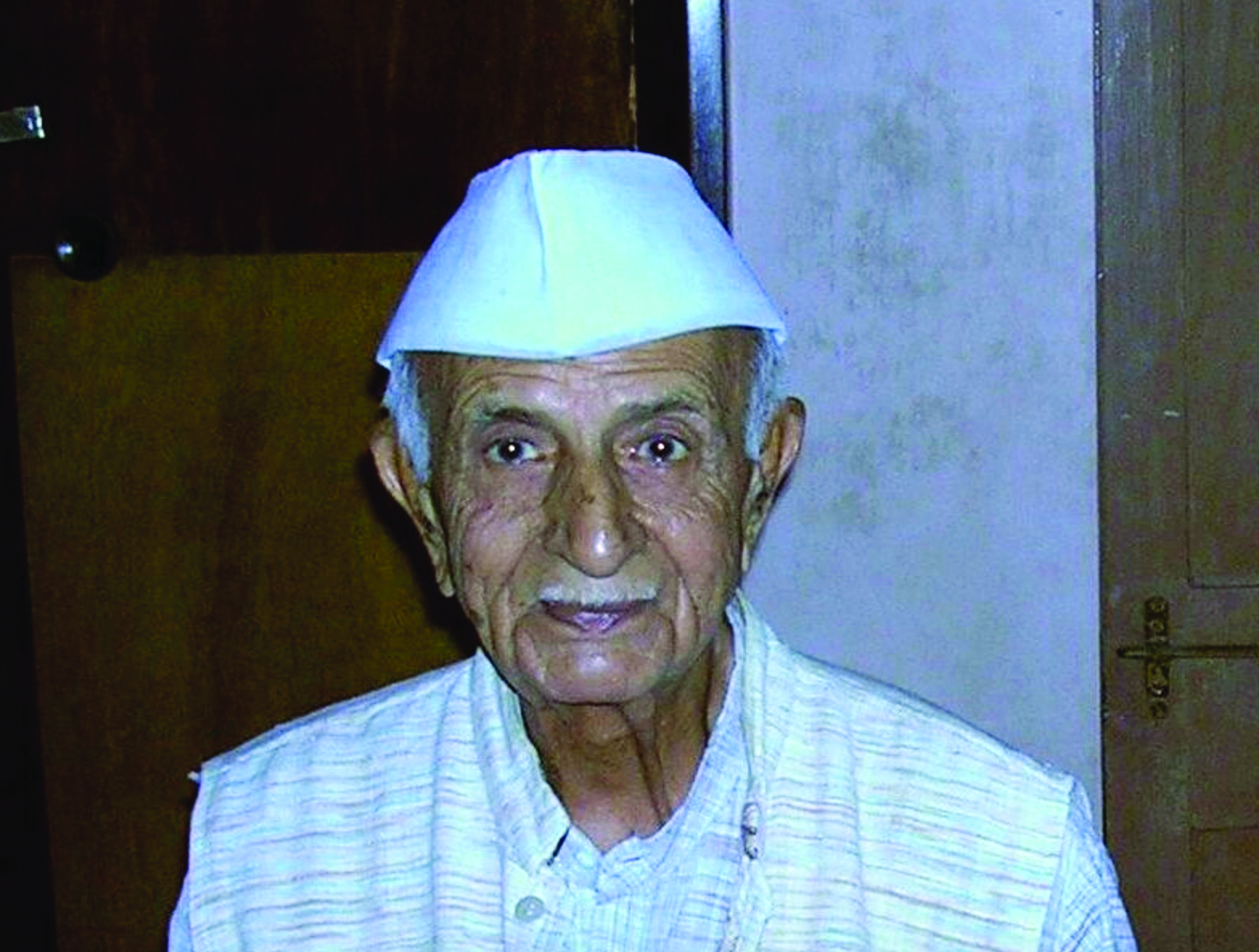
Prof Vaidya taught mathematics at various institutions/universities and over time, he associated with Gujarat University where he also served as Vice Chancellor. He played a crucial role in shaping the curriculum of mathematics and mentored students to study higher mathematics. Under his leadership, the Gujarat Ganit Mandal started promoting the education of mathematics and popularising it among students and teachers. Prof Vaidya took active part in its activities and contributed to lectures, conferences and publications. Suganitam, a mathematics magazine, was also started by him in the 1960s. He encouraged and supported the teaching and writing of mathematics in Gujarati to make it more friendly and accessible to students. He firmly believed that mathematics should not exist only in books and in isolation but it should serve to address the real life problems of our world and that’s the reason he always advocated the popularisation of mathematics and science through the national and regional languages. His life as an Educator and Scientist along with contribution to understand the mysteries of universe with ground breaking discovery of Vaidya Spacetime made a lasting impact on both science and society, especially in India. Prof Vaidya and his family practiced the Gandhian way of life throughout and he used to wear Khadi clothes with a white colour Gandhi cap. This tall personality was often seen riding a bicycle (even when he became a Vice Chancellor of the Gujarat University) from his home to university. Prof Vaidya was also a founder member of Indian Association of General Relativity and Gravitation (IAGRG). He always used to deliver lectures with a chalk on black board and scripted his memories of teaching and research in a publication titled Chalk and Duster.
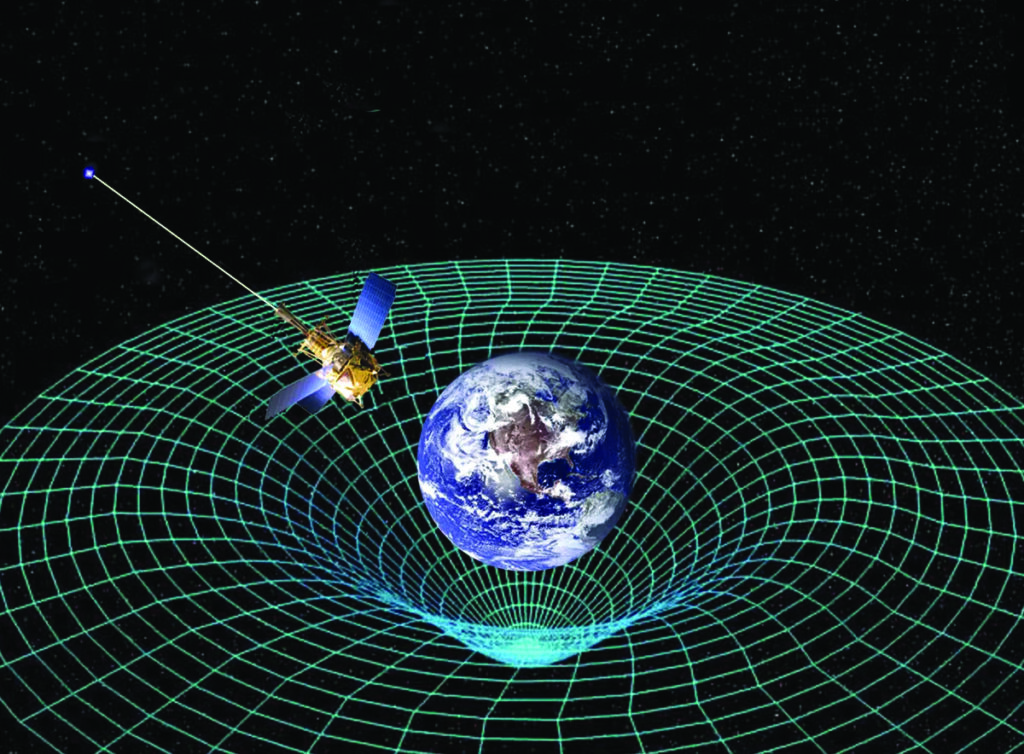
Image Courtesy: NASA
CONCLUSION
Prof P C Vaidya passed away on 12 March 2010 at the age of 92 and may truly be hailed for his seminal work, dedication to the education of mathematics, and pursuit of knowledge for the wellbeing of society with Gandhian philosophy. Prof Vaidya may also be remembered for his genius to connect abstract mathematical notions to real world physical problems of our universe. Even today, his seminal work is a cornerstone of research in Classical Gravity, Astrophysics and Cosmology.
*The writer is a Professor of Physics and Director, Research & Development Cell, HNBGU, Srinagar-Garhwal, Uttarakhand, and can be reached at hnandan@associates.iucaa.in. He is fortunate to have met Prof Vaidya at IUCAA and witnessed his generosity, humility and simplicity.