





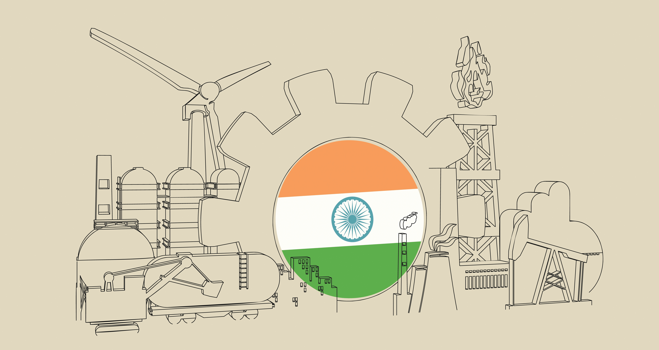
When India celebrates 100 years of independence in 2047, the nation envisions itself not only as an economic powerhouse but also as a global intellectual engine, confident in its science, proud of its technology, and open to sharing its innovations. Under the Viksit Bharat 2047 vision, a fully developed India is imagined as a place where prosperity is created through ideas and shared through collaboration. Becoming a developed nation requires more than high GDP or modern infrastructure. It requires scientific self-belief, resilient institutions, and a continuous cycle of learning and innovation. How effectively India builds and connects its research, development, and innovation ecosystem will determine the pace and quality of this transformation.
A glimpse of this ambition emerged at the Emerging Science Technology Innovation Conclave (ESTIC) 2025, held at Bharat Mandapam in New Delhi. Scientists, entrepreneurs, educators, and policymakers gathered to discuss how India could move from islands of excellence to an integrated national innovation network. The session, titled “Architecting the Future: Nurturing India’s R&D and Innovation Ecosystem for Viksit Bharat 2047” and moderated by Professor Ajay Kumar Sood, Principal Scientific Adviser to the Government of India, underscored a collective commitment to building the science of tomorrow.
FROM ADOPTERS TO INNOVATION LEADERS
For decades, India has proven its strength as a practical adapter of global technologies, improving upon imported ideas and making them affordable for millions. The challenge now is to lead by designing the world’s next breakthroughs rather than merely assembling them. This transformation calls for a shift from ‘know-how’ to ‘know-why’.
Know-how drives replication and incremental improvement. Know-why sparks discovery by seeking the principle behind every process. A nation that asks ‘how’ learns to operate systems. A nation that asks ‘why’ learns to create them. Countries that nurture this deeper curiosity generate new industries. When Indian scientists and engineers begin with ‘why’, they step into the frontier of original science.
If India succeeds, it can realise a 30 to 35 trillion-dollar economy by 2047, built on creative knowledge. Manufacturing will remain the backbone, but its true strength will come from indigenous design, sustainable production, and intellectual property created within India. The shift from ‘Made in India’ to ‘Designed in India’ signifies not just technological progress but cultural maturity, a confidence that Indian ideas can set global standards.
CROSSING THE ‘VALLEY OF DEATH’
Every innovation system faces the silent danger of the ‘valley of death’, the difficult gap between laboratory research and market application. In this gap, promising discoveries often stall for lack of funding, mentorship, or risk tolerance.
India’s answer is the Research, Development and Innovation (RDI) Fund, worth nearly one trillion rupees. It provides long-term, flexible capital, enabling innovators to experiment, fail safely, and try again. The fund is managed by professional intermediaries, such as venture and alternative-investment funds, that blend market discipline with the nation’s strategic goals. Private co-investment ensures accountability and brings scale that public grants alone cannot provide.
The fund prioritises sectors with long, expensive innovation cycles, such as semiconductors, advanced materials, aerospace, climate technologies, and defense. By offering patient financial support alongside performance metrics, it gives Indian innovators the confidence to compete globally. In essence, the RDI Fund does not merely support projects. It builds an innovation mindset across the ecosystem.
UNIVERSITIES AS ENGINES OF INNOVATION
India’s universities and research institutions form the base of its scientific pyramid. They are evolving from centres of classroom learning into dynamic engines of research, invention, and entrepreneurship.
Grand challenges such as affordable healthcare, clean energy, cybersecurity, and sustainable cities are too complex for any single discipline. Universities are therefore promoting cross-departmental collaboration and consortium research involving multiple campuses, industries, and social stakeholders. The new culture values not only novelty but also relevance.
This change also reflects a movement toward democratising innovation. India’s scientific talent is widely distributed across states and smaller towns. Many Tier 2 and Tier 3 institutes harbour creative young minds who need infrastructure and connections. Providing them with access to advanced instrumentation, mentorship, and international collaborations unleashes hidden potential.
Academic entrepreneurship is gaining legitimacy. National programmes encourage Entrepreneurs in Residence fellowships, startup incubators at technical institutes, and joint research with corporations. Professors and students increasingly view product design and technology transfer as forms of scholarship. As one student innovator described at the Conclave, “Our project moved from a journal paper to a village solution within a year. That experience is priceless.”
SECTORAL TRANSFORMATION: BUILDING ON STRENGTH
Innovation in India is not abstract. It manifests powerfully across sectors where policy, investment, and creativity converge. These sectoral transformations require a robust institutional backbone to ensure continuity, scale, and coordination across the system.
Space: Opening the Final Frontier
The space sector has become a showcase of policy reform and collaboration. Once limited to ISRO, it now includes private startups, corporate suppliers, and universities developing small satellites and launch systems. The government retains its enabling role through regulation and infrastructure, while entrepreneurs bring agility and fresh ideas. This model shows how strategic openness can accelerate growth. It also offers an inspiring narrative for young people, who now see outer space as a domain where Indian companies can lead.
HEALTHCARE: INNOVATION WITH COMPASSION
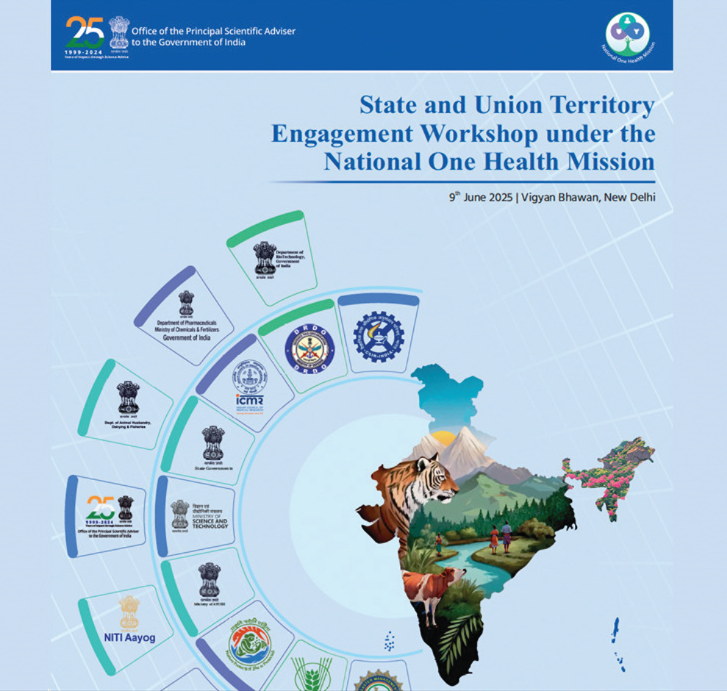
Healthcare in India blends technological ingenuity with social purpose. The guiding concept of ‘One Health’ recognizes the link between human, animal, and environmental well-being. Partnerships among medical schools, engineering institutes, and AI developers are producing affordable solutions, from portable diagnostic kits to telemedicine networks. Simulation labs now train doctors and nurses using virtual reality, improving quality while reducing costs. Yet compassion remains central. Innovation must reach those who need it most and respond to India’s cultural diversity in health practices.
AGRICULTURE: TOWARD SUSTAINABILITY AND INCLUSION
Agriculture, which supports a large share of India’s population, is witnessing an ‘evergreen revolution’ that values both productivity and ecological sustainability. The approach revolves around five E principles: Employment, Environment, Economic growth, Energy, and Equity.
Precision agriculture, climate-smart seeds, and bio-fertilizers are entering mainstream farming. Drone and satellite data help farmers monitor crops and manage water use. By integrating digital technology with traditional wisdom, India aims to secure its food future while protecting small farmers from climate-related vulnerability.
ANRF: INDIA’S INSTITUTIONAL NERVE CENTRE
A true milestone in India’s innovation journey is the Anusandhan National Research Foundation (ANRF), envisioned as the unifying nerve centre of the national R&D ecosystem. The foundation replaces fragmented funding streams with a coherent architecture spanning the entire spectrum from fundamental science to applied technology. It encourages high-risk, high-reward research, recognising that scientific progress often emerges from exploration rather than certainty.

ANRF aligns its initiatives with national missions in priority areas, including materials and manufacturing, precision healthcare, agriculture and food security, quantum and digital technologies, and renewable energy. Thematic clusters bring together universities, national laboratories, and industry leaders around shared goals, enabling cross-fertilisation of ideas and faster movement from prototype to production.
Inclusivity is a core value. ANRF’s tiered funding model ensures equitable opportunities across institutions. Leading institutes receive large-scale grants for frontier research, while smaller and state universities receive targeted seed funding and mentoring. Early-career investigators benefit from compact starter grants that pair funding with mentorship, helping them establish independent research trajectories.
Beyond funding, ANRF promotes partnerships, capacity, and accountability. Collaborative innovation clusters enable companies and universities to share facilities and intellectual property frameworks. Faculty training and post doctoral fellowships strengthen human capital, while global exchange programs expose Indian researchers to international best practices. Regional centres operating through a hub-and-spoke network connect leading universities with institutions across the country, ensuring that expertise flows widely rather than remaining confined to metropolitan hubs.
A special initiative, the Societal Innovation Labs, integrates science with real-world needs. These labs support projects that deliver grassroots solutions such as clean water technologies, affordable energy devices, and assistive systems for persons with disabilities. In doing so, ANRF connects research with society and strengthens scientific engagement at the community level.
Perhaps its most forward-looking reform is its outcome-based evaluation system. Instead of measuring success solely through publications, ANRF evaluates impact through patents, startups, policy contributions, and community outcomes. The result is a shift from counting outputs to creating value.
LEARNING FROM GLOBAL MODELS
Innovation rarely grows in isolation. The experiences of the United States, South Korea, Germany, and the United Kingdom show that sustained research investment, strong industry partnerships, and policy continuity are essential to success. Mechanisms such as the Bayh-Dole Act, Catapult Centres, and Fraunhofer Institutes demonstrate that innovation accelerates when academia and industry share ownership of ideas.
Another clear lesson is the central role of private enterprise. In advanced economies, businesses account for a majority of R&D spending. For India to become an innovation leader, industry must view research not as a cost but as a strategic investment. Integrating industrial R&D into national missions, from semiconductors to green hydrogen, will help translate laboratory breakthroughs into large-scale economic transformation.
India’s steady rise in the Global Innovation Index reflects growing capability. Yet the true measure of success lies not in rankings but in the ability to develop technologies that address national challenges and compete globally.
SCIENCE AS DIPLOMACY
Science today also serves as a bridge between nations. In an era when standards define markets, scientific capability defines influence. Collaborative research builds trust even when political differences persist.
India’s leadership in initiatives such as solar energy alliances, global health collaborations, and South–South research partnerships demonstrates that science can strengthen international engagement. By aligning its innovation agenda with global sustainability goals, India enhances both its soft power and its contribution to collective progress.

Image Courtesy: PIB
THE ROAD AHEAD: TRUST, TALENT, TRANSFORMATION
As India moves toward 2047, its innovation journey will hinge on three enduring forces: trust, talent, and transformation.
Trust fosters creativity. Scientists must trust that the system values original thinking, and institutions must trust their scientists to pursue long-term goals. Transparent policies and sustained support translate that trust into confidence.
Talent remains India’s greatest wealth. Continued investment in education, laboratory networks, and research fellowships will ensure every region contributes to innovation. Programmes that identify promising students early and mentor them through real-world challenges can transform curiosity into capability.
Transformation occurs when government, academia, industry, and society align. Interdisciplinary missions, open data systems, and collaborative evaluation frameworks enable research to move efficiently from discovery to application.
A FUTURE BUILT TOGETHER
The path to Viksit Bharat 2047 is neither simple nor short, yet it is deeply inspiring. It calls on citizens to view science not merely as knowledge but as a force for nation-building.
If India builds an ecosystem founded on trust, powered by talent, strengthened by institutions such as ANRF, and guided by transformation, it can redefine development itself. The coming decades can demonstrate that progress rooted in science is progress shared by all. An innovative India will not only shape its own future, but also help define the future of the world.
*Dr Deo Prakash Chaturvedi is Scientist, Department of Biotechnology, Government of India, New Delhi; Dr Kishore Paknikar is ANRF Prime Minister Professor, COEP Technological University, Pune.