


Image Courtesy: PIB
YOUNG SCIENTIST / PROF MOHANASANKAR SIVAPRAKASAM
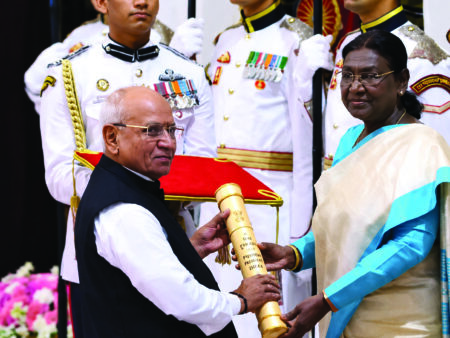
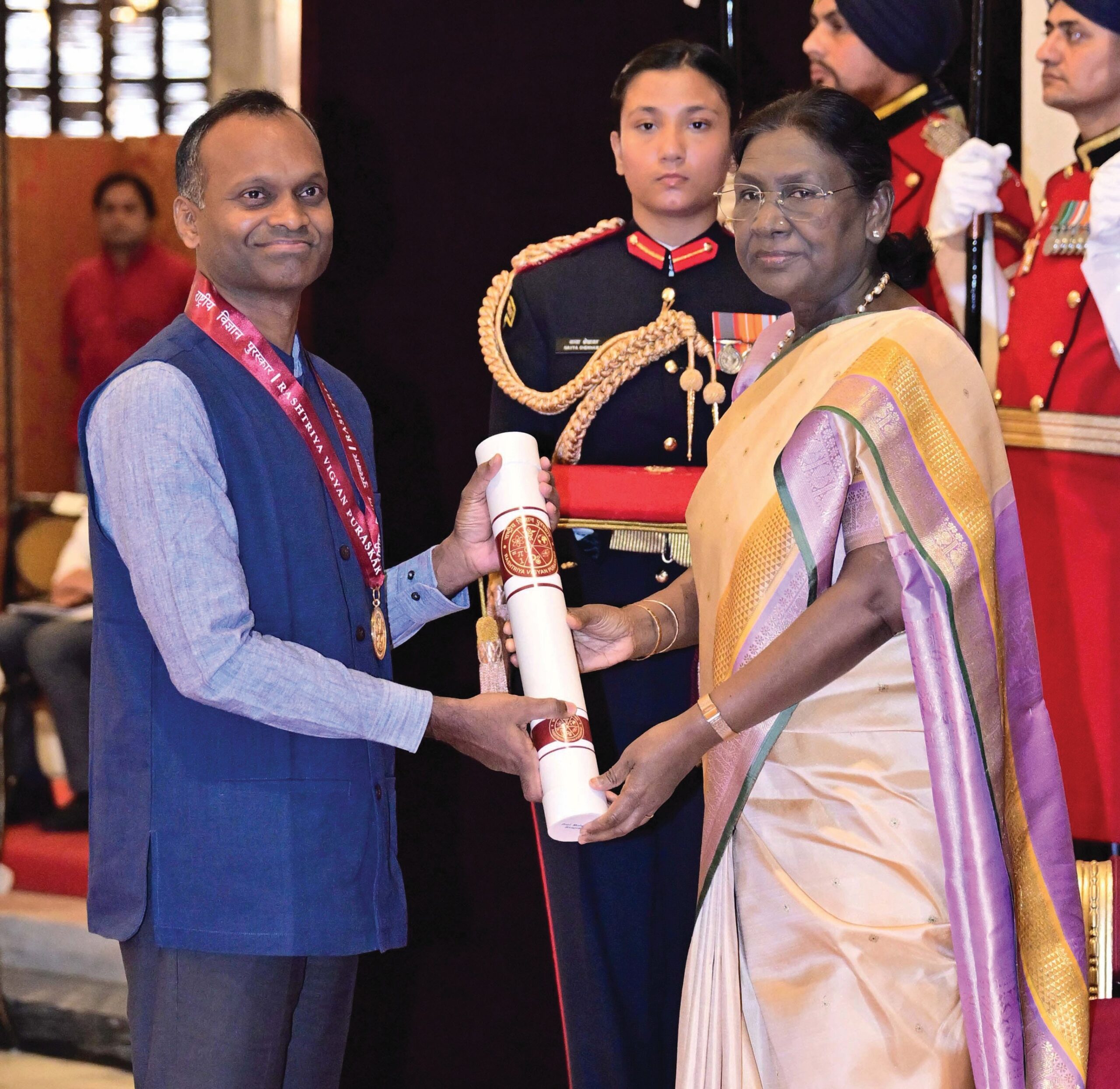
In 2025, Prof Mohanasankar Sivaprakasam was awarded the Vigyan Yuva Award under the Rashtriya Vigyan Puraskar, recognising a body of work that goes far beyond academic research. His journey represents a powerful shift in Indian science, where innovation is no longer confined to laboratories, but is designed to solve real-world problems at scale. At a time when access to quality healthcare remains uneven, Prof Sivaprakasam’s work stands out for its ability to bridge technology and affordability.
Currently a professor at IIT Madras, Prof Sivaprakasam has built his career at the intersection of engineering and medicine. He leads key initiatives such as the Healthcare Technology Innovation Centre (HTIC) and the Sudha Gopalakrishnan Brain Centre, both of which have become hubs for cutting-edge yet socially relevant research. His recognition through the Vigyan Yuva Award comes for developing affordable medical devices, indigenous healthcare technologies, and advanced brain imaging systems.
What makes his work particularly significant is its scale and impact. Over the years, the technologies developed under his leadership have benefited more than 15 million patients, both in India and globally. Unlike many scientific breakthroughs that remain confined to academic journals, Prof Sivaprakasam’s innovations have been translated into real-world applications, used in hospitals, clinics, and even rural healthcare settings.
One of the defining aspects of his work is the development of affordable medical devices tailored to Indian conditions. These include portable diagnostic tools, AI-powered screening systems, wearable health devices, and even mobile healthcare solutions such as “hospital-on-wheels” platforms. Such innovations are particularly crucial in a country where access to expensive medical infrastructure is often limited to urban centres. By designing devices that are both cost-effective and scalable, Prof Sivaprakasam has helped democratise access to healthcare.
Equally groundbreaking is his contribution to human brain research. At IIT Madras, he has been at the forefront of a global effort to create one of the most detailed human brain maps ever developed. This initiative, led through the Sudha Gopalakrishnan Brain Centre, has already achieved significant milestones. The first set of brain maps released in 2025 advanced the field “tenfold” compared to previous efforts and positioned India as a key player in global neuroscience research.
The ambition of this project goes even further. Scientists at the centre are working to create a cellular-level atlas of the human brain, mapping hundreds of brains across different age groups, ethnicities, and disease conditions. This could fundamentally transform the understanding of neurological disorders, ageing, and brain function, opening avenues for diagnosis and treatment.
Prof Sivaprakasam’s journey also reflects a larger trend in Indian science, interdisciplinary collaboration. His projects bring together experts from engineering, medicine, data science, and neuroscience, creating a model where innovation is both holistic and application driven. His ability to manage large-scale, complex research initiatives has been instrumental in translating ideas into deployable technologies. In fact, he established the Healthcare Technology Innovation Centre as early as 2011, laying the foundation for one of India’s most successful med-tech ecosystems.
Prof Sivaprakasam’s work aligns closely with national priorities such as indigenous technology development, affordable healthcare, and self-reliance. In his own words, the award represents the possibility of conducting “cutting-edge research in India” and translating it into commercially viable, indigenous products. This philosophy captures the essence of his work—innovation that is advanced, accessible and impactful.
Prof Sivaprakasam’s journey is, therefore, not just about scientific excellence; it is about redefining what science can achieve when aligned with societal needs. By turning engineering solutions into life-saving technologies, he has set a benchmark for a new generation of researchers, one where success is measured not just by discovery, but by the number of lives transformed.