


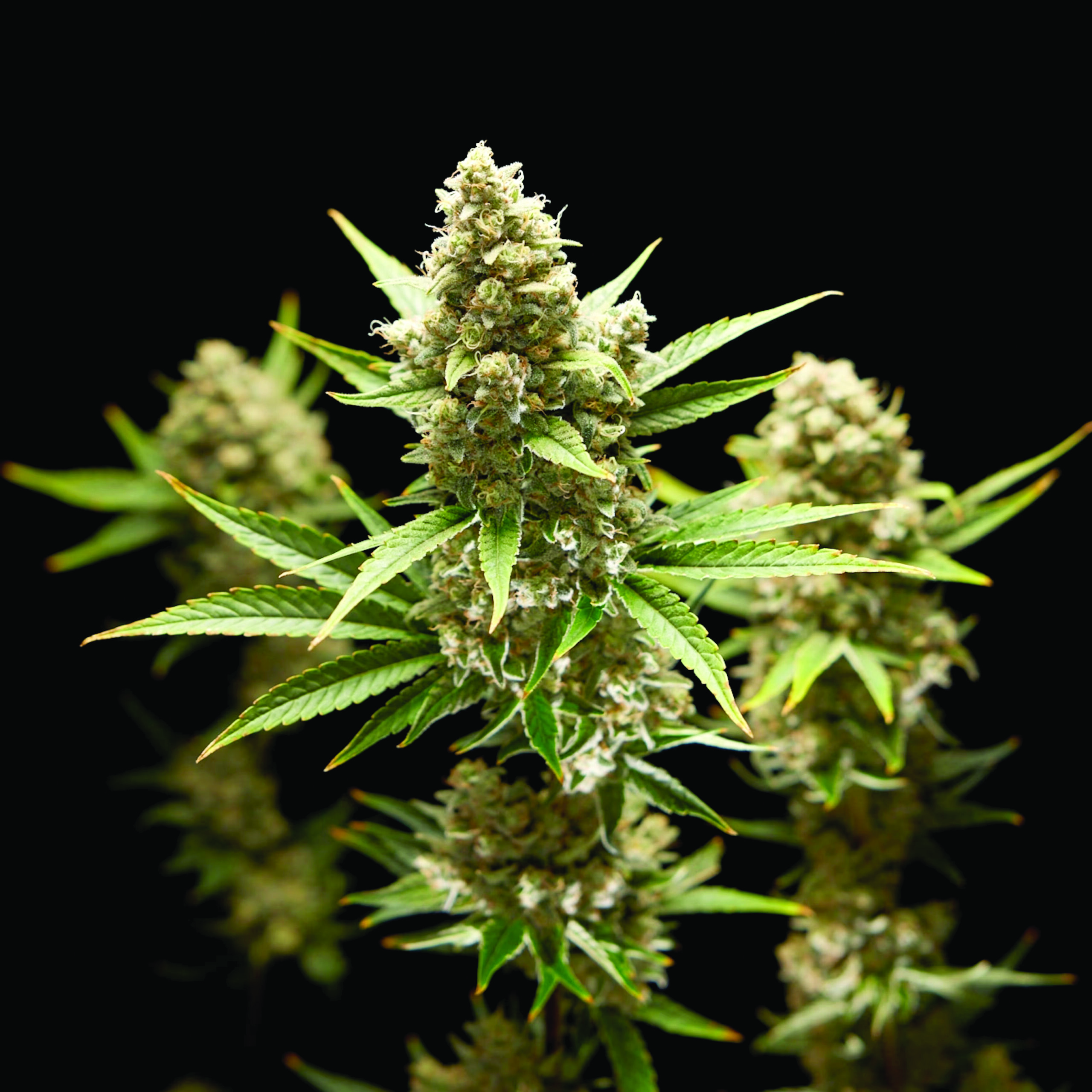
Few plants have travelled a journey as complex as Bhaanga (Cannabis sativa L.). Celebrated in mythology, employed in traditional medicine, restricted by law, investigated by western science and increasingly valued as a sustainable industrial resource, Cannabis occupies a unique place in human history.
For many people today, the word Cannabis immediately evokes discussions around recreational use and intoxication. Yet this perspective captures only a fraction of the plant’s identity. Ayurveda, classical Indian literature and emerging scientific research collectively reveal a far broader narrative—one in which Bhaang appears as a carefully regulated medicinal herb, a subject of neurobiological research and a promising source of environmentally sustainable products.
At a time when science is exploring the body’s own endocannabinoid system and industries are seeking greener alternatives to conventional materials, Bhaang offers an opportunity to revisit an ancient plant through the lens of evidence, context and responsible use.
CLASSICAL IDENTITY AND AYURVEDIC PERSPECTIVE
Bhaang finds mention in Ayurvedic literature including the Bhavaprakasha Nighantu, Raja Nighantu and Dhanvantari Nighantu. Unlike Rasayana herbs, Bhaang was never regarded as a daily rejuvenator or a general wellness herb. Classical physicians recognized it as a potent medicinal substance requiring careful handling.
Its Ayurvedic attributes are described as:
- Rasa: Tikta, Kashaya
- Guna: Laghu, Tikshna
- Virya: Ushna
- Vipaka: Katu
Traditional Ayurvedic texts describe actions such as:
- Deepana (stimulating digestive fire)
- Pachana (enhancing metabolic transformation)
- Grahi (improving intestinal absorption)
- Vedanasthapana (pain alleviation)
- Nidrajanana (supporting sleep)
It was employed in selected conditions such as Grahani disorders, chronic pain, appetite disturbances, and certain neurological conditions. Importantly, Ayurveda emphasized that Bhaang should undergo specific purification procedures (Shodhana) before medicinal use. This reflects a sophisticated understanding that therapeutic value and potential harm may coexist within the same substance.
THE PLANT OF SHIVA: A MYTHOLOGICAL ASSOCIATION
Few medicinal plants possess such a strong cultural presence in India.
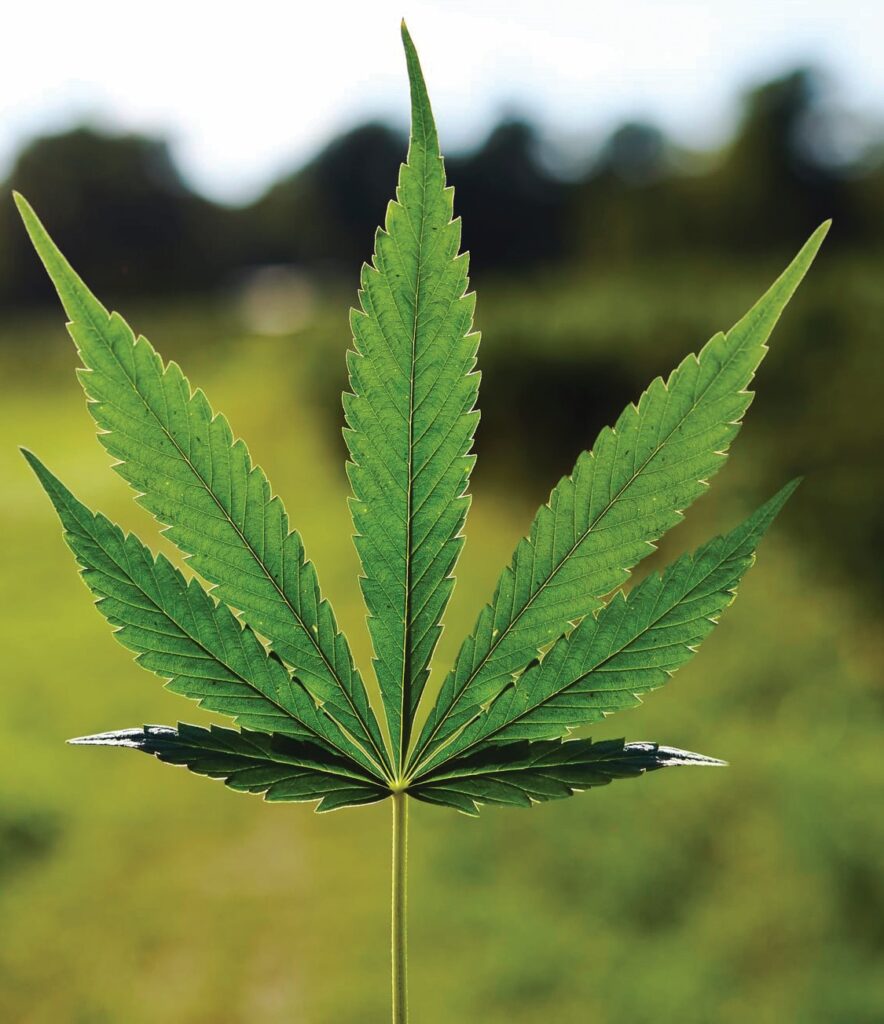
One popular legend associates Bhaang with Lord Shiva. According to traditions, during Samudra Manthana, drops of celestial nectar fell upon the earth and gave rise to sacred medicinal plants, including Bhaang. India did not regard Bhaang merely as an intoxicant. It was seen as a plant possessing power, requiring respect and restraint.
AYURVEDA’S MOST IMPORTANT LESSON: POTENCY DEMANDS PRUDENCE
Perhaps the most relevant lesson Ayurveda offers modern society is its approach to responsible use.
Classical physicians never advocated indiscriminate consumption. Therapeutic use depended upon:
- Proper purification (Shodhana)
- Appropriate dosage (Matra)
- Suitable vehicle (Anupana)
- Individual constitution (Prakriti)
- Disease condition (Vyadhi)
This approach mirrors the modern pharmacological principle that efficacy and safety depend upon context.
In an era where Cannabis-derived products are increasingly available worldwide, this Ayurvedic emphasis on supervision and personalization remains highly relevant.
THE ENDOCANNABINOID SYSTEM: A SCIENTIFIC REDISCOVERY OF BALANCE
One of the most important discoveries in modern neuroscience has been the identification of the endocannabinoid system (ECS).
The ECS consists of naturally produced endocannabinoids, cannabinoid receptors (CB1 and CB2), and enzymes that regulate these signaling molecules. Collectively, this network influences:
- Sleep
- Appetite
- Mood
- Memory
- Pain perception
- Immune function
- Stress adaptation
Researchers now regard the ECS as one of the body’s major regulatory systems, helping maintain physiological equilibrium or homeostasis.
This discovery has transformed scientific understanding of Cannabis. Rather than acting upon an isolated pathway, plant-derived cannabinoids interact with a widespread regulatory network involved in maintaining balance throughout the body.
AN AYURVEDIC LENS ON THE ENDOCANNABINOID SYSTEM
While Ayurveda and modern physiology emerge from fundamentally different knowledge systems, the discovery of the ECS creates an interesting opportunity for dialogue.
Ayurveda defines health as a dynamic balance among Doshas, Dhatus, Agni and Srotas. Disease arises when this equilibrium is disturbed.
Among the three Doshas, Vata governs communication, movement, sensory processing, coordination and adaptability. Disturbed Vata manifest as pain, insomnia, anxiety, irregular digestion and neurological imbalance. It’s functional rote is regulating the body’s broader regulatory networks. Similarly, the ECS participates in maintaining physiological stability across multiple organ systems.
The comparison should not be interpreted as a direct equivalence. Rather, both frameworks highlight a common biological principle: health depends upon regulation and balance, not merely the function of individual organs.
Seen through this lens, Bhaang becomes a fascinating point of convergence between ancient observations about systemic regulation and modern discoveries in neurobiology.
BHAANG IN PAIN, SLEEP, AND DIGESTIVE HEALTH
- Pain Management
Classical texts describe Bhaang as Vedanasthapana, supporting relief from pain and discomfort. Modern research into cannabinoids has similarly focused on conditions such as neuropathic pain, cancer-related pain and chronic pain syndromes.
- Sleep and Nervous System Regulation
Bhaang was traditionally used in selected conditions involving disturbed sleep and nervous agitation. Contemporary research continues to investigate cannabinoid interactions sleep regulation and stress adaptation pathways.
- Digestive Applications
Ayurveda also valued Bhaang for its Deepana and Pachana properties. It was employed in carefully selected digestive disorders characterized by impaired appetite, sluggish digestion, and Grahani-related disturbances.
BEYOND MEDICINE: THE INDUSTRIAL HEMP REVOLUTION
Perhaps the most overlooked aspect of Cannabis is its industrial potential.
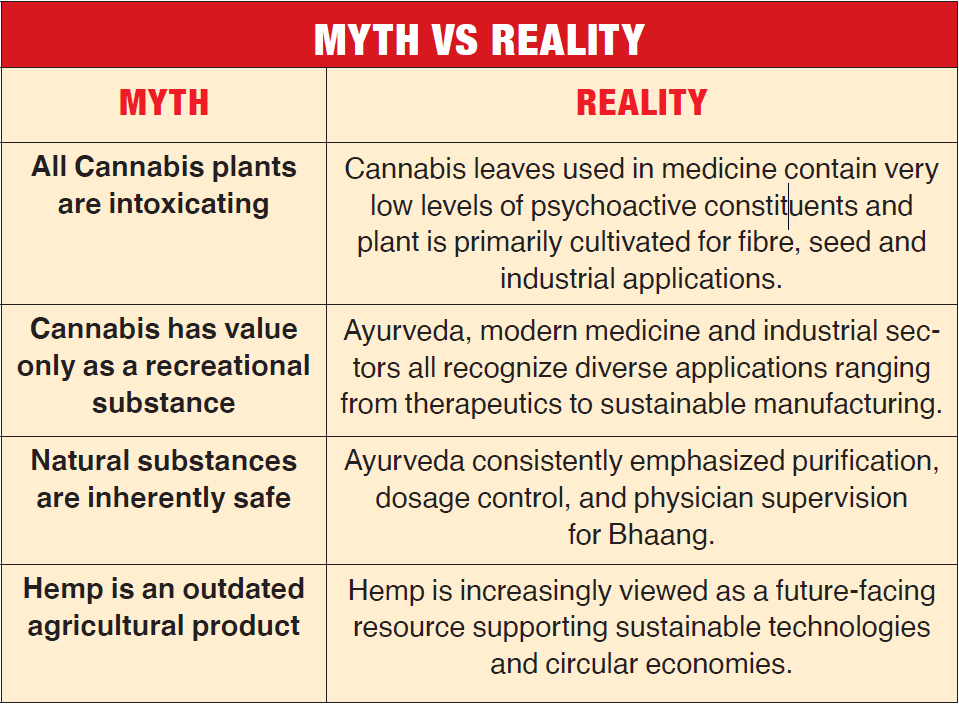
Not all Cannabis varieties are cultivated for psychoactive purposes. Industrial hemp is increasingly being cultivated for fibre, seed and industrial applications. Historically, hemp was used to manufacture rope, textiles, paper and sailcloth. Today, modern industries are exploring hemp for: sustainable fabrics, biocomposite materials, construction products, packaging solutions, automotive components and nutritional products. Hemp is a promising contributor to future green technologies.
CANNABIS AND SUSTAINABILITY
Compared with many conventional industrial crops, hemp offers several advantages such as: rapid growth, high biomass yield, relatively low pesticide requirements, potential carbon sequestration benefits, utilization of multiple plant components. Researchers are investigating hemp-based alternatives to plastics, synthetic fibres and resource-intensive construction materials.
RECLAIMING A BALANCED PERSPECTIVE
Bhaang may be one of the most misunderstood plants of our time. Reduced to a narcotic substance, its broader identity is often overlooked.
Ayurveda neither glorified nor demonized the plant. Instead, it recognized its medicinal value while acknowledging its risks. Modern science is arriving at a similarly nuanced position—investigating cannabinoids, exploring the endocannabinoid system and examining hemp as a sustainable resource for the future. Cannabis cannot be understood through a single narrative.
*The writer is an Ayurveda physician, DST Woman Scientist A, AIIMS New Delhi, and founder of Pratha Ayurveda.