




Image: AI Generated
The human brain has traditionally been described as one organ divided into specialised regions. But new research suggests that its basic architecture may be far more unusual: what appears to be a single brain may actually have been assembled from two ancient developmental systems with distinct origins.
Researchers led by Stanford scientists have found that the front and back portions of the brain originate from different groups of progenitor cells at the earliest stages of embryonic development. The findings challenge the prevailing model that the entire brain develops from a common population of precursor cells.
The discovery could also help explain why scientists have struggled to reproduce certain brainstem neurons in laboratories and may provide new ways to investigate neurological diseases such as amyotrophic lateral sclerosis (ALS) and spinal muscular atrophy (SMA).
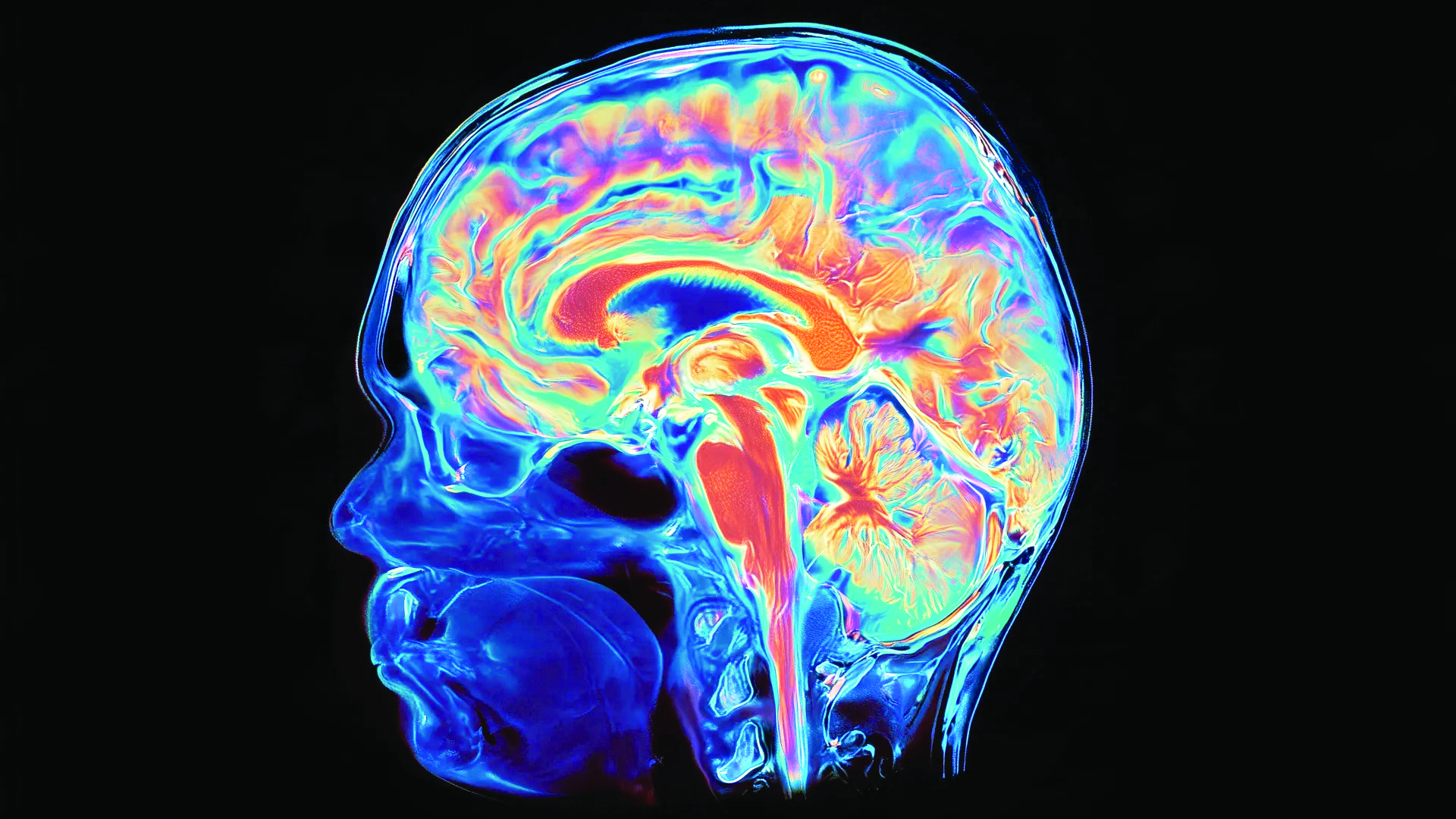
The adult human brain is broadly divided into the forebrain, midbrain and hindbrain. The forebrain is associated with higher cognitive functions, including language, consciousness, reasoning and abstract thought.
The hindbrain, which includes important structures of the brainstem, performs very different tasks. It regulates several automatic functions essential for survival, including breathing, heartbeat, sleep and hunger. Neurons in this region also control muscles involved in facial movement, speech and swallowing.
Scientists had long assumed that these different regions ultimately originated from the same type of early embryonic cell. The new research indicates otherwise.
By studying the earliest stages of embryonic development, researchers identified two distinct populations of brain progenitor cells. Cells expressing a gene called Otx2 develop into the forebrain and midbrain, while cells expressing another gene, Gbx2, are committed to forming the hindbrain.
Crucially, researchers found that the two populations remain separate. Rather than one developmental pathway branching into different brain regions later, the forebrain-midbrain and hindbrain appear to begin along parallel developmental tracks.
The researchers also examined chromatin—the structure in which DNA is packaged inside cells and which helps determine which genes can be activated.
They discovered major differences between the chromatin configurations of cells destined for the front of the brain and those forming the hindbrain. These configurations appear to establish the identity of the cells very early, effectively directing them towards different developmental futures. The finding may solve a long-standing problem in neuroscience.
For years, researchers have struggled to produce authentic human hindbrain neurons from stem cells. In many cases, scientists were effectively attempting to transform progenitor cells destined for the front of the brain into cells belonging to the hindbrain.
The Stanford-led team instead used the newly identified developmental pathway to generate human hindbrain motor neurons from stem cells. The laboratory-grown neurons displayed electrical activity and produced proteins associated with neurons controlling facial and swallowing muscles.
Researchers then examined other species, including zebrafish, chickens and acorn worms, and found evidence of a similar developmental division. That suggests the two-part organisation of the nervous system may have originated more than 500 million years ago.
The findings could have important implications for disease research.
Both ALS and SMA damage neurons involved in movement, including neurons in the brainstem. As these cells deteriorate, patients can experience increasing difficulty speaking, swallowing and eventually breathing.
Obtaining such neurons directly from living patients is extremely difficult. The ability to reliably produce them from stem cells could allow scientists to observe how diseases damage these cells and provide laboratory models for testing potential treatments.
Researchers now plan to investigate whether the same ancient developmental division extends beyond the brain, including into the spinal cord and other parts of the nervous system.
Rather than simply rewriting anatomical textbooks, the discovery suggests that the human brain may carry within it the evolutionary history of two remarkably old neural systems—joined together over hundreds of millions of years to function as what we experience as one brain.