


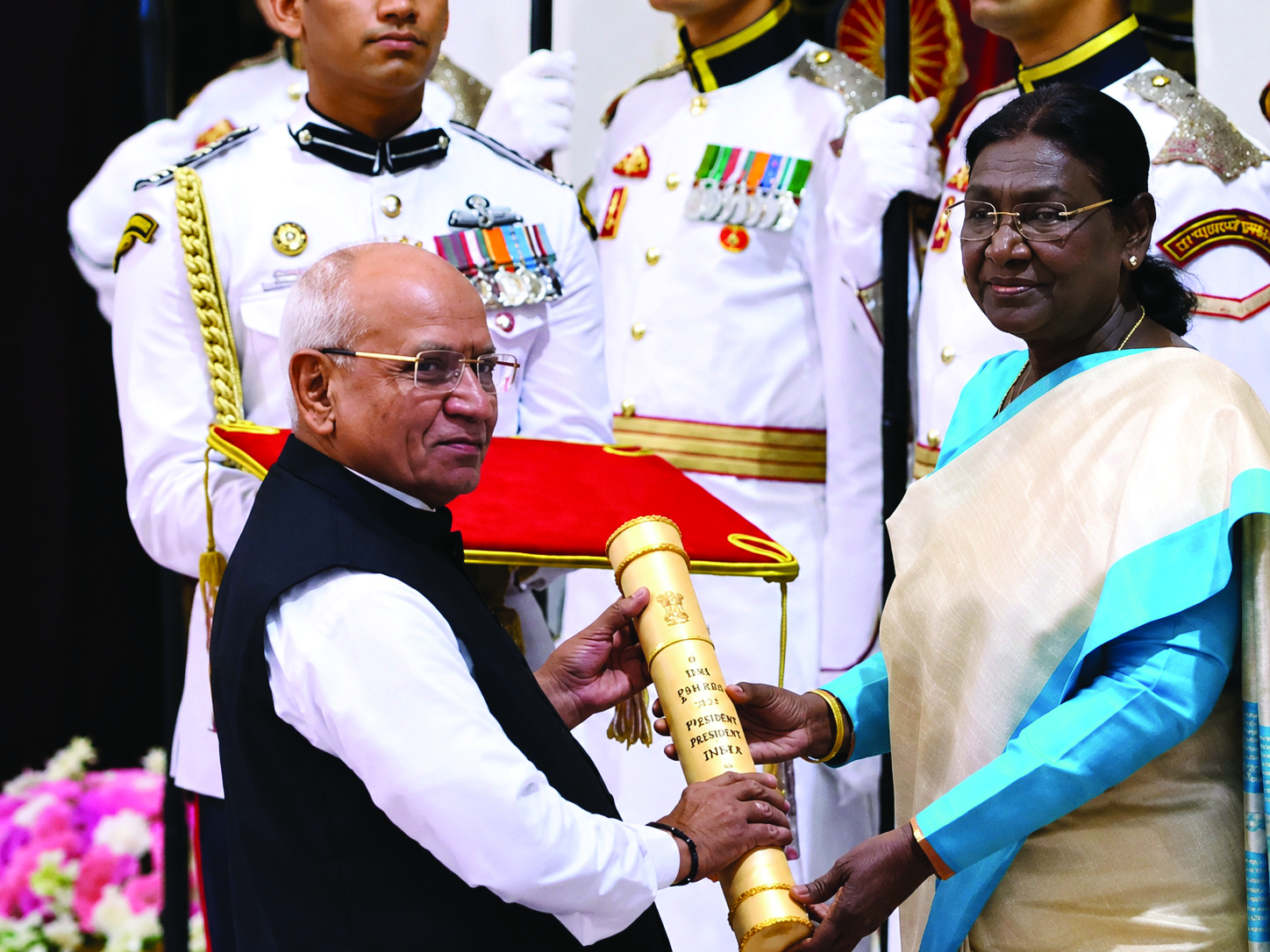
Images Courtesy: PIB
When the Padma Awards were announced earlier this year, the spotlight naturally fell on celebrated artists, scientists and public figures. Yet, among the awardees were two names that rarely dominate national headlines but have transformed the lives of thousands in rural India through years of silent, persistent work.
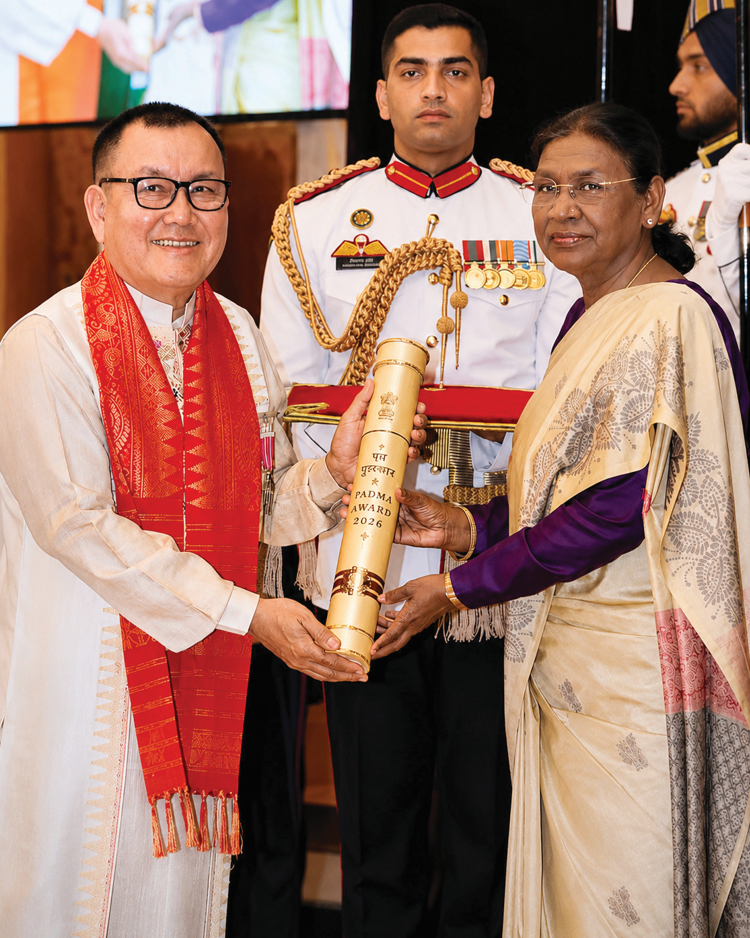
One is Shrirang Devaba Lad, a farmer from Maharashtra’s Parbhani district whose innovations in cotton cultivation have dramatically increased productivity and changed the fortunes of cultivators across several states. The other is Dr Jogesh Deuri, the sericulture expert from Assam who transformed the Eri silk sector into a thriving rural enterprise, connecting over 1,600 villages to an integrated value chain while making women the backbone of the industry’s growth.
Their journeys began in entirely different landscapes—one in the drought-prone cotton fields of Marathwada, the other in the lush silk-growing regions of Assam. Their fields of work are different. Their methods are different. Yet, they embody the same philosophy: India’s greatest innovations often emerge not from laboratories or boardrooms, but from villages where people understand local problems because they live them every day.
THE FARMER WHO REFUSED TO ACCEPT LOW YIELDS
For generations, cotton cultivation in Maharashtra carried with it a paradox. Cotton was called ‘white gold’, yet thousands of farmers growing it struggled with low productivity, erratic rainfall and mounting debt.
In Malsonna village of Parbhani district, a young farmer named Shrirang Devaba Lad refused to believe that poor yields were inevitable. Born into a modest farming family, he experienced firsthand the uncertainty of agriculture. Rather than accepting inherited practices as unchangeable, he began observing every stage of cotton cultivation with extraordinary patience and curiosity.
His approach was unusual. Unlike scientists working inside research institutions, Lad’s laboratory was his own farm. Over the years, these observations evolved into what is today known as the Dada Lad Technique—a comprehensive system of cotton cultivation that combines improved planting density, selective pruning, scientific spacing, efficient irrigation and better moisture conservation practices. Lad realised that not every branch contributed equally to production. Some branches consumed nutrients without adding substantially to yield. By selectively pruning these non-productive branches, the plant redirected its energy towards fruit-bearing growth. What appeared to be a simple intervention eventually became one of the defining features of his cultivation technique. Farmers who initially hesitated to cut healthy-looking branches later witnessed remarkable improvements in output after seeing the results in demonstration plots.
The numbers were astonishing. Where conventional cultivation often produced five to six quintals of cotton per acre, farmers adopting his techniques reported yields reaching 25–30 quintals per acre under favourable conditions. Independent evaluations by the Central Institute for Cotton Research (CICR), Nagpur, acknowledged the effectiveness of his methods, lending scientific validation to innovations that had originated on a farmer’s field rather than in a laboratory.
Lad never sought exclusive ownership over his ideas. Instead, he travelled extensively, meeting farmers, demonstrating techniques in fields, answering questions and encouraging experimentation. He understood something fundamental about rural India: farmers trust what they can see.
In an interview with Sansad TV, he remarked that farmers do not change because someone tells them to; they change after witnessing results with their own eyes. One successful demonstration inspires another, and gradually knowledge spreads from village to village. That philosophy explains why his techniques travelled across eight cotton-growing states through farmer-to-farmer learning rather than expensive extension campaigns.
TURNING SILK INTO SUSTAINABLE PROSPERITY
If Shrirang Devaba Lad’s story is one of transforming agricultural productivity, Dr Jogesh Deuri’s journey is about rebuilding an entire rural economy around one of Assam’s oldest traditions.
For centuries, Assam’s identity has been intertwined with silk. The state is the only place in the world that produces all four major varieties of natural silk—Muga, Eri, Mulberry and Tropical Tasar. Among them, Eri silk occupies a unique position. Known as the ‘peace silk’ because the moth is not killed during extraction, it has long been woven into the cultural and economic life of Assam’s tribal and rural communities. Yet, despite its immense potential, Eri silk remained largely a household activity with limited commercial value. Farmers reared silkworms in their backyards, women spun yarn manually, and artisans struggled to access modern markets. The absence of organised infrastructure meant that while Assam possessed a rich natural resource, the people producing it often remained poor.
It was this paradox that shaped the life of Dr Jogesh Deuri. Born in Daranggiri under Goalpara district, Deuri’s introduction to sericulture was deeply personal rather than academic. As a child, he watched his mother rear Eri silkworms and spin yarn to supplement the family’s income. He also witnessed the uncertainty that governed the lives of thousands of silk rearers. Seasonal shortages of food plants, low productivity and the absence of organised markets meant that sericulture could rarely provide a stable livelihood. Those childhood experiences remained with him and later inspired a career devoted entirely to improving the lives of silk farmers.
After earning his doctoral degree, Deuri pursued advanced research at the Central Silk Board before further specialising in sericulture at the Sericultural Research Institute in Liaoning Province, China. Exposure to international practices convinced him that Assam’s traditional knowledge possessed enormous potential if supported by modern science, better technology and organised value chains.
Returning to Assam, he spent more than three decades in the Sericulture Department, eventually serving as its Director. Rather than viewing his role merely as an administrator, he approached it as an opportunity to solve problems that had constrained rural livelihoods for generations. Under his leadership, sericulture was no longer treated as a cottage activity; it became an integrated rural development model linking farmers, artisans, entrepreneurs and markets.
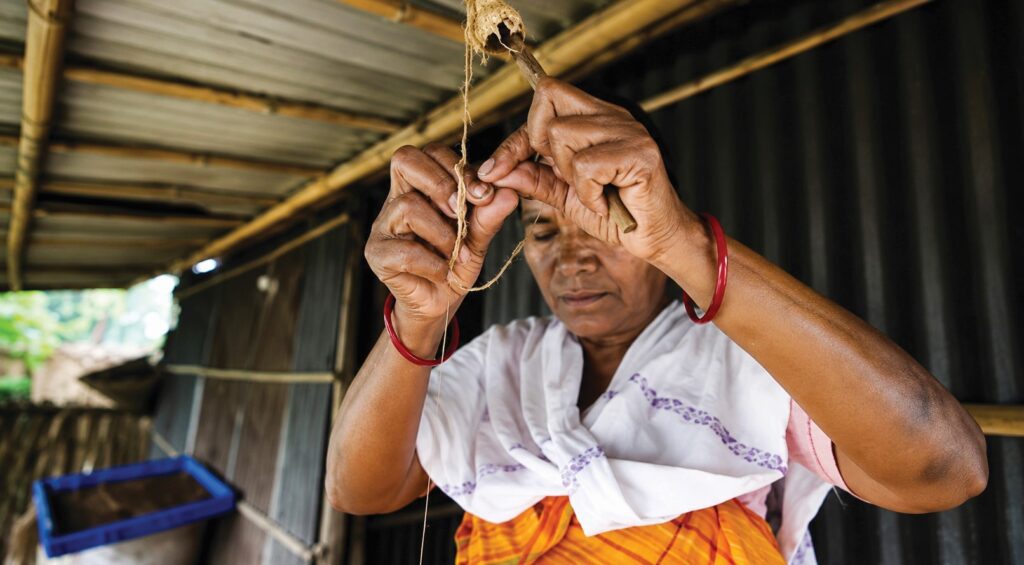
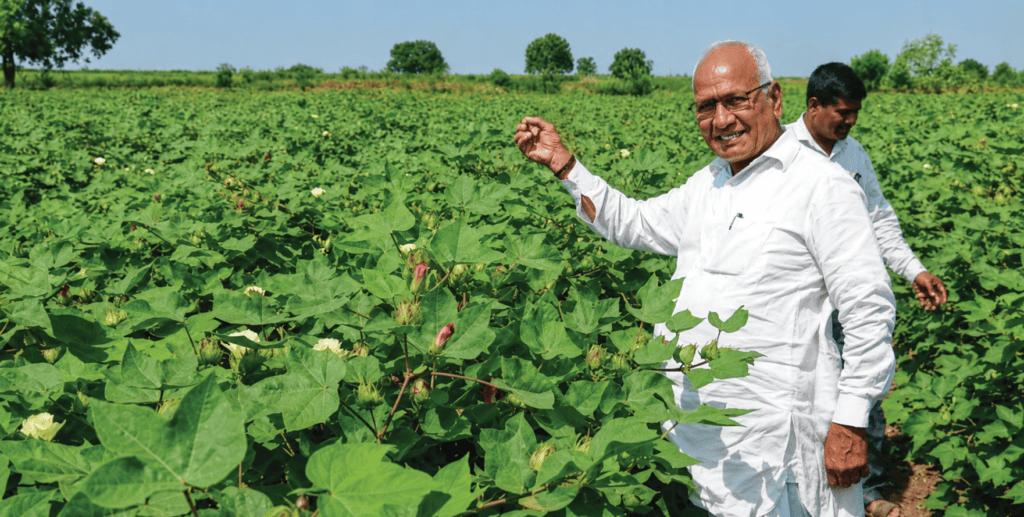
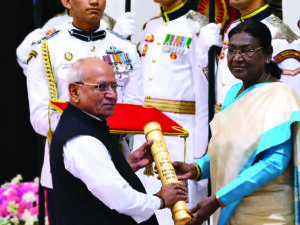
Dr Deuri’s initiatives enabled women to move beyond unpaid family labour to become entrepreneurs, while Shrirang Devaba Lad (above right) has been a mentor and leader within farmer organisations
One of his earliest interventions addressed a surprisingly simple yet critical challenge. Eri silkworms traditionally feed on castor, kesseru and certain seasonal host plants. During periods when these leaves became scarce, silk production slowed dramatically, leaving farming households without income for months. Deuri introduced tapioca leaves as an alternative food source, enabling year-round rearing of Eri silkworms. The innovation not only stabilised production but also transformed sericulture from a seasonal occupation into a more dependable livelihood.
However, increasing cocoon production alone could not transform rural incomes. The real problem lay elsewhere. Farmers produced cocoons. Women spun yarn. Weavers produced fabric. Traders controlled markets. Profits accumulated in the hands of intermediaries rather than producers. Deuri realised that unless the entire value chain was reorganised, farmers would continue to remain vulnerable.
This understanding led to one of his most significant contributions—the establishment of Integrated Borderland Silk Parks. These parks brought every stage of production under one roof, from cocoon processing and spinning to weaving, dyeing, finishing and marketing. Instead of selling raw material at low prices, producers could participate in value addition, ensuring that a greater share of profits remained within local communities. Modern equipment replaced many labour-intensive manual processes, training facilities introduced new technologies, and young entrepreneurs found opportunities within their own districts rather than migrating elsewhere.
Perhaps the most remarkable aspect of Deuri’s work has been its impact on women. Traditionally, women had always been central to Eri silk production, but much of their labour remained invisible and poorly remunerated. By strengthening the entire value chain and creating organised production systems, Deuri’s initiatives enabled women to move beyond unpaid family labour to become entrepreneurs, decision-makers and income earners. The expansion of sericulture across more than 1,600 villages brought thousands of women into self-help groups, cooperative enterprises and organised production networks, significantly strengthening household incomes and social status.
Yet, Deuri’s vision extended beyond economics. He understood that Assam’s silk heritage was also an ecological treasure. Among his landmark achievements was the creation of the world’s first Wild Muga Silk Sanctuary near the Koklong forest adjoining Manas National Park in 2013. His philosophy is perhaps best captured in a simple statement he often repeats:
“Eri is our future, Muga is our hope and Mulberry is our scope.”
The phrase reflects a carefully balanced vision. Eri provides inclusive livelihoods because of its adaptability and year-round production. Muga preserves Assam’s unique cultural identity. Mulberry expands future commercial possibilities. Together, they form a diversified sericulture economy capable of generating sustainable rural prosperity.
DIFFERENT PATHS, SHARED PURPOSE
At first glance, Shrirang Devaba Lad and Dr Jogesh Deuri appear to belong to entirely different worlds. One is a farmer from the drought-prone plains of Maharashtra; the other, a scientist and administrator from the lush river valleys of Assam. One worked with cotton plants, the other with silkworms. One perfected cultivation practices, while the other built institutions and integrated value chains.
The Padma Shri awarded to these two grassroots pioneers celebrates more than individual excellence. It recognises a deeper truth about India’s development story: some of the country’s most transformative ideas continue to emerge not from boardrooms or laboratories, but from fields, farms and village communities where innovation is born out of necessity and sustained by service.
*The writer is Associate Editor, Science India.