



HERB HERITAGE: AMLIKA / TAMARIND
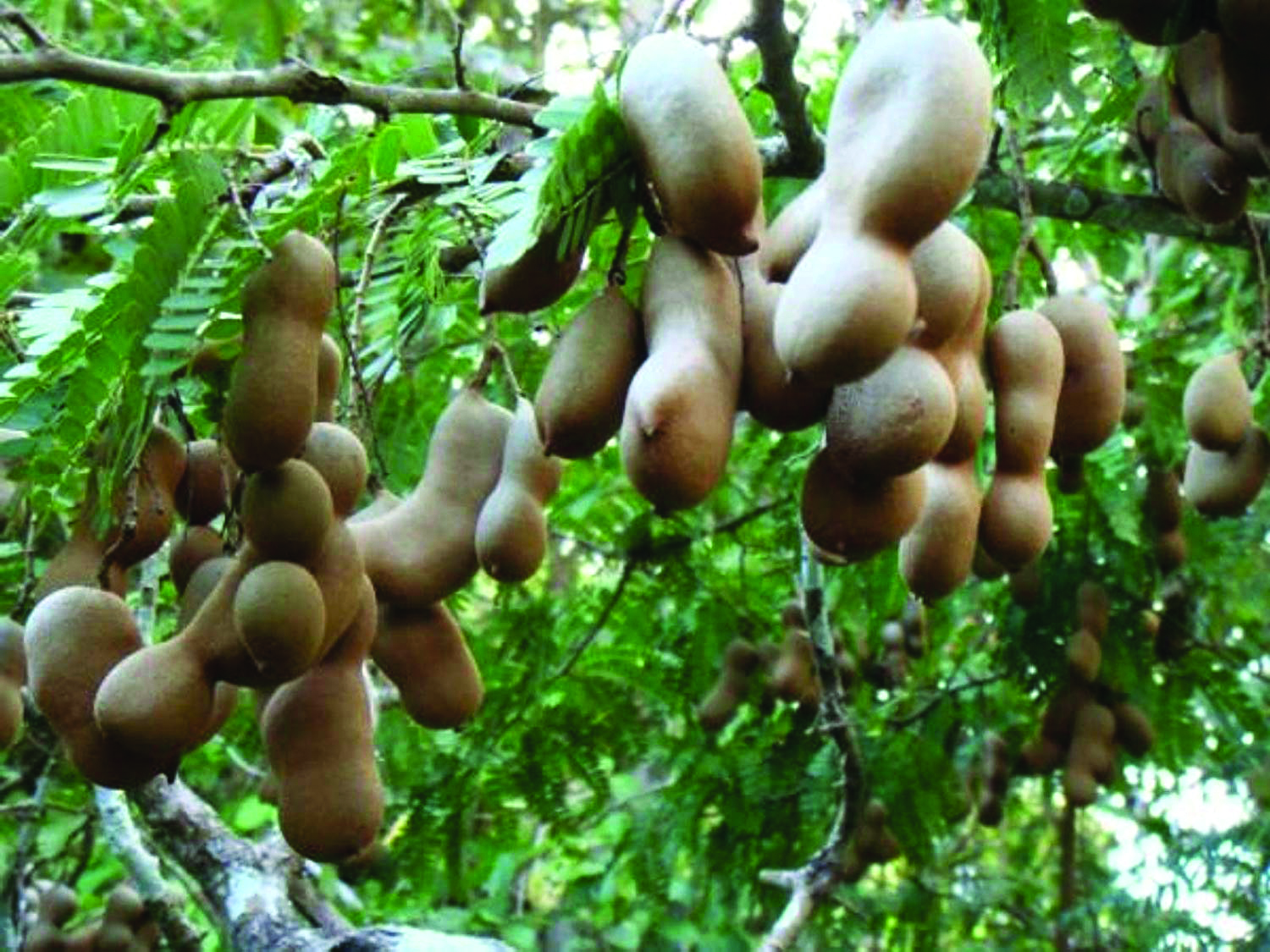
A spoonful of tamarind can transform an ordinary meal into one bursting with flavour. Whether it is sambhar, rasam, chutneys or traditional summer drinks, the unmistakable sourness of tamarind has become an integral part of cuisine across India. Because of this familiarity, tamarind is often perceived merely as a culinary ingredient. Ayurveda, however, offers a remarkably different perspective.
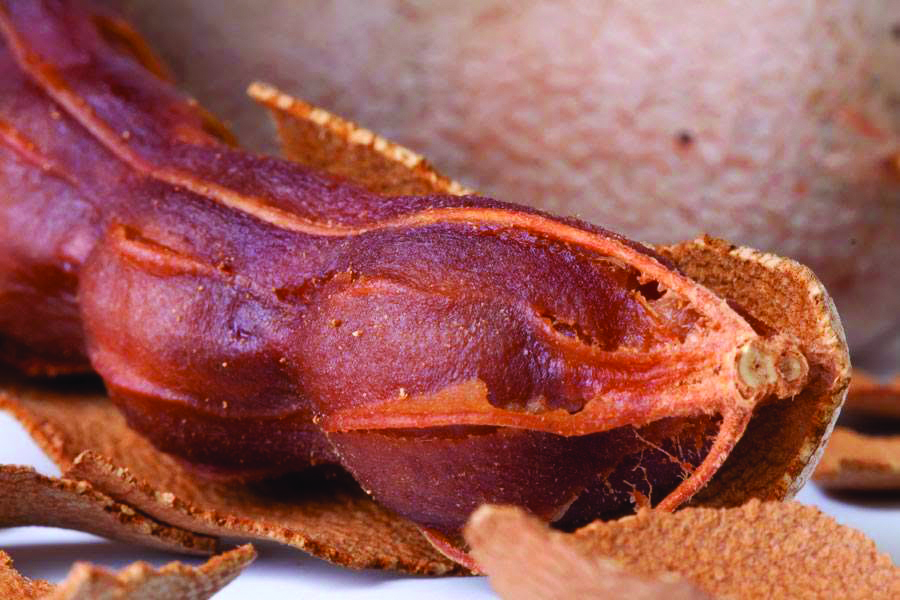
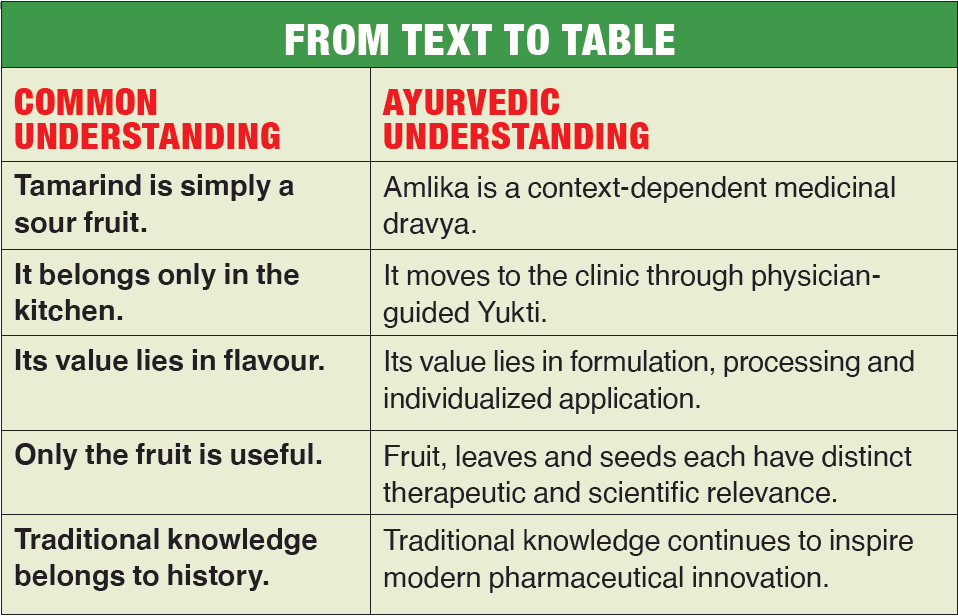
For an Ayurvedic physician, Amlika (Chincha) is not simply a sour fruit but a dravya whose therapeutic role depends on Yukti—the thoughtful application of a medicinal substance according to the patient’s constitution, disease, season, dosage, processing and the route of administration. In other words, Ayurveda does not ask merely “What does this herb do?” it asks, “How should this herb be used for this individual?”
This distinction transforms Amlika from a common kitchen ingredient into an excellent example of Ayurveda’s sophisticated approach to personalized medicine.
A FRUIT THAT BECAME INDIAN
Although tamarind is deeply woven into India’s culinary identity, botanical evidence indicates that Tamarindus indica is native to tropical Africa. It is believed to have reached the Indian subcontinent through ancient maritime trade routes, where it adapted remarkably well to diverse agro-climatic regions.
Arab traders referred to it as ‘Tamar Hindi’—the Indian date—from which the English name tamarind eventually evolved. Over centuries, the tree became an indispensable component of Indian food traditions and was simultaneously evaluated by Ayurvedic scholars through the principles of Dravyaguna Vigyana. Thus, what entered India as a fruit gradually earned recognition as a medicinal dravya through systematic clinical observation rather than culinary popularity.
UNDERSTANDING AMLIKA THROUGH AYURVEDA
Classical Ayurvedic literature, including Bhavaprakasha Nighantu, describes Amlika as predominantly possessing Amla Rasa, along with Guru and Ruksha Guna, Ushna Virya, and Amla Vipaka. Based on these properties, it is described as Dipani (enhancing digestive fire), Rochani (improving appetite and taste perception) and useful in selected Vata-Kapha conditions when used judiciously.
Unlike modern pharmacology, which often explains medicinal plants through individual phytochemicals, Ayurveda interprets these attributes as part of a larger physiological network. Digestive function is governed by Agni, the principle responsible not only for digestion but also for transformation and nourishment. Disturbance of Agni may impair appetite, digestion and metabolism, leading to the accumulation of Ama, a concept central to many disease processes described in Ayurveda.
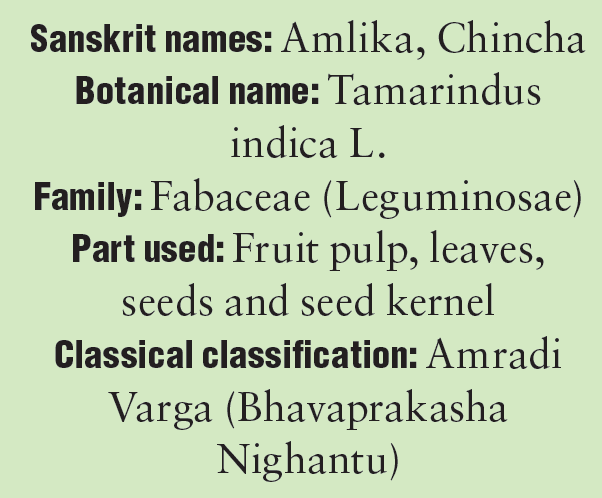
The therapeutic role of Amlika is therefore understood not simply in terms of its sour taste but in relation to its influence on these physiological principles.
FROM FOOD TO MEDICINE
One of Ayurveda’s distinguishing features is its nuanced understanding of the relationship between food and medicine. Rather than placing substances into rigid categories, Ayurveda recognizes that the therapeutic role of a dravya depends on Yukti—the physician’s judgment regarding the patient’s condition, the stage of disease, the season, the dose and the method of preparation.
Amlika illustrates this principle beautifully. When added to a meal, it serves as Ahara, enhancing taste and supporting nutrition. Prepared as Amlika Panaka, it becomes a physician-guided dietary preparation. Incorporated into Vaitarana Basti or used in Chinchapatra Pinda Sweda, it assumes entirely different therapeutic roles. Thus, the same plant can function as food, medicine or part of a therapeutic procedure—not because the plant changes, but because its purpose and application do.
CLINICAL APPLICATIONS IN AYURVEDA
The versatility of Amlika is reflected in the diversity of its therapeutic applications.
Traditionally, Ayurveda employs Amlika in selected conditions such as Agnimandya (reduced digestive fire), Aruchi (loss of appetite) and digestive disturbances where stimulation of appetite and digestive capacity is desirable. Rather than being prescribed indiscriminately, it is selected according to the patient’s constitution and disease status.
One classical dietary preparation is Amlika Panaka. Prepared by soaking ripe tamarind pulp in water, straining it and combining it with ingredients such as jaggery, roasted cumin and Saindhava Lavana according to therapeutic need, it is traditionally described particularly during Grishma Ritu (summer). Beyond its refreshing taste, it has been used to support diminished appetite and excessive thirst under appropriate clinical circumstances.
A particularly important application is found in Vaitarana Basti, a classical Panchakarma procedure in which tamarind pulp forms part of a carefully designed formulation employed in conditions such as Amavata, Sandhivata, Gridhrasi and chronic Vata-Kapha disorders associated with pain, stiffness and restricted mobility. In this setting, Amlika contributes to the overall therapeutic strategy rather than functioning as an isolated medicinal agent.
Ayurveda also utilizes tamarind leaves in Chinchapatra Pinda Sweda, an external fomentation procedure traditionally employed in selected musculoskeletal disorders characterized by pain and stiffness. These examples highlight an important principle of Ayurvedic therapeutics: a medicinal plant is not confined to a single dosage form but may be adapted to different pharmaceutical preparations and therapeutic procedures according to clinical need.
ANCIENT PLANT, MODERN INNOVATION
While Ayurveda has appreciated Amlika for centuries, modern science has discovered new possibilities in another part of the plant—the seed.
The tamarind seed polysaccharide (TSP) has attracted considerable attention because of its viscosity, biocompatibility, biodegradability and mucoadhesive properties. These characteristics have encouraged its investigation in controlled drug delivery systems, ophthalmic formulations, sustained-release tablets, hydrogels, wound dressings, biodegradable films and tissue engineering.
This represents an interesting shift in scientific thinking. Rather than viewing medicinal plants solely as sources of bioactive compounds, researchers are exploring their potential as natural pharmaceutical materials. In many ways, this complements the Ayurvedic perspective that a medicinal plant possesses multiple therapeutic possibilities extending beyond a single pharmacological action.
BEYOND THE NUTRACEUTICAL NARRATIVE
Nutraceutical industry often emphasizes isolated phytochemicals and standardized extracts. Ayurveda, however, approaches medicinal plants differently. It recognizes that therapeutic efficacy depends not only on the herb itself but also on Samskara (processing), Kalpana (dosage form), Matra (dose), Anupana (vehicle), Kala (timing) and individual patient factors.
For a familiar plant such as Amlika, future innovation may therefore lie in integrating traditional Ayurvedic principles with advances in pharmaceutical sciences. Collaboration between Ayurvedic physicians, pharmacognosists, formulation scientists and biomaterial engineers could pave the way for evidence-based products that remain faithful to classical therapeutic concepts.
\Whether supporting digestive function, forming part of Panchakarma procedures, contributing to external therapies or inspiring modern biomaterials research, Amlika exemplifies the remarkable versatility of medicinal plants. More importantly, it reminds us that Ayurveda does not define a medicine solely by its botanical identity or chemical composition. It defines medicine by its appropriate application.
In an age increasingly captivated by functional foods and nutraceuticals, Amlika quietly conveys a timeless Ayurvedic lesson: the true therapeutic potential of a plant lies not merely in what it is, but in the wisdom with which it is used.
*The author is an Ayurveda Physician, founder of www.prathaayurveda.in, co-founder of www.indiainnings.in, and general secretary, NASYA India.