



HERB HERITAGE: BHRINGRAJ
If there is one Ayurvedic herb that modern commerce has successfully reduced to a single identity, it is Bhringraj. Walk into a pharmacy or search for herbal hair-care products and Bhringraj is almost synonymous with hair oil, hair fall and premature greying.
But Ayurveda knew Bhringraj long before it became a hair-care ingredient.
Known as Bhringaraja, Kesharaja and Kesharanjana, this small herb has a much wider classical identity. References in the Charaka Samhita place it in contexts ranging from Vamana and Krimi Chikitsa to Raktapitta and Pittaja Madatyaya, and also record it as an ingredient in classical preparations such as Jeevaniya Ghrita and Mahanila Taila.
Its later description in Nighantus further expands its identity through actions such as Keshya, Rasayana and Twachya. Bhringraj, therefore, is not simply a “hair herb”.
A SMALL HERB WITH A LONG AYURVEDIC HISTORY
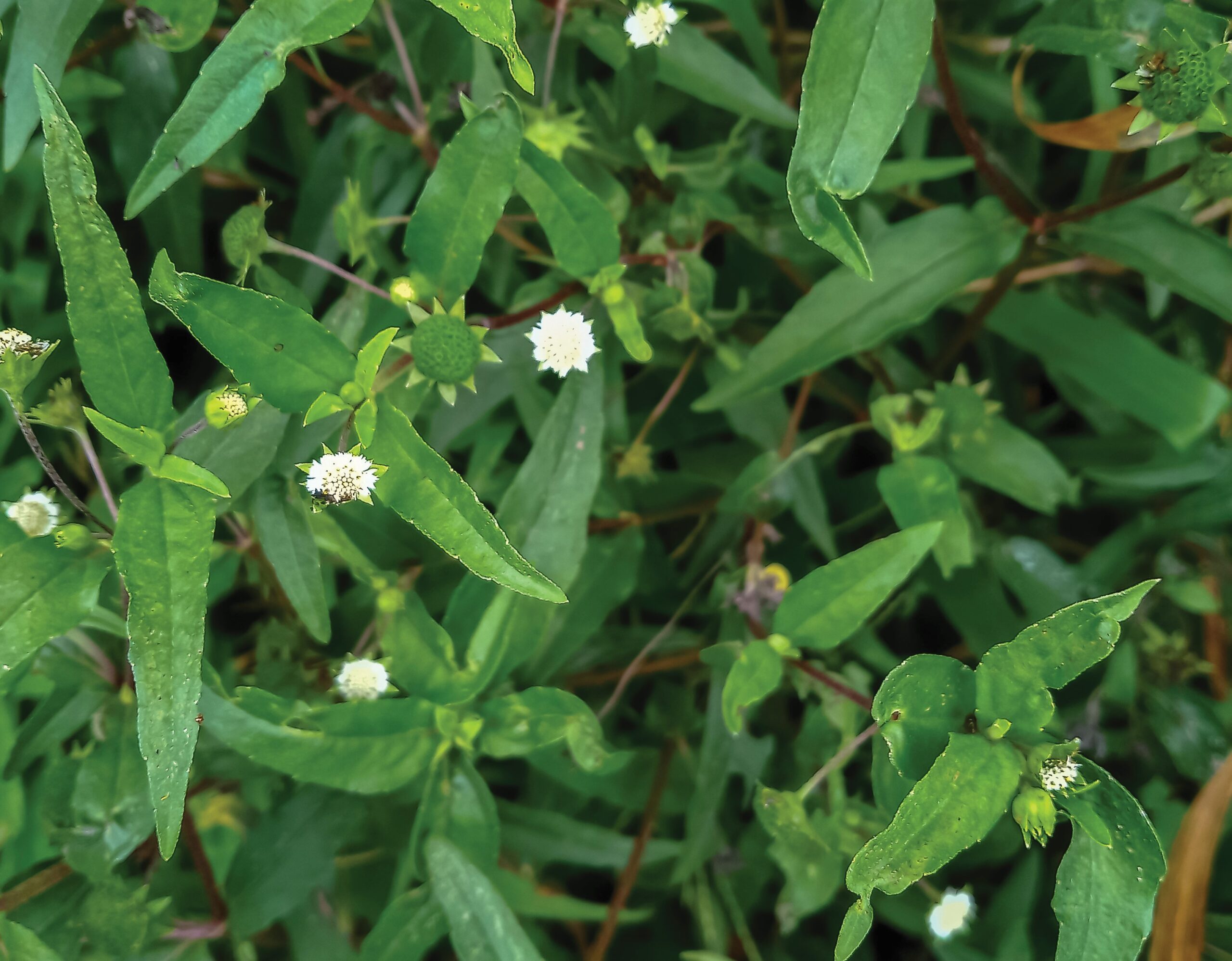
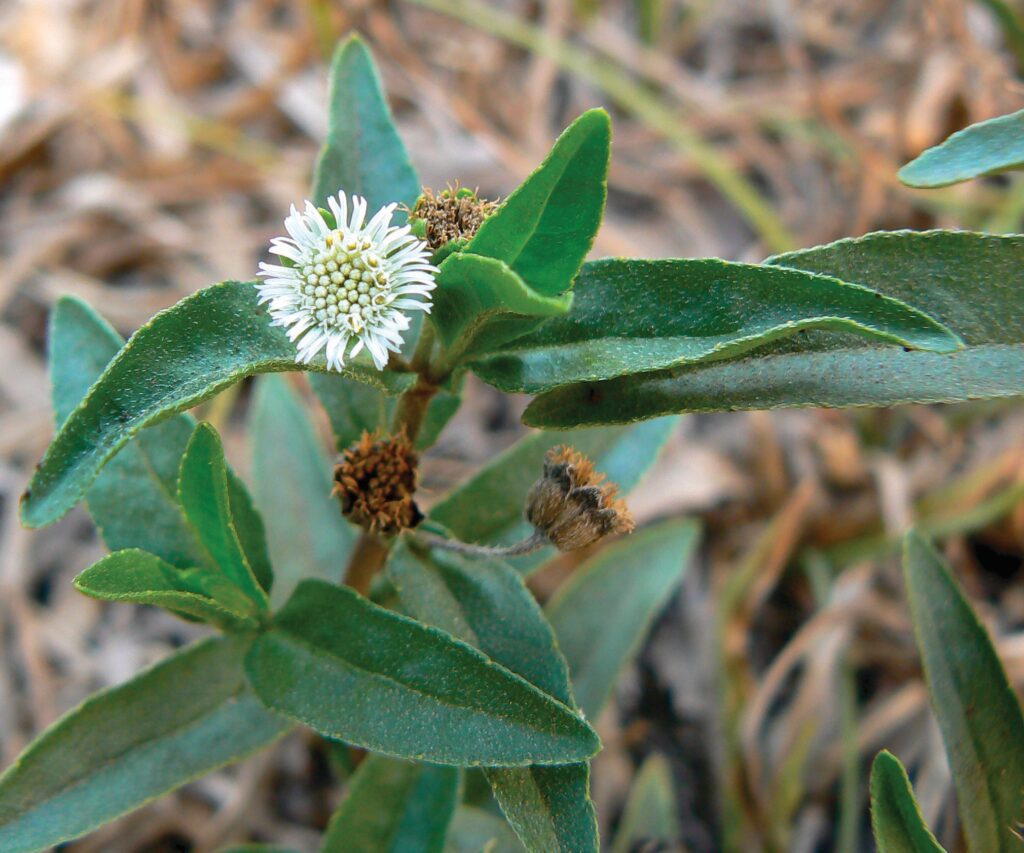
Bhringraj or False Daisy is a small herb that thrives in moist environments and is widely distributed across tropical and subtropical regions.
The plant’s Sanskrit nomenclature itself offers clues to its traditional identity. Kesharaja—‘king of the hair’—and Kesharanjana—associated with imparting colour or maintaining the natural appearance of hair—reflect its celebrated Keshya action.
Yet its textual history tells a larger story.
The Charaka Samhita records Bhringaraja under several therapeutic contexts, as in Krimi Chikitsa, as a drug for Vamana, as an Anupana-associated drug in Raktapitta, in Pittaja Madatyaya, and as an ingredient in Jeevaniya Ghrita and Mahanila Taila.
This is important because it changes the way we should understand Bhringraj. Its association with hair is not its entire classical identity; it is one expression of a much broader pharmacological profile.
BHRINGRAJ THROUGH THE AYURVEDIC PHARMACOLOGICAL LENS
The Charaka-based herb database describes Bhringaraja with Katu and Tikta Rasa, Laghu and Ruksha Guna, Ushna Virya, and Katu Vipaka, with an overall Vata-Kapha-Shamaka action.
These attributes provide an important Ayurvedic framework for understanding its therapeutic applications.
Tikta and Katu Rasa, together with Laghu-Ruksha Guna and Ushna Virya, provide the rationale for its use in selected Kapha-dominant and metabolic conditions, while its traditional Rasayana and Keshya associations demonstrate that its therapeutic interpretation cannot be reduced to a single Dosha action.
This is where Ayurvedic pharmacology differs from the popular idea of an herb having a list of ‘benefits’. The physician does not simply select Bhringraj because it is good for hair or because it is labelled hepatoprotective. The herb is selected according to its Rasa, Guna, Virya, Vipaka, Karma, formulation, dose and patient suitability.
The result is a much more contextual understanding of herbal medicine.
FROM SAMHITA TO NIGHANTU: AN EXPANDING PHARMACOLOGICAL IDENTITY
Bhringraj’s presence across Ayurvedic literature also reveals how knowledge about medicinal plants evolved.
Along with the Samhita references, Bhringraj is discussed in important Nighantu literature including Dhanvantari Nighantu, Shodhala Nighantu, Madanapala Nighantu, Kaiyadeva Nighantu, Raja Nighantu and Bhavaprakasha Nighantu. Different textual traditions provide synonyms, varieties, properties and therapeutic actions, with later literature particularly strengthening its identity as a Keshya and Rasayana drug.
The Raja Nighantu is especially interesting for its discussion of different varieties of Bhringraj, illustrating that botanical diversity was not entirely overlooked by traditional physicians.
THE HAIR HERB—BUT NOT ONLY A HAIR HERB
Bhringraj’s Keshya identity remains one of its most recognizable Ayurvedic applications. It is traditionally incorporated into Taila, Ghrita and other preparations used for hair and scalp care, including management of concerns such as Khalitya (hair loss) and Palitya (premature greying).
Its role, however, becomes more interesting when viewed through the Ayurvedic concept of Rasayana. Healthy hair is not considered entirely independent of internal physiology. Digestion, tissue nourishment, metabolism, sleep, stress and overall health can all influence the condition of hair and skin.
Therefore, the classical use of Bhringraj suggests a broader approach than simply applying an oil to the scalp. The visible manifestation may be addressed externally, while the physician may simultaneously consider the internal factors influencing tissue nourishment.
This distinction is particularly relevant today, when hair loss is often treated as a purely cosmetic problem.
BEYOND HAIR: SKIN AND INTERNAL HEALTH
Bhringraj’s traditional identity also extends to Twachya applications. Traditional and ethnomedicinal literature describes its use in various skin conditions, wounds and inflammatory complaints. Modern research has investigated antimicrobial and anti-inflammatory activities of extracts and isolated constituents, although these findings should not automatically be equated with clinical efficacy in humans.
ANOTHER IMPORTANT AREA IS HEPATIC HEALTH
The traditional use of Bhringraj in formulations and therapeutic contexts involving internal disorders has attracted considerable modern scientific interest. Experimental studies of Eclipta prostrata have reported hepatoprotective activity, alongside anti-inflammatory, hypoglycaemic, hypolipidaemic, antimicrobial, neuroprotective and hair-growth-promoting effects.
| FROM TEXT TO TABLE | |
| POPULAR IMAGE | AYURVEDIC IDENTITY |
| Hair oil herb | Keshya medicinal dravya |
| Cosmetic ingredient | Drug with internal and external applications |
| Hair-growth plant | Keshya + Rasayana + Twachya identity |
| Liver-support herb | A multi-system drug interpreted through Ayurvedic pharmacology |
| Single botanical ingredient | A dravya whose action changes with formulation, processing and therapeutic context |
The liver research is particularly interesting because it creates a translational bridge between traditional medicinal use and modern experimental pharmacology.
FROM CLASSICAL DRUG TO MODERN MOLECULE
Modern phytochemical investigations have identified several classes of constituents in Eclipta prostrata, including coumestans, flavonoids, triterpenes, steroids, saponins and thiophenes. Compounds such as wedelolactone and eclalbasaponins have attracted particular research interest.
Research has explored the plant’s potential hepatoprotective, anti-inflammatory, antimicrobial, neuroprotective, metabolic and hair-growth-related activities.
Yet this research also presents an important scientific question: How do we translate a traditional multi-system medicine into modern evidence without reducing it to a single molecule? The most productive translational research will allow different pathways to inform one another without forcing an artificial one-to-one equivalence.
BHRINGRAJ IN THE AGE OF HERBAL COSMETICS
Bhringraj’s popularity has created a thriving market of hair oils, shampoos, serums, capsules and multi-herbal supplements. This offers an opportunity—but also a responsibility.
A product containing Bhringraj is not automatically equivalent to a classical Bhringraj preparation. The plant part, identity, processing method, extraction solvent, concentration, combination, dosage form and intended use can all alter its pharmacological profile.
For this reason, Ayurvedic physicians should have a meaningful role in the development of therapeutic or nutraceutical products containing Bhringraj. Modern formulation science can provide standardization and quality control, while Ayurvedic expertise can ensure that the intended application remains consistent with the traditional pharmacological identity of the drug.
Modern research is now investigating many of the same broad territories—liver protection, inflammation, microbial activity, metabolism, neuroprotection and hair growth—although much of the evidence remains experimental and requires further clinical validation.
The future of Bhringraj should therefore not be limited to putting the herb into increasingly sophisticated hair products. Its greater potential lies in understanding the Ayurvedic pharmacology that made the plant valuable in the first place, and then asking modern science the right translational questions.
In an age where medicinal plants are often reduced to a single marketing claim, Bhringraj offers a richer lesson: A plant may become famous for one action, while its true medicinal identity lies in the many therapeutic possibilities recognized through centuries of Ayurvedic observation
*The author is an Ayurveda physician, founder of www.prathaayurveda.in, co-founder of www.indiainnings.in, and general secretary, NASYA India.