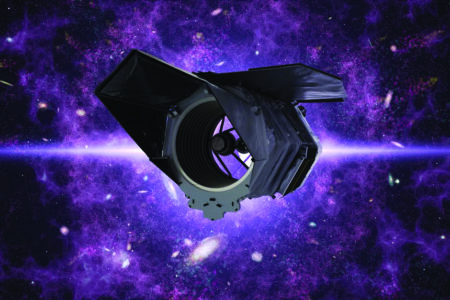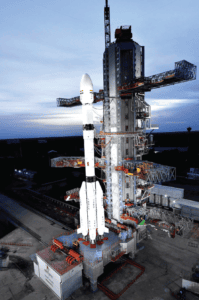




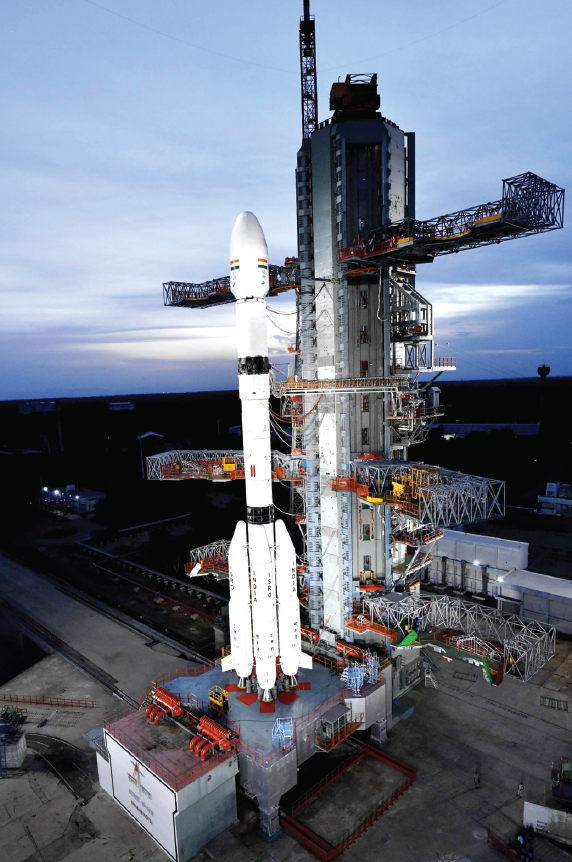
The Indian Space Research Organisation (ISRO) successfully launched the state-of-the-art Earth obs er vat ion spac e craft EOS-05, aboard the GSLV-F17 rocket from the Satish Dhawan Space Centre in Sriharikota on 4 September.
The launch of this advanced Earth-observation imaging satellite marks the first time that India has successfully placed an imaging satellite specifically designed to operate from a geosynchronous orbit, approximately 36,000 km above the Earth. The mission is being regarded as a major technological advance in India’s remote-sensing and space-based monitoring capabilities.
The 51.7-metre-tall GSLV-F17 lifted off from the Second Launch Pad at Sriharikota, carrying the approximately 2,367-kg EOS-05. The three-stage Geosynchronous Satellite Launch Vehicle successfully completed its flight sequence and injected the spacecraft into the planned sub-geosynchronous transfer orbit.
EOS-05, also known as GISAT-1A, is designed to provide frequent imaging of large geographical areas. Its location in geosynchronous orbit will allow it to repeatedly observe the same broad region of the Earth, offering an important advantage over conventional Earth-observation satellites operating in lower orbits.
The satellite’s advanced imaging capabilities are expected to have applications ranging from agriculture and disaster management to environmental monitoring, weather-related observations and strategic surveillance.
Its ability to revisit and monitor the same region at frequent intervals could prove particularly valuable during natural disasters, when authorities require rapid information about affected areas.
The mission is also significant because of the technological demands involved in putting a relatively heavy Earth-imaging spacecraft into such a high-energy orbit. The GSLV uses a three-stage configuration incorporating solid, liquid and cryogenic propulsion, with the indigenous cryogenic upper stage playing a crucial role in missions to higher orbits.
The achievement of ISRO comes at a time when India is seeking to expand the role of space technology in national development as well as strategic applications. Continuous or near-real-time observation from a geosynchronous platform can provide decision-makers with valuable information over wide areas, complementing the country’s existing fleet of remote-sensing satellites.
The successful EOS-05 mission thus represents another important step in India’s evolution from conventional remote sensing towards high-frequency, large-area Earth imaging, strengthening ISRO’s capabilities in both civilian applications and strategically important space-based observation.