






On 27 January 1926, the journal Annalen der Physik received the first of Erwin Schrödinger’s papers on wave mechanics. During that year, Schrödinger developed the equation that would forever carry his name, seeking a mathematical description of the puzzling behaviour of atoms. A hundred years later, physicists, chemists and materials scientists still use it. This is not an equation confined to scientific history. Scientists still use it every day.
Quantum mechanics changed our understanding of atoms, molecules, chemical bonds and materials. It became central to semiconductor physics and therefore to transistors and computer chips. Lasers, LEDs and much of modern materials science rest on quantum principles. Today, scientists are learning to control the quantum world for computing, communication and sensing. Yet something curious remains. We can calculate quantum behaviour with remarkable accuracy and build technologies from that knowledge, while still debating what the wavefunction, the central mathematical idea in Schrödinger’s equation, actually tells us about reality.
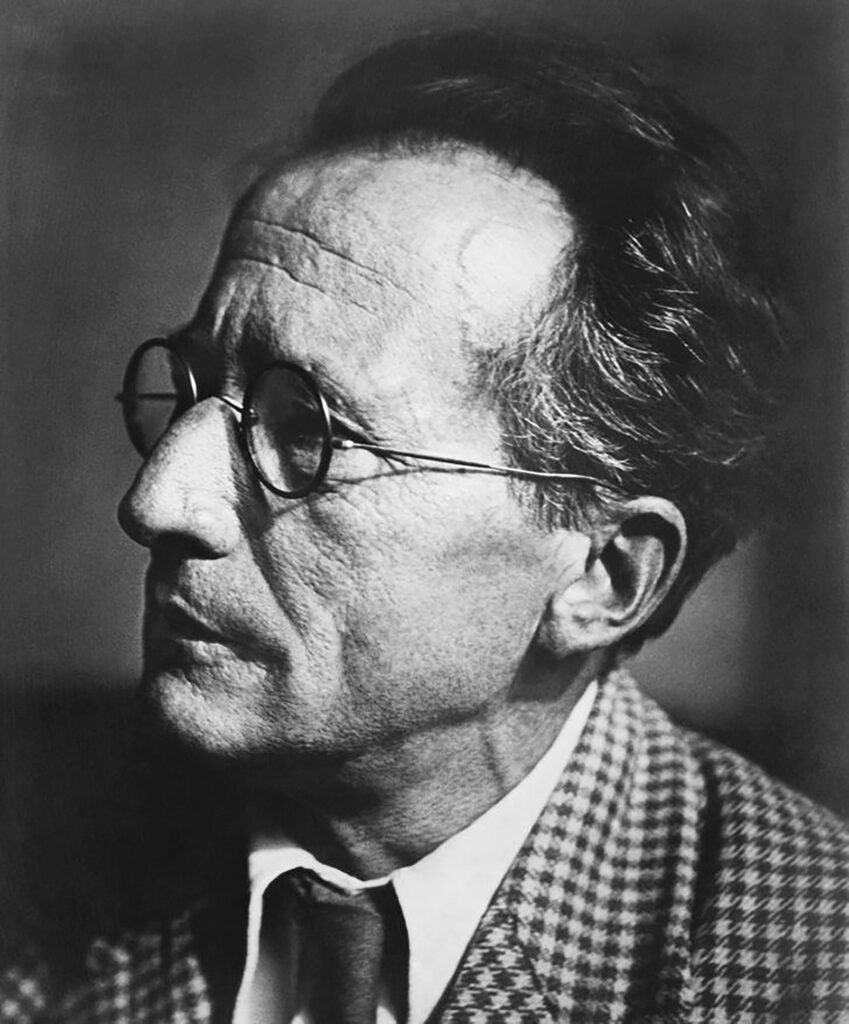
Image Courtesy: Wikimedia Commons
That is what makes this centenary especially interesting. Schrödinger’s equation is not only a great success story in physics. It is also a hundred-year story about the nature of knowledge itself.
WHAT CAN WE PREDICT?
Before quantum mechanics, physics encouraged a reassuring view of nature. Newton’s laws suggested that if the present state of a physical system were known precisely enough, its future could, in principle, be calculated. Pierre- Simon Laplace imagined an intelligence that knew the position and motion of everything and could calculate both future and past. Uncertainty reflected our ignorance. Nature itself followed fixed laws.
The atomic world did not fit this picture. Electrons did not behave like tiny planets circling a nucleus. Light showed both wave-like and particle-like behaviour, and energy came in discrete packets. By 1925, Werner Heisenberg and his colleagues had developed one mathematical description of this strange world, known as matrix mechanics. Schrödinger, inspired partly by Louis de Broglie’s proposal that matter could have wave-like properties, found another route through wave mechanics.
At its heart was the wavefunction, represented by psi. Think of it as a mathematical description that quantum mechanics uses to describe a system, such as an electron. But what did psi actually mean? Later in 1926, Max Born showed how it could be used to calculate probabilities. Even when we know everything the theory allows, it generally tells us the chances of different results rather than predicting one certain result.
Here lies one of the puzzles of quantum mechanics. Schrödinger’s equation describes how the wavefunction changes in a predictable way. Yet when we make a measurement, the theory gives probabilities for different results. Einstein was deeply uncomfortable with this. His objections sharpened debates about whether quantum mechanics gave a complete picture of reality. John Bell eventually showed that important parts of what had seemed a philosophical argument could be tested experimentally.
Quantum mechanics therefore produced an unusual situation: its predictions worked, powerful applications followed, yet fundamental questions about what the theory means remained open.
WHAT CAN WE BUILD?
While physicists debated what quantum mechanics meant, the mathematics kept proving useful. It explained why atoms have particular energy levels and how chemical bonds form. Applied to solids, it helped explain electrical conduction and semiconductors. An equation developed to understand the atom gradually moved into chemistry, materials science and engineering.
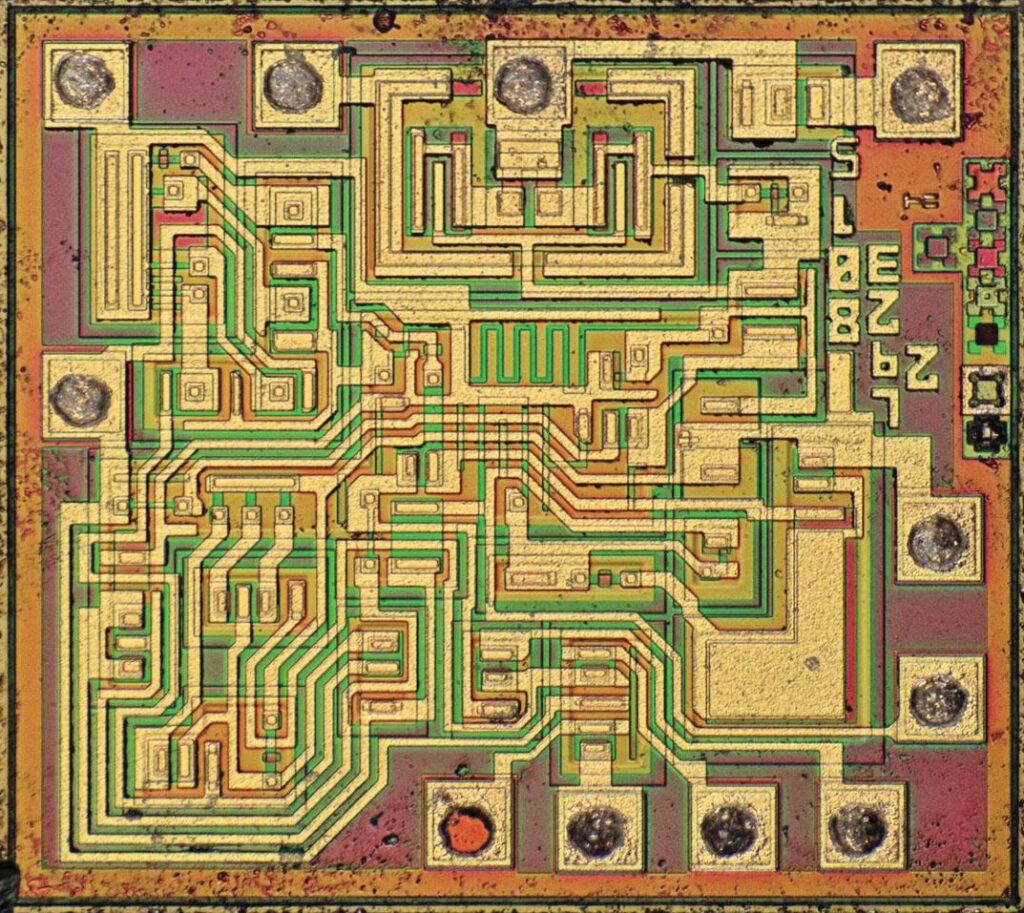
The consequences became part of everyday life. Semiconductor science gave us the transistor, integrated circuits and modern computing. Quantum physics became essential to lasers, LEDs and many electronic and optical technologies. Someone using a smartphone need never encounter Schrödinger’s equation, but the materials inside it cannot be properly understood without quantum mechanics.
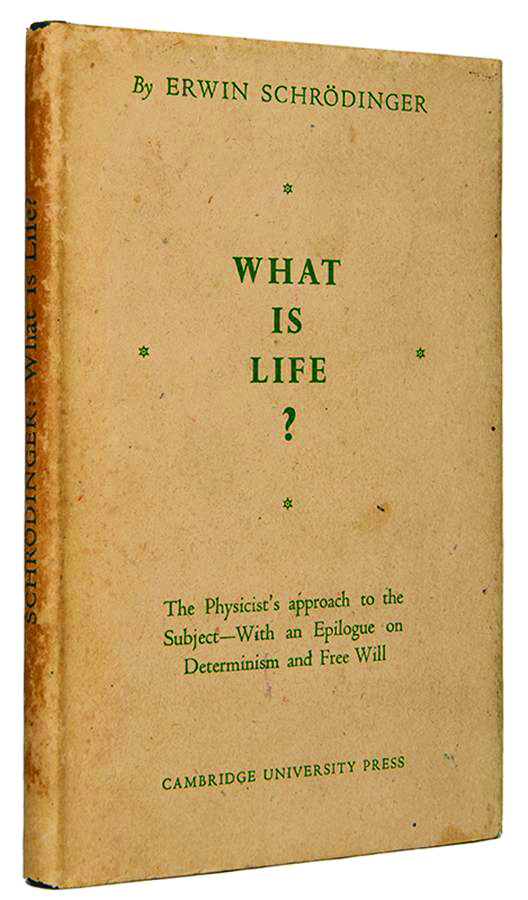
Image Courtesy: Biblio UK
Imagine asking Schrödinger in 1926 to write a research proposal specifying its “expected societal impact” and “deliverables.” Could he have promised the transistor, laser, computer chip or quantum computer? Of course not. He was trying to understand the atom.
His deliverable was understanding. Civilization supplied many of the applications later.
That is worth remembering when research is increasingly expected to justify itself through immediate results. Fundamental research is often valuable precisely because we do not know where it will lead. If every scientific question must promise a product, patent or market at the beginning, we may miss work from which completely new technologies emerge.
The story also reminds us that scientific models are not reality itself. Schrödinger’s wave picture gave physics a powerful mathematical language, but the wavefunction is not simply an ordinary wave like a ripple on water. Science progresses by building useful models and learning where they should not be taken too literally.
WHAT IS LIFE?
Schrödinger’s interests did not stop with physics. In 1944, he published What Is Life? based on lectures delivered in Dublin. The molecular structure of the gene was not yet known. Schrödinger suggested that hereditary information might reside in an “aperiodic crystal,” a stable but non-repeating molecular structure capable of carrying information. Drawing on biological work already under way, the book encouraged scientists to cross disciplinary boundaries and approach questions about life using ideas from physics.
Living organisms are made of atoms and molecules, whose behaviour ultimately rests on quantum mechanics. Chemical bonds, molecular stability and the movement of electrons and protons in biochemical reactions belong to the same physical world. Life does not stop obeying physics because matter has become organized into a cell.
But the question had changed. In 1926, Schrödinger was asking how matter behaves. In What Is Life? he was asking how matter becomes organised into living systems capable of maintaining themselves and passing information to the next generation. Molecular biology has since answered questions he could only speculate about, while opening many more.
We began with matter. Matter became chemistry; chemistry became biology; and somewhere along this chain, matter became capable of asking questions about matter.
WHAT DOES IT MEAN TO KNOW?
This brings us back to the question that has followed the equation for a century. What does it mean to say that we know a quantum system? We can use the wavefunction to make highly accurate predictions. We can increasingly prepare and control quantum systems in carefully chosen states. Yet physicists still disagree about what the wavefunction ultimately represents.
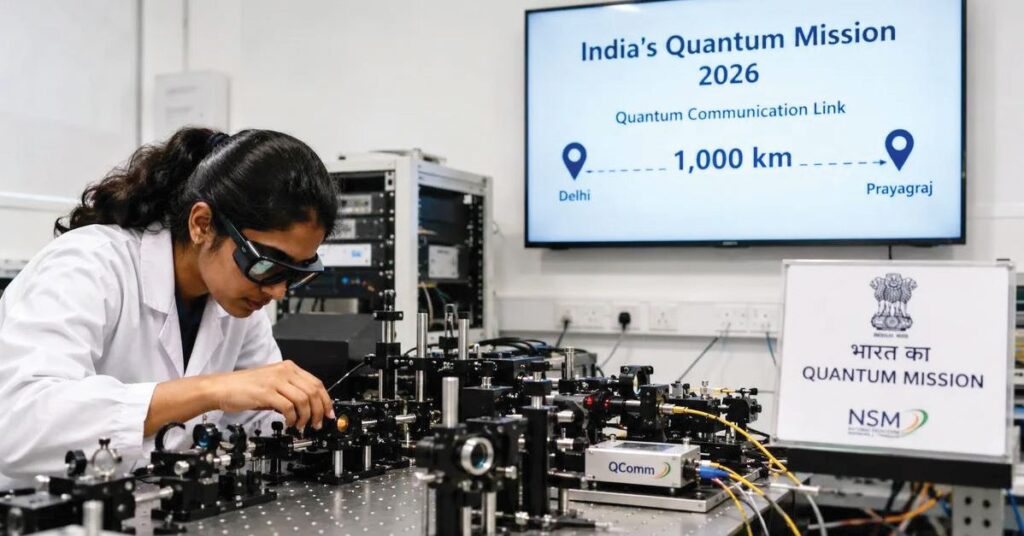
Image Courtesy: Twitter
Perhaps part of the difficulty comes from treating “knowing” as though it meant only one thing. We can know enough to predict. We can know enough to explain how things are related. We can know enough to control nature and build technologies. But does that mean we know what reality finally is?
The history of Schrödinger’s equation suggests that science need not answer that last question before achieving a great deal. Science is at its best when it distinguishes between what can be calculated, what can be tested, what the evidence allows us to conclude and what remains open.
The first century of Schrödinger’s equation is therefore also a lesson in humility. Scientific progress does not simply tell us more. It helps us see more clearly what we still do not understand.
WHO IS THE KNOWER?
Schrödinger’s intellectual life has particular interest for Indian readers. Even before his breakthrough in wave mechanics, he had developed a serious interest in Indian philosophy. His writings show that he was especially drawn to an Advaita Vedanta reading of the Upanishads, encountered partly through the German philosopher Arthur Schopenhauer. The idea of an underlying unity behind the apparent separation of individual selves became important in his thinking.
Schrödinger was particularly attracted to the Upanishadic Tat tvam asi, commonly translated as “That thou art,” and to the Advaita relationship between atman, the self, and Brahman, ultimate reality. The Upanishads contain diverse philosophical strands, and Schrödinger encountered them largely through a non-dualistic Advaita interpretation. An important distinction must be made. The Upanishads did not anticipate quantum mechanics. Advaita did not predict Schrödinger’s equation, and quantum entanglement does not prove Vedanta. Entanglement is a physical phenomenon in which quantum systems can show correlations that cannot be explained by ordinary classical ideas, even when the systems are far apart. It can be described mathematically and tested experimentally. Advaita, by contrast, is a philosophical tradition concerned with the nature of self and reality. Mixing the two too casually does justice to neither.
The connection is more subtle. Science usually turns its attention outward: What is this? How does it behave? Can it be measured and predicted? The Upanishadic tradition also turns the inquiry inward: Who is the one who sees, thinks and knows? Schrödinger did not treat these philosophical questions as substitutes for quantum physics, but he was deeply interested in both.
His intellectual journey widened the question. Physics led him to ask how matter behaves. Biology led him to ask what life is. Philosophy turned his attention towards the knower. These were not parts of one theory, but one broad search for understanding.
FROM PSI AS A PUZZLE TO PSI AS A RESOURCE
Perhaps nothing captures the hundred-year journey better than what has happened to psi itself. In 1926, the wavefunction was a puzzle. Was it a physical wave, a description of possibilities, or something else? Those questions remain. But scientists now deliberately prepare, manipulate and protect quantum states.
This captures the shift from the first quantum revolution to the second. The first used quantum mechanics to understand atoms, molecules, solids and light, giving us technologies such as semiconductors and lasers. The second seeks to turn some of the strange properties of the quantum world into technological resources. These include superposition, in which a quantum system can exist in a combination of possibilities, and entanglement, in which quantum systems can remain strongly correlated even when separated. Scientists hope to use these properties for computing, communication and sensing.
For India, this transition has immediate significance. The National Quantum Mission, approved in 2023 with an outlay of Rs 6,003.65 crore through 2030-31, aims to build capabilities in quantum computing, communication, sensing and metrology, the science of precise measurement, and quantum materials and devices. India therefore enters the second century of Schrödinger’s equation with an opportunity not merely to use quantum technologies but to help create them.
Yet today’s quantum technologies could not have been foreseen when quantum mechanics was being founded. If the second century is to be as productive as the first, India will need technological missions, but also fundamental research driven by questions whose applications are not yet obvious.
THE SECOND CENTURY BEGINS
A hundred years is a long life for a scientific equation, but Schrödinger’s equation has not become a monument. It remains a working instrument of science. Its first century took us from atoms to molecules and materials, and from those materials to technologies that reshaped modern life. The same quantum laws reach into the chemistry of life. In its second century, quantum states themselves are becoming things we seek to engineer. The “limits of knowing” are not fixed walls. Science keeps moving them, but each advance reveals new territory. Schrödinger’s equation shows that scientific progress need not follow a simple path from ignorance to discovery, complete understanding and application. We learned enough to predict, enough to build and enough to change the world, while recognizing that prediction, usefulness and ultimate understanding are not quite the same thing.
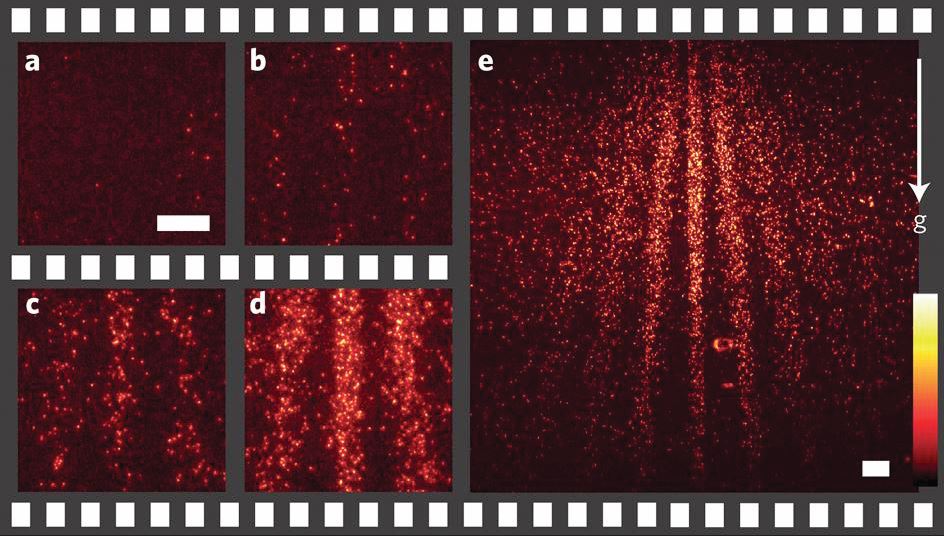
in real-time
Schrödinger’s own journey adds another dimension. The physicist who asked how matter behaves later asked what life is and engaged seriously with an Indian philosophical tradition that asked about reality and the knower. The Upanishads are not quantum mechanics, biology cannot be reduced to philosophy, and philosophy cannot replace experiment. But these questions can still speak to one another when their boundaries are respected.
Perhaps that is the most fitting way to celebrate one hundred years of Schrödinger’s equation. In 1926, psi was a new mathematical way of describing the strange behaviour of the quantum world. In 2026, it remains central to our understanding of matter, while quantum states have become things we can increasingly prepare, manipulate and use. The first century of Schrödinger’s equation transformed what humanity can know and what humanity can do. As its second century begins, perhaps its greatest promise is not merely that it will give us more answers, but that it will lead us to questions we do not yet know enough to ask.
*The writer is ANRF Prime Minister Professor, COEP Technological University, Pune, and Former Director, Agharkar Research Institute, Pune.