




Author: Dr Natraj Kranthi

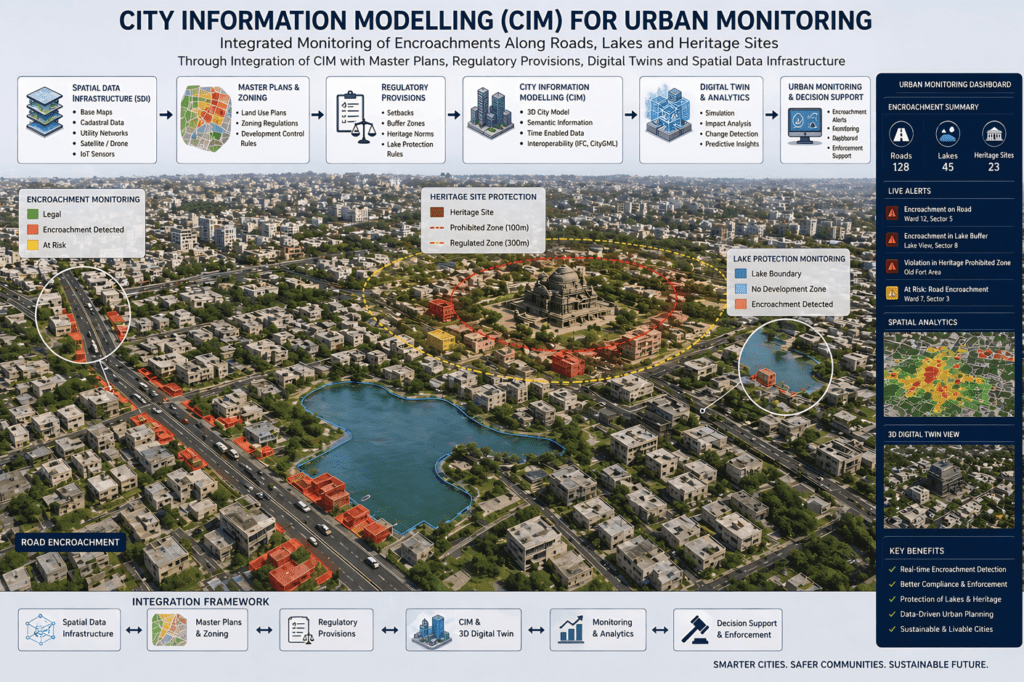
India is a rapidly urbanising nation with nearly 600 million population projected to reside in the towns and cities by 2036. Many urban challenges such as urban sprawl/ unplanned expansion of cities, spontaneous growth of informal settlements, rising levels of pollution, ecological degradation, severe traffic congestion, housing shortages, inadequate infrastructure and inefficient land use patterns, are often a result of such urbanisation. Conventionally, statutory plans such as master plans (also referred to as development plans) are prepared in India to address spatial challenges related with urbanisation and its consequences. Master plans are usually long-term plans prepared for a period of…

In India, Master Plans (also referred to as Development Plans) are statutory plans usually prepared by the local or development authority for a future period of 20 years in line with the Town Planning Act of the respective states. Planning for urban areas generally involves addressing many spatial challenges such as urbanisation and its related impacts. These may often comprise the spontaneous growth and proliferation of slums, increasing of air pollution and water contamination, ecological imbalance, traffic congestion, shortage of housing, inadequacy of physical and social infrastructure, etc. Master plans are comprehensive development plans with a focus on improving various…