




Image Courtesy: PIB
The defining contest of the 21st century is no longer being waged solely across borders, oceans, or traditional theatres of power. It is unfolding within data centres, semiconductor fabs, and the complex supply chains that sustain the digital world. Artificial intelligence, often perceived as an abstract software revolution, is in reality anchored in deeply physical infrastructures: silicon chips, rare earth minerals, and vast computational networks. Control over these underlying systems is fast becoming the new currency of geopolitical influence. In this emerging order, nations are not just competing for technological superiority but for supply chain resilience, trusted partnerships, and the ability to shape the rules governing the digital future. It is within this shifting landscape that the idea of Pax Silica—a silicon-centred geopolitical framework—acquires profound significance, and India’s entry into it marks a decisive strategic moment.
The AI Impact Summit 2026, held from 16–21 February at Bharat Mandapam, New Delhi, marked a significant moment in the evolving global technology order. Bringing together representatives from more than 100 countries, the summit was among the most comprehensive international gatherings focused on the governance, infrastructure, and strategic implications of artificial intelligence. Notably, it was the first such global AI summit hosted in the Global South, reflecting India’s growing stature within the international technology ecosystem and its emergence as a credible and trusted technology partner.
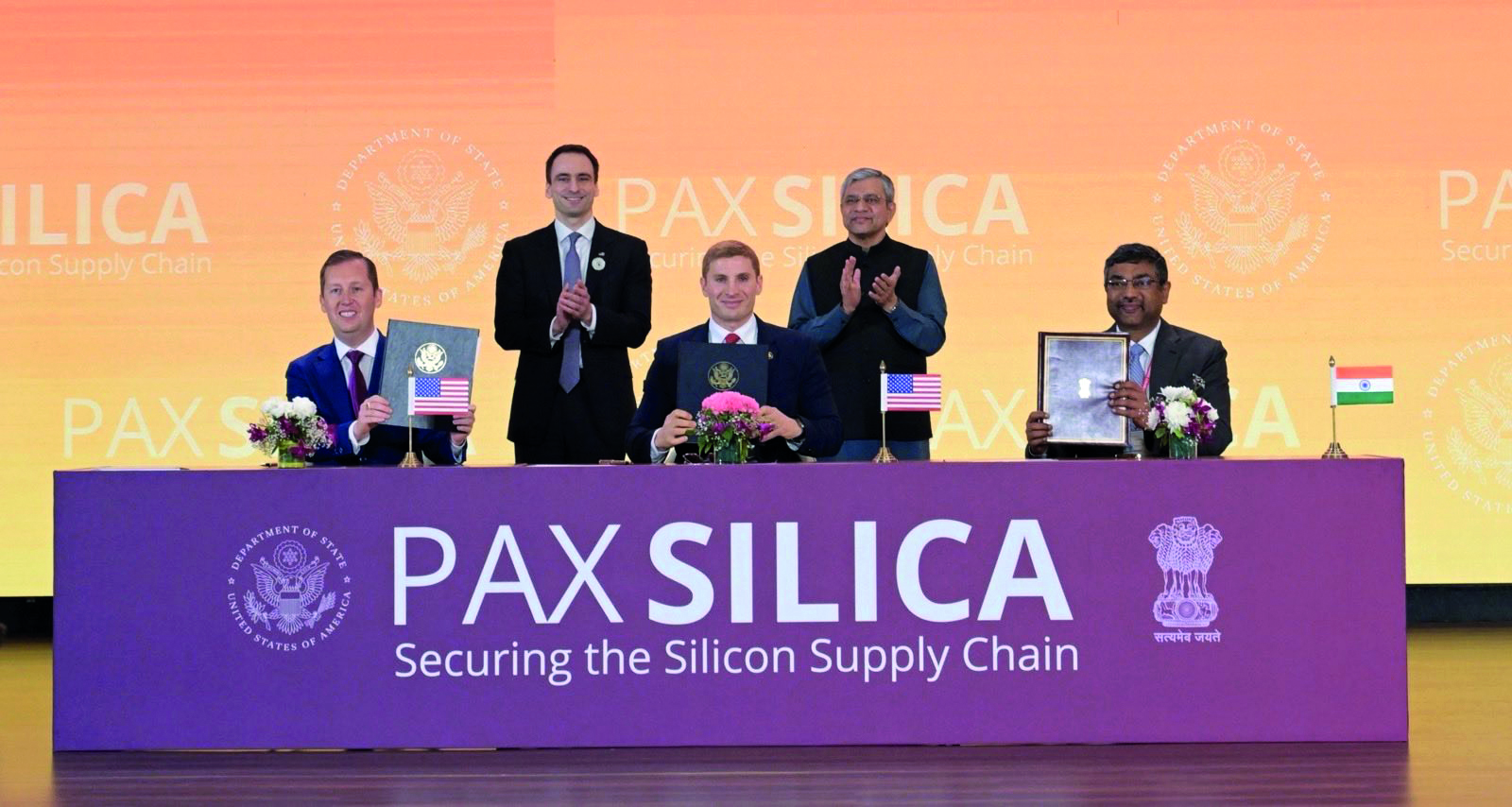
Among the many outcomes of the summit, one development stood out for its long-term geopolitical and technological implications: India’s formal entry into the Pax Silica Coalition. The move positioned Bharat at the centre of emerging efforts to secure semiconductor supply chains and the hardware infrastructure that underpins the global AI economy.
While certain media narratives focused on peripheral events surrounding the summit, the strategic significance of India joining Pax Silica remains one of the most consequential outcomes of the gathering. The summit functioned not merely as a diplomatic forum but as a platform where nations aligned around the need for secure, resilient, and democratic technology ecosystems. In this context, the Pax Silica declaration represents a foundational step toward reshaping the governance of AI supply chains in an increasingly uncertain geopolitical environment.
UNDERSTANDING PAX SILICA
Pax Silica is a United States–led international initiative designed to secure and coordinate the critical supply chains that power advanced technologies, particularly artificial intelligence and semiconductor manufacturing. The initiative seeks to ensure resilient access to essential resources across the entire technological stack—from critical minerals and semiconductor fabrication to advanced computing infrastructure— while reducing excessive dependence on single-country dominance in strategic supply chains.
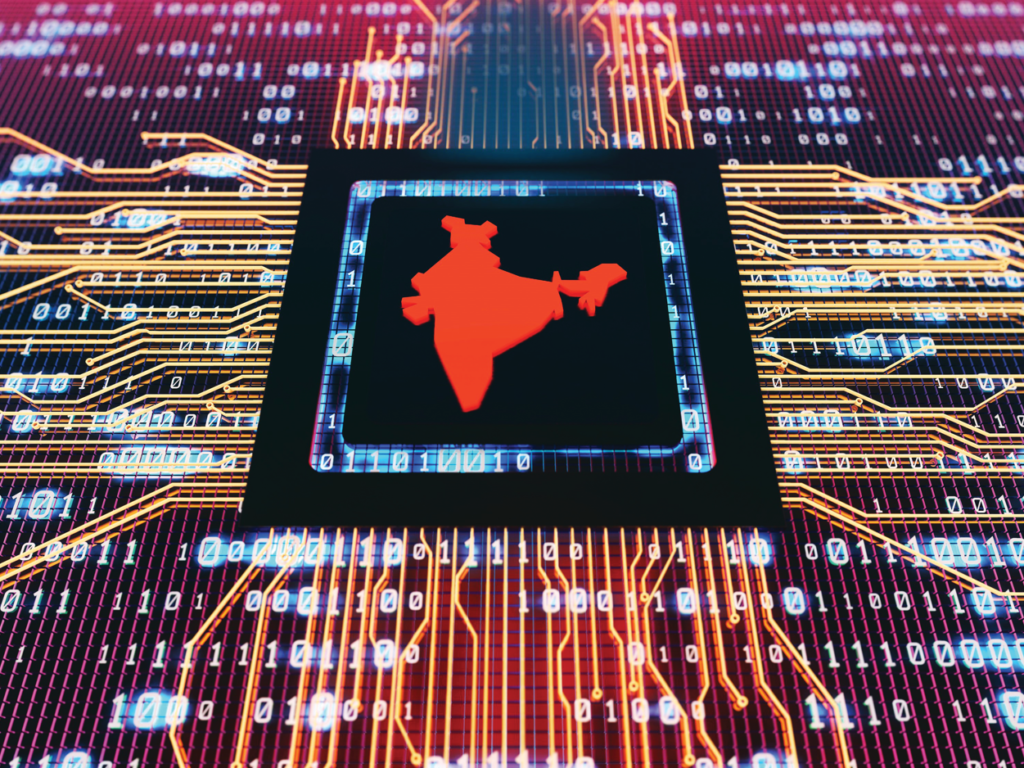
Image Courtesy: Unsplash
Launched in December 2025, the coalition includes partner countries such as Australia, Greece, Israel, Japan, Qatar, South Korea, Singapore, the United Arab Emirates, and the United Kingdom, among others. India’s inclusion in this grouping reflects both its growing technological relevance and the coalition’s broader objective: fostering cooperation among trusted democratic and technological partners committed to transparent, secure, and ethical AI ecosystems.
The relevance of Pax Silica arises from the structural nature of AI itself. Artificial intelligence systems rely on complex global networks involving semiconductor fabrication facilities, high-performance computing clusters, advanced materials, and specialised logistics infrastructure. The resilience of these interconnected systems increasingly determines the pace and direction of AI innovation.
In many ways, Pax Silica represents a transition from a fragmented, efficiency-driven globalisation model toward a more security-conscious and trust-based technological order. The emphasis is no longer solely on cost optimisation, but on reliability, redundancy, and geopolitical alignment.
SILICON AND THE GEOPOLITICS OF TECHNOLOGY
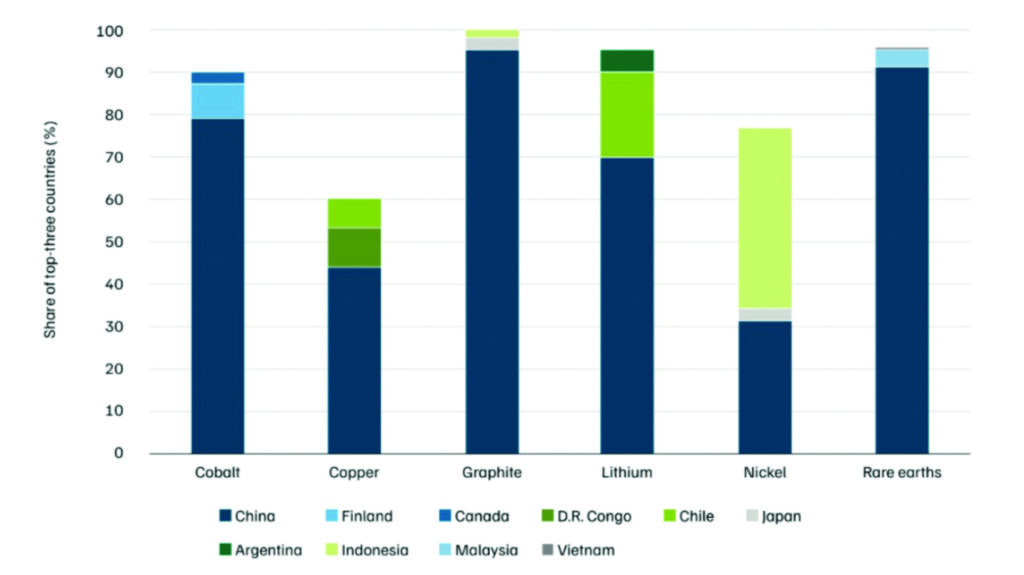
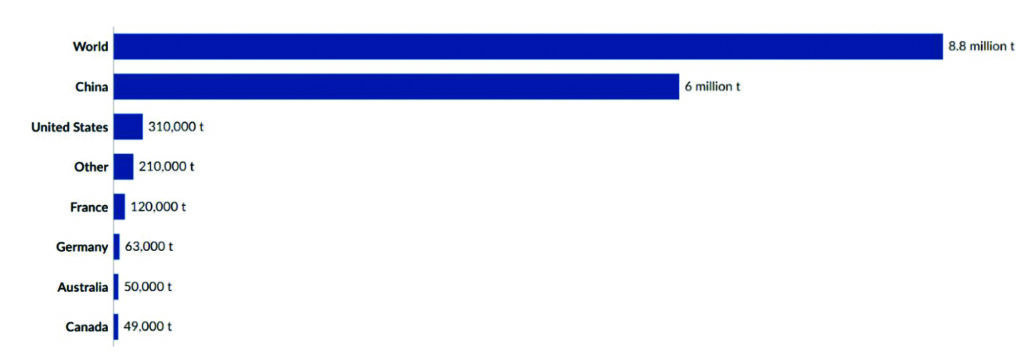
Silicon, the fundamental material used in semiconductor fabrication, has become a strategic fulcrum in contemporary geopolitics. Advanced chip manufacturing remains geographically concentrated in a few regions, particularly Taiwan and South Korea, while significant portions of critical mineral processing are dominated by China. These structural concentrations create systemic vulnerabilities in the global technology ecosystem.
Supply chain disruptions—whether due to export controls, geopolitical tensions, or industrial shocks—can rapidly cascade across industries that depend on semiconductors, including artificial intelligence, telecommunications, defence systems, and advanced manufacturing.
The accelerating growth of AI intensifies these dynamics. Frontier AI models require specialised processors, high-density data centres, and large-scale computing infrastructure. These requirements translate into rising demand for advanced semiconductor nodes, high-bandwidth memory, and energy-intensive computational facilities.
Equally significant is the growing linkage between semiconductor access and national security. Modern defence systems—from surveillance platforms to autonomous technologies—are increasingly dependent on advanced chips. As a result, semiconductor supply chains are no longer merely economic assets; they are strategic assets with direct implications for sovereignty and security.
Within the Pax Silica framework, participating nations aim to mitigate these vulnerabilities by aligning industrial policies, diversifying sourcing networks, securing access to raw materials, and facilitating collaborative technological innovation. In effect, Pax Silica represents an emerging framework for collective technological resilience.
In this new geopolitical landscape, influence is increasingly defined not only by military capability but also by semiconductor fabrication capacity, access to critical minerals, and control over AI computing infrastructure—the invisible architecture underlying digital sovereignty.
WHY PAX SILICA AND BHARAT MATTER TO EACH OTHER
India’s participation in Pax Silica represents more than symbolic diplomacy; it signals Bharat’s structural integration into the emerging global architecture of AI and semiconductor supply chains.
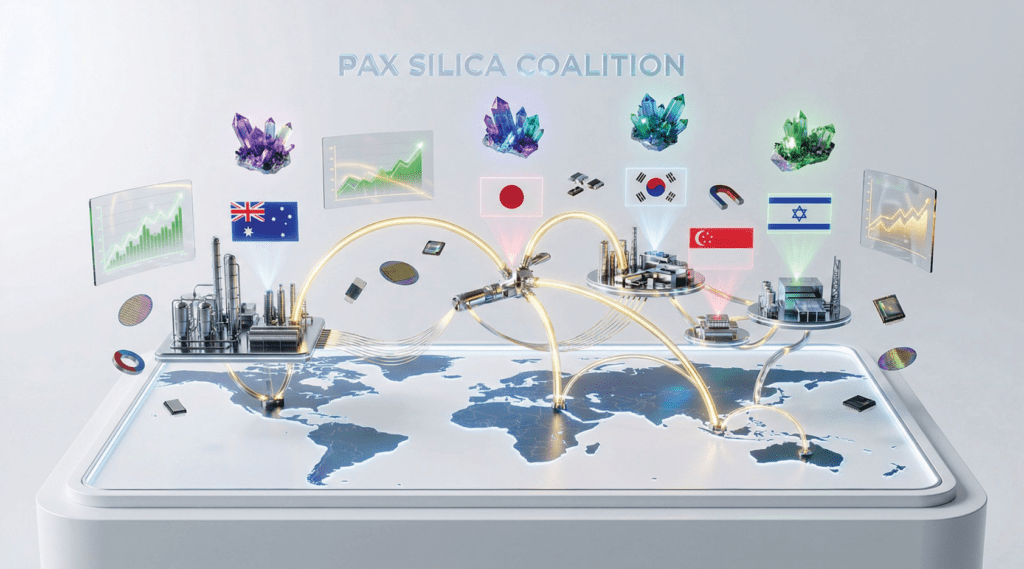
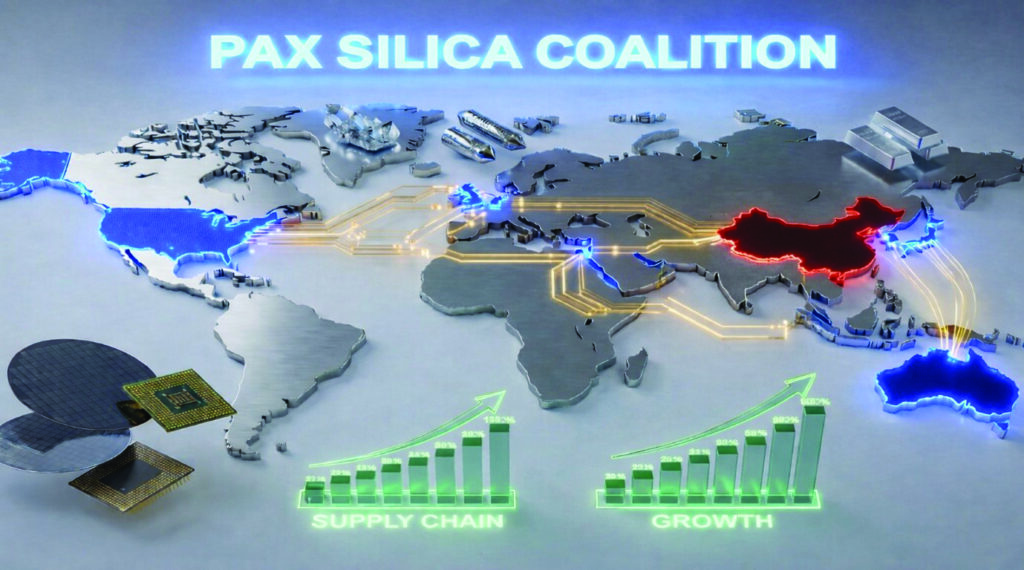
Above and right: Representation of Pax Silica coalition before India joined on 20 February 2026
Images Courtesy: Twitter
For India, membership in the coalition enhances access to trusted silicon ecosystems encompassing raw materials, advanced fabrication capabilities, and specialised equipment. This aligns closely with domestic initiatives such as the India Semiconductor Mission and the National Critical Minerals Mission, both aimed at strengthening India’s technological self-reliance and manufacturing capacity.
The development also reflects India’s gradual transformation from being primarily a large consumer market for advanced technologies to becoming a co-architect of resilient and democratic technology frameworks. Through sustained engagement with strategic partners including the United States, Japan, and Australia, Bharat has positioned itself as a trusted pillar in the global AI hardware value chain.
At the same time, India’s strengths lie not only in manufacturing ambitions but also in design capabilities. A significant share of the global semiconductor design workforce operates from India, contributing to cutting-edge chip architectures and embedded systems. This positions India uniquely within the Pax Silica ecosystem—as both a contributor to innovation and a beneficiary of supply chain integration.
The relationship, however, is mutually reinforcing. Pax Silica also gains strategic depth from India’s capabilities and perspectives. As the world’s youngest major nation with a vast engineering workforce, India offers a substantial pool of human capital essential for semiconductor design, AI development, and advanced manufacturing. Its rapidly growing startup ecosystem and expanding AI research base demonstrate both technological deployment capacity and innovation potential.
India’s participation also strengthens global efforts to diversify supply chains. With China exercising considerable influence over critical mineral processing and other strategic resources, many countries seek alternative production and processing ecosystems. India’s expanding manufacturing base and growing domestic market provide a natural anchor for this diversification strategy.
If effectively operationalised, the Pax Silica framework could enable a fully integrated supply chain ecosystem—from mining and processing critical minerals to semiconductor fabrication and AI deployment—distributed across trusted partner nations. Such a system would significantly reduce vulnerability to disruptions arising from geopolitical tensions or excessive industrial concentration.
ENERGY, INFRASTRUCTURE, AND THE FUTURE OF AI
An often-underappreciated dimension of the AI revolution is its energy intensity. Training and deploying advanced AI models requires enormous computational resources, translating into significant electricity consumption. Data centres are rapidly emerging as critical infrastructure nodes in the global economy. This introduces a new layer to the geopolitics of AI: the intersection of energy security and digital infrastructure.
India’s expanding renewable energy capacity provides a strategic advantage in this domain. By integrating solar, wind, and other sustainable energy sources into data centre ecosystems, India has the potential to pioneer green AI infrastructure. This not only reduces environmental impact but also enhances long-term sustainability and cost efficiency. Within the Pax Silica framework, such capabilities could position India as a hub for energy-efficient computing infrastructure, complementing its ambitions in semiconductor manufacturing and AI deployment.
A HUMAN-CENTRIC VISION FOR AI
Beyond its technological and industrial dimensions, India’s approach to AI governance incorporates a normative and ethical perspective. Prime Minister Narendra Modi has articulated a human-centric framework for artificial intelligence through the MANAV vision. The concept emphasizes Moral and Ethical Systems, Accountable Governance, National Sovereignty, Accessible and Inclusive AI, and Valid and Legitimate technological frameworks.
This approach resonates with India’s long-standing philosophical ethos captured in the principle of Sarvajan Hitay Sarvajan Sukhay—the welfare and happiness of all. Within the context of AI governance, the principle underscores the importance of ensuring that technological progress remains aligned with broader societal wellbeing.
India’s experience with large-scale digital public infrastructure further strengthens this perspective. Platforms enabling digital identity, payments, and service delivery demonstrate how technology can be deployed inclusively at scale. This provides a practical foundation for extending AI benefits across diverse populations. By combining democratic governance, technological capability, and large-scale digital inclusion, India expands the meaning of Pax Silica beyond purely industrial objectives. The initiative is not only about securing semiconductor supply chains but also about ensuring that artificial intelligence evolves as a responsible, secure, and inclusive technological force.
CONCLUSION: A DEFINING MOMENT IN THE AI ERA
The Pax Silica development at the AI Impact Summit represents a pivotal moment in the evolving global AI landscape. That the milestone occurred at a summit hosted in the Global South adds further strategic significance. It indicates that the future of artificial intelligence will not be shaped exclusively by narrow clusters of technological power but increasingly through broader international collaboration.
India’s role in this process is distinctive. The country stands not merely as a participant in the emerging AI order but as a technology partner capable of contributing both industrial capacity and intellectual leadership. For much of modern history, technological revolutions have largely been driven by market imperatives or narrow strategic objectives. India’s approach suggests a broader paradigm—one in which technological advancement is aligned with social inclusion and global cooperation.
Anchored in the principle of Vasudhaiva Kutumbakam—the idea that the world is one family—India’s vision seeks to extend technological progress to the widest possible spectrum of humanity. In doing so, Bharat is positioning itself not only as a rising technological power but also as a nation seeking to shape the ethical and developmental direction of the artificial intelligence era.
*The writer is Researcher & Consultant at MeitY (Ministry of Electronics and Information Technology), Government of India.