


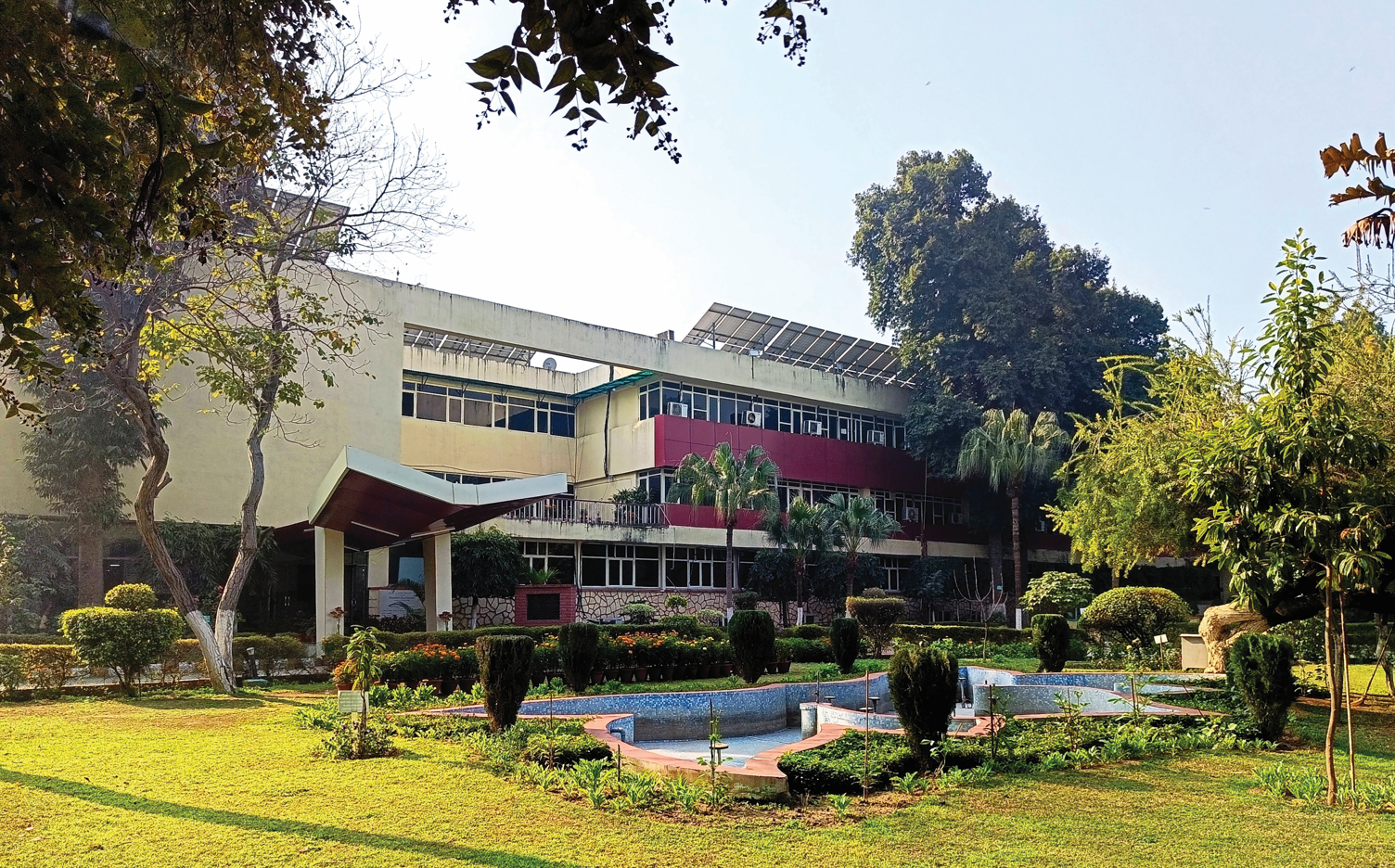
The Council of Scientific and Industrial Research (CSIR), established on 26 September 1942, has been at the forefront of India’s scientific and technological progress for over eight decades. While CSIR is widely recognized for its pioneering research and innovation, its vision extends far beyond laboratories to ensuring that scientific knowledge reaches every section of society. This mission finds its strongest expression through the CSIR–National Institute of Science Communication and Policy Research (CSIR-NIScPR), a unique institution among CSIR’s 37 laboratories that serves as a bridge connecting scientific research, policy, industry, and society. It serves as a globally recognised think tank of India to fulfill the emerging national aspirations and needs related with STI policy research and science communication.
Reflecting this legacy, the Journal of Scientific & Industrial Research (JSIR), established in 1942, is the oldest scientific journal of CSIR and continues to be published by NIScPR as a distinguished platform for high-quality research and innovation. The primary objective of NIScPR is to promote STI policy studies, science communication, and research in the areas of science, technology, and innovation among various societal stakeholders. NIScPR was established in 2021 following the merger of two of CSIR’s predecessor laboratories NISCAIR (estd. in 1951) and NISTADS (estd. in 1980). Preserving a legacy spanning over seven decades, this research institute has been playing the role of a bridge connecting science and technology with industry and society.
PUBLISHING SCIENCE, CONNECTING KNOWLEDGE
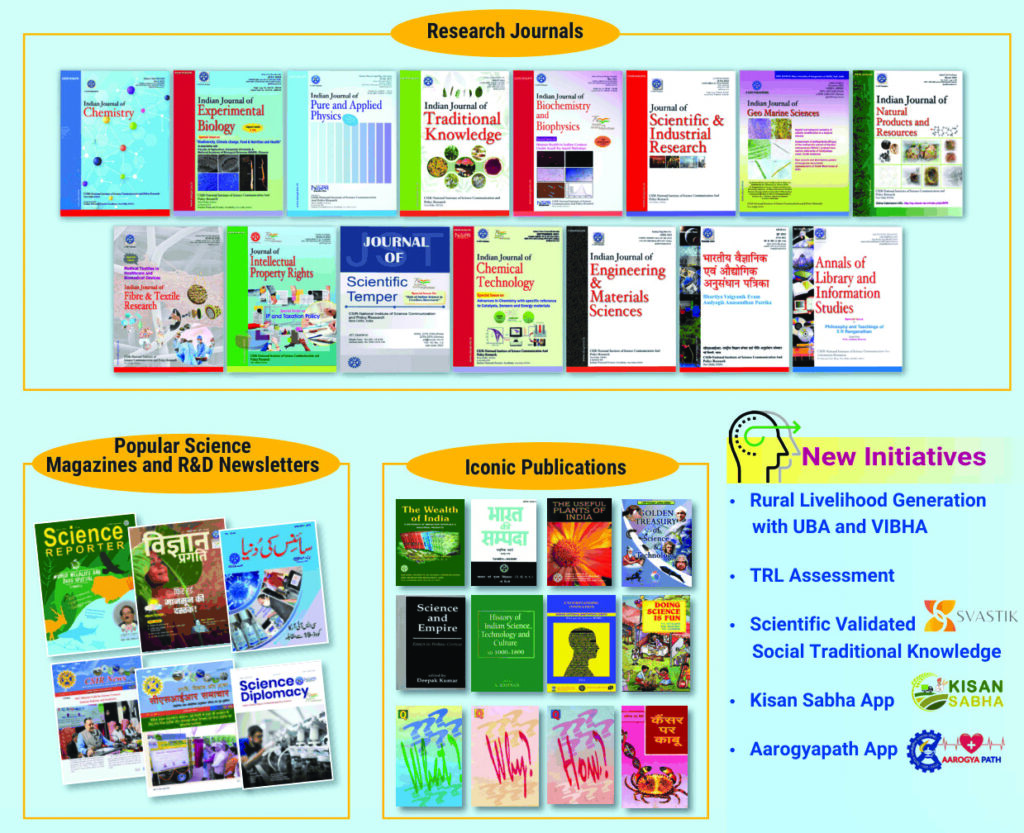
NIScPR’s portfolio of 15 peer-reviewed research journals in various S&T domains represents one of India’s most respected platforms for scholarly publishing in science and technology. Renowned for their scientific excellence and international visibility, these journals follow a Diamond Open Access model, ensuring free online access for readers while charging no Article Processing Charges (APCs) to authors. All 15 journals are indexed in leading international databases and are recognised through globally accepted metrics such as Journal Citation Reports (JCR), SCImago Journal Rank (SJR), CiteScore, and NAAS ratings. Supported by a seamless online manuscript submission system, the journal ecosystem also includes two journals indexed under the WIPO Patent Cooperation Treaty (PCT). Reinforcing its commitment to responsible and future-ready scholarly communication, NIScPR has also introduced a comprehensive Artificial Intelligence (AI) Policy for its research journals, ensuring the ethical and transparent use of AI in scientific publishing.

NIScPR is renowned across the country for its three popular science magazines— Vigyan Pragati (a Hindi monthly); Science Reporter (an English monthly); and Science Ki Duniya (an Urdu quarterly). All three magazines are very popular across the country. The publication of Vigyan Pragati was started by CSIR in 1952, and is set to enter its 75th year of its publication in August 2026. Students, general public and youth preparing for competitive examinations eagerly await these magazines. Science Diplomacy is NIScPR’s Global Digest of Multidisciplinary Science, launched in 2017. It is an open-access quarterly publication that highlights the growing role of science in international relations. Covering science diplomacy, innovation, technology, policy developments, global partnerships, and expert perspectives, it promotes dialogue on emerging global challenges while strengthening the bonding between STI, and sustainable development.
NIScPR has a great repository of scientific information in the form of research journals, and popular science magazines. You can find more information about NIScPR’s Online Periodicals Repository (NOPR) at http://nopr.niscpr.res.in/
SCIENCE POLICY RESEARCH FOR A SUSTAINABLE AND INNOVATIVE INDIA
Science Policy Research at CSIR-NIScPR serves as a strategic bridge between scientific knowledge and public policy, generating evidence-based solutions that strengthen India’s STI ecosystem. Aligned with the vision of Viksit Bharat 2047 and the Sustainable Development Goals (SDGs), the programme adopts a multidisciplinary approach to address emerging national and global challenges. Its research spans innovation and entrepreneurship, technology commercialization, climate action, sustainable agriculture, environmental governance, pollution mitigation, and transformative technologies such as artificial intelligence, quantum technologies, semiconductors, and the bioeconomy. By integrating policy analysis, impact assessment, advanced data analytics, and foresight studies, NIScPR develops actionable insights that support informed decision-making across government, industry, academia, and society. Through policy briefs, strategic roadmaps, technology assessments, STI indicators, and decision-support tools, NIScPR strengthens the science-policy interface and accelerates innovation-led growth. By translating scientific evidence into practical policy recommendations, Science Policy Research empowers India to build a resilient, competitive, and future-ready nation where science, sustainability, and societal well-being advance together.

NIScPR provides evidence-based policy inputs for national policy making in several critical thematic S&T areas including sustainability studies, scientometrics, benchmarking and foresight studies, entrepreneurship & start-up ecosystem and socio-economic impact & market research. The STI ecosystem is becoming increasingly large, complex, and non-linear. Conventional indicators are no longer sufficient to understand this evolving landscape. At NIScPR, the next-generation STI indicators are being developed that go beyond counting publications and patents. NIScPR focuses on measuring quality, causal understanding, and weak signals by integrating scientometrics, artificial intelligence, and qualitative approaches to support foresight and evidence-based STI policymaking.
TECHNOLOGY READINESS FOR INNOVATION AND IMPACT
We usually witness that many promising technologies fail before reaching the market because they are not sufficiently mature, validated, or aligned with user requirements. To address this challenge, the global scientific community uses Technology Readiness Levels, or TRLs. TRL is a systems engineering management tool that helps assess the maturity of a technology and determine what needs to be done before it can move to the next stage. Over the last several years, NIScPR has emerged as a national leader in TRL assessment. We have developed generic as well as sector-specific TRL frameworks covering engineering, medical technologies, agriculture, water technologies, and several emerging domains including drones. More recently, we have been associated with the Office of the Principal Scientific Adviser to the Government of India as a knowledge partner for the TRL Compass initiative.
NIScPR, in collaboration with the National Research Development Corporation (NRDC), is driving the National Establishment for Technology Readiness Assessment (NETRA) initiative by developing sector-specific TRL frameworks. This collaborative effort aims to standardize technology assessment, accelerate innovation commercialization, strengthen industry-academia linkages, and support evidence-based technology policy and strategic decision making in India.
NKRC: ENABLING EXCELLENCE IN RESEARCH AND LEARNING
The National Knowledge Resource Consortium (NKRC), coordinated by NIScPR, is one of India’s largest and most impactful knowledge resource consortia, serving 82 participating institutions across the Council of Scientific and Industrial Research (CSIR), the Department of Science and Technology (DST), and the Ministry of Earth Sciences (MoES). Established in 2002, NKRC facilitates seamless access to more than 75 specialized electronic resources, including scholarly e-journals, bibliographic and citation databases, standards, and other research information products from leading global publishers that are outside the scope of the PM-One Nation One Subscription (ONOS) initiative. Through centralized licensing and strategic negotiations, the consortium has significantly expanded access to high-quality scientific information while achieving substantial savings in public expenditure. NKRC also plays a pivotal role in the successful implementation of the PM-One Nation One Subscription (ONOS) scheme by facilitating the consolidation and transfer of CSIR’s subscription contributions to the centralized ONOS mechanism and providing technical, administrative, and coordination support for its implementation. By ensuring equitable access to world-class scientific information resources and promoting resource sharing across institutions, NKRC continues to strengthen India’s research ecosystem and serves as a successful national model for collaborative knowledge resource management. In a significant step towards strengthening access to high-quality scientific, technical and intellectual property information, the Office of the Controller General of Patents, Designs and Trade Marks (CGPDTM), Government of India, and CSIR-NIScPR signed a MoU on 15 July 2026 for participation in the NKRC. For more information, , visit https://nkrc.niscpr.res.in
NATIONAL SCIENCE LIBRARY AND GATEWAY TO ISSN SERVICES
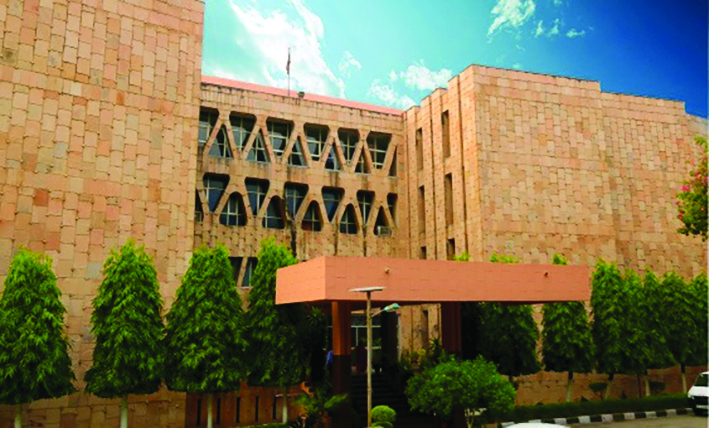
The National Science Library (NSL) is a government facility of national importance, coordinated by NIScPR. NSL houses more than 2.9 lakh collections, including books, journals, theses, standards, and online resources, to support students, researchers and scientists. NSL has reader room service for 70 readers during working hours. NSL was established by CSIR in June 1963. At present, it is situated at the NIScPR office on Satsang Vihar Marg, New Delhi. The ISSN National Centre (India) based at NIScPR, has been a member of the global ISSN (International Standard Serial Number) network since 1986. Network activities are administered by the ISSN International Centre in Paris. Each ISSN National Centre representing one of the 93 countries in the network is responsible for implementing ISSN activities within its respective country. This centre is responsible for assigning ISSNs to journals and periodicals published in India and for providing information about them to the International ISSN Register. To date, the centre has assigned ISSNs to approximately 27,777 Indian journals and periodicals.
SHOWCASING INDIA’S EVIDENCE-BASED TRADITIONAL KNOWLEDGE THROUGH SVASTIK
Our country possesses a rich heritage of traditional knowledge and practices. Recognizing the significance of Indian traditional knowledge and its scientific basis, the Prime Minister of India and President of the CSIR Society, Narendra Modi, emphasized the need to effectively communicate information regarding the scientific validation of traditional knowledge and practices to the public. CSIR was directed to collaborate with relevant stakeholders across the country and spearhead efforts to implement a national initiative focused on ‘Communicating India’s Scientifically Validated Traditional Knowledge’. NIScPR has been designated as the nodal organization for implementing this national initiative. Until now 85 stories based on Indian traditional knowledge with scientific basis have been disseminated through #SVASTIK social media platforms in English along with dissemination in 19 Indian and 5 foreign languages. For more information about this initiative, you may visit https://www.svastik.niscpr.res.in
COMMUNICATING SCIENCE, INSPIRING PUBLIC TRUST
In 2023, NIScPR came up with an initiative with a unique objective to spread the milestones, breakthroughs and achievements of Indian science. This initiative is known as Science Media Communication Cell (SMCC). The key objective of the SMCC unit at NIScPR is to produce audio-visual and social media content regarding scientific achievements of Indian laboratories and make it accessible to the general public on a large scale. It also serves as a platform for dialogue among citizens, researchers, scholars, experts, and institutions. It acts as a shared platform for sharing and making available to users all science-based content produced by CSIR laboratories and other science departments across the country. This unit ensures the communication of scientific information through print, audio-visual, and social media channels. To know more about SMCC, you can visit http://www.smcc.niscpr.res.in.
NIScPR conducts a PhD programme to guide researchers in the fields of Science, Technology, and Innovation Policy and Science Communication. To date, 28 researchers have obtained their PhDs through this programme, and 41 students are currently pursuing their research.
In recent years, NIScPR has collaborated with leading scientific institutions to organize conferences on significant themes such as Deep Science versus Deep Tech, STI indicators for effective R&D governance, Open science, Human-centric AI, and the Semiconductor ecosystem. NIScPR actively participates in scientific programmes and conferences of national and international significance; the Raisina Dialogue on Science Diplomacy Initiative (SDI) is a prime example of this. Since 2017, NIScPR has been coordinating two significant events of the India International Science Festival (IISF) called ‘Vigyanika’ and ‘Science & Technology Media Conclave’.
Recently, NIScPR has also entered into partnership agreements with Research and Information System for Developing Countries (RIS), Indian National Science Academy (INSA), Andhra Pradesh State S&T Council, National Disaster Management Authority (NDMA), National Institute of Advanced Studies (NIAS) and Office of the Controller General of Patents, Designs and Trade Marks (CGPDTM). These strategic partnerships reflect CSIR-NIScPR’s commitment to building a collaborative national and global knowledge ecosystem for science communication and science policy research. By working closely with leading scientific institutions, policy think tanks, government agencies, academia, and industry, the institute seeks to co-create evidence-based policy solutions, strengthen research and innovation ecosystems, enhance science communication capacities, promote knowledge sharing, and address emerging societal challenges. Such collaborations also enable NIScPR to benchmark its programmes against global best practices while ensuring that its research and outreach remain firmly aligned with India’s developmental priorities and aspirations towards Viksit Bharat 2047.
CSIR-NIScPR holds a significant place among the early institutional initiatives for science popularization and policy studies and research in independent India. Its legacy is intertwined with the nation’s progress. Dedicated to the core objectives of science communication and science policy research, the institute strives to emerge as a globally benchmarked institution that advances India’s leadership in evidence-based policymaking, scientific knowledge dissemination, and public engagement with science.
*Dr Geetha Vani Rayasam, an accomplished scientist with vast experience in academia, industry and Government of India, is the Director of CSIR-National Institute of Science Communication and Policy Research (NIScPR). Dr Manish Mohan Gore leads the Science Media Communication Cell at CSIR-National Institute of Science Communication and Policy Research (NIScPR) and is the Senior Scientist and editor of the NIScPR’s popular science magazine, ‘Vigyan Pragati’.