



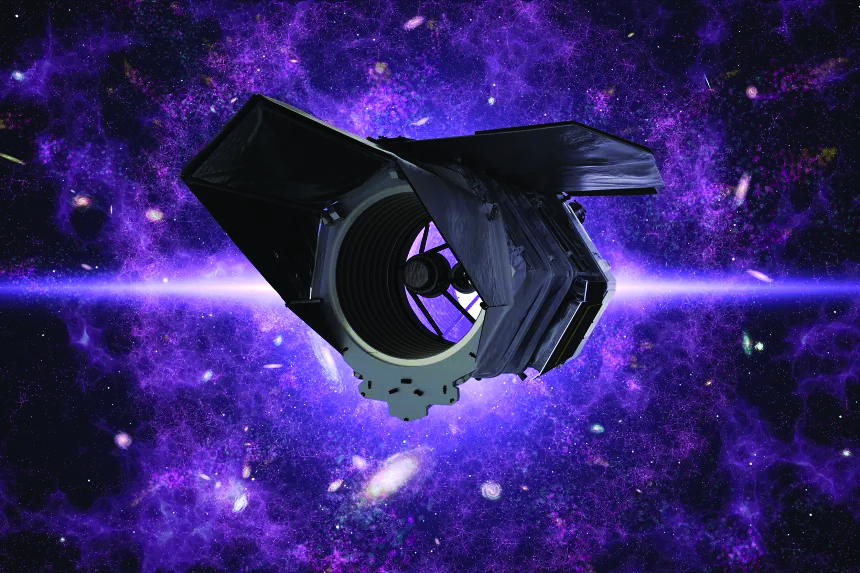
Image Courtesy: NASA
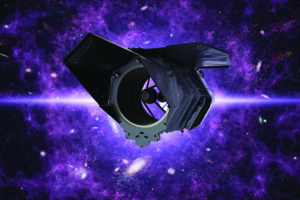
NASA has launched one of its most ambitious space observatories yet, designed to look deeper into some of the universe’s greatest mysteries. From mapping invisible dark matter and investigating dark energy to discovering planets beyond our solar system, the Nancy Grace Roman Space Telescope could dramatically expand humanity’s understanding of the cosmos.
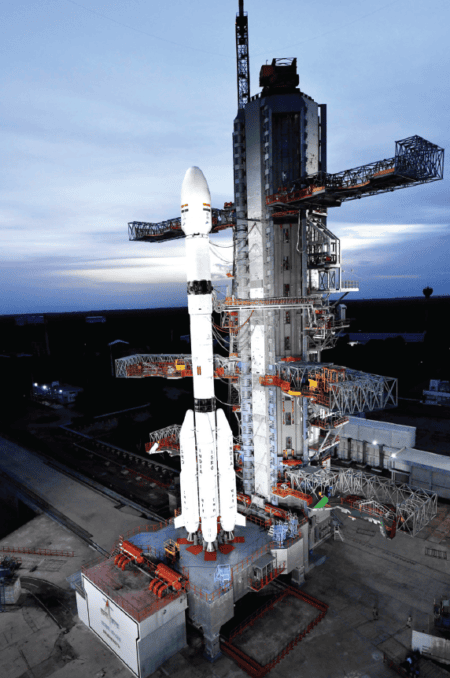
NASA’s Nancy Grace Roman Space Telescope was launched on August 30 aboard a SpaceX Falcon Heavy rocket from Launch Complex 39A at the Kennedy Space Center in Florida. The telescope is now undertaking a three-month journey of about one million miles to the second Sun-Earth Lagrange point, known as L2.
The observatory is named after Nancy Grace Roman, NASA’s first chief astronomer, who played an important role in advancing space-based astronomy and was widely known as the “mother of Hubble” for her contribution to the development of the Hubble Space Telescope.
Roman’s strength lies in combining sharp infrared vision with the ability to observe enormous portions of the sky. NASA says the telescope has been designed to survey the universe about 1,000 times faster than Hubble, potentially providing astronomers with an unprecedented cosmic atlas.
Its primary scientific instrument is the 300-megapixel Wide Field Instrument, which contains 18 detectors. Unlike telescopes that concentrate on relatively small areas of the sky at a time, Roman will rapidly survey vast cosmic regions and collect information about galaxies, stars and other celestial objects.
Among its most important tasks will be investigating dark matter and dark energy, two phenomena that together are estimated to constitute about 95 per cent of the universe. Ordinary matter — the material that makes up planets, stars and humans — represents only about five per cent. Dark matter is believed to account for roughly 27 per cent, while dark energy makes up around 68 per cent.
Dark matter cannot be directly observed, but scientists infer its existence from its gravitational influence on galaxies and other structures. Roman will study effects such as gravitational lensing, in which gravity bends light travelling across the universe. Its observations could help scientists construct detailed three-dimensional maps showing the distribution of galaxies and galaxy clusters and provide new clues about how cosmic structures developed.
The telescope will also investigate dark energy, the mysterious phenomenon believed to be responsible for accelerating the expansion of the universe. By surveying huge numbers of galaxies across cosmic history, researchers hope to better understand how that expansion has changed over billions of years.
Another major objective is the hunt for exoplanets – planets outside our solar system.
Roman also carries a Coronagraph Instrument designed to demonstrate technology capable of suppressing the overwhelming glare of stars, making it possible to image comparatively faint planets orbiting them.
The mission will produce an extraordinary quantity of information. Roman is expected to transmit approximately 1.4 terabytes of data every day, the highest data rate so far for a NASA astrophysics mission. Artificial intelligence, machine learning and citizen scientists are expected to assist astronomers in identifying significant discoveries hidden within this enormous dataset.
Roman is undergoing a three-month commissioning period during which its instruments will be calibrated and tested. NASA expects to release its first images in early 2027, potentially beginning a new era in the exploration of the universe we can see and the vast portion we still cannot.