




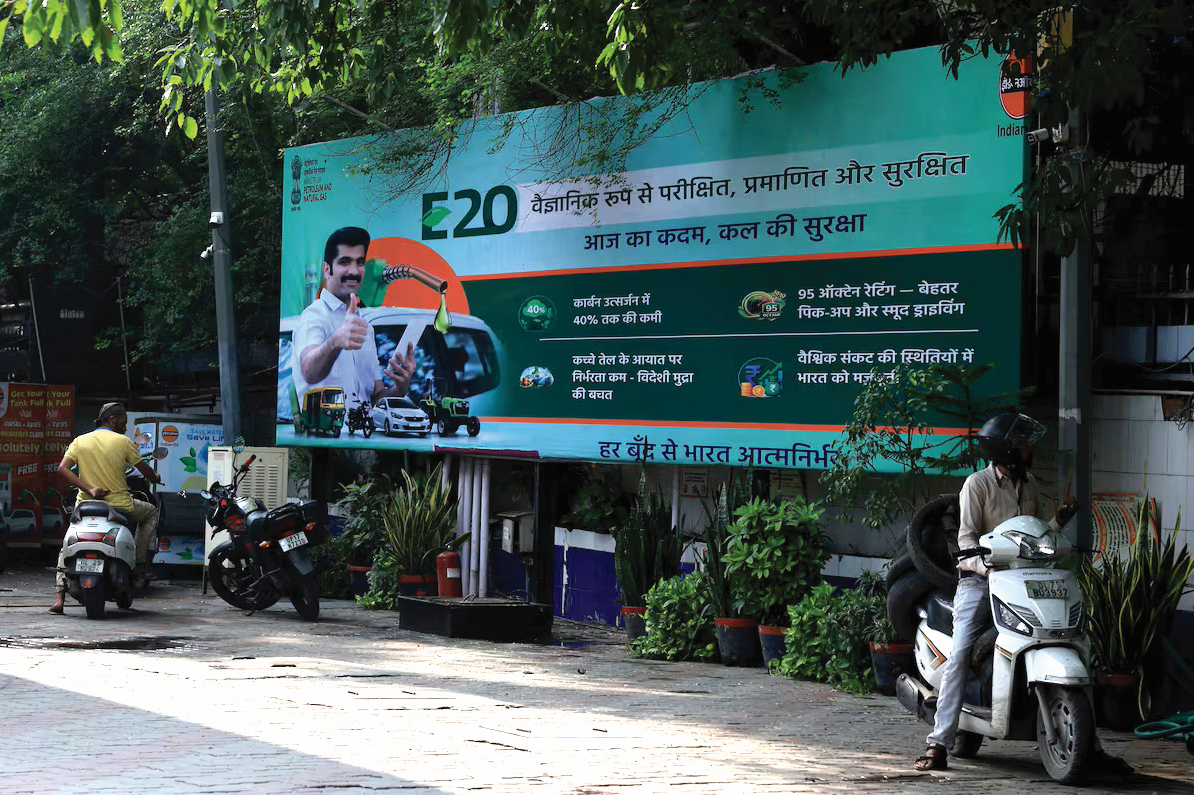
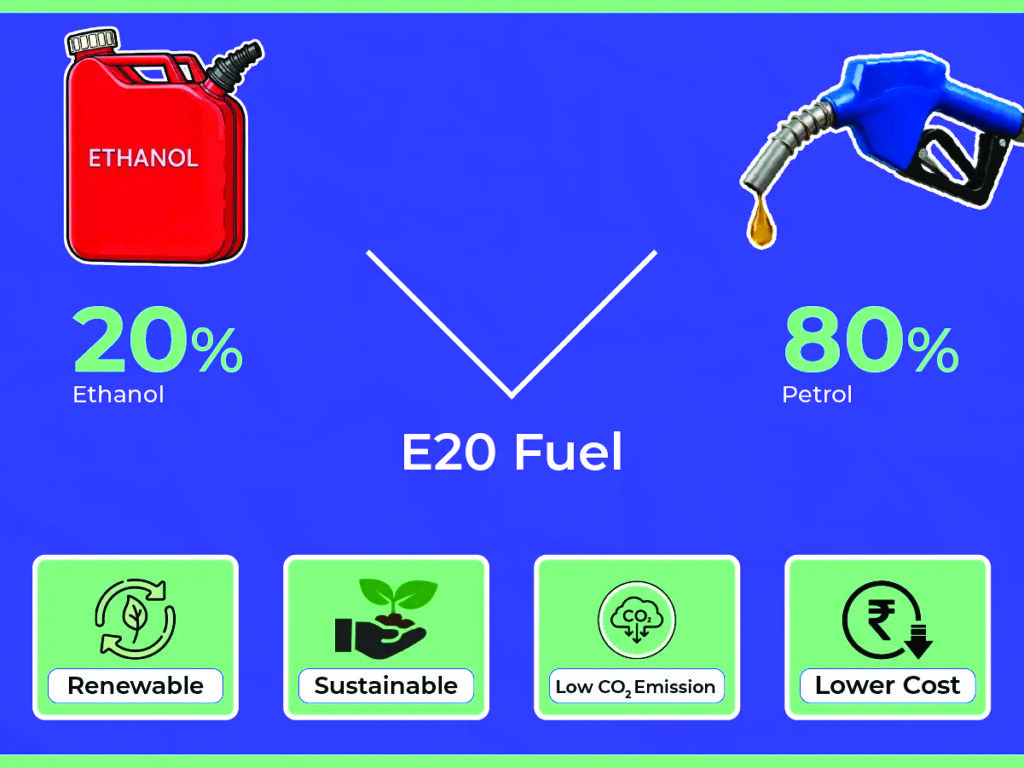
India’s transition to E20—petrol containing up to 20 per cent ethanol—has become unexpectedly contentious. To some, it represents an important step towards energy security, lower oil imports and a cleaner transport system. To others, it is an agricultural diversion masquerading as environmental policy, consuming water and food resources while offering uncertain gains in emissions and foreign-exchange savings.
Both positions contain elements of truth. The science, however, is more interesting than either narrative.
The real question is not whether ethanol is inherently good or bad. It is what ethanol is produced from, how it is produced, what resources it consumes, what it replaces and what its complete lifecycle costs are.
FROM SUGARCANE TO E20
India’s ethanol journey is not new. The Ethanol Blended Petrol programme dates back more than two decades, but its acceleration after 2014 has been remarkable.
Government data show that ethanol blending in petrol increased from less than 1.5 per cent in 2013-14 to 20 per cent in 2025-26. Procurement rose from about 38 crore litres to more than 1,040 crore litres over the same period, while installed ethanol production capacity expanded from 421 crore litres in 2014 to approximately 2,000 crore litres in 2026.
The significance extends beyond the fuel pump. Ethanol has created an additional market for sugarcane, molasses, maize and other agricultural feedstocks, while providing an alternative revenue stream for sugar mills and distilleries.
India’s ethanol programme is therefore simultaneously an energy policy, an agricultural policy and an industrial policy.
WHAT EXACTLY IS ETHANOL?
Chemically, ethanol is a simple alcohol, C2H5OH. It can be produced biologically by fermenting sugars and starches, followed by distillation and dehydration.
Its attraction as a motor fuel comes partly from a property that is often overlooked: Ethanol has a high-octane rating. It resists engine knocking better than conventional petrol and can therefore be advantageous in engines designed or calibrated to exploit its properties.
But ethanol has a significant disadvantage: Its energy density is lower than that of petrol. A litre of ethanol contains roughly two-thirds the energy of a litre of petrol. Consequently, replacing part of petrol with ethanol can reduce fuel economy, although the precise effect depends upon the vehicle, engine calibration and driving conditions.
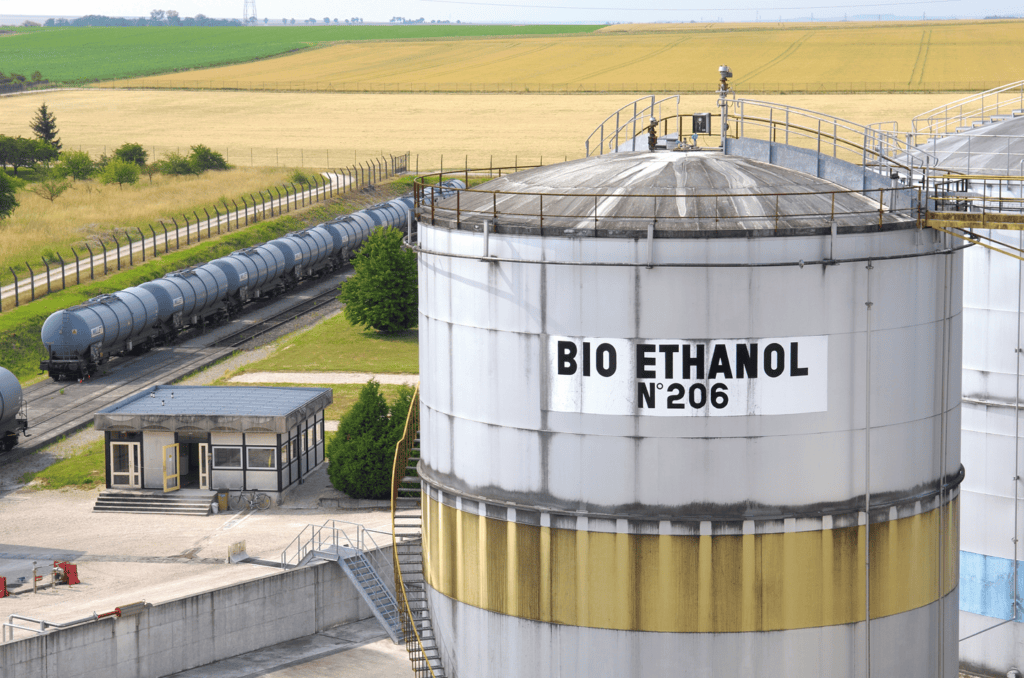
Image Courtesy: Shutterstock
This distinction is important. A reduction in mileage does not necessarily make ethanol an inferior fuel overall. The relevant question is whether the energy and emissions saved over the entire fuel lifecycle compensate for the additional resources required to produce it.
THE FEEDSTOCK MAKES THE DIFFERENCE
The environmental character of ethanol is determined to a considerable extent before it ever reaches the petrol tank.
For much of India’s history, ethanol production has been closely linked to sugarcane and molasses. Increasingly, however, maize and other grains have become important feedstocks. Agricultural residues and non-food biomass offer another possibility through what are generally called second-generation or 2G biofuels.
This distinction is fundamental.
Sugarcane is highly productive in terms of ethanol yield, but it is also water-intensive. A NITI Aayog assessment estimated that sugar-based ethanol could require around 3,000 litres of water per litre of ethanol, although such figures vary considerably depending on methodology, location and whether rainfall or irrigation is included in the water footprint. The same study identified maize as less water-intensive than sugarcane among the grain feedstocks it examined.
More recent NITI Aayog work continues to examine comparative lifecycle assessment of ethanol from sugarcane, maize and rice—an indication that there is no scientifically defensible single answer applicable to every feedstock and every region.
The implication is clear: E20 should not be evaluated simply as ethanol versus petrol. It should be evaluated as sugarcane ethanol versus maize ethanol versus waste-derived ethanol versus other energy alternatives.
THE FOOD-VERSUS-FUEL QUESTION
This leads directly to one of the strongest criticisms of India’s ethanol policy.
If maize, rice or other food crops are diverted to fuel production, does an energy policy begin competing with food security?
The answer is neither an unequivocal yes nor no.
Using damaged grain, agricultural surplus or material unsuitable for human consumption is very different from diverting food that would otherwise enter the human food chain. India has used both sugar-based feedstocks and grain-based sources, including surplus and damaged grain.
But food security is not merely a question of whether there is enough grain today. Agricultural production is vulnerable to droughts, floods, climate change, price fluctuations and changing consumption patterns. A crop that appears surplus in one year may become scarce in another.
This makes feedstock flexibility essential. India should not allow its ethanol programme to become structurally dependent upon any crop that is simultaneously critical to food security.
IS ETHANOL REALLY A GREEN FUEL?
This is perhaps the most important scientific question.
The answer depends on what is meant by “green”.
At the tailpipe, ethanol blending can alter emissions’ characteristics and reduce the amount of fossil petrol consumed. But the climate impact of a biofuel cannot be judged solely by what comes out of the exhaust pipe.
A lifecycle assessment must consider the entire chain: Cultivation, fertiliser use, irrigation, harvesting, transport, fermentation, distillation, energy consumed by the ethanol plant and eventual combustion.
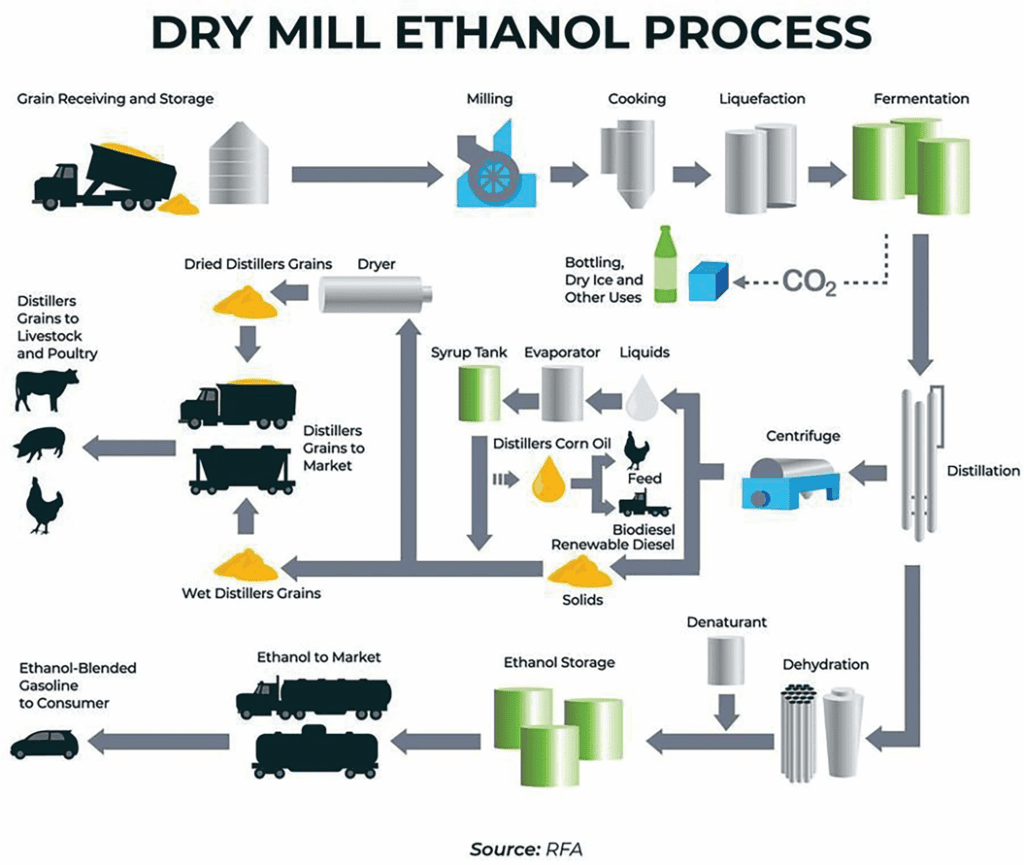
The carbon dioxide released when ethanol burns is broadly part of the contemporary biological carbon cycle because the feedstock absorbed carbon dioxide while growing. But that does not mean ethanol is automatically carbon-neutral. Fossil energy used to cultivate crops, manufacture fertiliser, transport feedstocks and operate distilleries adds emissions.
Land-use change can complicate the picture further.
Thus, the scientifically meaningful question is not “Does ethanol emit carbon?” It obviously does. The question is, “How much greenhouse gas is emitted per unit of useful energy delivered, compared with the petrol it replaces?”
That is why lifecycle carbon intensity matters more than the attractive but simplistic label of “renewable fuel”.
ENERGY SECURITY: THE STRONGEST CASE FOR ETHANOL
India imports the overwhelming majority of the crude oil it consumes. Transport remains heavily dependent on liquid petroleum fuels, and this dependence creates both an economic and geopolitical vulnerability.
Ethanol provides one way of reducing that vulnerability because it can be produced domestically.
The government estimates that the ethanol programme has already substituted substantial quantities of crude oil and generated significant foreign-exchange savings. Such figures should be treated as programme estimates rather than as the final calculation of net national benefit. The latter must also account for the energy, water, land, subsidies and agricultural resources employed in producing ethanol.
Nevertheless, the strategic benefit of diversifying the country’s liquid-fuel supply should not be underestimated.
An indigenous fuel—even one that is not the cheapest or the cleanest imaginable—is strategically valuable when the alternative is importing virtually all the underlying fossil resource.
WHAT ABOUT ELECTRIC VEHICLES AND SOLAR ENERGY?
This is where the ethanol debate sometimes becomes unnecessarily binary.
Electric vehicles powered increasingly by renewable electricity may ultimately offer a more efficient pathway for much of road transport than combustion engines running on blended fuels. Solar energy, batteries and grid decarbonisation are therefore indispensable to India’s long-term energy transition.
But energy transitions do not happen overnight.
India has hundreds of millions of existing vehicles and an enormous installed base of internal-combustion engines. Replacing this fleet will take decades. During that transition, liquid fuels will remain important.
Ethanol can therefore occupy a transitional and complementary role rather than being presented as an alternative to electrification.
The IEA (International Energy Agency) has similarly noted India’s potential to diversify ethanol feedstocks beyond sugarcane and to include agricultural residues such as rice straw, wheat straw, cotton stalks, bagasse and bamboo.
THE PROMISE OF SECOND-GENERATION ETHANOL
Perhaps the most exciting part of India’s ethanol story lies not in E20 itself but in what comes next.
India produces enormous quantities of agricultural residues. Much of this biomass is burned or otherwise underutilised. Converting cellulose and hemicellulose in such material into ethanol is considerably more difficult than fermenting sugar or starch, but technological advances are gradually making 2G ethanol commercially more viable.
This could fundamentally change the environmental equation.
A fuel made from agricultural waste does not necessarily compete directly with food. It can provide an additional income stream for farmers, reduce residue burning and produce a domestic transport fuel.
The challenge is cost. Breaking down lignocellulosic biomass into fermentable sugars requires more sophisticated pretreatment and enzymatic processes than conventional ethanol production. The economics will ultimately depend on technology, scale, feedstock logistics and energy efficiency.
But this is precisely where public policy can make a difference: not by indefinitely protecting inefficient technologies, but by helping promising technologies cross the threshold from laboratory success to commercial viability.
WHAT SHOULD INDIA DO NEXT?
The lesson from the E20 controversy should therefore not be that India should abandon ethanol—or that it should automatically move to higher blends.
It should be that the quality of the ethanol matters as much as its quantity.
India should progressively favour feedstocks with lower water and land requirements and lower lifecycle emissions. Agricultural residues and other non-food biomass should receive greater attention. Second-generation technologies deserve sustained research and commercial support.
At the same time, blending targets should not become ends in themselves. They should be periodically reviewed against measurable outcomes: crude-oil displacement, lifecycle greenhouse-gas reduction, water consumption, food-security impacts, energy return and overall economic cost.
Regional differences should also matter. A litre of ethanol produced from a water-stressed sugarcane belt cannot be regarded as environmentally equivalent to a litre produced from agricultural residue in a region where the residue would otherwise be burned. This is where science must inform policy.
BEYOND E20
E20 is therefore neither an engineering disaster nor an environmental miracle.
It is a technological and policy choice made in the context of a country that remains heavily dependent on imported fossil fuels, possesses a vast agricultural economy and must simultaneously confront climate change, water scarcity, food security and the need for affordable energy.
Ethanol has genuine advantages: It is domestically producible, renewable in its biological origin, capable of reducing fossil-petroleum consumption and potentially valuable to farmers and rural industry. It also has genuine limitations: Lower energy density, feedstock and water requirements, possible food-versus-fuel tensions, and lifecycle emissions that vary substantially according to how and where it is produced.
The answer is not to choose between ethanol, solar power, electric vehicles, batteries or hydrogen. India needs all the viable pathways it can develop, but it must know the conditions under which each pathway actually delivers a net benefit.
The next stage of India’s ethanol journey should therefore be measured not by how quickly the country moves from E20 to E30, but by how intelligently it moves from crop-based fuel towards resource-efficient, waste-based and technologically advanced biofuels.
The ultimate objective is not simply energy security. It is an energy system that is secure, affordable, environmentally sustainable and scientifically defensible.
And that is why the debate over E20 deserves more science—and less rhetoric.
* The writer, a Harvard educated civil servant, is a former Secretary, Ministry of Information & Broadcasting, Government of India. He also served on the Central Administrative Tribunal and as Secretary General of ASSOCHAM. He commands extensive expertise in the fields including Media and Information, Industrial and Labour Reforms, and Public Policy.