



India is witnessing one of the most significant technological transformations in its modern history. Artificial Intelligence (AI), once considered a futuristic concept limited to research laboratories and science fiction, has now become central to economic growth, governance, education, healthcare, cybersecurity, agriculture, and national development. Today, India’s AI journey is moving rapidly through three parallel tracks: AI industry growth, digital infrastructure creation, and large-scale skill development. Together, these pillars are shaping the foundation of a technologically empowered and economically strong nation under the vision of ‘AI for Viksit Bharat’.
The dream of a ‘Viksit Bharat’—a developed India by 2047—cannot be achieved without leadership in advanced technologies. Among these technologies, AI stands out as the defining force of the 21st century. Nations that lead in AI will influence future economies, military capabilities, industrial innovation, healthcare systems, and even geopolitical power structures. Recognizing this reality early, India adopted the vision of ‘Make AI in India’ and ‘Make AI Work for India’, focusing not only on technological progress but also on inclusive development.
India’s AI transformation is unique because it combines innovation with scale. While many countries focus on building advanced AI models, India is building an entire AI ecosystem that includes infrastructure, digital public platforms, skilled manpower, startup innovation, governance frameworks, and affordable digital access for millions of citizens. This balanced approach has started attracting global technology giants, investors, and cloud infrastructure providers toward India.
INDIA’S EXPANDING AI ECONOMY
Artificial Intelligence is no longer a niche technology sector. It has become a powerful economic multiplier. According to recent IBM–IndiaAI estimates, AI could contribute more than 500 billion US dollars to India’s economy by 2030 if infrastructure, talent development, and policy execution continue at scale. This projected growth has the potential to transform India into one of the world’s largest AI-driven economies.
India already possesses several strategic advantages in this race. The country has one of the world’s largest pools of software engineers, data scientists, and technology professionals. It also has a thriving startup ecosystem, supported by digital payment systems, cloud adoption, mobile internet penetration, and government-led digital transformation programmes.
Over the last decade, India has emerged as a global digital powerhouse through initiatives such as Digital India, Aadhaar, Unified Payments Interface (UPI), BharatNet, DigiLocker, and ONDC. These platforms created massive digital datasets, cloud adoption opportunities, and scalable digital governance models. AI systems thrive on data, connectivity, and computation — and India has steadily strengthened all three.
Indian startups are increasingly building AI solutions in sectors such as healthcare diagnostics, precision agriculture, language translation, smart manufacturing, financial technology, cybersecurity, logistics, and education technology. Many startups are also focusing on India-specific AI applications, including regional language AI systems, rural healthcare support, and agricultural advisory platforms.
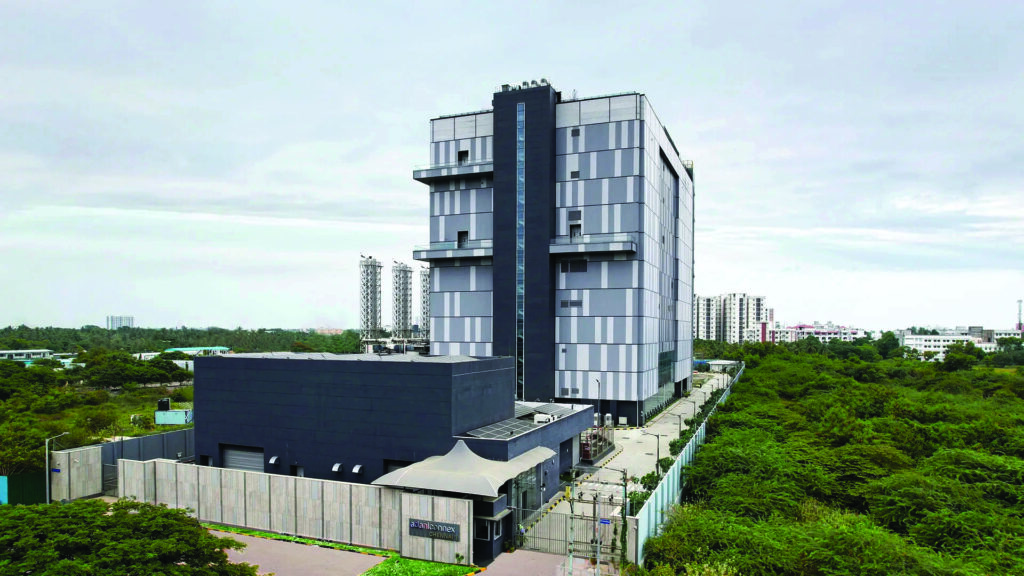
Image Courtesy: Adani Group
The rapid rise of generative AI has further accelerated India’s ambitions. Businesses across industries are integrating AI into customer service, fraud detection, automation, predictive analytics, and software development. Large Indian IT companies are investing billions of dollars in AI-driven transformation programmes, while startups are developing specialized AI models tailored to Indian requirements.
THE THREE PILLARS OF INDIA’S AI JOURNEY
India’s AI growth can be understood through three major pillars that are evolving simultaneously.
1. AI Industry Growth
India’s AI industry is expanding rapidly through startups, multinational investments, cloud service providers, research labs, and enterprise adoption. Thousands of Indian startups are now working in AI-related domains. Global companies are also establishing AI engineering centres and research facilities in Indian cities such as Bengaluru, Hyderabad, Pune, Chennai, Gurugram, and Noida.
Indian IT giants are transitioning from traditional outsourcing models toward AI-driven services. This shift is creating new employment opportunities in machine learning, AI model engineering, cloud infrastructure management, cybersecurity, AI governance, and data analytics.
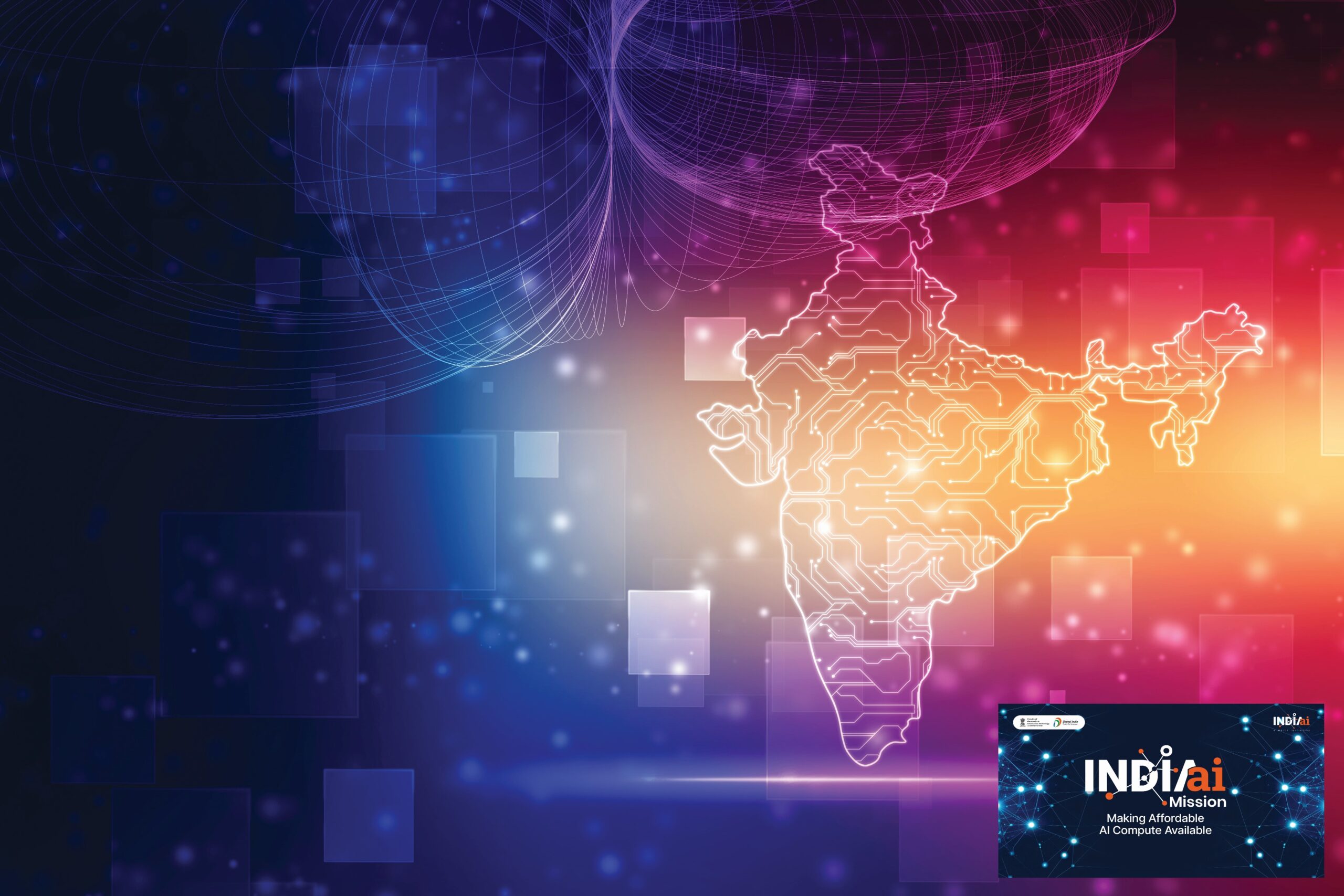
The government’s IndiaAI Mission has further strengthened this ecosystem by supporting AI innovation, research, compute infrastructure, startup funding, and responsible AI development. India is also encouraging domestic semiconductor manufacturing and AI hardware ecosystems to reduce strategic dependence on foreign supply chains.
2. Digital Infrastructure Creation
AI cannot function without massive computing infrastructure. Modern AI systems require advanced data centres, high-performance GPUs, high-speed fibre networks, cloud computing platforms, and reliable electricity. India has recognised this need and is now investing heavily in AI-ready digital infrastructure.
The country’s growing network of hyperscale data centres is becoming the backbone of India’s AI ambitions. Major investments are flowing into cloud regions, submarine cable connectivity, edge computing facilities, and green energy-powered data centres.
India’s digital public infrastructure has already demonstrated how scalable technology platforms can transform society. UPI revolutionised digital payments, Aadhaar enabled identity verification at scale, and DigiLocker simplified digital documentation. The next phase of this transformation is expected to be AI-powered digital infrastructure capable of supporting advanced generative AI systems, smart governance platforms, industrial automation, and next-generation research.
3. Large-Scale Skill Development
Perhaps India’s greatest strength is its human capital. AI leadership depends not only on machines and infrastructure but also on millions of skilled professionals who can design, deploy, secure, and manage AI systems.
India is making significant investments in AI education and skilling programs. Universities, engineering institutions, online learning platforms, and private technology companies are introducing specialised courses in machine learning, data science, robotics, cybersecurity, and generative AI.
Government initiatives are also promoting AI literacy among students, professionals, and entrepreneurs. Programmes under Skill India and Digital India are preparing young Indians for AI-driven careers. India’s demographic advantage—a large young population—could become a decisive factor in the global AI race.
At the same time, India faces the challenge of ensuring that AI development remains inclusive. Skill development must extend beyond metropolitan cities into smaller towns and rural regions so that the benefits of AI are distributed across society.
THE VIZAG AI INFRASTRUCTURE PROJECT: A HISTORIC TURNING POINT
A major milestone in India’s AI journey emerged during 2025–26 with the announcement of India’s largest AI infrastructure ecosystem in Visakhapatnam (Vizag), Andhra Pradesh. In a landmark collaboration, Google partnered with AdaniConneX and Airtel Nxtra to establish one of the most ambitious AI infrastructure projects in Asia.
This project is widely seen as a game changer for India’s global AI ambitions because it addresses one of the biggest bottlenecks in AI development: large-scale compute infrastructure.
The Vizag AI ecosystem includes:
- A 1-gigawatt hyperscale AI data centre campus
- Advanced AI cloud infrastructure
- Large-scale GPU clusters for AI training and inference
- Green energy systems for sustainable operations
- Subsea cable connectivity for global data exchange
- High-speed fibre backbone infrastructure
- AI compute systems designed for future generative AI workloads
The scale of this project places India among a select group of nations building next-generation AI infrastructure at global standards.
WHY THE VIZAG PROJECT IS A GAME CHANGER
The importance of the Vizag AI infrastructure project extends far beyond a single data centre campus. It represents a strategic shift in India’s technological capabilities.
AI COMPUTE SOVEREIGNTY
One of the biggest global challenges in AI is access to advanced computing power. Training modern AI models requires enormous GPU clusters, specialised processors, and high-bandwidth infrastructure. Until recently, much of this infrastructure was concentrated in the United States and a few advanced economies.
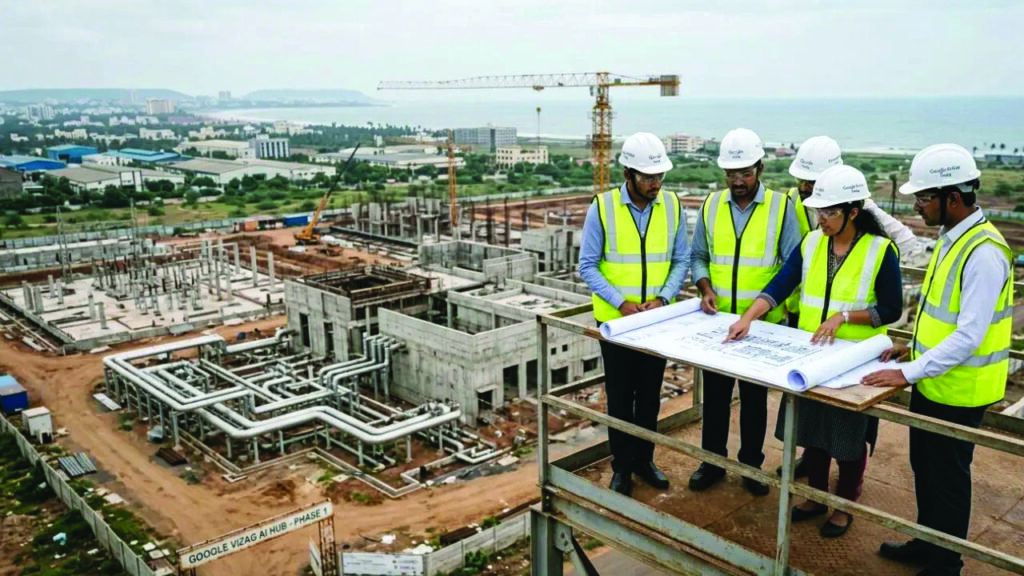
Image Courtesy: productleadersdayindia.org
By establishing massive AI compute infrastructure within India, the Vizag project reduces dependence on foreign AI infrastructure. This strengthens India’s technological sovereignty and ensures that Indian startups, researchers, enterprises, and government agencies have access to domestic AI computing resources.
STRENGTHENING INDIA’S POSITION IN GENERATIVE AI
Generative AI models require enormous computational power and data processing capabilities. Countries lacking advanced infrastructure may struggle to compete in the next generation of AI innovation.
The Vizag ecosystem creates the foundation for India to develop and host large-scale AI models domestically. This could accelerate innovation in Indian language AI systems, healthcare AI, educational AI tools, cybersecurity systems, and industrial automation platforms.
Economic and Employment Impact
The project is expected to create thousands of direct and indirect jobs in data centre operations, AI engineering, cloud computing, networking, cybersecurity, renewable energy systems, and infrastructure management.
It could also attract global AI companies, semiconductor firms, cloud providers, and research organisations to India. Over time, this may transform Andhra Pradesh into one of Asia’s major AI and digital infrastructure hubs.
GREEN AI INFRASTRUCTURE
Modern data centres consume enormous amounts of electricity. One of the most important aspects of the Vizag project is its focus on green energy systems. Sustainable AI infrastructure is becoming increasingly important as countries attempt to balance technological growth with climate goals.
By integrating renewable energy into hyperscale AI operations, India is demonstrating that future digital infrastructure can be both powerful and environmentally responsible.
GLOBAL CONNECTIVITY ADVANTAGE
Subsea cable connectivity and high-speed fibre networks are critical for global cloud services and AI applications. The Vizag project’s connectivity infrastructure enhances India’s role in global internet and cloud ecosystems.
This connectivity could improve international data exchange speeds, support multinational AI operations, and strengthen India’s attractiveness as a destination for digital infrastructure investments.
AI FOR NATIONAL DEVELOPMENT
India’s AI ambitions are not limited to economic growth alone. The broader vision of ‘AI for Viksit Bharat’ focuses on using AI to improve quality of life, governance efficiency, healthcare accessibility, educational inclusion, agricultural productivity, and public service delivery.
In healthcare, AI can help doctors detect diseases earlier, improve diagnostics in rural areas, and optimise hospital management systems. In agriculture, AI-powered advisory systems can assist farmers with weather forecasting, crop management, irrigation planning, and pest control.

Image Courtesy: IBM
In education, AI can enable personalised learning platforms in multiple Indian languages, helping bridge learning gaps across regions. AI-powered governance systems can improve public service delivery, fraud detection, traffic management, disaster response, and urban planning.
India’s multilingual diversity also presents a major opportunity for AI innovation. Developing AI systems capable of understanding and generating Indian languages could unlock digital access for millions of citizens who are currently underserved by English-centric technologies.
CHALLENGES ON THE ROAD AHEAD
Despite remarkable progress, India’s AI journey also faces several challenges.
Infrastructure Gaps
Although large projects such as the Vizag AI ecosystem are transformative, India still requires far more AI-ready infrastructure to meet future demand. Reliable electricity, high-speed internet access, semiconductor manufacturing capacity, and advanced research facilities remain critical priorities.
Talent Competition
Global demand for AI professionals is rising rapidly. India must continue investing in advanced AI education, research funding, and innovation ecosystems to prevent talent migration and maintain competitiveness.
Cybersecurity Risks
As AI infrastructure expands, cybersecurity threats also increase. AI systems themselves can become targets of cyberattacks, data theft, model manipulation, and infrastructure sabotage. Protecting AI infrastructure will require strong cybersecurity frameworks, resilient networks, and advanced monitoring systems.
Ethical and Regulatory Challenges
AI introduces complex ethical concerns involving bias, misinformation, privacy, surveillance, and accountability. India must develop balanced AI governance frameworks that encourage innovation while protecting citizens’ rights and ensuring responsible AI deployment.
INDIA’S EMERGING GLOBAL ROLE IN AI
The global AI race is no longer limited to Silicon Valley or a few technology superpowers. Countries around the world are now investing aggressively in AI infrastructure, semiconductor ecosystems, and digital innovation.
India’s approach stands out because it combines scale, affordability, inclusiveness, and strategic vision. The country is not merely adopting foreign AI technologies; it is building foundational capabilities for long-term AI leadership.
If current momentum continues, India could become one of the world’s leading centres for AI talent, AI infrastructure, AI-enabled governance, and AI-driven economic growth.
CONCLUSION
India’s AI journey is entering a defining phase. The convergence of AI industry growth, large-scale digital infrastructure creation, and nationwide skill development is creating the foundation for a new technological era.
The vision of ‘AI for Viksit Bharat’ is not merely about economic competition or technological prestige. It is about using AI to improve lives, create opportunities, strengthen national capabilities, and empower citizens across every region of the country.
The Vizag AI infrastructure ecosystem announced during 2025–26 represents a historic milestone in this journey. With hyperscale AI computing, advanced cloud systems, GPU clusters, green energy integration, and global connectivity, the project positions India firmly within the front ranks of the global AI revolution.
The coming decade will determine which nations shape the future of artificial intelligence. India now has the opportunity to emerge not only as a major AI market, but also as a global AI powerhouse capable of driving innovation for humanity at scale.
As India moves toward the goal of becoming a developed nation by 2047, AI will undoubtedly play a central role in transforming the country’s economy, governance, security, and social progress. The journey has begun, and the foundations of an AI-powered Viksit Bharat are already taking shape.
*The writer is a state awardee science writer, Director AI and Cyber Security, Theta Dynamics, Texas, USA.