





Image Courtesy: Wikimedia Commons
Averting climate change, environmental degradation, biodiversity loss, and higher carbon emissions have become one of the biggest challenges facing humanity as the world transitions towards a so-called net-zero. To minimise their ecological footprint, nations spend considerable effort in renewable energy, electric mobility, artificial intelligence, green hydrogen, smart cities and carbon capture technologies. However, many of the principles of sustainability were also well-rooted in ancient civilisations, even if they are being tried out now. The Indus Valley Civilisation shows us some amazing urban planning and sustainability concepts that were in place more than 4,500 years ago.
India has some extraordinary instances of ecological wisdom that are extremely relevant right now, given its rich cultural and architectural heritage. The ancient Indian societies established systems in harmony with nature. Sustainability was not considered an environmental problem but a fundamental component of architecture, agriculture, water management, spirituality, governance, and everyday life. Temples remained cool without electricity, forts were self-sufficient, water harvesting ensured a year-round water supply, and traditional houses could cope with the climate. They were based on ecological science and the philosophy of sacred respect for nature. In a world where India is striving to achieve ambitious climate targets and pledges to become a net-zero nation, it is time to explore the ancient Indian knowledge systems that offer sustainable development solutions rooted in cultural context and practice.
SUSTAINABILITY AS A CIVILIZATIONAL ETHOS IN ANCIENT INDIA
Ancient Indian civilisation evolved through a close relationship with the environment. The relationship between humans and nature was repeatedly stated in the Vedas, the Upanishads and the classical Indian texts. Rivers were regarded as mothers, forests as sacred areas, mountains as sacred and animals as part of the cosmos. The Atharva Veda shows that the concept of the earth was that of ‘Mother Earth’ rather than of exploitation, implying a worldview of reciprocity. This ecological ideology inevitably influenced lifestyle, which involved reducing waste and being eco-friendly. Communities ate to their needs, not their wants! Economies were decentralised, which decreased transport-related emissions. Food systems were dependent on seasonal foods and biodiversity-based agriculture. A large number of materials were reused and recycled. Sustainability was thus not only a technological but also a cultural and ethical matter.
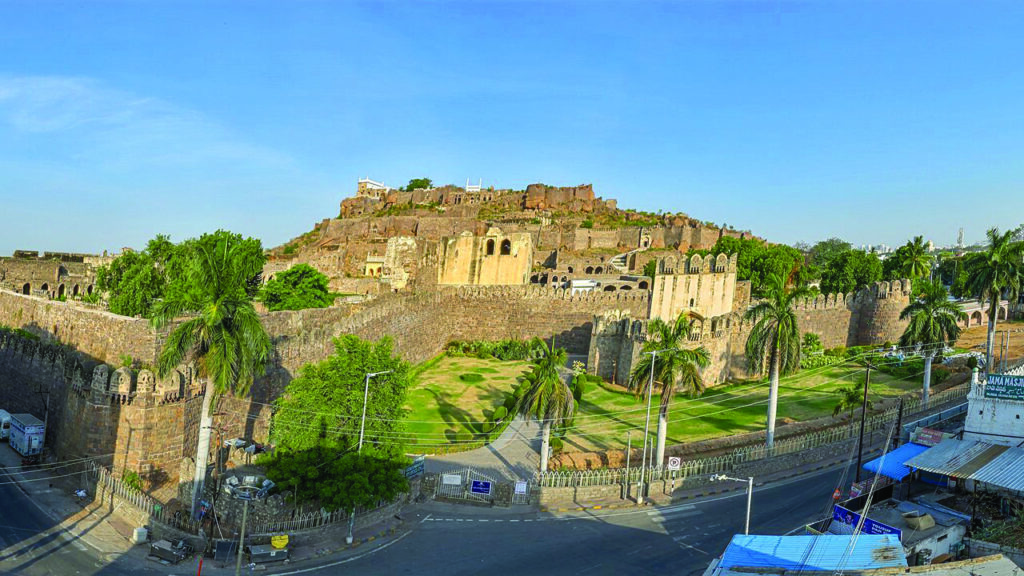
Image Courtesy: Incredible India
This ecological philosophy naturally shaped lifestyles that minimised waste and promoted sustainability. Communities consumed according to need rather than excess. Economies were localised, reducing transportation-related emissions. Food systems relied on seasonal produce and biodiversity-rich agriculture. Materials were reused and recycled extensively. Sustainability was therefore not merely technological but cultural and ethical.
TEMPLES AS MODELS OF CLIMATE-RESPONSIVE ARCHITECTURE
Indian temples are often admired for their artistic brilliance and spiritual significance, but they are also remarkable examples of sustainable engineering. Architects of ancient temple had a high level of awareness of thermal comfort, solar orientation, airflow properties and resource efficiency. Even centuries after facing climatic pressures, many temples are still physically sound and eco-efficient.
i) Brihadeeswarar Temple and Passive Thermal Cooling
The Brihadeeswarar Temple, built during the Chola dynasty over a thousand years ago, demonstrates extraordinary thermal engineering. The massive granite walls have a slow heating capacity for the day and a slow cooling capacity for the night, which helps to keep the interior temperature constant. In the hot summer season, the temple is naturally cool even with no air-conditioning.
Modern buildings consume enormous amounts of electricity for cooling, contributing significantly to greenhouse gas emissions. Ancient temple builders achieved thermal comfort entirely through passive design strategies, offering valuable lessons for modern sustainable architecture.
ii) Solar Alignment and Energy Efficiency in Konarak Sun Temple and Modhera Sun Temple
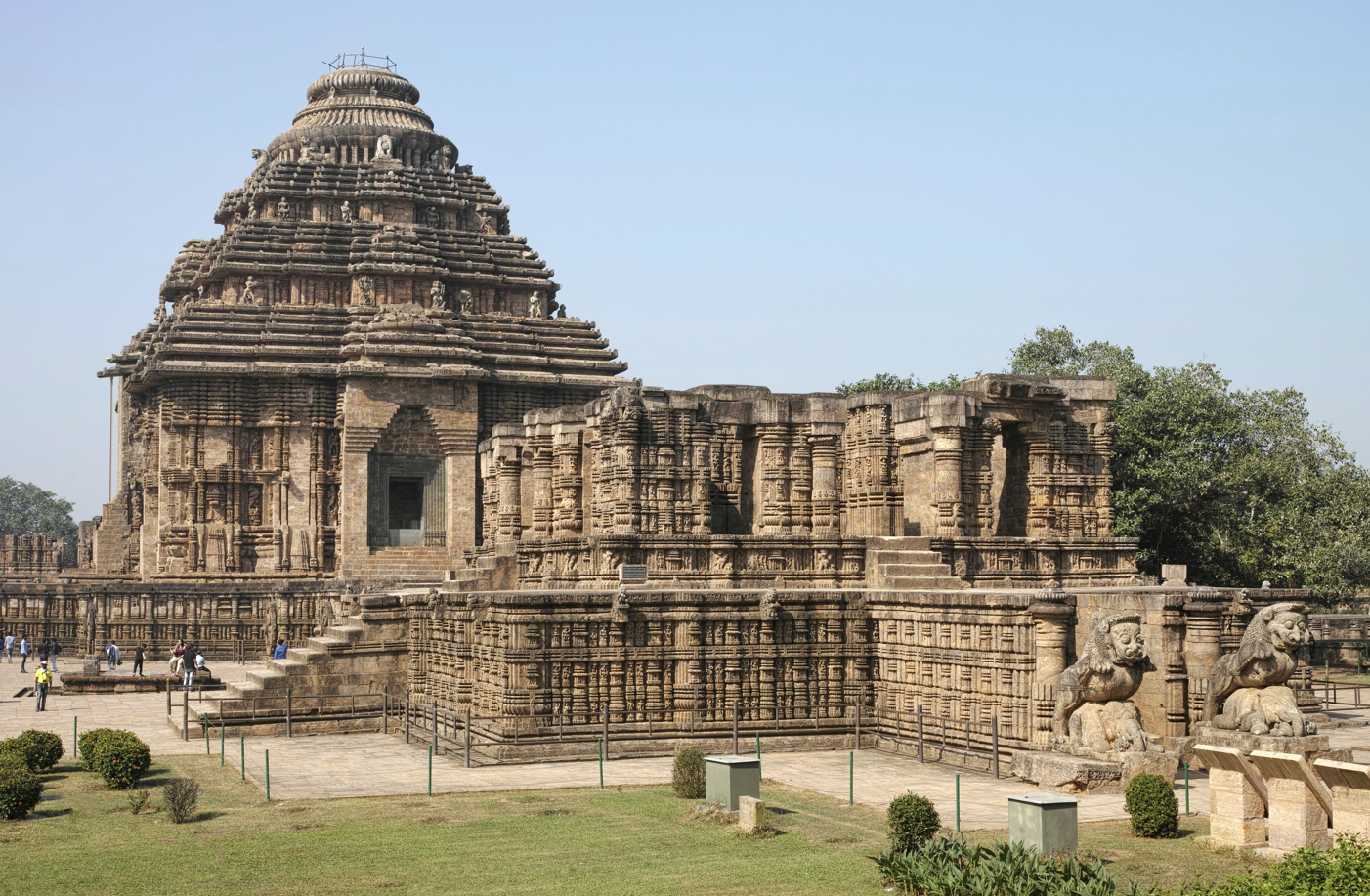
The astronomical knowledge of ancient Indian architects is seen in the Konarak Sun Temple and the Modhera Sun Temple. The two temples were set on an axis with exact precision so that the sun would shine into the sanctum at certain times of the day and year. At Konarak, the first rays of the rising sun illuminated the deity directly, while Modhera’s architecture aligned perfectly with equinox sunlight. Whereas Modhera was constructed in such a way that the sun’s rays fall on it during the time of the Sun’s culmination at the equinoxes. This way, the sun’s path was used to ensure maximum natural light, thereby minimising the need for artificial lighting. In the sustainable architecture ideal today, lighting optimisation goes hand in hand with energy conservation, but in fact, the principles of lighting optimisation were already known to Indian architects long ago.
iii) Natural Ventilation Systems in South Indian Temples
Highly sophisticated systems of natural ventilation are seen in the temples built in southern India, particularly in Kerala. The architects of the temple conducted extensive research on the flow of air, humidity, solar heat gain and thermal comfort. These temples have open courtyards, sloping roofs, raised buildings, verandahs, and clever openings designed to ensure that the buildings are naturally ventilated. The study of temples such as the Iringole Kaavu Bhagavathy Temple and the Thottuva Temple reveals how their architectural plans naturally ensured a comfortable temperature in the humid climate. This was topped by intelligent integration of forest surroundings, nearby water bodies and pressure difference into the cooling systems.
iv) Thermal Engineering and Cooling Systems in Meenakshi Temple
The Meenakshi Temple is one of the best examples of the ancient Indian climate-responsive design in Madurai. It is quite cool inside the temple compared to the outside environment, owing to the thick granite walls, high gopurams, temple tanks and the carefully constructed corridors. The gopurams act as thermal chimneys, which suck the hot air from the top and circulate it in the lower passages. Evaporative cooling occurs in water bodies in the complex. These passive cooling systems are currently the subject of many studies by contemporary architects seeking low-energy building strategies.
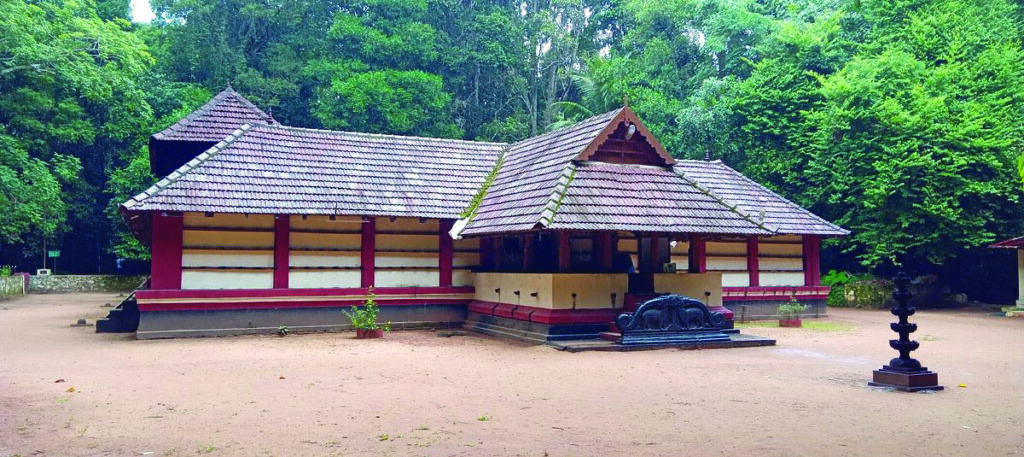
Image Courtesy: Wikimedia Commons
STEPWELLS: A BRILLIANT WATER CONSERVATION SYSTEM
In ancient India, the conservation of water was a major concern, especially in desert areas. Stepwells, known as baolis, were amongst the most elaborate hydraulic constructions ever built. These played not only the role of water reservoirs, but also acted as spaces of social and cultural interaction.
Rani ki Vav in Gujarat was one such structure that ensured the availability of water throughout the year, even in droughts, by collecting rainwater and recharging groundwater. They were also cooler microclimates because of their multi-level architecture. Severe water stress in India today is due to urbanisation and groundwater depletion. The revival of traditional rainwater harvesting and decentralised water systems may be a powerful tool for adapting and developing sustainable urban water management.
ECOLOGICAL INTELLIGENCE IN INDIA’S HISTORIC FORTS
The forts in India were not just military structures; they were self-contained ecosystems, resilient, sustainable, and adaptable to the climatic conditions.
Sustainable Design in the Hill Forts of Rajasthan: Thick sandstone walls were used in the hill forts of Rajasthan, such as the Amer Fort, the Mehrangarh Fort, and the Chittorgarh Fort, to block heat penetration, while intricate jali structures promoted ventilation and diffused sunlight. The rainwater catchment systems, reservoirs, and grain storage were essential for ensuring resilience during periods of drought and sieges. In the era of modern urban resilience planning, this decentralised approach is increasingly being recommended for cities.
Passive Cooling and Acoustic Engineering in Golconda Fort: The military efficiency of constructing the Golconda Fort in Hyderabad is astounding. It was capable of communicating with others acoustically, with a communication range of over 2 km (techno-neutral). Passive cooling was also achieved by the building’s design. The innovations are based on the Indian philosophy of achieving functionality with the least amount of energy used.
CLIMATE-SENSITIVE PALACES AND TRADITIONAL HOMES
Traditional Indian palaces and homes were built according to local climatic conditions and environmental realities.
i) Natural Cooling Through the Architecture of Hawa Mahal
The Hawa Mahal in Jaipur remains one of the world’s finest examples of passive cooling architecture. It has hundreds of small windows to give the Venturi effect to the incoming air, which naturally cools the air. This minimised artificial ventilation and thus kept things comfortable in the desert climate of Rajasthan.
ii) Sustainable Living in Kerala’s Nalukettu Homes
Nalukettu houses (tropical houses) in Kerala were built to cope with the hot, humid, and torrential rain. Thermal comfort was achieved through natural means, such as central courtyards, sloping roofs, cross-ventilation systems, and the use of local materials like timber and laterite. In today’s context, architects are increasingly looking for locally available materials and towards a climate-friendly design, which India has practised for centuries.
iii) The Courtyard-Based Ventilation of Ladakhi Monasteries
Courtyards that served as natural ventilation systems were incorporated into the design of the monasteries in Ladakh, for example, in the Hemis Monastery. These courtyards purveyed fresh air and helped to keep the interiors warm in a cold climate. In some monasteries like the Thiksey Monastery, sunlight was controlled to help promote healthy circadian rhythms through the strategic placement of windows.
iv) The Earthquake-Resilient Kath-Kuni Architecture
The Kath-Kuni style of architecture in Himachal Pradesh was achieved by interlocking wooden beams and using stone without mortar. They were designed to be earthquake-safe, to maintain thermal insulation, and to be environment friendly. During major earthquakes, many concrete buildings were destroyed, whereas traditional Kath-Kuni houses survived owing to their flexibility and tensile strength.
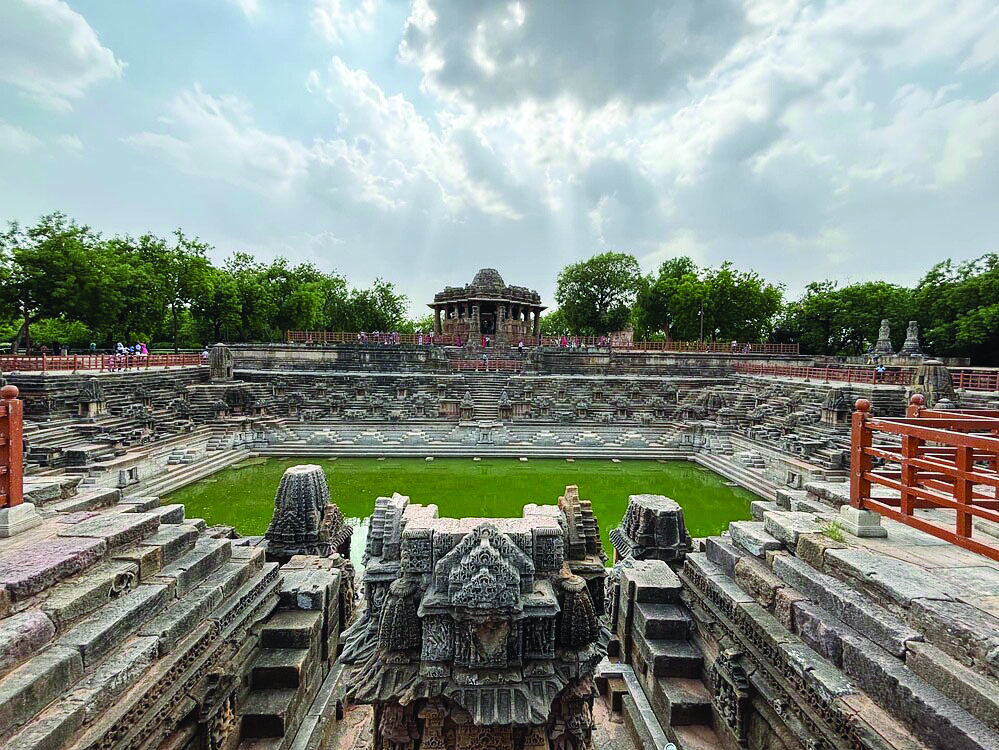
Image Courtesy: Wikimedia Commons
INTEGRATING TRADITIONAL WISDOM WITH MODERN SUSTAINABILITY TECHNOLOGIES
One should not interpret ancient knowledge as an opposition to modern science. Rather, the future is in the blending of traditional knowledge and modern innovations. Smart buildings can combine AI-driven energy management with passive cooling inspired by temples and traditional homes. Urban water systems can revive stepwell-inspired harvesting methods enhanced by digital technologies. Precision farming equipment can complement the use of local seeds in any sustainable agriculture scenario. India possesses a unique opportunity to modernise while remaining connected to its civilizational roots.
Smart Cities and the Net Zero Future of India’s cities have been mulled over. The urban population of India is growing rapidly, which will affect India’s future climate. Unfortunately, many urban areas today have been found to be heat islands, flood-prone, poorly ventilated and over-dependent on energy. Ancient Indian architectural wisdom offers critical lessons for sustainable urban development. A truly smart city may not be the one with the most sensors and algorithms, but the one that functions harmoniously with nature.
CONCLUSION
From naturally ventilated temples and water-conserving stepwells to climate-sensitive homes, resilient forts, sacred groves, and sustainable agricultural systems, India’s traditional knowledge systems demonstrate that sustainability was once a way of life rather than a specialised environmental agenda. These practices emerged from scientific observation, environmental adaptation, and cultural values deeply rooted in traditions.
Our challenge is not merely to preserve this wisdom as cultural heritage, but to reinterpret and integrate it into contemporary modes of development. By combining ancient ecological intelligence with modern innovation, India can create a sustainable development model that is technologically advanced, culturally rooted, and environmentally resilient. Perhaps the road to a net-zero future already exists in the wisdom of the past, waiting to be rediscovered and reimagined for the needs of the future.
*The writer is the Dean-Academic Affairs, Garden City University, Bengaluru, and an adjunct faculty at the National Institute of Advanced Studies, Bengaluru. He can be reached at bijudharmapalan@gmail.com.