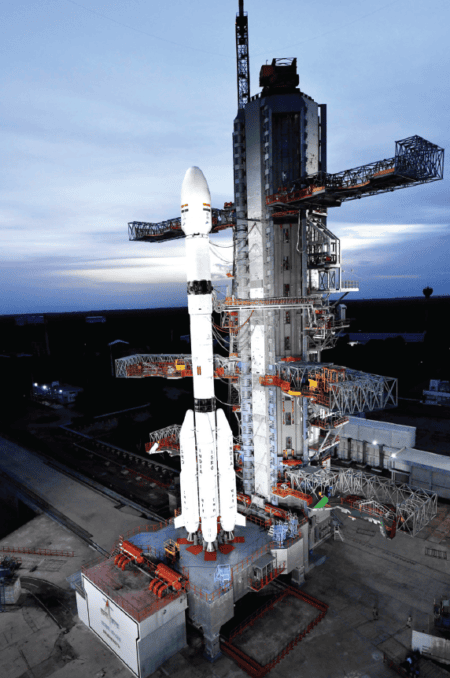



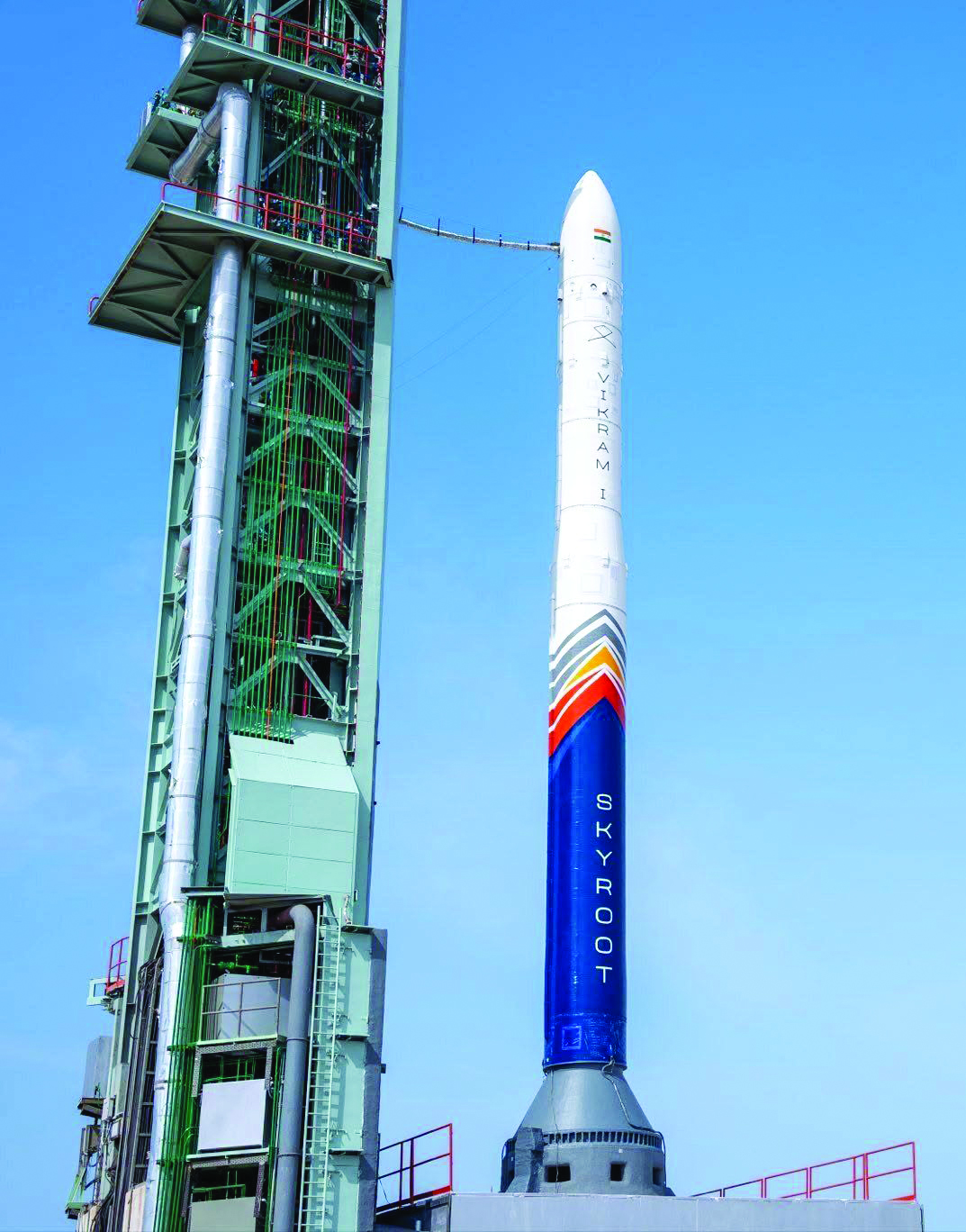
When the seven-storey-tall Vikram-1 roared into the skies from the Satish Dhawan Space Centre, Sriharikota, on July 18, it did much more than place a handful of satellites into the Low Earth Orbit. It launched a new chapter in India’s space history. For the first time, a privately developed Indian orbital launch vehicle successfully reached orbit, demonstrating that India’s journey into space is no longer the exclusive domain of the Indian Space Research Organisation (ISRO). It is now a shared national enterprise powered by government vision, scientific excellence, entrepreneurial courage and industrial innovation.
The success of Mission Aagaman marks a turning point comparable to India’s historic SLV-3 launch in 1980. Forty-six years ago, India entered the exclusive league of spacefaring nations under the leadership of visionaries such as Dr Vikram Sarabhai, Prof Satish Dhawan and Dr A P J Abdul Kalam. Today, Vikram-1 represents another historic transition—not from dependence to self-reliance, but from government monopoly to an ecosystem where private industry becomes an equal partner in shaping India’s future in space.
A NEW CHAPTER IN INDIAN SPACE HISTORY
Vikram-1 is not only India’s first private orbital rocket, but also a rocket of importance. India is now the third country in the world to have a privately-built launch vehicle successfully send payloads into space. This achievement puts Indian private aerospace companies in an elite worldwide category and shows that the country’s commercial space ambitions have moved from being aspirational to operational.
The milestone comes less than four years after Skyroot Aerospace achieved the country’s first private rocket launch, Vikram-S, in 2022. This quick technological innovation is testimony of the amazing speed of growth of India’s startup ecosystem.
ENGINEERING EXCELLENCE MEETS INNOVATION
Vikram-1 is made with an all carbon composite frame, reliable solid-fuel boosters and unique 3D printed liquid engines and demonstrates the impact of modern manufacturing technologies on space transportation. Rockets can carry bigger payloads more effectively, because carbon composites are lighter and stronger than previous materials. At the same time, additive manufacturing or 3D printing may reduce costs, increase design flexibility and drastically shorten production time.
These technologies are no longer experimental curiosities. They are becoming the foundation of next-generation launch vehicles worldwide, and India has now demonstrated that it possesses these capabilities indigenously.
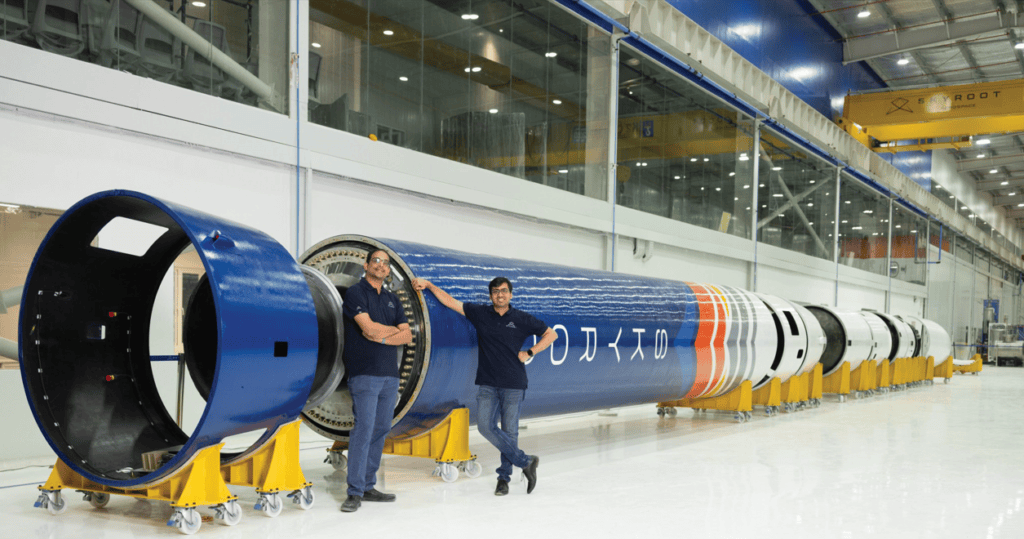
Perhaps the most reassuring aspect of Mission Aagaman was that every principal mission milestone was successfully achieved. Skyroot confirmed that the rocket validated its propulsion systems, avionics, guidance, navigation and control systems under actual flight conditions. Such flawless performance during a maiden mission significantly boosts international confidence in India’s emerging commercial launch industry.
MORE THAN A ROCKET LAUNCH
Mission Aagaman carried multiple technology demonstration payloads into a 450-kilometre Low Earth Orbit. Among them were Skyroot’s own SCOPE satellite, DCUBED’s technology demonstrator, Grahaa Space’s SOLARAS S3 satellite and Cosmoserve Space’s ‘Embrace’, a robotic arm designed to capture orbital debris.
The integration of a technology for the removal of orbital debris warrants particular consideration. The cosmos is progressively congested with defunct satellites and debris that pose risks to functioning spacecraft.
Mission Aagaman’s success is a watershed moment like the momentous launch of India’s SLV-3 in 1980. Forty-six years ago, India joined the elite club of spacefaring nations, led by visionaries like Dr. Vikram Sarabhai, Prof. Satish Dhawan and Dr. A.P.J. Abdul Kalam. Today, Vikram-1 marks another historic change. Not from dependency to self-reliance, but from government monopoly to an environment where private enterprise is an equal player in designing India’s future in space.
THE REAL SUCCESS STORY IS POLICY
Behind every successful rocket lies an equally successful policy framework. Until recently, India’s space sector was dominated almost entirely by ISRO. Although this model enabled remarkable scientific achievements, it limited private participation in launch services, satellite manufacturing and downstream applications. This changed dramatically after the Government of India initiated comprehensive reforms in the space sector and introduced the Indian Space Policy 2023. The creation of the Indian National Space Promotion and Authorisation Centre (IN-SPACe) has arguably become one of the most important institutional reforms in Indian science during the past decade. Acting as an autonomous single-window regulatory agency, IN-SPACe authorises private space activities, provides access to ISRO facilities, facilitates technology transfer and offers a predictable regulatory environment that encourages investment.
The impact has been extraordinary. In 2025 alone, it enabled investments of about USD 150 million into Indian space entrepreneurs with the country’s top space startups bagging confirmed commercial orders of a comparable order. These numbers tell us something significant—India is no longer just producing rockets, it is establishing a whole space economy.
The success of Vikram-1 is not the achievement of a single company. According to Skyroot Aerospace, the mission involved a workforce of over 1,000 professionals and nearly 400 suppliers, illustrating how deeply India’s manufacturing ecosystem has become integrated into advanced aerospace production. Every successful rocket stimulates hundreds of industries—advanced metallurgy, composite manufacturing, electronics, sensors, software engineering, artificial intelligence, robotics, precision machining and logistics. This multiplier effect is perhaps the greatest economic value of India’s expanding space sector.
ISRO’S NEW ROLE
Ironically, the greatest beneficiary of private launch companies may be ISRO itself. For decades, ISRO had to divide its attention between commercial launches and frontier scientific missions. As companies like Skyroot, Agnikul Cosmos and others begin handling routine commercial launches, ISRO can focus more intensely on ambitious programmes including Gaganyaan, reusable launch vehicles, lunar exploration, planetary science and deep-space astronomy. Rather than competing with ISRO, private companies extend its capabilities. This collaborative model resembles successful international ecosystems where government agencies undertake high-risk research while private companies commercialise technologies and provide routine services.
INSPIRING THE NEXT GENERATION
Prime Minister Narendra Modi described Vikram-1 as a “defining moment in India’s space journey” and emphasised that increasing private participation would encourage young Indians to dream bigger and innovate fearlessly.
Indeed, Vikram-1 changes the aspirations of India’s youth. For decades, engineering graduates interested in space dreamed primarily of joining ISRO. Today they can aspire to create entirely new businesses based on space technologies. This expansion of opportunity is exactly what a knowledge economy requires. History may remember Vikram-1 not simply as India’s first privately developed orbital launch vehicle, but as the mission that transformed India’s space programme into India’s space economy.
*The writer is the Dean-Academic Affairs, Garden City University, Bengaluru and an adjunct faculty at the National Institute of Advanced Studies, Bengaluru. He can be reached at bijudharmapalan@gmail.com.