




Image Courtesy: Shutterstock
The twenty-first century has become an age of paradox. Humanity has reached unprecedented technological heights—artificial intelligence, quantum computing, reusable rockets, and gene editing—yet struggles with some of the most fundamental challenges of survival. Climate change is accelerating, biodiversity is shrinking at alarming rates, freshwater resources are under severe stress, and soils that have fed civilisations for millennia are losing their fertility. The latest scientific reports repeatedly remind us that technological innovation alone will not be enough; humanity must also rethink the way it lives.
Modern sustainability is often presented as a new concept. In reality, sustainable living was the norm for thousands of years. Ancient societies survived because they understood a simple ecological truth: Human prosperity depends upon healthy ecosystems.
SCIENCE HIDDEN IN TRADITION
The traditional practices are often misinterpreted as customs or rituals. However, many were the result of careful observations from the real world. Farmers were aware of which crops to grow to replenish soil nutrients. They understood the thermal characteristics of clay pots. Over the centuries, the village healers acquired knowledge of the healing properties of local flora. Builders mastered passive cooling long before the advent of air conditioners. Communities were able to create complex water harvesting structures based on topography. These were scientific processes, though not always expressed in modern scientific terminology. This ecological awareness was further strengthened by ancient Indian philosophical concepts that described the Panchamahabhutas (the five elements)—earth, water, fire, air, and space—as interdependent and vital for life. People began to recognise nature not only as a resource but as part of a larger system. In the Atharva Veda’s Bhumi Sukta, the earth is depicted as a nurturing mother, whose welfare is intertwined with that of humanity. This type of thinking prompted not only a moral obligation to conserve but also a sense of survival.
WATER: THE FIRST LESSON IN SUSTAINABILITY
A place where traditional scientific wisdom is more apparent, than anywhere else, is water conservation. India’s varied climate forced the communities to have systems of capturing rainwater in different ways and locations. The villagers of the Rajasthan desert made johads, small earthen dams that stored water from the monsoons and fed the water into underground aquifer systems. Despite being straightforward, these structures showed a sophisticated understanding of groundwater recharge and watershed management. Modern scientific research supports the fact that johads have a positive impact today on groundwater levels, agricultural productivity and the restoration of biodiversity.
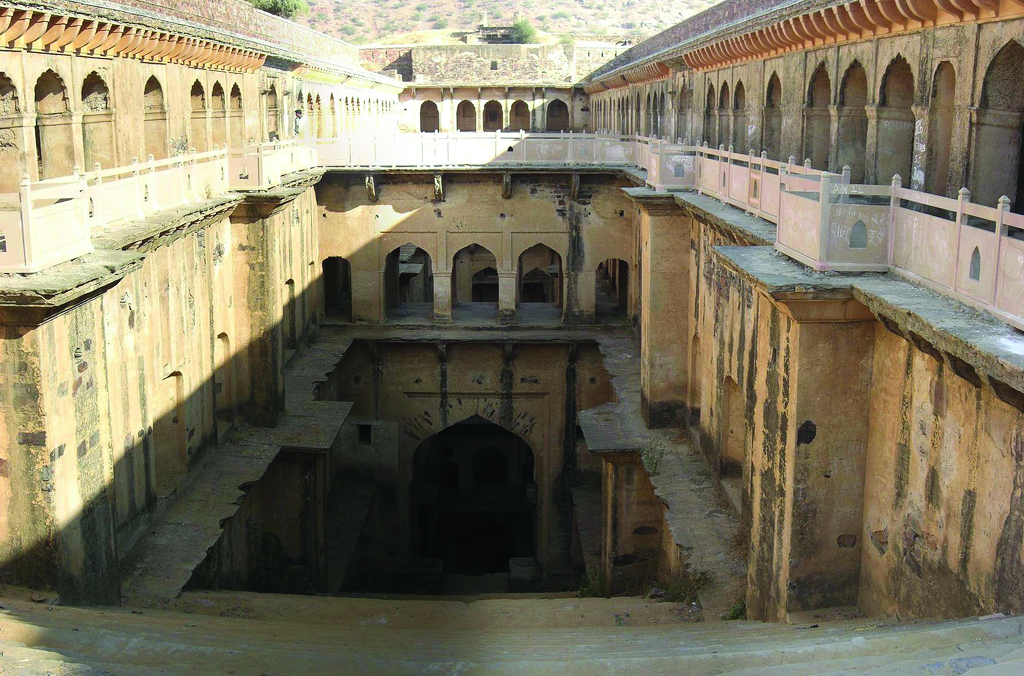
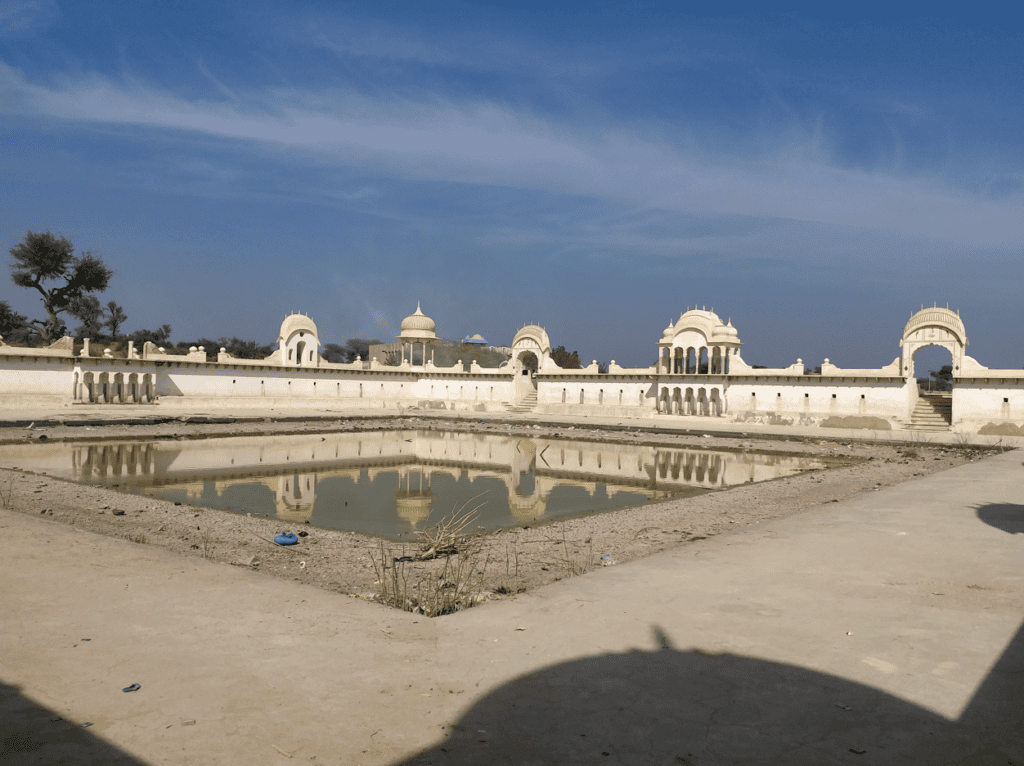
The locals of the western region of Rajasthan created circular, earthen rainwater catchment tanks called Kunds, which were covered with a dome to prevent evaporation and contamination. They provided safe drinking water all year in an area with less than 250 mm of annual rainfall. The famous Baolis or stepwells were engineering marvels which not only stored water but also created a cooler microclimate.
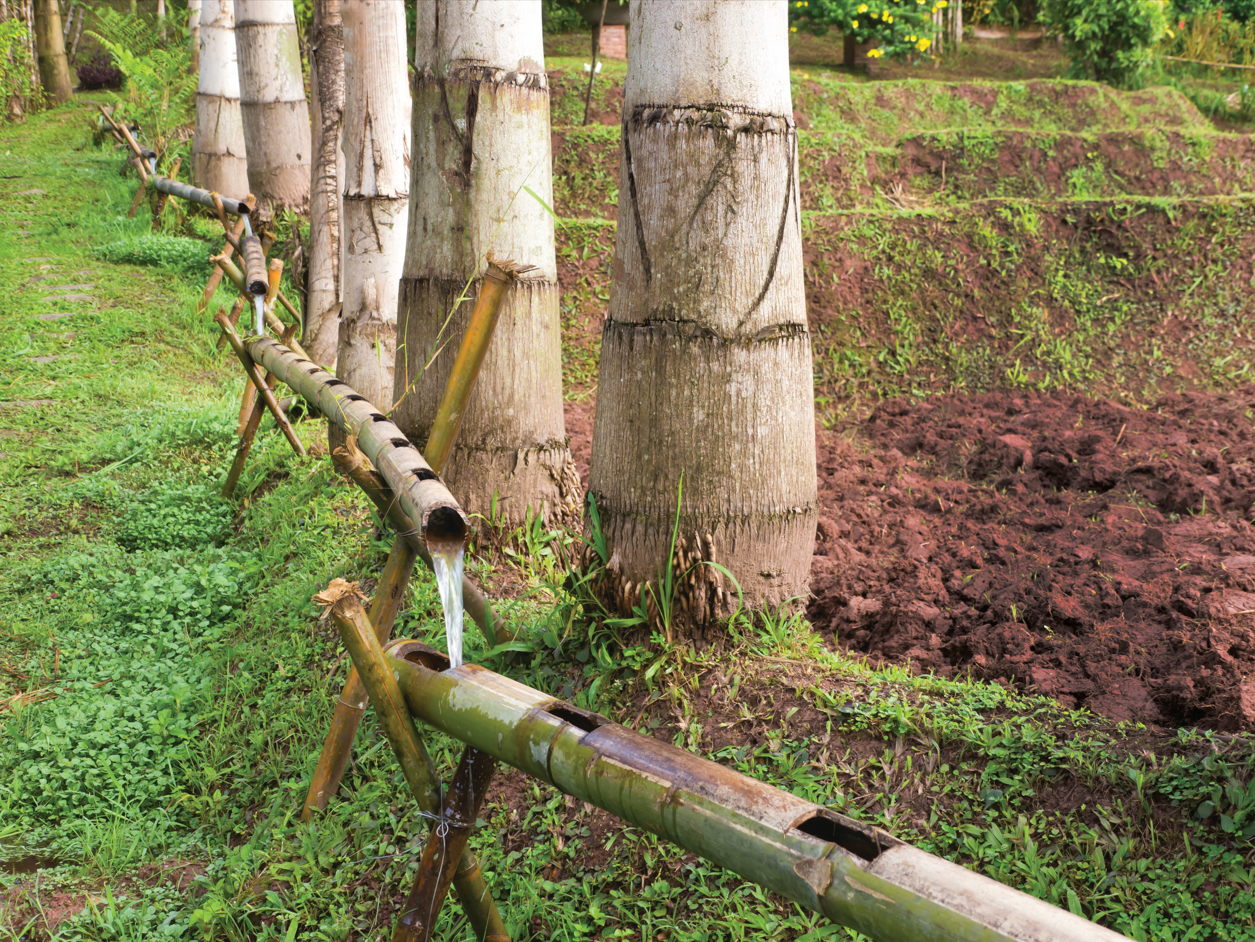
In the hills of the north-eastern part of Meghalaya, communities established bamboo drip irrigation centuries ago. Spring water was transported to plant roots over several kilometres by gravity through hollow bamboo channels. The system minimised wastage without any electricity, pumps, or concrete structures.
The farmers in Bihar and eastern Uttar Pradesh developed Ahar-Pyne irrigation systems. The Ahars were used as reservoirs and the Pynes were a network of interconnected channels that carried water throughout the fields. All of these decentralised systems not only prevented flooding, but also stored water for dry spells.
In the western Himalayas, the Kulhs redirected the glacier-fed streams into agricultural terraces by using well-designed gravity-fed channels.
The principles of these traditional water management systems are increasingly being advocated by modern hydrologists for decentralised rainwater harvesting, groundwater recharge and watershed restoration.
AGRICULTURE THAT WORKED WITH NATURE
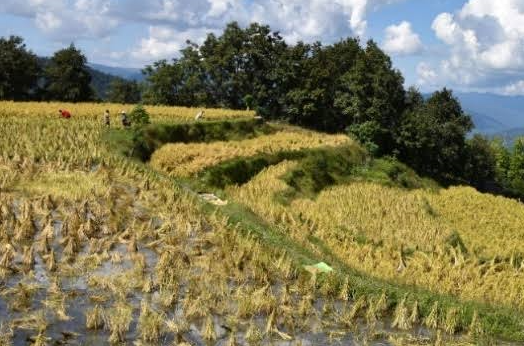
Even in pre-chemical agriculture, Indian farmers developed farming systems that could sustain soil fertility for centuries. The traditional mixed cropping system, which continues in some parts of Karnataka, Odisha and Madhya Pradesh, was characterised as a combination of two or more cereals together with pulses, oilseeds and vegetables. Perhaps the Baranaja farming system of Uttarakhand is one of the best examples of ecological agriculture. It translates to twelve grains: Multiple cereals, pulses, millets, oilseeds, vegetables and medicines are cultivated together on rain-fed mountain slopes. This biodiversity helps ensure nutritional security and soil stability against erosion, and also decreases the risk of crop failure due to adverse weather. Similarly, the Zabo farming system in Nagaland combines forest, farm, stock rearing and water catchment as a single ecological unit. Water is collected from protected forests, stored in ponds, and used to irrigate terraced fields fertilised with manure from livestock. Nutrients are continually recycled without significant nutrient inputs from outside. Today these are referred to as “circular agriculture”, but millennia ago, village communities mastered them.
All Images Courtesy: Dr Biju Dharmapalan
THE SCIENCE BENEATH THE SOIL
In the old days, farmers were aware of the soil as a living being. They fertilised with compost, leaf litter, green manure, crop residues and animal waste, rather than using synthetic fertilisers. Vriksha Ayurveda, an ancient agricultural document, described practices very similar to today’s principles of regenerative agriculture: Composting, mixed cropping, and nutrient management using organic resources. Many of these are well known, such as Panchgavya, a fermented product of five cow-derived products and natural supplements. Scientific assessments are ongoing on specific claims, but research indicates that such traditional bio-inputs can enhance soil microbial activity and minimise reliance on synthetic chemicals in some farming systems. The overall concept is still relevant: soils need a dynamic component, not just a chemical one. This was an insight of traditional farmers centuries ago.
LIVING WITH MILLETS: CLIMATE-SMART CROPS BEFORE CLIMATE SCIENCE
Indian communities had been dependent on millets for a long time before the term ‘climate change’ became part of scientific language. Millets such as ragi, bajra, jowar, foxtail millet, little millet, barnyard millet, and kodo millet need much less water than rice or wheat. They are drought-tolerant, adaptable to poor soils and high temperatures and are excellent sources of nutrition. These hardy crops have been grown in tribal and farming communities in the states of Karnataka, Telangana, Maharashtra, Madhya Pradesh, Chhattisgarh, Odisha and Tamil Nadu for centuries. The millets are now being encouraged as future food crops by climate scientists. What is now being heralded as climate-smart agriculture was always being practised in our traditional agriculture. The International Year of Millets (2023) inspired renewed interest in these ancient grains, which are part of the indigenous food systems and thus also play a role in nutrition, biodiversity, and climate resilience.
FOOD PRESERVATION WITHOUT ELECTRICITY
The people of hot and dry regions of India have adopted ingenious techniques of food preservation through evaporative cooling long before the advent of the electric refrigerator. The use of earthen pots (matkas) for preserving drinking water has been a practice in India for centuries. Clay vessels have porous walls that let a bit of water leak onto the outside layer of the vessel. The water will absorb heat from the pot as it evaporates, cooling the water in the pot. Artisans expanded the concept to create larger clay cabinets that could also store fruits and vegetables, milk, cooked food, and other items without the use of electricity. The most popular commercial adaptation is the Mitticool Refrigerator, created by a potter from Gujarat, Mansukhbhai Prajapati. This is a completely electricity-free, all-clay refrigerator: no refrigerants, no compressor. The water in the upper storage chamber gradually trickles through the porous clay wall and evaporates, absorbing heat and maintaining the temperature of the lower storage chamber. Vegetables can be kept fresh for several days, and milk can be kept fresh for many days, much longer than when stored in ambient conditions.
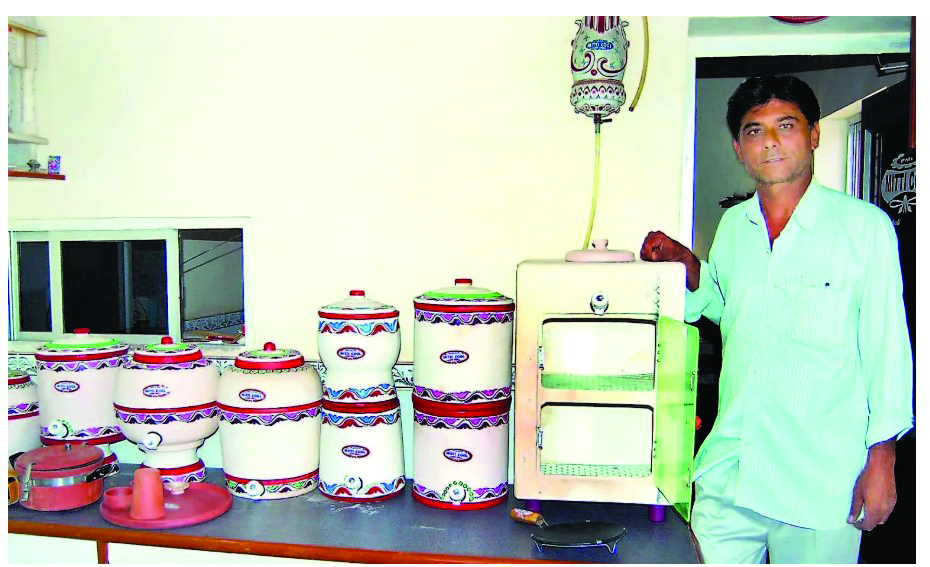
The scientific principle of this technique is very simple. The cooling is done by utilizing latent heat of evaporation: Slowly, the water percolates through the tiny holes in the clay. It sucks heat up from the clay surface as it evaporates. Continual evaporation lowers the temperature inside the storage chamber. These systems don’t use electricity or synthetic refrigerants, but instead exploit basic physics for cheap and environment friendly cooling. As a result of their success, these technologies could serve as commercially viable solutions for sustainable development when refined through modern design and engineering, combined with indigenous technologies.
INDIGENOUS KNOWLEDGE IN THE HEALTHCARE SYSTEM
Traditional healers were the first line of healthcare for millions for centuries, before the advent of hospitals and modern pharmaceuticals in India. They were not herbalists; they were keepers of a knowledge of plant, animal and human health that had been carefully gathered over the years. The knowledge they passed on from one generation to the next was frequently a mixture of practical experience and intimate knowledge of the local ecosystem.
Lakshmikutty Amma, known as the ‘Snakebite Healer’ of Kerala, is one such instance of remarkable people. Her knowledge proved invaluable to people in areas where emergency health care was unavailable, and it saved lives for centuries because it was based on the experience of indigenous people. Her contributions earned her Padma Shri award and highlighted the value of preserving traditional medical practices.

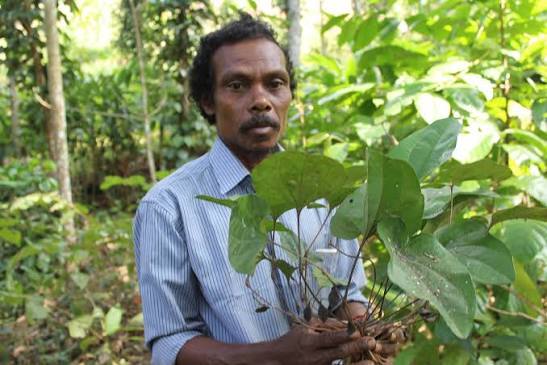
Yet another motivating tale is from the Western Ghats, from the Kani tribes. Scientists of KSCSTE-JNTBRI, in an ethnobotanical expedition in the 1980s, noted that the local tribesmen were eating the fruit of a small forest plant, Trichopus zeylanicus (Arogyapacha), to get rid of fatigue while on long forest treks. Its extraordinary adaptogenic properties were confirmed by scientific investigation, and the herbal formulation Jeevani was developed. Most importantly, it was one of the first instances in India to acknowledge and award monetary compensation to the Kani community for their traditional knowledge.
These narratives show that traditional healers were not just doctors in the village, but living libraries of biodiversity and innovation in health care. Their knowledge has served as a blueprint for contemporary medicine, deepened the understanding of the value of conserving biological resources, and shown how ancient knowledge and modern scientific research can collaborate in the pursuit of human health.
Ayurveda, with its emphasis on careful observation, experimentation, and a holistic approach to nature, has provided a foundation for scientific innovation. One of the most amazing things about this contribution is the use of metallic and mineral preparations called Bhasmas and which are repeatedly purified and incinerated. Many of these preparations turned out to contain particles at the nanometre scale, and thus ancient practitioners were already making use of the principles of nanotechnology. The increased bioavailability and therapeutic activity of these nanoparticles have inspired present research studies on nanomedicine, targeted drug delivery, and biomaterials. The blending of ancient knowledge with contemporary research underscores the profound relevance of Ayurveda as a holistic healing system and also demonstrates its continued influence in the modern scientific landscape, thus affirming India’s scientific heritage and legacy of innovation.
ANCIENT INDIAN WISDOM IN METALLURGY
Ancient India was one of the world’s foremost centres of metallurgical excellence, pioneering the extraction, purification and alloying of metals such as iron, copper, zinc, silver and gold. Among its greatest achievements was the Wootz steel, produced in southern India as early as the 3rd century BCE. Celebrated for its exceptional strength, flexibility and sharpness, it became the raw material for the legendary Damascus swords. Today, scientists study its unique microstructure to develop advanced high-strength steels used in aerospace, automotive engineering and precision cutting tools. Equally remarkable is the Delhi Iron Pillar, which has resisted corrosion for over 1,600 years. Modern research has shown that its unique composition and the formation of a protective oxide layer offer valuable insights for designing corrosion-resistant alloys and protective coatings used in bridges, railway infrastructure and industrial structures. Ancient India also pioneered large-scale zinc distillation at Zawar in Rajasthan centuries before Europe mastered the technology, while Indian goldsmiths perfected alloying, casting, wire drawing and granulation techniques that continue to influence modern jewellery manufacturing.
The legacy of this metallurgical wisdom remains visible in everyday life—from galvanized steel that protects buildings and automobiles from rust to copper vessels valued for their antimicrobial properties and traditional brass and bronze alloys still used in cookware, musical instruments and electrical components.
THE LOTUS EFFECT
For thousands of years, the lotus has been part of Indian culture and has symbolised purity, resilience and spiritual enlightenment. Another amazing natural phenomenon is that its leaves remain perfectly clean, yet it grows in dirty ponds. This unique property was greatly admired by ancient Indian scholars, poets and philosophers who described the lotus as an emblem of being untouched by impurities. These observations were mostly philosophical, but modern science has shown that the lotus has a remarkable surface architecture that has inspired one of the greatest biomimetic innovations of the twenty-first century—the Lotus Effect.
To the naked eye, a lotus leaf appears smooth, but this is not so under the microscope. It is covered in microscopic bumps coated in nanoscale wax crystals. This multi-layered architecture retains tiny pockets of air, so water droplets sit almost as perfect spheres on the surface, rather than spreading out. Falling drops catch dust particles, bacteria, and other impurities as they drift off, leaving the leaf gleaming clean. The scientific term for this phenomenon is superhydrophobicity; water contact angles are larger than 150 degrees.
The scientific explanation of the Lotus Effect was first developed in the 1990s by German botanist Professor Wilhelm Barthlott. Today, this ancient natural concept is being used in a variety of commercial products. Surfaces inspired by the lotus leaf are used in self-cleaning paints, fabrics, roof tiles, ceramics and solar panels.
A BLUEPRINT FOR THE FUTURE
Human civilisation has always progressed by learning from both the past and the future. The environmental crises confronting the planet cannot be solved solely through more consumption, more energy, or more technological complexity. They require rediscovering principles of restraint, resilience, reciprocity, and respect for nature.
India’s traditional knowledge systems demonstrate that prosperity need not come at the expense of ecological balance. They show that societies can meet their needs while allowing rivers to flow, forests to thrive, soils to regenerate, and biodiversity to flourish. These practices are not relics of a bygone era but living examples of adaptive science developed through centuries of interaction between people and their environments.
As the world searches urgently for sustainable solutions, it may be worthwhile to remember that sustainability was once not a specialised discipline but an ordinary way of life. The homes people built, the crops they cultivated, the water they harvested, the forests they protected, the food they ate, and the waste they reused together formed a resilient civilisation with a relatively light ecological footprint. The climate crisis is not asking humanity to return to the past. It is asking us to recover its wisdom.
In an age searching for sustainability, perhaps the oldest lesson remains the most profound: we do not inherit the Earth from our ancestors; we borrow it from future generations.
*The writer is the Dean-Academic Affairs, Garden City University, Bengaluru, and an adjunct faculty at the National Institute of Advanced Studies, Bengaluru. He can be reached at bijudharmapalan@gmail.com.