


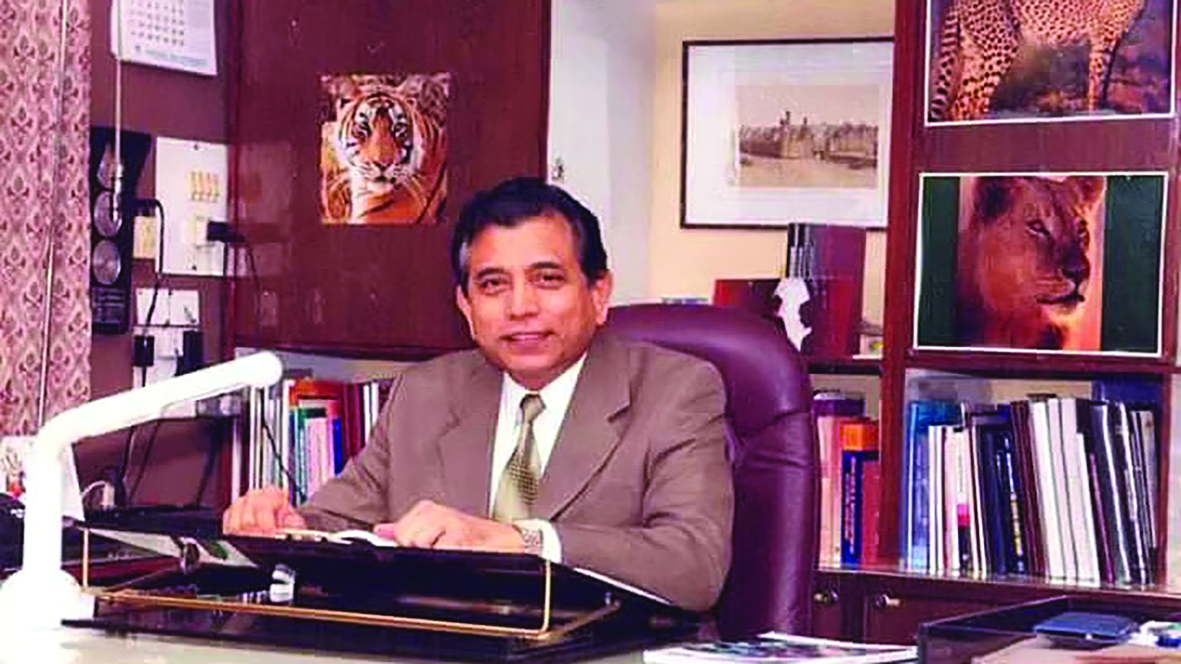
PROFILE OF THE MONTH: Dr Lalji Singh (1947-2017)
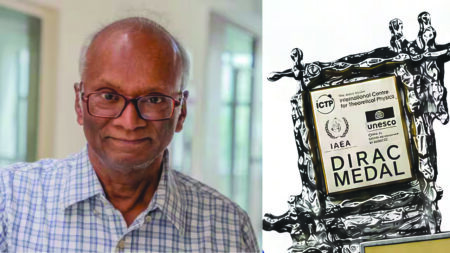
From DNA fingerprinting to wildlife conservation Padma Shri Dr Lalji Singh conquered the world of molecular biology and genetics through his years of expertise in the field. Dr Singh, also known as the Father of DNA fingerprinting was born in a small village named Kalwari in Uttar Pradesh. After finishing his schooling, he completed his graduation, post-graduation as well as PhD from Banaras Hindu University (BHU), and interestingly, later served as the Vice-Chancellor of BHU. He devoted 45 years of his life to scientific research and has more than 230 research publications to his credit. His work is recognized globally even in the present days.
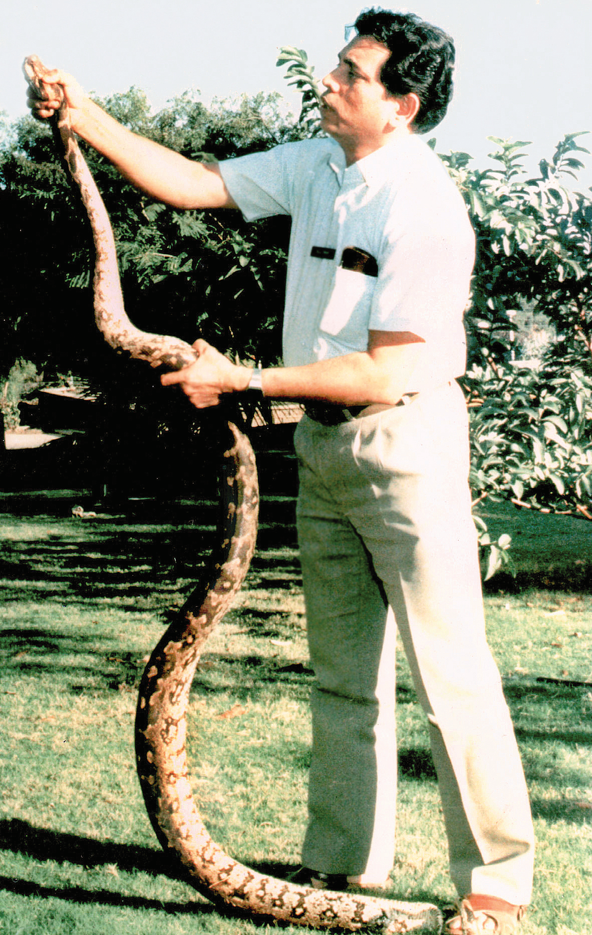
Dr Lalji Singh’s early life was indeed simple, but not at all usual. He was born on 5 July 1947. Hailing from a farmer’s family, Lalji completed his schooling from his native Kalwari village in Jaunpur district of Uttar Pradesh. Later, for pursuing graduation he moved to Varanasi and completed his Bachelor’s degree in Zoology and Cytogenetics in 1964 from BHU. Pursuing his interest in the field he remained at BHU to complete his Master’s degree in Zoology, securing a gold medal alongside in 1966. With his keen interest in the field and excellent performance in academics, he went on to continue his higher studies by pursuing his PhD in Cytogenetics (a sub-discipline of Zoology/Genetics) under Professor S P Ray Chaudhuri as a UGC-Junior Research Fellow. His research work revolved around “Evolution of karyotyping in snakes”.
In his study, Dr Singh tracked the changes that occur with time in the sex-chromosome in reptilian species. Through his research he demonstrated the genetic determination of sex using repetitive DNA sequences. His highly recognized research work was awarded by a doctoral degree in 1971, with Honorary DSc degree from six universities. In recognition of his outstanding endeavors in the field of research, he was given the Young Scientist award in 1974, CSIR Technology award twice in 1992 and 2008, Ranbaxy research award (1994), Goyal prize in Life Sciences (2000), The Millennium Plaques of Honour award (2002), FICCI award (2002-03), Vigyan Gaurav Award (2003), Padma Shri in 2004 for his contribution to Indian Science and technology, NRDC Meritorious Invention award (2009), Biospectrum Life Time Achievement Award (2011) with numerous national & international fellowships.
Today the modern-day forensics relies on DNA fingerprinting for personal identification, however in the past the technology for the same was not sufficiently developed in India. Dr Singh took the initiative to bring this technology to practical application in Indian laboratories, taking the quest from the crime scene to the verdict in the courtroom.
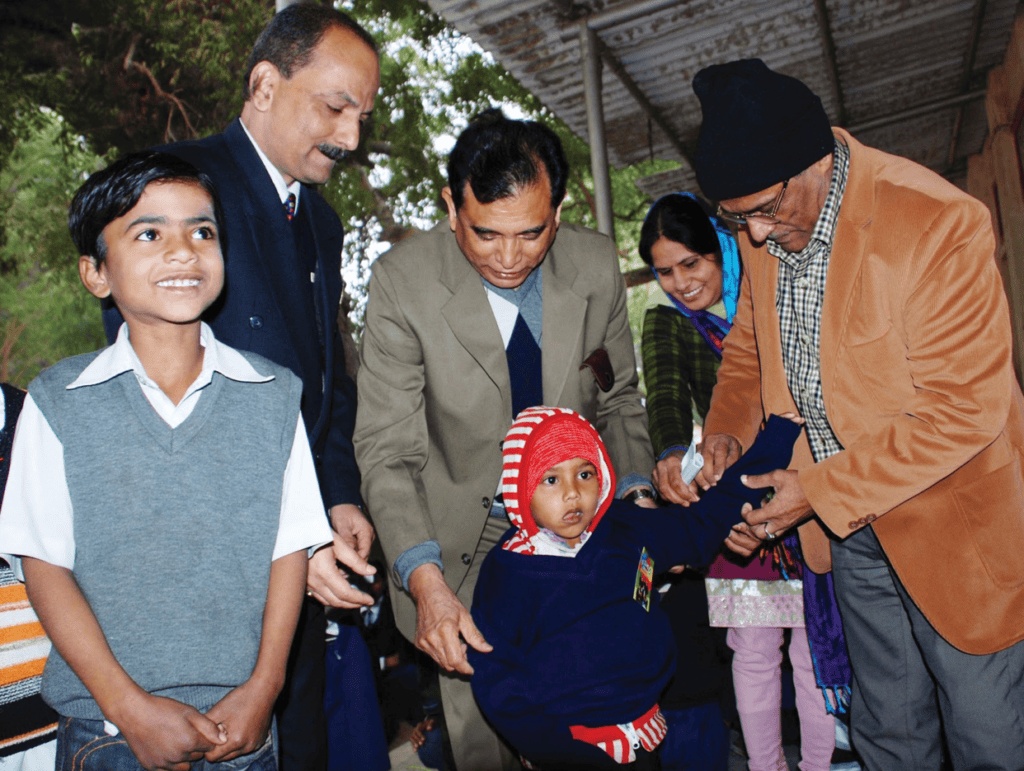
All Images Courtesy: Prachi Panwar and Prashant Singh
Continuing his research in the field, Dr Singh introduced ‘Indigenous DNA fingerprinting technology’ in India, as in 1970s technologies used for in-depth molecular evaluation were lacking. This was a tremendous breakthrough not just in the field of science and technology but for the country and its justice system as well. Following his return to India from United Kingdom, he served as a Senior Scientist at center for Cellular and Molecular Biology, Hyderabad in 1987.
The current era has witnessed the vast application of DNA Fingerprinting technology, especially in the field of forensic science. Today it is the most reliably used method of personal identification from biological samples collected from the crime scene. Dr Singh significantly contributed in the field of forensics by aiding in personal identification through DNA fingerprinting with several books including My Travails in the Witness Box and DNA Fingerprinting: The Silent Witness (2012). Forensic science being a field where the knowledge and principles of science are applied to solve legal cases, comprises various fields, one of which is the Forensic biology. Forensic biology primarily deals with the identification and characterization of different biological samples linking the victim or suspect to the crime scene or victim to the suspects.
DNA fingerprinting is the heart of forensic biology and present-day forensic analysis involving personal identification. The DNA fingerprinting is not only limited to human identification but plays a vast role in the analysis of animals, plants as well as lower organisms. The DNA fingerprinting science depends on the fact that every living organism possesses cell as the basic unit of life, this cell contains nucleus (the brain of the cell), which harbors the DNA — the genetic material. The DNA is simply like an ancestral recipe book (comparable to genetic information) transferred from one generation to another, from a parent to the children. It is important as it serves as the medium of biological continuity and is a silent but noticeable natural phenomena. It contains the codes (recipes) that instruct our proteins (chef) on how to cook and what to cook. It is the DNA which decides the gender of an individual, the appearance of an individual, regulation of bodily functions, resistance and susceptibility to diseases, etc. However, just like not all the pages of the recipe book contain information, the DNA also has some regions that codes for no information at all. This is what categorizes the DNA into coding and non-coding DNA. The coding part of DNA contains information and accounts for only 0.01% of DNA. On the contrary, the non-coding part of DNA contains no information, just junk, like a random scribble pattern in the recipe book, and accounts for 99.9% of the total DNA. Interestingly this coding DNA is same in all humans, however, the non-coding DNA is unique to every individual, except for twins. Since ‘rare is precious’ this scribble pattern or the junk DNA actually acts as a ‘molecular fingerprint’. The fact that the fingerprint is unique to every individual gives ‘DNA fingerprinting’ its name, as this technique focuses on tracing the unique portion of an individual’s DNA that acts as a unique identifier aiding in personal identification. The DNA fingerprinting thus helps in establishing a solid biological, scientifically-accepted proof in cases such as murder, rape, paternity testing, etc. Biological samples like blood, saliva, semen, sweat, hair, vomit, feces, urine, etc. contains cells with nucleus that harbors DNA, making them ideal samples for DNA analysis, if stored properly.
For instance, let’s assume a case where two people ‘A’ and ‘B’ had a violent fight where A is trying to strangulate B using hands, and B in his defense is grabbing A’s hands tightly, scratching him in a way that his skin deposits in B’s fingernails. As a result of the fight B dies and A leaves from the scene of crime. Later when police investigation takes place, the dead body of B is sent for post-mortem examination. The doctors send the fingernail scraping from B’s nails for DNA identification. Assuming A and C are the potential suspects the forensic experts collect samples from both for DNA analysis. On DNA fingerprinting, the results show that the DNA fingerprint of samples from A matches the DNA fingerprint sample from B’s nails, linking the victim to the suspect, hence helping the legal authorities to convict the accused.
DNA being a complex and highly-sensitive molecule, the process of DNA fingerprinting requires a systematic scientific protocol. Dr Lalji established the first DNA fingerprinting protocol in India. This was the point when Dr Lalji Singh started being addressed as the ‘Father of DNA Fingerprinting’ in India.
The process of DNA fingerprinting involved 6 broad steps: the foremost step is to extract the DNA from an intact cell, where the source of the cell can be bloodstain, semen, roots of hair, etc. Since the wall of the cell is formed of protein and lipid, certain detergents are used to break the cell wall, causing the DNA to liberate out of the cell. Next, enzymes, acting as molecular scissors are added to the extracted DNA so that it can be cut at specific site based on the presence and frequency of repeat sequences called as Variable Number of Tandem Repeats or VNTRs (as these sequences vary from person to person in DNA). This is followed by separating the mixed fragments of different sizes of DNA, based upon their size. This process is carried out by employing the principle of electric charge on DNA and the size of DNA fragments, under the influence of electric field by a technique called as Gel-electrophoresis. This causes the negatively charged DNA to move towards the positive electrode through molecular sieve. During this process the smaller fragments of DNA travel faster than the larger fragments of DNA, separating it based on size. The fourth step is to transfer the separated fragments of DNA on a membrane, creating an imprint of gel separation pattern. This is followed by coupling the single-stranded fragments of DNA by radioactively labelled probes containing complimentary bases. Finally, the membrane containing the paired DNA fragments is exposed to X-ray film resulting in a visual barcode formation, seen as dark bands, serving as individual’s unique DNA fingerprint.
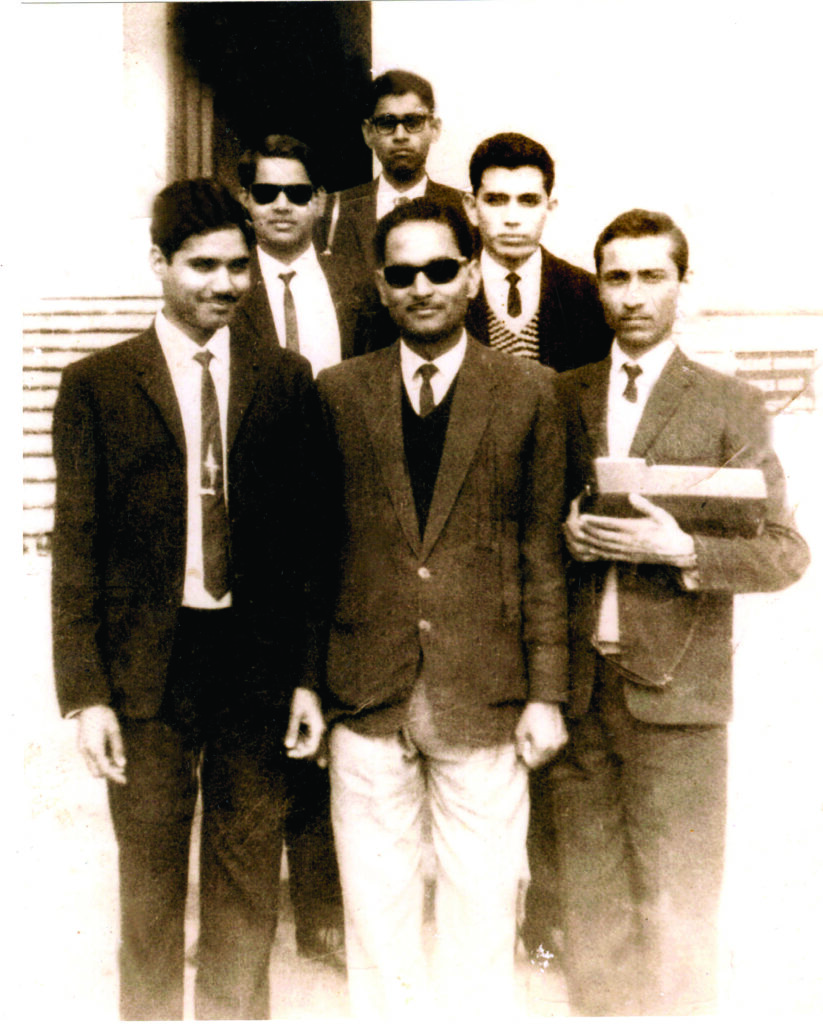
The first ever forensic application of this technology was employed in 1988 Vilasini Vs. Kunhiraman paternity case, which served as a landmark, bridging the gap between modern science and courtroom jurisprudence. This was the start of scientific revolution where Dr Singh served as the expert witness in innumerable criminal cases. Some of such sensational forensic cases included: Rajiv Gandhi assassination case (1991), Naina Sahni tandoor murder case (1995), Swami Premanand trial (1997), and so on.
Forensic science is the science of common sense and is one of the oldest but not so known science in the early days. Forensics being a powerful field, require individuals to have an understanding of every possible subject as crime has no face neither do the necessity of research to improve science. Anyone who is a master of his/her subject or a good learner and listener can feel the essence and capability of forensic science. Dr Singh demonstrated that with his science by contributing in the field of DNA fingerprinting, giving us a loud message not from his words but from is work. Science is never limited and neither is any research; there are endless possibilities and scientists in every life has demonstrated it. Science is a way of life; a concept, some people fail to understand. Curiosity and inquiry begin in childhood, but it is often masked or overlooked by the sophisticated societal rat race humans often fall to. Dr Lalji Singh is one such story out of the many, reminding us how common people can do not so common things that can later become inspiration to young minds to help shape the world and make it a better place. Science is endless and forensic science is one such magical world of science with immense potential to help solve crimes and endless mysteries, and discoveries yet to unfold through ‘Re-search’. Dr Lalji Singh passed away on 10 December 2017.
*Prachi Panwar is Junior Research Fellow, National Forensic Sciences University, Jaipur, where Prashant Singh is Senior Research Fellow.