




Diplomacy once travelled at the pace of caravans, ships, and sealed letters carried across oceans. Today it moves through semiconductor supply chains, quantum laboratories, artificial intelligence frameworks, clean-energy grids, and strategic technology partnerships. The grammar of power is changing. Nations are no longer judged solely by the size of their armies or territorial reach, but increasingly by their capacity to innovate, collaborate scientifically, secure technological ecosystems, and shape the infrastructures of the future.
It is against this shifting global landscape that the recent five-nation tour of Prime Minister Narendra Modi acquires significance beyond conventional diplomacy. Public discourse naturally focused on investment figures, strategic agreements, defence partnerships, and viral moments on social media. Yet beneath the visible theatre of summit meetings and ceremonial receptions lay a deeper theme: the emergence of science diplomacy as a central pillar of India’s external engagement.
The tour was not merely about bilateral relations. It reflected India’s growing effort to position itself within the emerging architecture of technological power.
Across the countries visited, recurring themes appeared with notable consistency—artificial intelligence, critical minerals, clean energy transitions, maritime connectivity, advanced manufacturing, innovation ecosystems, digital infrastructure, defence technologies, and scientific collaboration. Together these sectors increasingly constitute the nervous system of the twenty-first-century global order.
SCIENCE DIPLOMACY AND THE NEW GEOPOLITICS
Science diplomacy, once considered peripheral, has now moved to the centre of geopolitics.
Historically, scientific cooperation often survived even periods of political hostility. During the Cold War, rival powers still collaborated in fields such as space exploration, medicine, climate science, and nuclear regulation. Science created channels where politics frequently failed. Today, however, science diplomacy has acquired an additional dimension. It is no longer merely a bridge between nations; it is also a theatre of strategic competition.
All Images Courtesy: PIB
Artificial intelligence, quantum technologies, cyber infrastructure, rare-earth supply chains, and space systems now shape economic strength, military preparedness, governance, and geopolitical influence simultaneously. Diplomatic engagements increasingly revolve around trusted technological partnerships and resilient innovation networks.
India’s recent outreach must be viewed within this larger transformation. The tour signalled India’s determination to avoid technological isolation while also resisting excessive dependence on any single bloc. It sought partnerships that combine strategic autonomy with collaborative advancement—a balancing instinct that has become central to Indian diplomacy in an increasingly fragmented world.
THE WIDER STRATEGIC ARC OF THE TOUR
Although the Italian leg emerged as the intellectual and strategic centrepiece of the journey, the broader tour also revealed India’s attempt to deepen engagement with technologically advanced and economically influential regions.
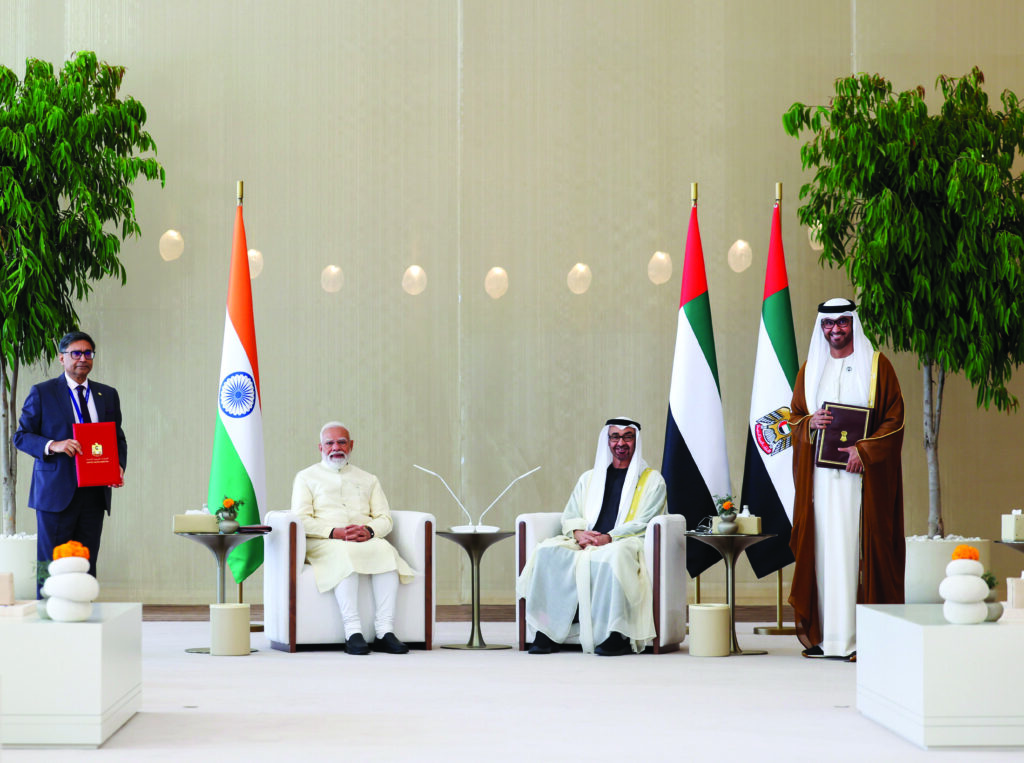
The visit to the United Arab Emirates underlined the extraordinary transformation in India-UAE relations over the last decade. What was once viewed primarily through the prism of oil and expatriate labour has evolved into a multidimensional strategic partnership involving fintech, renewable energy, logistics, food security, artificial intelligence, and digital infrastructure.
Cooperation in green hydrogen, smart logistics, startup financing, and digital payments reflects the larger shift in India’s diplomacy toward technology-led economic integration. India’s digital public infrastructure, particularly UPI-based systems, has itself become an instrument of technological diplomacy in the Gulf region.
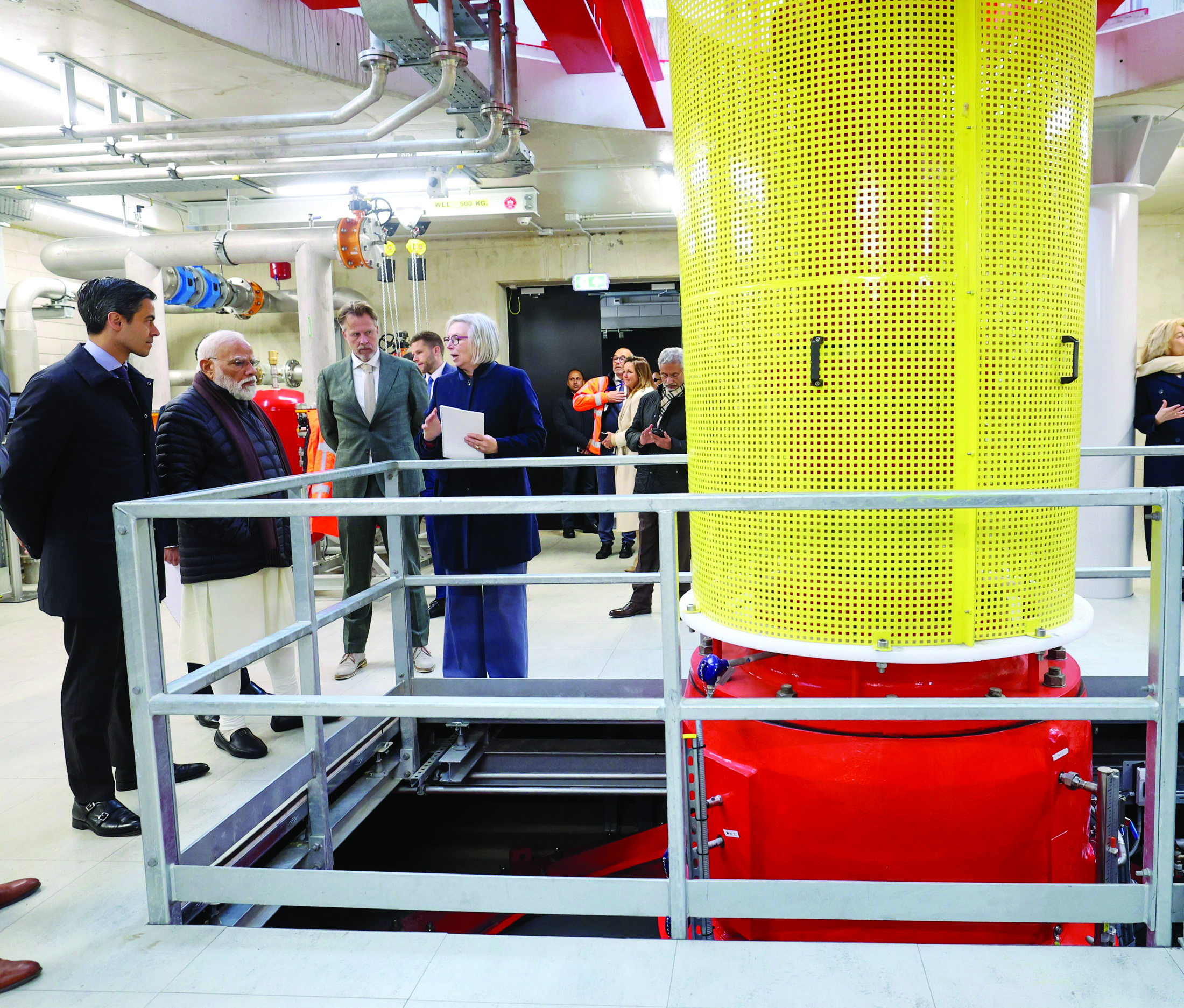
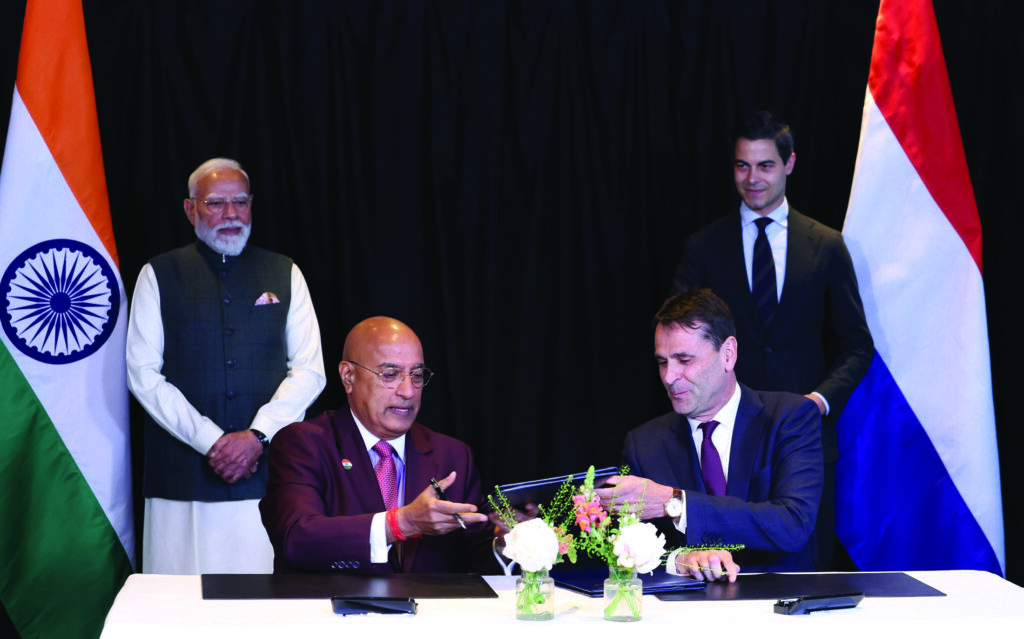
Equally significant was the engagement with the Netherlands, a country that exerts influence far beyond its geographical size in advanced engineering, semiconductor technologies, agriculture, and water management. India’s growing collaboration with Dutch institutions reflects recognition that future food security, climate resilience, and manufacturing competitiveness will depend heavily upon technological sophistication.
The outreach to Nordic countries was perhaps even more revealing from a science diplomacy perspective. Nations such as Denmark, Sweden, Norway, and Finland possess exceptional strengths in clean technologies, green shipping, telecommunications, advanced materials, and innovation-led governance.
India’s engagement with the Nordic region increasingly revolves around sustainability and high technology—green hydrogen, offshore wind energy, circular economy models, battery technologies, and climate-smart urban systems. In the emerging global order, access to scientific ecosystems June prove as consequential as access to markets or military alliances.
ITALY: FROM CORDIALITY TO STRATEGIC DEPTH
Within this broader framework, the visit to Italy emerged as perhaps the most strategically layered segment of the tour.
For decades, India and Italy maintained cordial but under-realised relations. The Rome summit appears intended to decisively alter that trajectory. The elevation of ties to a “Special Strategic Partnership” was not merely symbolic diplomacy. It reflected recognition by both countries that future influence increasingly lies in technological capability, industrial resilience, maritime connectivity, and innovation ecosystems.
The warmth between Modi and Italian Prime Minister Giorgia Meloni naturally attracted enormous public attention. Social media transformed their interactions into a global spectacle, complete with memes, humour, viral songs, and the now familiar ‘Melodi’ phenomenon. Yet behind this digital theatre stood a remarkably substantive agenda.
The India-Italy Joint Strategic Action Plan 2025–29 outlined cooperation across trade, defence, critical technologies, energy transitions, scientific research, higher education, maritime systems, climate studies, and innovation ecosystems. It attempted to create a long-term institutional framework rather than a short-lived diplomatic flourish.
Particularly noteworthy was the emphasis on emerging technologies. Artificial intelligence, quantum sciences, civil nuclear energy, advanced manufacturing, and space collaboration were all explicitly highlighted. This is significant because modern geopolitics increasingly revolves around precisely these domains.
Quantum technologies are rapidly becoming strategic assets with implications for encryption, communications, computing, materials science, and defence systems. Artificial intelligence is reshaping economic productivity, warfare, governance, and social behaviour simultaneously. Nations capable of building trusted technological coalitions in these sectors are likely to shape the future international order.
India’s outreach to technologically advanced middle powers such as Italy therefore reflects strategic foresight.
DEFENCE MANUFACTURING AND MARITIME STRATEGY
Among the most consequential outcomes of the Rome summit was the India-Italy Defence Industrial Roadmap.
This agreement reflects the changing character of global defence cooperation itself. Modern defence partnerships are no longer confined to procurement contracts or arms purchases. Increasingly, they revolve around co-development, co-production, technology transfer, integrated supply chains, cyber capabilities, autonomous systems, and dual-use innovation.
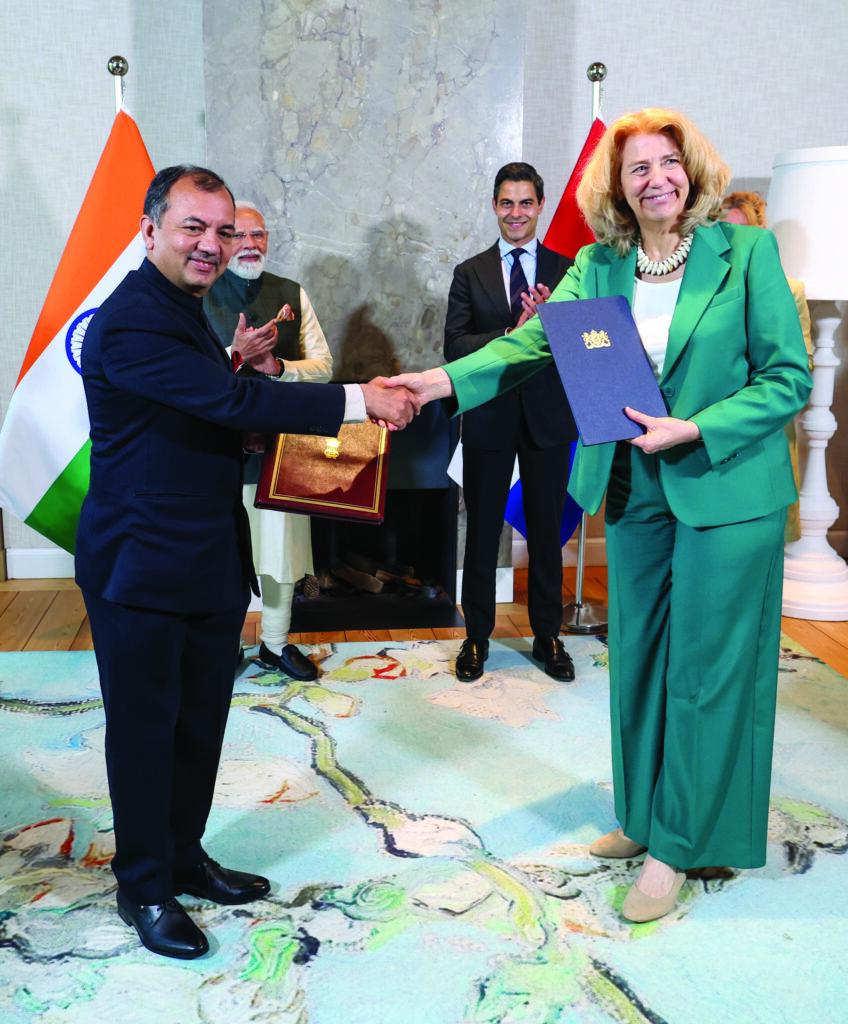
Italy possesses important competencies in aerospace engineering, naval systems, helicopters, radar systems, electronics, and defence manufacturing. India, meanwhile, seeks to expand domestic defence production under its larger goal of strategic self-reliance.
The roadmap envisages collaboration in helicopters, naval platforms, marine armament systems, and electronic warfare technologies. These are areas of growing strategic importance as maritime competition intensifies across the Indo-Pacific and Mediterranean-linked trade corridors.
Particularly significant is the maritime dimension. Both India and Italy are major maritime nations located at critical ends of emerging trade architectures — India in the Indian Ocean and Italy in the Mediterranean. As global trade increasingly depends upon resilient sea lanes, secure logistics, and port infrastructure, maritime technologies acquire immense strategic relevance.
The proposed Dialogue on Maritime Security and cooperation in shipping, logistics, and port modernisation must therefore be viewed not merely as commercial arrangements but as part of a wider geopolitical reconfiguration linked to the India-Middle East-Europe Economic Corridor (IMEC).
Defence-industrial cooperation also carries scientific implications. Advanced defence production frequently drives breakthroughs in materials science, electronics, sensors, AI-enabled systems, and cybersecurity. Historically, many civilian technological innovations emerged from defence research ecosystems. Thus, the India-Italy partnership could stimulate wider industrial and technological collaboration beyond military applications.
INNOVATION, CLIMATE SCIENCE AND SPACE
One of the most promising announcements was the proposed India-Italy Innovation Centre intended to connect startups, industries, universities, and research institutions from both countries.
Such initiatives June ultimately prove more transformative than summit declarations. Innovation ecosystems thrive not merely through state agreements but through sustained interactions between scientists, entrepreneurs, engineers, venture capital, and academic institutions.
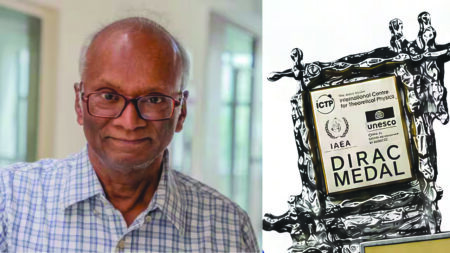
The agreements in climate science and advanced research were equally important. Collaborations involving the Indian Institute of Tropical Meteorology, the Abdus Salam International Centre for Theoretical Physics, the CMCC Foundation, and Elettra Sincrotrone Trieste point toward deeper scientific integration in climate modelling, material sciences, and sustainability studies.
At a time when climate disruptions increasingly affect agriculture, migration, health, and economic stability, climate science itself has become an instrument of strategic governance. Scientific cooperation in this field is therefore no longer purely academic; it is geopolitical.
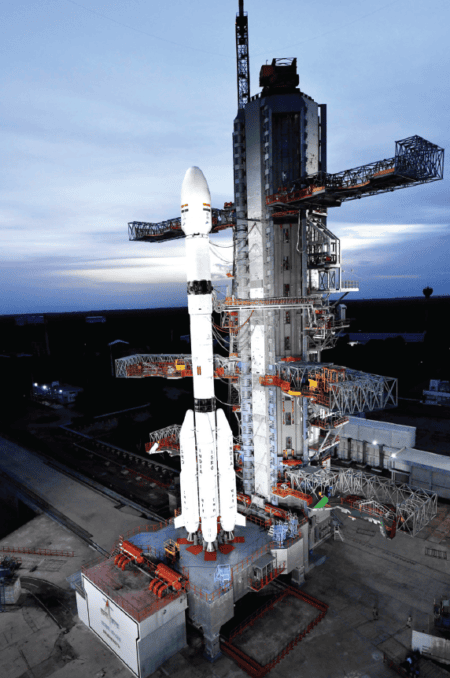
The space dimension of the partnership is equally noteworthy. Cooperation between the Italian Space Agency and the Indian Space Research Organisation reflects the growing strategic significance of outer space. Satellite systems today underpin communication, navigation, weather forecasting, disaster management, and national security. The future world order June well be shaped as much by orbital infrastructure as by terrestrial geopolitics.
HUMAN CAPITAL, CULTURE AND THE FUTURE
Another striking feature of the Rome summit was the integration of human mobility into strategic cooperation.
The agreements concerning students, researchers, skilled workers, and nurses reflect recognition that talent flows are central to innovation economies. Scientific advancement increasingly depends upon globally connected research communities and mobile knowledge networks.
Alongside technology and economics came the softer yet equally enduring dimension of culture. India and Italy agreed to celebrate 2027 as the ‘Year of Culture and Tourism’. This carries significance beyond ceremonial diplomacy. Few countries possess civilisational inheritances as deep and aesthetically influential as India and Italy. By combining technological cooperation with cultural dialogue, the partnership acquires emotional depth alongside strategic utility.
The five-nation tour therefore illustrated a larger truth about the contemporary world: science and technology are no longer peripheral to diplomacy; they are its new infrastructure.
The laboratories of quantum science, the algorithms of artificial intelligence, the corridors of maritime logistics, and the ecosystems of innovation are becoming the arenas where global influence is negotiated.
India appears increasingly aware of this transformation. Its diplomatic engagements now seek not merely markets or military partnerships, but participation in shaping future technological architectures.
The ultimate success of these initiatives will depend not on declarations but on implementation. Innovation centres must produce innovation. Research collaborations must generate knowledge. Industrial roadmaps must create manufacturing ecosystems. Scientific partnerships must survive political transitions.
Yet even with these caveats, the tour marked an important moment in the evolution of Indian diplomacy.
It suggested that India no longer sees science and technology merely as instruments of domestic development. Increasingly, they are being deployed as instruments of international engagement, strategic influence, and civilisational presence in a rapidly transforming world.
And perhaps that is the deeper meaning of the journey — not simply that India signed agreements across continents, but that it is learning to speak the new language through which the future world order itself June ultimately be written.
*The writer is a Harvard educated civil servant, and former Secretary, Ministry of Information & Broadcasting, Govt of India. He also served on the Central Administrative Tribunal and as Secretary General of ASSOCHAM. He commands extensive expertise in the fields including Media and Information, Industrial and Labour Reforms, and Public Policy.