




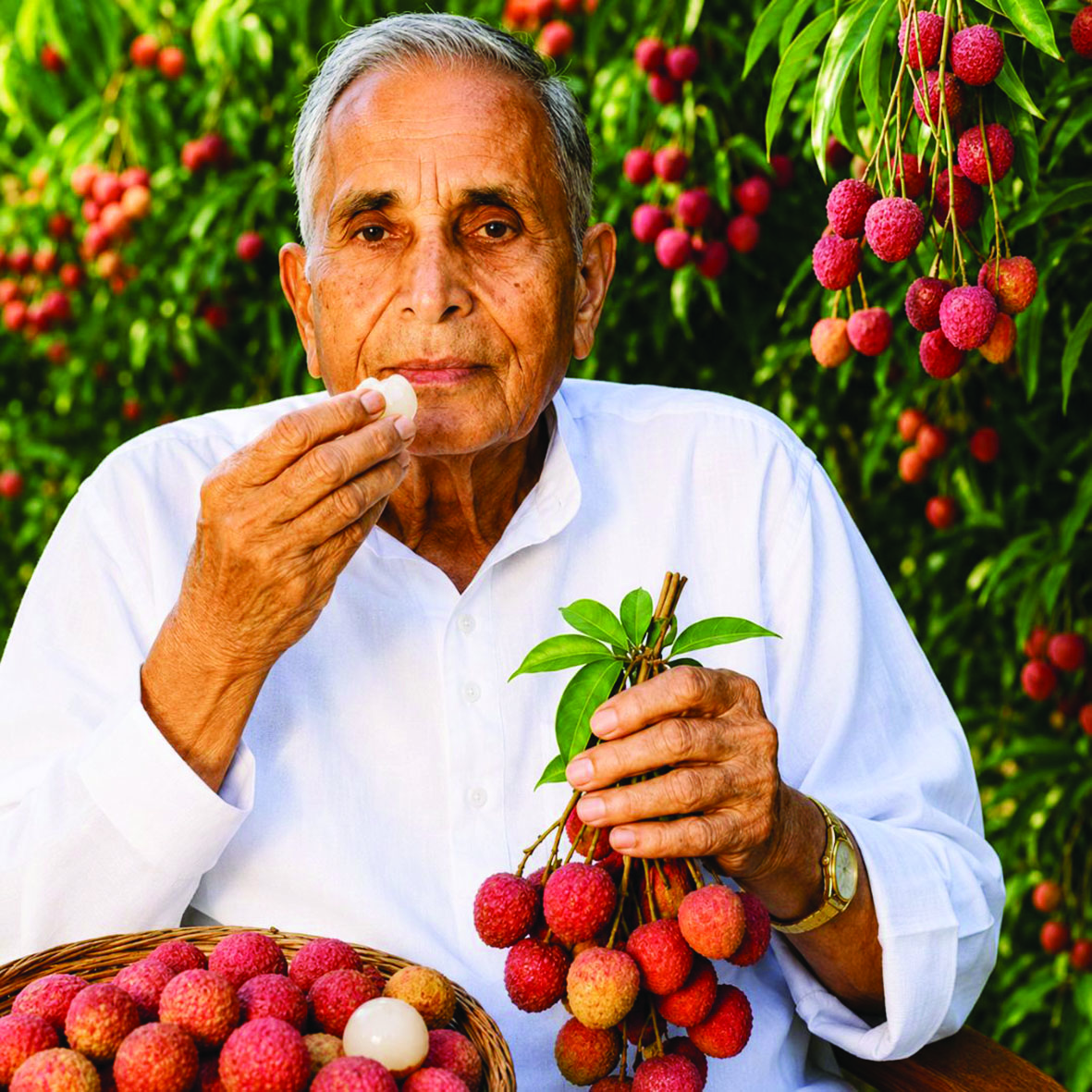
SPOTLIGHT: Dr Gopal Ji Trivedi (1930-2026)
On a hot summer afternoon in Muzaffarpur, Bihar, the air carries a fragrance unlike any other. It is the scent of ripening Shahi litchis—sweet, floral and unmistakably inviting. During the harvest season, trucks loaded with bright red bunches roll out of orchards and head towards markets across India and abroad. For many consumers, the litchi is simply a delicious summer fruit. Few know that behind this success story stands a scientist who spent his life working quietly among farmers.
A few hundred kilometres away, in the wetlands of north Bihar, farmers stand knee-deep in water harvesting makhana (fox nut), the popped seeds of the aquatic plant Euryale ferox. Today, makhana has become a favourite among nutritionists, fitness enthusiasts and health-conscious consumers. It is marketed as a ‘superfood’, stocked in supermarkets from Mumbai to London, and exported to several countries. Yet not very long ago, it was viewed largely as a traditional food consumed in parts of Bihar, and central and eastern India.
The remarkable journeys of these two products—Shahi Litchi and Makhana—intersect at one individual: Dr Gopal Ji Trivedi, the agricultural scientist who received the Padma Shri posthumously in 2026. Popularly known as Gaon Purush (Man of the Village) and Kishan Mitra (Farmer’s Friend), Dr Trivedi’s life story is one of perseverance, scientific innovation, and unwavering commitment to rural India. His contributions helped establish Muzaffarpur as India’s litchi capital, promoted makhana cultivation long before it became fashionable as a global superfood, and pioneered extension education models that continue to influence agricultural development across the country.
Dr Gopal Ji Trivedi was a visionary who spent more than six decades transforming the lives of farmers, revitalising rural economies, and demonstrating that science achieves its greatest success when it reaches the fields of ordinary people. While his name may not be as familiar as the products he helped popularise, his influence can be found in thousands of orchards, ponds and farming communities across Bihar.
A SCIENTIST ROOTED IN THE SOIL
Dr Gopal Ji Trivedi was born in 1930 in Matlupur village of Muzaffarpur district. His knowledge of agriculture was derived from his personal experience, as opposed to many who spend the majority of their careers in laboratories. He knew both the highs and lows of the weather and markets, as well as the problems of crop failure, having been raised on a farm.
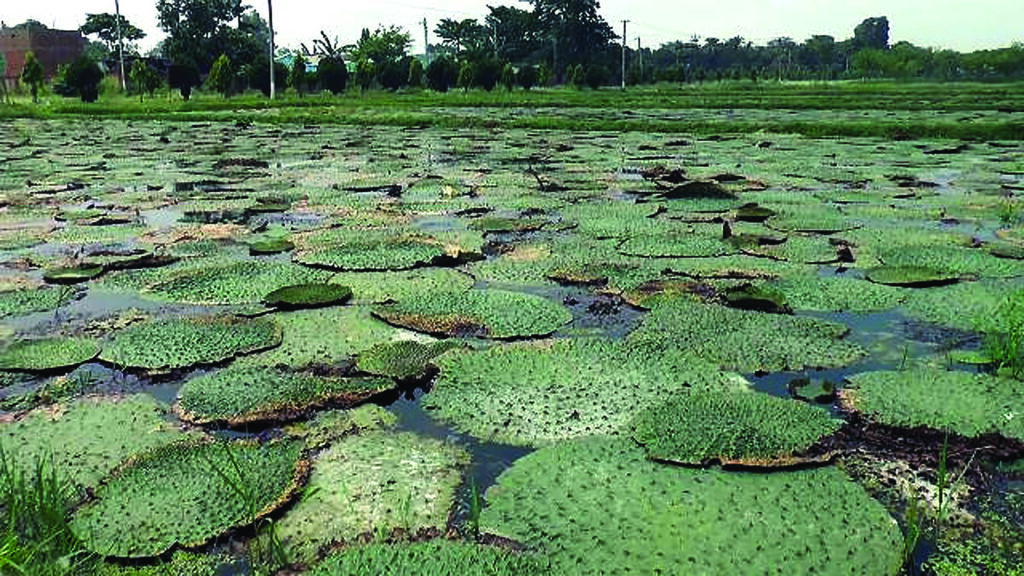
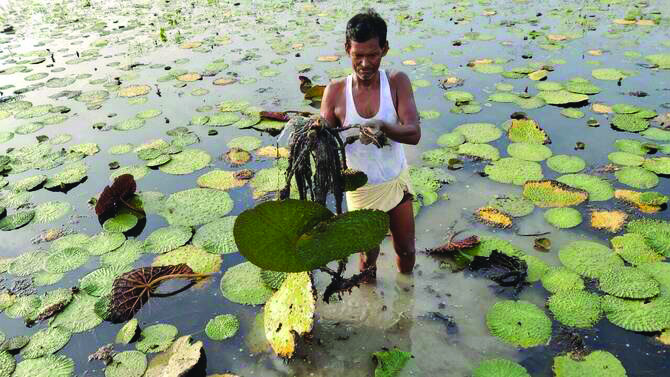
Makhana (fox nut) farm; it is cultivated primarily in the Mithilanchal region of Bihar
All Images Courtesy: Dr Biju Dharmapalan
His educational journey is testament to the spirit of resilience. His father’s death had briefly interrupted his studies. In order to support his family, he turned to farming. Yet the dream of education never left him. Encouraged by his mother and local agricultural leaders, he resumed his studies, completed degrees in agriculture, earned a master’s degree in Agricultural Extension Education from Bihar Agricultural College, Sabour, and eventually obtained a PhD from the Indian Agricultural Research Institute, New Delhi in 1963. But the most important lesson he learned was perhaps not in a classroom. Agriculture, he believed, succeeds only when science reaches farmers. That conviction would define the rest of his life.
His academic career began at Tirhut College of Agriculture, Dholi, where he served as a professor and mentor to generations of agricultural students. He later rose to become Director of Extension Education at Rajendra Agricultural University, Pusa, and subsequently served as its Vice-Chancellor from 1988 to 1991. Throughout his career, however, administrative positions never distanced him from farmers and field-level challenges.
THE FRUIT THAT CHANGED MUZAFFARPUR
Litchi is believed to have originated in southern China more than 2,000 years ago. Chinese emperors prized the fruit so highly that special couriers reportedly carried fresh litchis over long distances to the royal court.
When litchi arrived in India during the eighteenth century, few could have predicted that Bihar would become its strongest bastion. The fertile alluvial soils of north Bihar, coupled with cool winters and humid summers, created ideal conditions for cultivation.
Yet nature alone does not create an agricultural success story. By the 1970s and 1980s, many litchi orchards in Muzaffarpur were ageing. Trees had grown excessively tall, yields were declining, and farmers lacked scientific guidance. Traditional wisdom, while valuable, was no longer enough to meet growing market demand. This was where Dr Trivedi stepped in.
One of his most important interventions was promoting scientific orchard management. He encouraged farmers to rejuvenate old orchards through pruning, canopy management and improved nutrition. At first, many orchard owners resisted. “Why would we cut branches from a healthy tree?” they asked. The idea seemed counterintuitive. Farmers feared that pruning would reduce production. Trivedi responded not with lectures but with demonstrations.
He implemented these techniques in his own orchards and encouraged progressive farmers to experiment. Slowly, the results became visible. Trees produced healthier canopies, sunlight penetrated more effectively, pest incidence decreased, and fruit yields improved.
The transformation was significant enough that many ageing orchards regained productivity. What had once seemed a risky intervention became accepted practice. Today, Muzaffarpur’s Shahi litchi enjoys a reputation comparable to premium fruits from famous agricultural regions around the world. Its distinctive sweetness, aroma and small seed have made it a valued product. The Geographical Indication (GI) tag awarded to Shahi litchi in 2018 further validated its identity. Behind that success lies decades of patient extension work.
THE SCIENCE OF SWEETNESS
The story of litchi also contains fascinating scientific mysteries. Unlike fruits like bananas or mangoes, litchis do not continue ripening significantly after harvest. Time is a critical element and that’s why it’s so important. The harvesters have to harvest the fruit at the right time. The sugars, acids, and aromatic compounds involved in the sweetness of Shahi litchi are a complex array that depends on climate, soil, and growing techniques. Such interactions are called ‘terroir’ in scientific terms and account for the special character of agricultural products. Muzaffarpur enjoys precisely this combination. Trivedi understood that preserving this natural advantage required scientific management. Better orchard practices not only increased yields but also enhanced fruit quality, helping Bihar compete in national and international markets.
A SUPERFOOD HIDDEN IN PLAIN SIGHT
If litchi represented a success story above ground, makhana represented an even greater opportunity hidden beneath the water.

Long before makhana became celebrated globally as a nutrient-rich superfood, Dr Trivedi recognised its economic and nutritional potential. Rich in protein, fibre, antioxidants, and minerals, and naturally low in fat, it meets many of the criteria modern consumers seek in health foods. For centuries, makhana was harvested from ponds and wetlands across Bihar. The crop had deep cultural roots and featured prominently in fasting foods and traditional cuisine. Yet outside eastern and central India, relatively few people knew about it.
He encouraged scientific cultivation of makhana and water chestnut in Bihar’s wetlands, helping farmers derive sustainable incomes from flood-prone ecosystems.
His pioneering work laid the foundation for Bihar’s dominance in makhana production, which today accounts for nearly 90 per cent of India’s output. The recent establishment of the National Makhana Board reflects the growing national recognition of a sector that Dr Trivedi helped nurture decades ago.
TURNING PROBLEMS INTO POSSIBILITIES
One of the defining characteristics of great scientists is their ability to look at familiar things differently. Where many considered waterlogged areas as wastelands, Trivedi saw it as productive ecosystems. He encouraged the scientific development of makhana and water chestnut in wetlands and flood-prone areas. He advised farmers to optimise the use of these systems and consider aquatic farming as an alternative livelihood. His work helped demonstrate that flooded ecosystems need not remain economically marginal. The impact was profound.
Thousands of farmers discovered new opportunities to earn income from land thought too difficult to grow traditional crops on. Communities that had struggled with recurring floods began to generate value from the very water that once caused hardship. In many ways, Trivedi was practising climate-resilient agriculture decades before the term became fashionable.
THE BIRTH OF THE BABA MODEL
His most innovative intervention took the form of what became known as the Bihar Aquaculture-Based Agriculture (BABA) model. The concept was elegant in its simplicity. Instead of viewing aquaculture and agriculture as separate activities, why not integrate them? Waterlogged areas for fish culture also provided farmers with multiple income streams, as they could engage in other agricultural activities. Risks were distributed across different enterprises. The model transformed abandoned and underutilised landscapes into productive assets. Today, integrated farming systems are widely promoted as sustainable agricultural solutions. Trivedi was advocating such approaches long before they became mainstream.
MEASURING RURAL INDIA
While litchi and makhana brought him public recognition, one of Trivedi’s most influential contributions was far less visible. In 1964, he co-developed the Pareek–Trivedi Socio-Economic Scale, a pioneering tool that enabled researchers to scientifically measure the socio-economic status of rural households. The innovation may sound technical, but its implications were profound.
How do you understand rural poverty? How do you evaluate development programmes? How do you determine whether farmers’ lives are improving? Trivedi believed that such questions required reliable measurement.
The scale became a standard reference in rural development, agricultural extension, public health and social science research. Even today, modified versions continue to be used across India. In essence, he helped create one of the first scientific yardsticks for understanding rural transformation.
THE EXTENSION SCIENTIST
Perhaps the most remarkable aspect of Trivedi’s career was his unwavering commitment to extension education. Agricultural research often produces impressive innovations. Yet many technologies never reach farmers because communication fails. Trivedi devoted his life to solving this problem.
As a professor, Director of Extension Education and Vice-Chancellor of Dr Rajendra Prasad Central Agricultural University (Samastipur, Bihar), he was always involved in direct contact with the rural community. He chose to go back to his village after retirement, rather than find a comfortable life in the city. For more than three decades, he continued working with farmers, conducting demonstrations, sharing experiences and refining farming practices. His office became the village itself. His laboratory became the farmer’s field.
A LEGACY THAT LIVES ON
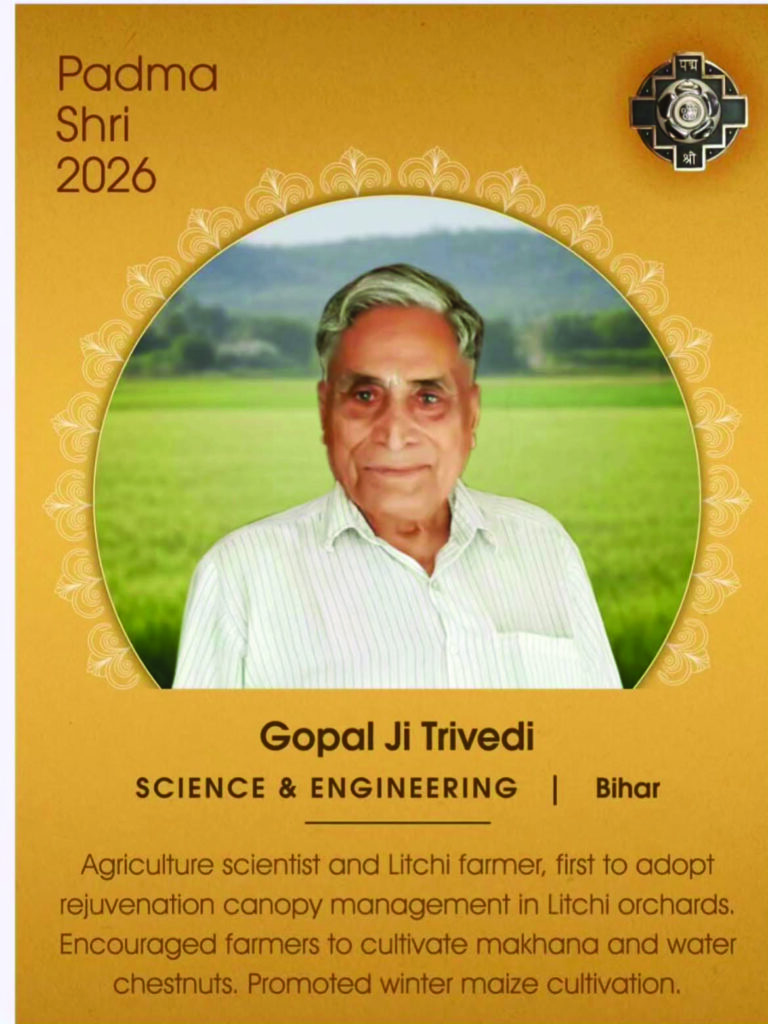
Dr Gopal Ji Trivedi won many laurels during his lifetime, though the Padma Shri came a little late. Notable among them are the Excellence in Extension Education Award from the then Prime Minister of India, Chandrasekhar, on the occasion of the International Conference at Delhi in 1991, the Krishi Rishi Award in 2015 at the Mahatma Gandhi Chitrakoot Gramoday Vishwavidyalay, and the Lifetime Achievement Award from former President Pratibha Patil during an International Conference held in Delhi in November 2011. Dr Trivedi’s name was announced in the list of annual Padma awards on January 26 this year; unfortunately, he passed away on May 12, 2026, days before the award was to be physically conferred on him on May 25.
Dr Gopal Ji Trivedi’s greatest achievement was not a scientific paper, a university position, or a national award. It was the trust he earned from farmers and the lasting impact of his work on rural communities. He did not merely develop technologies; he nurtured confidence among farmers. He did not merely study rural communities; he lived among them. Today, every basket of Muzaffarpur’s celebrated Shahi litchis, every harvest of makhana from Bihar’s wetlands, and every farmer who adopts integrated farming practices carries a part of his legacy. His life demonstrated that agricultural science is most meaningful when it improves the lives of people in villages.
As India seeks sustainable pathways for agricultural growth, climate resilience, and rural prosperity, the life of Dr Trivedi offers a timeless lesson: true innovation begins when science works hand in hand with society. His legacy lives on in every thriving litchi orchard, every makhana pond, every integrated farm, and every farmer whose life was transformed by his vision.
*The writer is the Dean, Academic Affairs, Garden City University, Bengaluru, and an adjunct faculty at the National Institute of Advanced Studies, Bengaluru. He can be reached at bijudharmapalan@gmail.com.