


Image Courtesy: Authors
The origin of life remains one of the science’s most enduring mysteries. How did a planet filled with relatively simple chemicals cross the extraordinary threshold from chemistry to biology? How did molecules that could exist independently begin to organise, compartmentalise, process matter and eventually reproduce?
The answer is unlikely to lie in a single dramatic moment when ‘life’ suddenly appeared. Instead, life probably emerged through a long sequence of chemical transitions in which increasingly complex molecules and structures acquired some of the properties we associate with living systems. Understanding that transition—from non-living chemistry to life-like organisation—is therefore a central challenge of origin-of-life research.
One of the most important early milestones came in 1952, when Stanley Miller and Harold Urey demonstrated that amino acids, the building blocks of proteins, could be generated from relatively simple chemicals under laboratory conditions designed to mimic aspects of the early Earth. Their experiment showed that organic molecules need not necessarily be produced by living organisms; they could emerge from inorganic starting materials through chemical processes.
But producing the building blocks of life is only part of the puzzle. A more difficult question follows: how did these molecules organise themselves into bounded, dynamic systems resembling primitive cells?
FROM COACERVATES TO ‘PARTICLES OF LIFE’
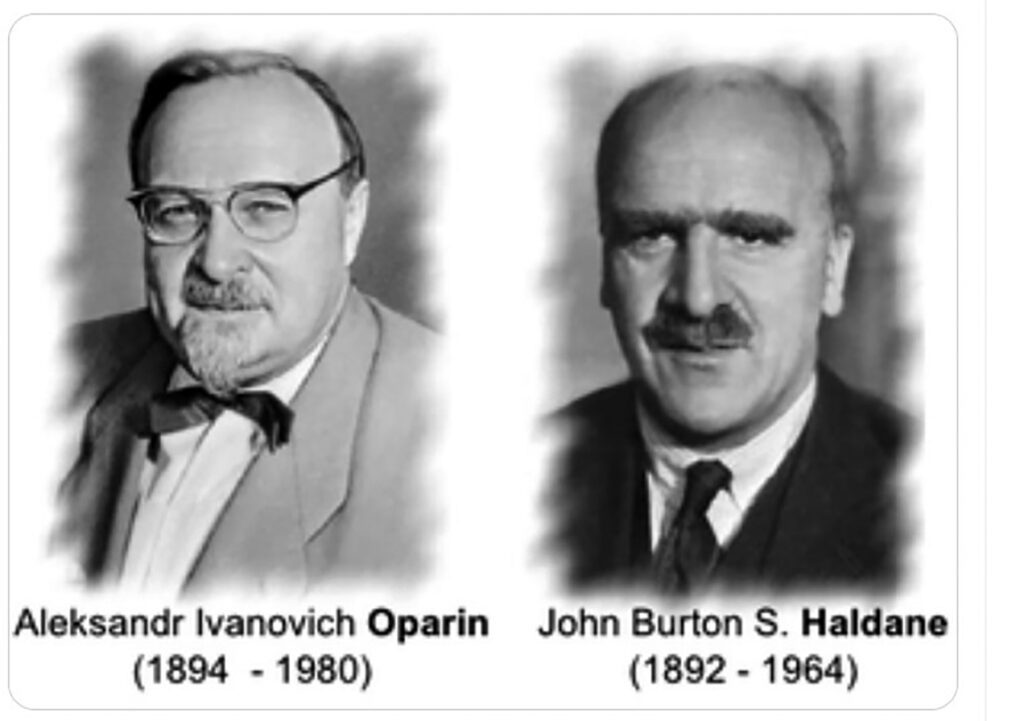
In the 1920s, Alexander Oparin and J B S Haldane proposed that organic molecules on the primitive Earth could accumulate and organise into increasingly complex structures. Oparin’s coacervate hypothesis suggested that droplets formed from organic substances might have provided a primitive form of compartmentalisation—a possible bridge between chemistry and biology.
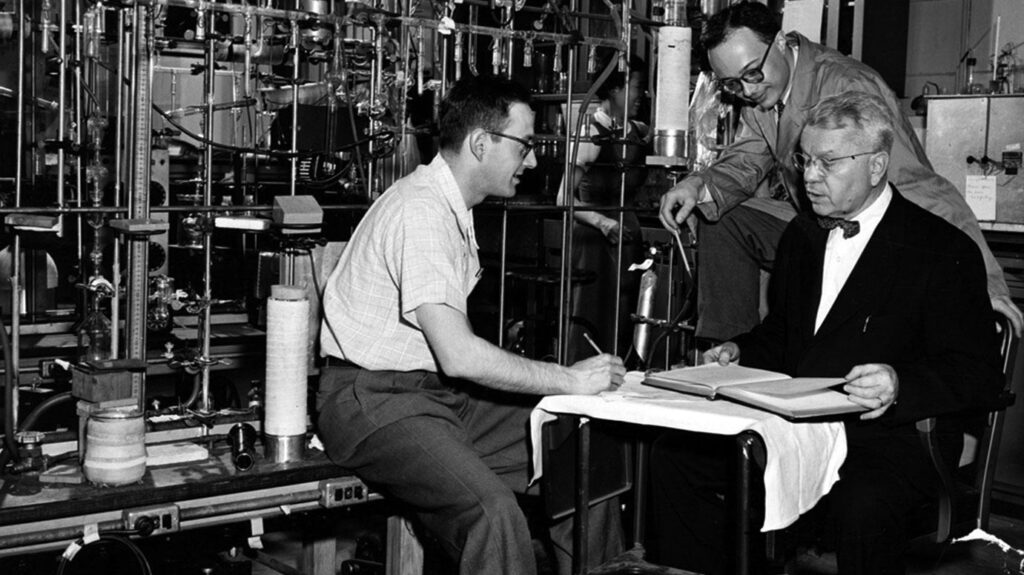
Image Courtesy: University of Chicago Archives
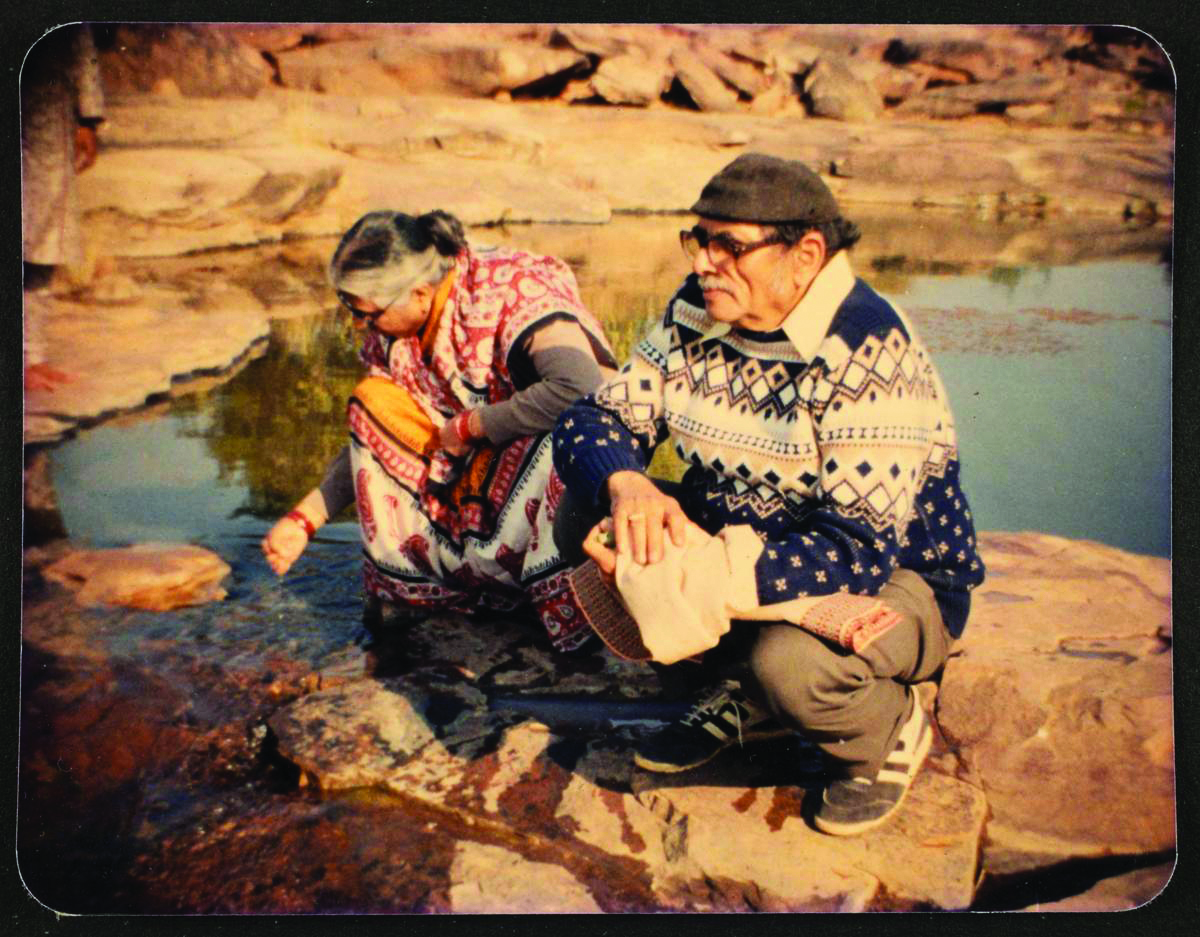
Against this intellectual backdrop, two Indian chemists, Krishna Bahadur and S Ranganayaki of the University of Allahabad, embarked on an unusual and ambitious series of experiments in the 1950s and 1960s. Their question was deceptively simple: could life-like structures emerge directly from a mixture of relatively simple chemicals?
Their experiments used compounds including paraformaldehyde, ferric salts, potassium nitrate, ammonium phosphate, molybdenum compounds and sodium chloride in water. They exposed the mixtures to sunlight or artificial light for extended periods. The researchers reported the formation of spherical microscopic particles and called them ‘Jeewanu’, derived from the Sanskrit expression for ‘particles of life’.
Bahadur and Ranganayaki went much further. They reported that the particles could grow and divide, and claimed evidence for metabolic activity, including the formation of amino acids and nitrogen fixation. If these observations could be established, they would represent a remarkable demonstration of life-like behaviour emerging from relatively simple chemistry.
The claims, however, remained controversial and largely disappeared from mainstream origin-of-life research. A major problem was reproducibility. The original experimental procedures were not documented with enough detail to make independent replication straightforward, and later assessments questioned whether the observations were sufficient to support the extraordinary biological claims. Importantly, the scepticism was not necessarily the result of systematic modern replication and refutation of the experiments. Much of the earlier criticism rested on interpretations of the published work rather than on a complete recreation of the experimental system. That left an intriguing scientific loose end.
BRINGING JEEWANU BACK TO THE LABORATORY
More than half-a-century later, researchers at the National Centre for Biological Sciences (NCBS), Bengaluru, together with collaborators, began revisiting the Jeewanu experiments using modern microscopy and analytical chemistry. The objective was not to prove Bahadur and Ranganayaki right, but to ask a more fundamental question: What actually happens when this chemistry is recreated under controlled laboratory conditions?
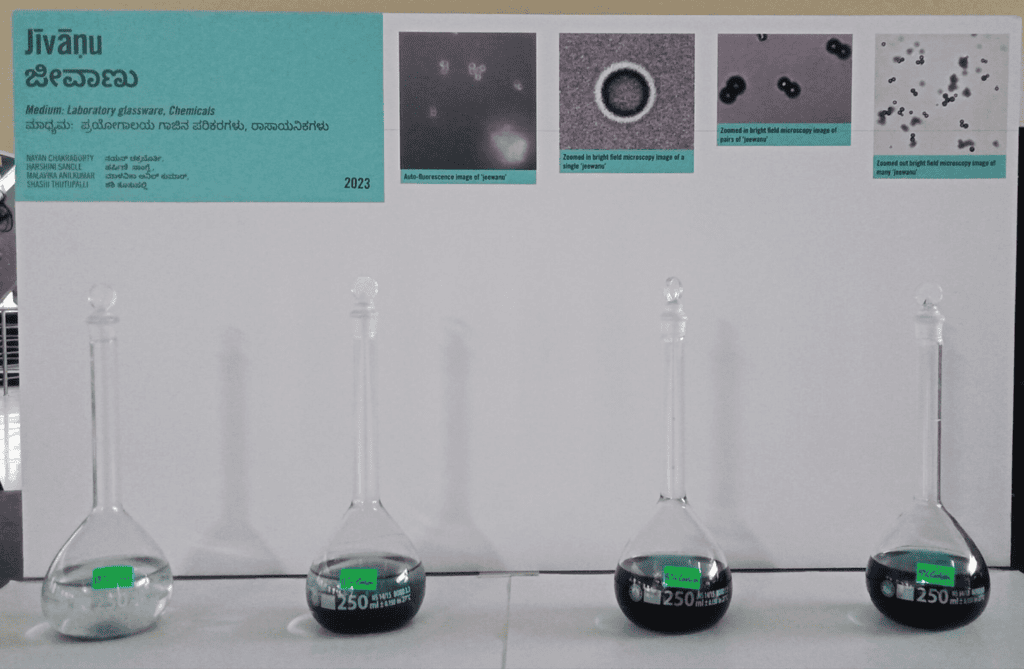
Image Courtesy: Japita Ghosh
The first challenge was to recover the experimental recipe. Guided by the original work and painstaking experimentation, Nayan Chakraborty and colleagues in Shashi Thutupalli’s research group succeeded in generating Jeewanu-like structures.
Their initial experiments also simplified the chemical recipe. Rather than retaining every compound used in the historical experiments, the researchers identified a smaller set of ingredients that could generate the structures. The information supplied for the study identifies formaldehyde, a molybdenum compound, an iron salt and diammonium hydrogen phosphate in water as the key starting chemicals. Light appears to accelerate the process rather than being absolutely indispensable.
This is important because origin-of-life research has often faced a conceptual divide. One branch of research focuses on how simple molecules such as amino acids, sugars and nucleotides could have formed on the early Earth. Another constructs protocells using sophisticated biological molecules such as polymers, lipids or nucleic acids.
Between these two approaches lies the hardest question: Can a cell-like, chemically active system organise itself from a relatively simple chemical mixture without already possessing the molecular machinery of life? The Jeewanu experiments offer a way of exploring precisely that gap.
WHAT IS A PROTOCELL?
A modern protocell is not necessarily alive in the full biological sense. Rather, it is a chemical system that reproduces some of the fundamental characteristics associated with living cells.
A genuine protocell would need some form of compartmentalisation. It would need to maintain a chemical environment distinct from its surroundings, exchange selected substances with that environment, carry out chemical reactions and, ideally, grow and reproduce.
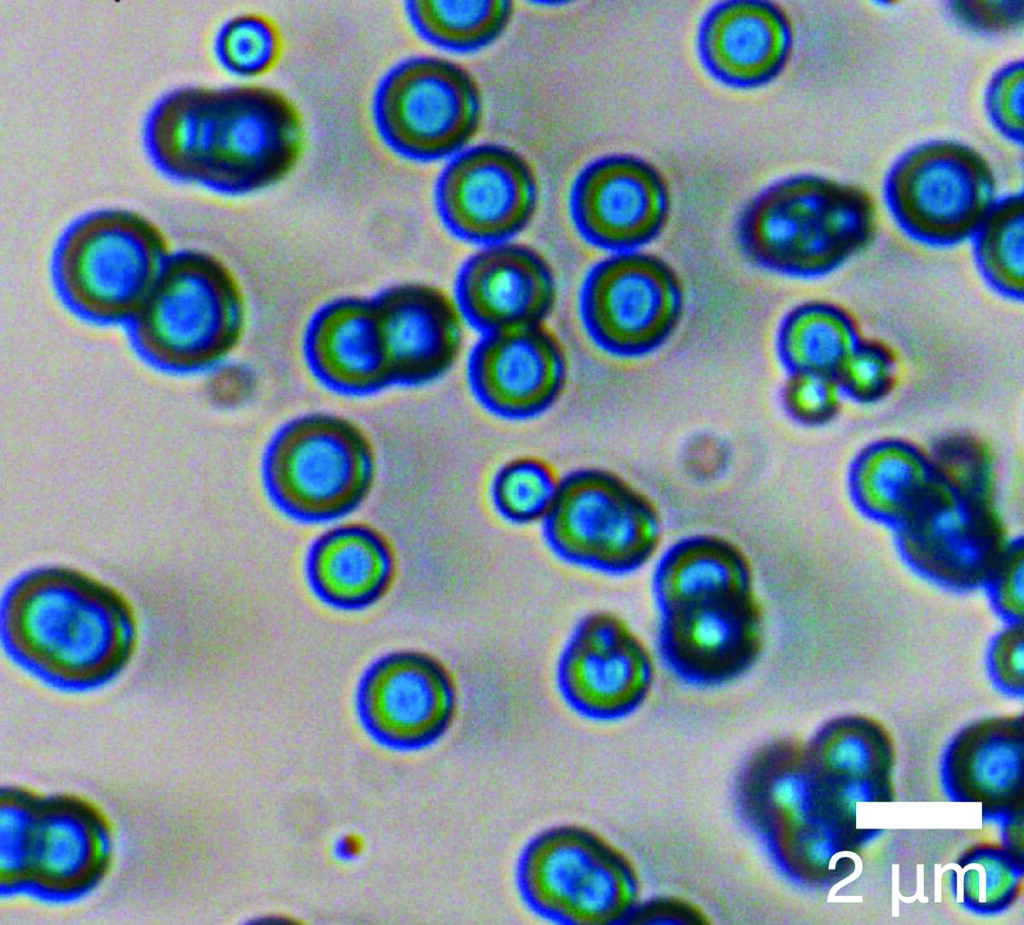
The recreated Jeewanu-like structures therefore become interesting not simply because they are spherical. A sphere seen under a microscope is not automatically a primitive cell. It could just as easily be a chemical precipitate.
The critical questions are more demanding: What are these structures made of? Do they have boundaries? Are those boundaries permeable? Can chemicals enter and leave? Do chemical reactions occur within them? Can they grow? And can their internal organisation be transmitted to newly formed structures?
These distinctions matter because the history of origin-of-life research includes structures that look biological without necessarily being biological.
GROWTH IS NOT YET REPRODUCTION
Modern research has produced an important correction to the historical narrative. The earlier Allahabad work interpreted certain microscopic images as evidence that Jeewanu particles could grow and divide by budding. In the Bengaluru experiments, researchers have observed growth, but the evidence so far does not establish budding or division in the conventional biological sense.
At higher particle densities, growing structures can come into contact and form complex shapes that resemble structures previously interpreted as budding. This raises the possibility that at least some of the historical observations may have been misinterpreted.
But another possibility remains open: The original researchers may have encountered conditions under which a more reproduction-like process occurred but which have not yet been recreated.
That distinction illustrates how science progresses. A celebrated historical claim need not be accepted or rejected outright. It can be taken back to the laboratory, subjected to better instruments and tested against more rigorous criteria.
Chemistry begins to look biological
Perhaps the most intriguing part of the modern investigation concerns metabolism. Bahadur used paper chromatography to report amino acid formation. Modern mass spectrometry provides far greater sensitivity and molecular specificity. Preliminary measurements from the Bengaluru team have indicated signatures consistent with amino acids and other small molecules.
These observations are potentially important, but they require further confirmation. Detecting molecular signatures is not the same as demonstrating a complete metabolic system. The next step is to establish exactly which compounds are produced, in what quantities, and through which chemical pathways.
A BOUNDARY BETWEEN CHEMISTRY AND BIOLOGY
One of the deepest questions concerns the nature of the particles themselves. For a structure to function as a protocell, it must have some mechanism of compartmentalisation. Not every microscopic sphere has a membrane, and not every hollow-looking structure is capable of regulating molecular exchange.
The researchers are therefore investigating the composition and physical properties of the Jeewanu-like particles to determine whether they possess a genuine permeable boundary. This is where the distinction between a chemical curiosity and a protocell becomes decisive.
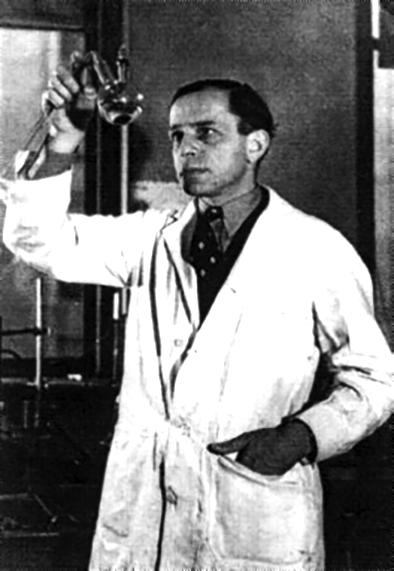
Image Courtesy: Authors
A precipitate may form spontaneously, but it does not necessarily maintain an internal chemical environment. A membrane-bound vesicle can, but it requires suitable molecules. A protocell that forms its own boundary while simultaneously generating organic compounds and changing over time would represent something much more significant.
The ultimate goal is not to find an object that merely looks alive. It is to understand how several properties associated with life—organisation, chemical transformation, compartmentalisation, growth and reproduction—could have emerged together.
AN ECHO FROM THE NATURAL WORLD
Recently, marine researchers uncovered molybdenum-rich, hollow microspheres within Indo-Pacific sponges, a phenomenon that had not been previously elucidated. These organic formations resemble artificial protocells: They have similar shell-like structures and a composition consisting primarily of molybdenum, carbon, oxygen, and phosphorus. The investigators also detected yellow microstructures throughout their tests, corresponding to the colour polymorphisms identified in natural systems. Based on these findings, it’s possible that protocell-like organisation is more of a natural occurrence than a mere laboratory curiosity. If so, the early Earth may have provided many opportunities for chemistry to experiment with organisation.
FROM JEEWANU TO THE SEARCH FOR LIFE BEYOND EARTH
The significance of the Jeewanu story extends beyond rehabilitating an overlooked Indian scientific contribution. It challenges a deeply rooted assumption about the complexity required before chemistry can begin to display life-like behaviour.
If relatively simple chemical mixtures can spontaneously organise into compartments, generate new molecules, undergo growth and produce structures with some degree of inheritance, then the boundary between chemistry and biology becomes less sharply defined.
This also has implications for the search for life elsewhere in the Universe. Current searches for extraterrestrial life often focus on familiar biological signatures—complex organic molecules, atmospheric gases or structures that resemble terrestrial organisms. But if life can emerge through a gradual continuum from chemistry to organisation, the earliest stages may leave signatures very different from those of mature biology.
Ocean worlds, icy moons and planets beyond our Solar System could therefore harbour chemical systems that are not fully alive but are nevertheless moving along the pathway towards life.
REDISCOVERING AN INDIAN SCIENTIFIC INTUITION
There is also a historical lesson here. Krishna Bahadur and S Ranganayaki worked at a time when the tools available to investigate microscopic chemical systems were far more limited than those available today. Their claims were ambitious, and some remain unconfirmed. Modern science should neither romanticise them nor dismiss them simply because they date back decades.
What deserves recognition is the scientific intuition behind the question. They asked whether relatively simple chemistry could organise itself into structures with life-like characteristics. More than six decades later, sophisticated microscopy, isotope tracing, mass spectrometry, and modern analytical chemistry allow scientists to ask the same question with far greater precision.
The emerging evidence does not mean that Jeewanu has been proven to be ‘life’. Nor does it establish that Bahadur and Ranganayaki were correct in all their original claims. Modern investigations distinguish between what has been reproduced, what remains preliminary, and what has not yet been demonstrated.
The origin of life may not have been a miraculous leap from dead matter to a fully formed cell. It may have been a gradual accumulation of chemical capabilities—first molecules, then compartments, then networks of reactions, then growth, heredity and eventually Darwinian evolution. The Jeewanu story brings us back to that beginning.
Perhaps the most profound lesson is that the first chapter of biology may have been written not in DNA, but in the language of elementary chemistry. And in returning to a forgotten experiment from Allahabad, modern science may be rediscovering one possible pathway by which that language began to resemble life.
*Dr Jyothish Madambikattil Sasi is an assistant professor (RIC) at Garden City University, Bengaluru. He can be reached at jyothishmadambi@gmail.com. Dr Biju Dharmapalan is the Dean-Academic Affairs, Garden City University, Bengaluru, and an adjunct faculty at the National Institute of Advanced Studies, Bengaluru. He can be reached at bijudharmapalan@gmail.com.