


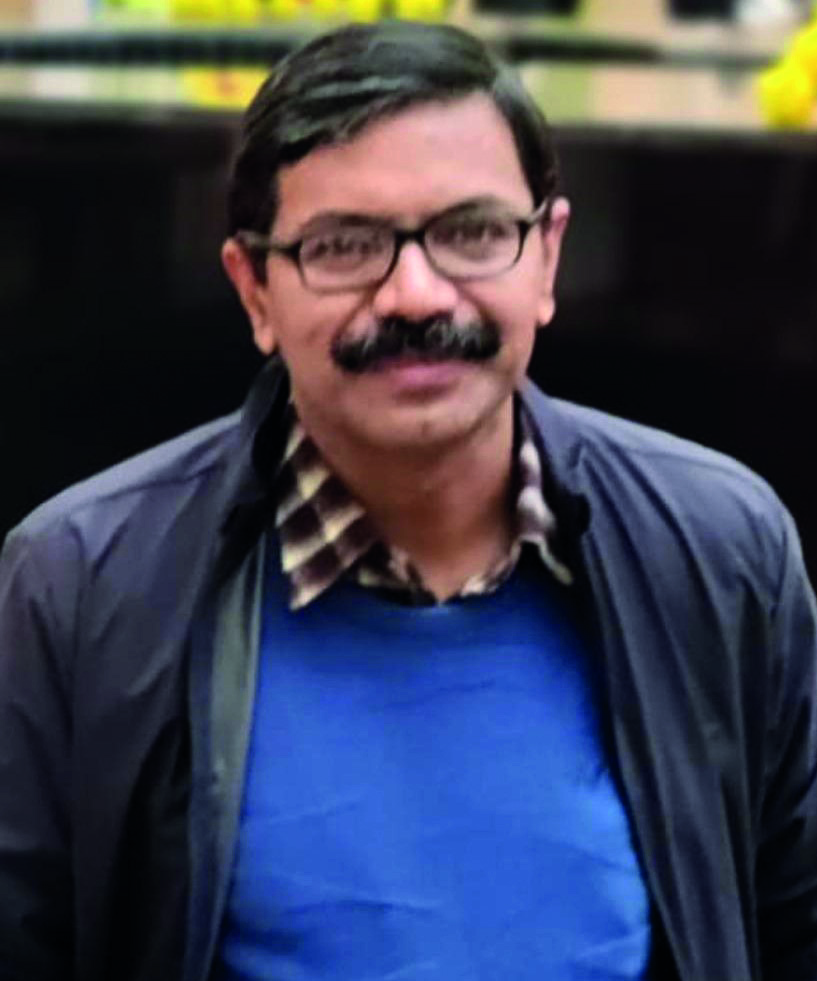
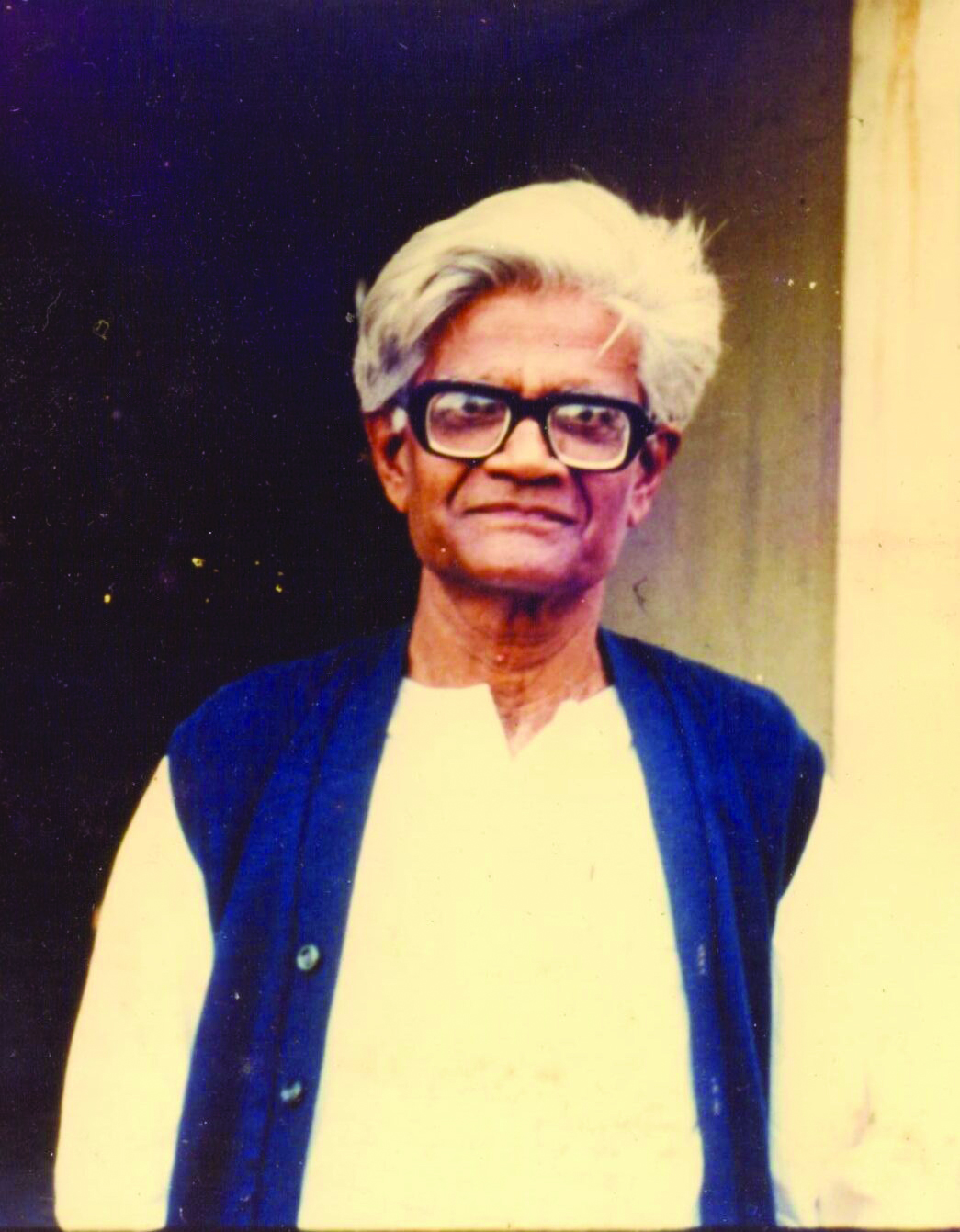
Image Courtesy: Twitter
Scientific advancements are fundamentally a collective endeavour. Every generation of scientists builds upon the discoveries and insights of those who came before, gradually extending the boundaries of knowledge across different branches of science and, more broadly, human understanding. Occasionally, however, an individual’s contribution proves so profound, far-reaching, and influential that it becomes permanently associated with its creator. There are several such examples, including the Laplace equation, named after the eminent French mathematician and physicist Marquis de Laplace, which is widely used in physics, mathematics, and engineering. One such equation with a similarly ubiquitous presence is the Raychaudhuri equation, named after the distinguished Indian physicist Prof Amal Kumar Raychaudhuri (hereafter, AKR). Although the equation was originally formulated in the context of theoretical cosmology, it has since found applications in a wide variety of fields, many of which were unimaginable at the time of its inception. We shall discuss the equation and its immense scientific influence shortly, but it is worthwhile first to acquaint ourselves with the life and journey of the man behind this celebrated contribution to science.
EARLY LIFE AND CAREER
AKR was born on 14 September 1923 in Barisal (a town that is now in Bangladesh). H is father, Suresh Chandra Raychaudhuri, was a famous mathematics teacher, while his mother, Surabala, was a homemaker. During his childhood, the Raychaudhuri family relocated to Calcutta due to personal reasons, where AKR spent most of his formative years. From an early age, AKR displayed an exceptional interest in mathematics and took great pleasure in solving the mathematical problems on his own, revealing the intellectual curiosity that would later shape his distinguished career in physics. From an early age, AKR displayed exceptional mathematical talent. During his school years, he often discovered solutions to mathematical problems that were more elegant than those presented by his teachers. On one occasion, his novel solution to a mathematics examination problem so impressed the headmaster that it was published in the school magazine with due credit to him, reflecting his remarkable originality and deep affinity for mathematics.
AKR studied at Tirthapati Institution and later at Hindu School, Calcutta. He graduated from the prestigious Presidency College, Calcutta, in 1942 and earned his MSc in Physics from the University of Calcutta in 1944 with outstanding distinction.
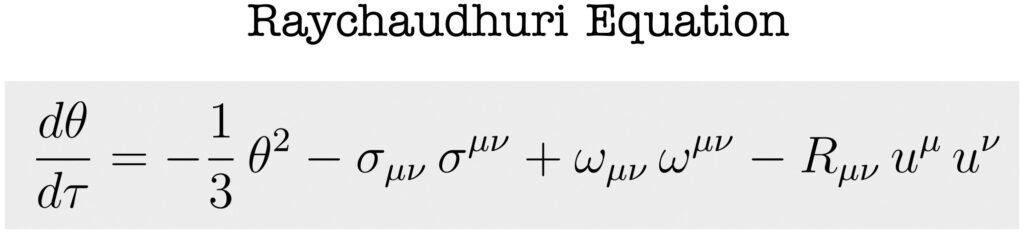
He began his research career at the Indian Association for the Cultivation of Science (IACS) in 1945. His early years were challenging, as he was assigned experimental research despite his strong inclination toward theoretical physics. Although these efforts yielded limited success, he independently mastered differential geometry and Einstein’s general relativity, laying the foundation for his future scientific achievements.
After a brief teaching stint at Ashutosh College, he re-joined IACS as a Research Assistant in 1952. Despite his deep interest in general relativity, he was required to work on electronic energy bands in metals and published two papers in that field to retain his position. It was under these restrictive circumstances that he made his landmark discovery—the equation now universally known as the Raychaudhuri equation.
AKR’s pursuit of academic excellence was also inspired by his father’s cousin, Hem Chandra Raychaudhuri, the distinguished Professor of History at the University of Calcutta.
THE RAYCHAUDHURI EQUATION
Raychaudhuri’s work profoundly influenced our understanding of the Universe and subsequently provided the essential framework for Roger Penrose and Stephen Hawking to formulate their celebrated singularity theorems in general relativity. Although the equation was derived in 1953, his paper, ‘Relativistic Cosmology I’, faced considerable delays and was finally published in Physical Review in 1955. Later, he submitted his doctoral thesis for the DSc degree, which was awarded in 1961. The external examiner of his thesis was Prof John A Wheeler (a well-known general relativist who popularised the term ‘black hole’ and coined the term ‘wormhole’), who highly appreciated his work.
In the early 1950s, Raychaudhuri began examining this problem by asking a fundamental question: Are singularities physically attainable? Within general relativity, gravity is interpreted as the curvature of spacetime, whereas a singularity represents a region where spacetime itself ceases to be well defined.
A remarkable feature of Raychaudhuri’s work was that he derived his equation without imposing symmetry assumptions such as homogeneity and isotropy. Instead, he incorporated the concepts of shear and vorticity, inspired by Gödel’s cosmological ideas. In cosmology, matter is treated as a fluid whose motion is characterised by three key quantities: Isotropic expansion, shear, and rotation (or vorticity). Although the complete derivation of the equations governing expansion, shear, and rotation involves substantial mathematical sophistication, their physical implications are profound. It is worth mentioning that the term ‘Raychaudhuri Equation’ for the scalar of expansion first appeared in a paper by Otto Heckmann and Engelbert Schücking in Gravitation: An Introduction to Current Research (New York, 1962).
Building upon Raychaudhuri’s ideas of geodesic focusing and spacetime evolution, Hawking, Penrose, and Geroch in the late 1960s formulated the celebrated singularity theorems and, in fact, the initial point of the discussion on singularity theorems was the Raychaudhuri equation for expansion scalar. Because this equation is fundamentally geometric in nature, its applications extend far beyond cosmology and it has found relevance in diverse areas of physics, including the study of kinematics and deformations in continuous media, strings, membranes and even the biological cells.
OTHER SEMINAL WORKS
In addition to his seminal contributions and sustained interest in spacetime singularities, AKR worked extensively on gravitational theories, particularly the scalar–tensor (Brans–Dicke) theory, which permits a varying gravitational constant in contrast to universal gravitational constant by Newton. He published several influential papers on these topics in leading international journals. AKR also explored singularity-free cosmological models by investigating scenarios that evade the assumptions of the singularity theorems. In collaboration with Prof Naresh Dadhich, he demonstrated the existence of a singularity-free spherically symmetric cosmological model.

Remarkably, these profound contributions emerged outside the major research hubs of the time and without the support of large scientific collaborations. Between 1951 and 1961, AKR published 15 single-authored papers, including his landmark 1955 paper, covering diverse topics in general relativity and cosmology such as Volkoff’s massive sphere, radiation spheres in the Einstein universe, condensation in expanding cosmological models, perturbed cosmological models, relativistic and Newtonian cosmology, static electromagnetic fields in general relativity, and the general derivation of two important exact solutions. During the same period, he also published papers in quantum chemistry, solid-state physics, and band structure.
Much of his later work was carried out with his PhD students. He made significant contributions to alternative theories of gravity, especially the Einstein–Cartan and Brans–Dicke theories, while also working on astrophysical problems, including temperature-dependent gravitational constants, tachyons and gravitation, charged dust distributions, domain walls, cosmic strings, cosmological models, and entropy. In the final years of his active research career, AKR returned to the Raychaudhuri equation, publishing several papers that further enriched this foundational area of gravitational physics.
TEACHING, BOOKS, AWARDS AND RECOGNITIONS
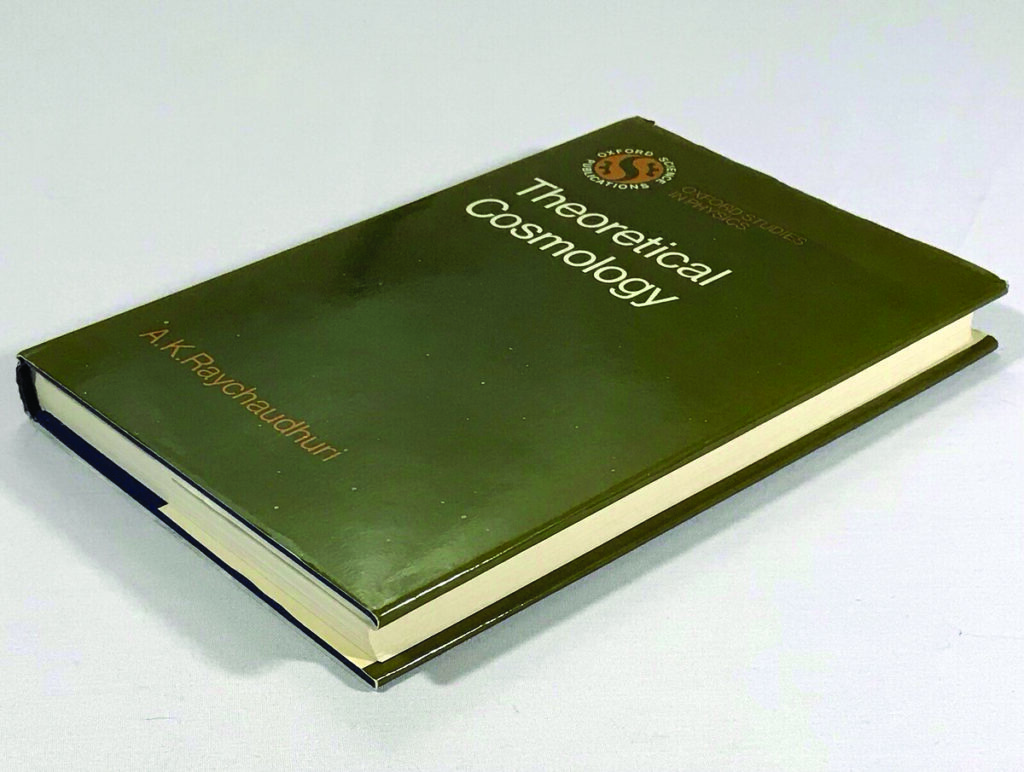
AKR was an accomplished teacher who joined Presidency College (now Presidency University), Calcutta, as Professor of Physics in 1961 and served there until his retirement in 1986. The institution has long attracted some of the brightest students from West Bengal, and many physicists and academicians in India and abroad benefited from his inspiring teaching. His readiness to answer students’ queries was remarkable. During these nearly three decades, his academic career flourished. Besides publishing numerous influential research papers, AKR authored five books, including Theoretical Cosmology (Oxford University Press), as well as Uchchatara Gatibidya, a Bengali text on higher mechanics.
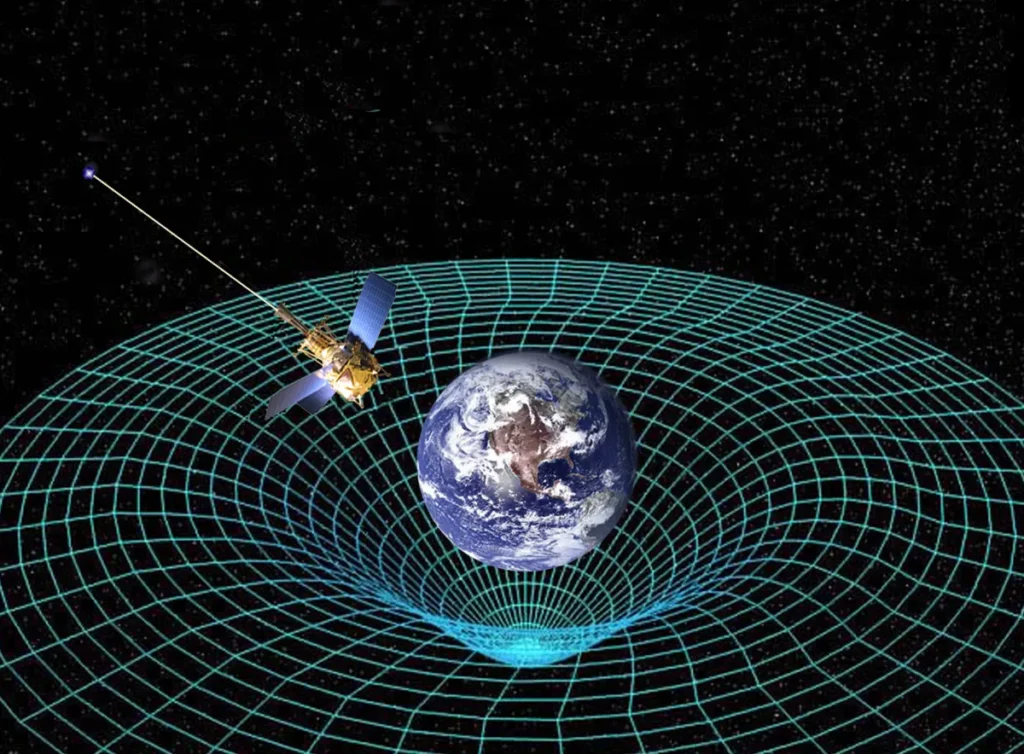
Image Courtesy: NASA
AKR served the International Committee on General Relativity and Gravitation (ICGRG) as an elected member from 1974 to 1983. Although he seldom travelled abroad, he spent a year at the University of Maryland. He was elected as a Fellow of the Indian Academy of Sciences in 1982 and the Indian National Science Academy (INSA) in 1987. AKR also received honorary doctorates from various universities in West Bengal. He served as an INSA Senior Scientist (1988–1991), a UGC Emeritus Fellow (1986–1988), and an Honorary Fellow of IUCAA, Pune, where he actively contributed to its academic programmes from its inception in 1988. He was closely associated with Prof Jayant Vishnu Narlikar, the founding Director of IUCAA, and Prof Naresh Dadhich, who later succeeded him. After retirement, AKR remained associated with the Relativity and Cosmology Centre at Jadhavpur University, Kolkata, and continued his research until the end of his life; his final research paper appeared in 2004.
As part of the World Year of Physics celebrations in 2005, Vigyan Prasar and IUCAA jointly produced a documentary highlighting the life and scientific contributions of Prof A K Raychaudhuri and another eminent Indian relativist, Prof P C Vaidya, whose celebrated Vaidya spacetime remains a landmark solution of Einstein’s field equations describing radiating gravitating systems.
Most of AKR’s research was carried out independently. Although he worked in diverse areas of physics, his enduring scientific legacy lies in general relativity and cosmology, particularly in understanding the large-scale structure and evolution of the Universe.
HIS LEGACY
Prof Raychaudhuri led a remarkably simple and peaceful life. He had a deep appreciation for music, particularly Rabindra Sangeet. In 1958, AKR married Nomita Sen, and together they had four children (two daughters and two sons). Despite his immense achievements, he remained an exemplary teacher and never sought honours, awards, or opportunities abroad. He passed away on 18 June 2005.
The emergence of the Raychaudhuri equation stands as one of the landmark achievements in theoretical relativity of the twentieth century. In 1955, the very year of Einstein’s death, Prof Raychaudhuri, while investigating fundamental cosmological questions, introduced the equation that now bears his name. Although general relativity had already undergone significant development by then, the problem of spacetime singularities remained unresolved, and AKR’s work may provide new insights into this topic in the future. The scope of the Raychaudhuri equation remains vast and continues to inspire research in many branches of theoretical physics. However, a universally accepted quantum (version of) Raychaudhuri equation is still awaited.
AKR’s unwavering determination, intellectual courage, and lifelong devotion to science firmly place him among the great Indian scientific legends, alongside figures such as Sir C V Raman, Prof Satyendra Nath Bose, Meghnad Saha, Homi J Bhabha and P C Vaidya, to name a few.
Note: The author gratefully acknowledges the valuable insights gained from the published articles of the late Prof Jayant V Narlikar and the late Prof Naresh Dadhich, as well as the articles and lectures of Prof Sayan Kar, which were consulted during the preparation of this article.
*Dr Hemwati Nandan is a Professor of Physics and Director, Research & Development Cell, HNBGU, Srinagar-Garhwal, Uttarakhand. He can be reached at hnandan@iucaa. associates.iucaa.in. The author has carried out extensive research on the Raychaudhuri equation and has published numerous papers exploring its applications and implications.