


Image Courtesy: Glavkosmos
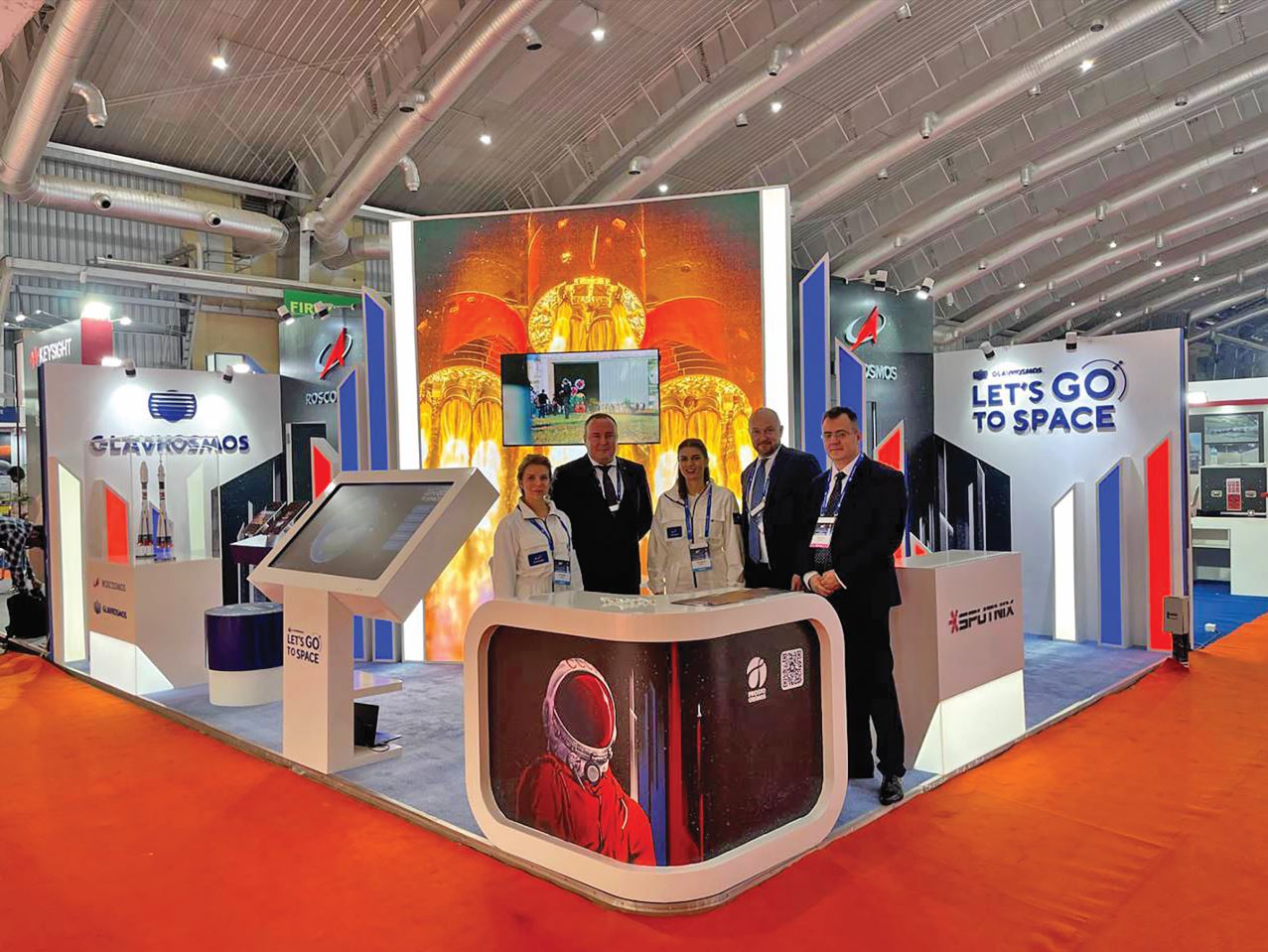
The future of India’s space programme is no longer confined to launch pads, mission control centres and government laboratories. It is increasingly taking shape in private companies, start-up incubators, university laboratories and the drawing boards of a new generation of entrepreneurs. This transformation was on full display at the 9th Bengaluru Space Expo (BSX 2026), held September 7-9, where leaders, innovators, entrepreneurs, policymakers and space scientists from across the world gathered to discuss the future of the global space industry.
Inaugurating the event, ISRO Chairman Dr V Narayanan offered a clear picture of both the achievements and the challenges confronting India’s space programme. His message was significant: India has built a formidable space capability, but the scale of the country’s future requirements demands an ecosystem far larger than ISRO alone. India’s space programme is now 64-65 years old, Narayanan noted, and currently has 56 operational space assets serving the country. But India’s requirements are expanding rapidly. Over the next six to seven years, the country could need 200-300 satellites. Meeting such a requirement, he stressed, cannot be ISRO’s responsibility alone. The answer lies in building a much broader partnership among ISRO, private industry, start-ups and academia. Perhaps one of the most important messages from the inaugural session was Narayanan’s clarification that greater private-sector participation should not be confused with the privatisation of ISRO. Responding to concerns raised by employee associations about the transfer of manufacturing and operational activities to private entities, he acknowledged that the concerns were genuine and promised appropriate clarification. But he firmly reiterated that ISRO remains a government organisation. The objective, therefore, is not to dismantle the public space programme but to enlarge the ecosystem around it. This distinction is crucial.
For decades, India’s space programme was largely identified with ISRO. The organisation had to design satellites, develop launch vehicles, manufacture components, conduct launches and operate missions. That model served India remarkably well during the formative decades of the space programme. But the requirements of a modern space economy are vastly different. India now needs more satellites, more launches, faster innovation, greater manufacturing capacity and globally competitive space services. A single organisation, however capable, cannot carry the entire burden. The transformation underway is therefore less about replacing ISRO and more about multiplying India’s capacity through partnerships.
FROM ONE START-UP TO HUNDREDS
The scale of change in India’s private space sector is remarkable. According to Narayanan, India had essentially one space start-up in 2014. Today, the country has more than 450 space start-ups, with private investment reaching around Rs 1,300 crore in 2026 alone. This is perhaps one of the clearest indicators of the changing character of India’s space programme. The reforms introduced around six years ago were designed to encourage private participation and enable companies and start-ups to enter the space sector with institutional support. The intention was to create an environment in which private players could innovate, invest and develop technologies while contributing to national objectives. The emergence of companies such as Skyroot Aerospace, which has developed a privately built Indian rocket capable of orbital launch, demonstrates what this new ecosystem can achieve. The emerging model involves several institutions playing complementary roles: ISRO providing technological expertise and infrastructure, IN-SPACe facilitating and enabling private participation, NewSpace India Limited (NSIL) supporting commercialisation, and private companies bringing investment, innovation and entrepreneurial agility. This is not a simple transfer of responsibility. It is the creation of a networked national capability.
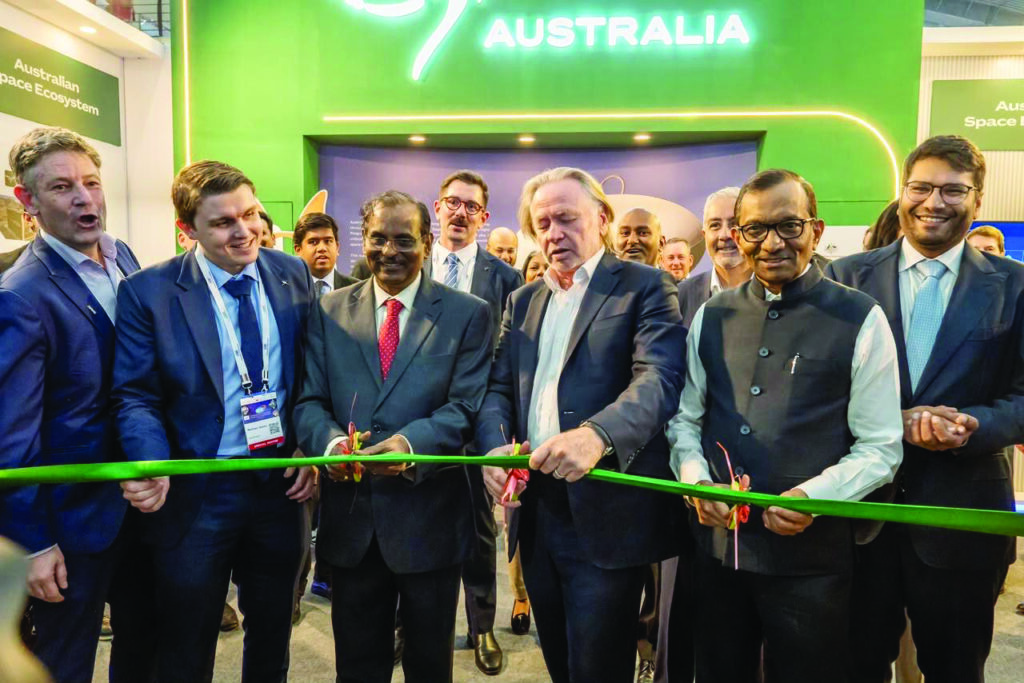
Image Courtesy: Twitter
THE HIDDEN INDUSTRIAL BACKBONE
An equally revealing figure presented at BSX concerns the relationship between ISRO and the Indian industry. Nearly 80 per cent of the budget associated with PSLV, GSLV and LVM-3 launches is invested in Indian industries, with around 450 companies working with ISRO. This reveals something that is often overlooked. ISRO may be the visible face of India’s space programme, but behind every successful launch lies a vast industrial network involving manufacturers, component suppliers, electronics companies, engineering firms, material specialists and technology providers. The private sector, therefore, is not an entirely new participant in India’s space story. It has been an important industrial partner for decades. What is changing now is the depth and breadth of its participation. Private companies are moving beyond supplying components to developing complete satellites, launch vehicles, propulsion systems, communication technologies, Earth-observation platforms and downstream applications.
50 LAUNCHES A YEAR
The next challenge is scale. India is already moving towards a much higher launch frequency, with missions taking place almost every month. But Narayanan pointed out that the country’s requirement is far greater, around 50 launches annually. That is an enormous leap. Achieving 50 launches a year would require not merely more rockets but an entirely new industrial architecture: larger manufacturing capacity, multiple launch providers, streamlined regulation, reliable supply chains, skilled manpower, testing facilities, launch infrastructure and a vibrant commercial market. Private participation is indispensable here. The question is no longer whether India can build a rocket. The question is whether India can build enough rockets, satellites and associated technologies quickly, economically and reliably to meet a rapidly expanding demand.
FROM SPACE EXPLORATION TO SPACE ECONOMY
The Bengaluru Space Expo makes this transition visible. The exhibition floor brings together established aerospace companies, emerging start-ups, research institutions and international organisations. Their technologies represent a space sector that is becoming increasingly diverse. The future is not simply about launching satellites. It is about what those satellites can do. Earth observation can transform agriculture by providing information about crop health, soil moisture and water availability. Satellite communications can connect remote communities. Navigation systems can support transport and logistics. Space-based data can assist disaster management, climate monitoring, urban planning and infrastructure development. Artificial intelligence is adding another dimension by allowing vast quantities of satellite data to be processed rapidly and converted into useful information. The emerging space economy therefore extends far beyond the traditional boundaries of aerospace engineering. It touches agriculture, telecommunications, finance, insurance, disaster management, climate science, defence, transportation and everyday life.
BENGALURU’S NATURAL ADVANTAGE
There could hardly be a more appropriate venue for this conversation than Bengaluru. The city has been at the heart of India’s scientific and technological development for decades. Its concentration of space institutions, aerospace companies, technology firms, research laboratories, universities and start-ups gives it a unique advantage. Bengaluru is now witnessing the convergence of two traditions that have historically operated somewhat separately: India’s public-sector scientific establishment and its rapidly expanding private innovation economy. BSX represents this convergence. It also offers an opportunity for India to engage with the international space industry. Countries and organisations from across the world are participating in discussions on space sustainability, commercialisation, emerging technologies, human spaceflight and international cooperation. Space is rapidly becoming both a domain of cooperation and competition. India’s growing capabilities create opportunities not only to launch its own satellites but also to participate more deeply in the global space value chain.
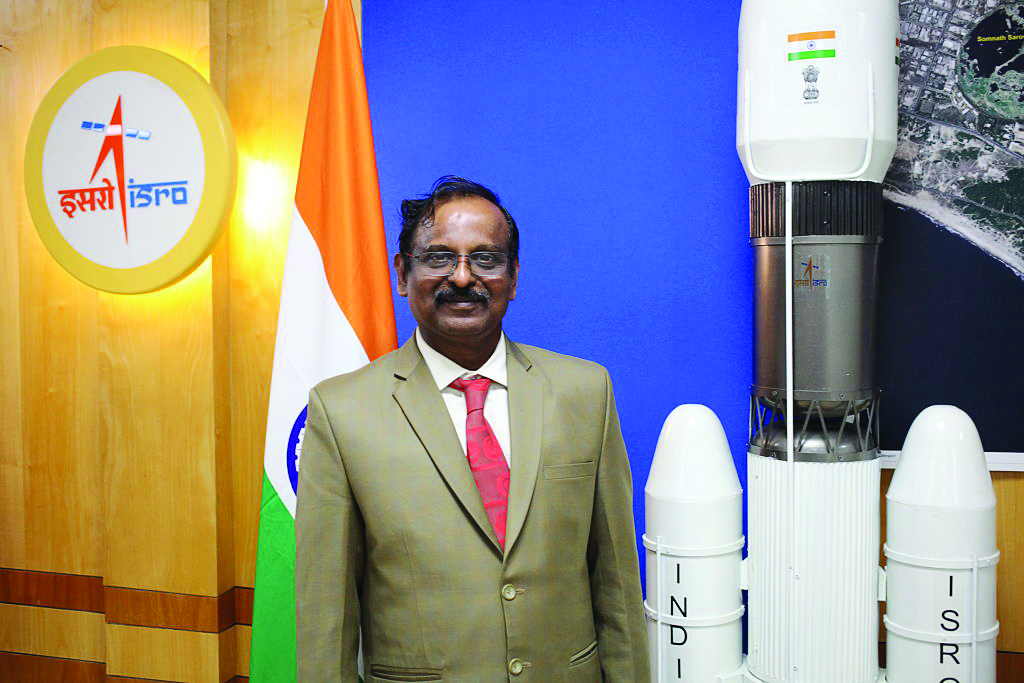
Image Courtesy: PIB
THE MOST IMPORTANT INVESTMENT IS IN PEOPLE
Yet beneath the rockets, satellites and billion-rupee investments lies another requirement that may ultimately determine India’s success: human capital. The next generation of the space industry will require engineers and scientists, but it will also require experts in artificial intelligence, data science, electronics, robotics, advanced materials, manufacturing, software and entrepreneurship. Universities therefore cannot remain disconnected from the rapidly evolving space ecosystem. Academia must become an active partner, not merely a supplier of graduates. Students should have opportunities to work on real space problems, interact with scientists and entrepreneurs, participate in satellite and data projects and understand how scientific knowledge is transformed into technology and societal applications. If the first phase of India’s space programme was built largely by scientists and engineers working within national institutions, the next phase will require an entire generation of young innovators working across institutional boundaries.
A NEW CHAPTER
The Bengaluru Space Expo is therefore much more than an exhibition of rockets and satellites. It represents a fundamental transition in India’s space journey. The first era was about building capability. The next is about building scale. And scale requires an ecosystem. ISRO will continue to remain the anchor of India’s national space programme. But around that anchor is emerging a much larger constellation of private companies, start-ups, universities, investors and international partners. The symbolism is powerful. India’s space programme began in an era when resources were scarce, and ambitions were necessarily modest. Scientists worked with limited infrastructure, built technologies largely from scratch and gradually demonstrated that India could become a spacefaring nation.
Today, the challenge is very different. India has demonstrated that it can reach the Moon, explore the Sun, operate sophisticated satellites and build powerful launch vehicles. The question before the country now is whether it can transform those capabilities into a large, globally competitive and socially relevant space economy. The target of 50 launches a year, the requirement for hundreds of satellites and the emergence of hundreds of start-ups indicate the scale of that ambition. And Bengaluru, once again, finds itself at the centre of India’s scientific transformation. The rockets may rise from India’s launch centres. The satellites may orbit hundreds of kilometres above the Earth. But the ideas, technologies, investments and partnerships that will define India’s next chapter in space are increasingly being created on the ground. India’s space journey is no longer the story of one organisation. It is becoming the story of an entire nation, and Bengaluru is helping write its next chapter.
*The writer is an Associate Professor (RIC) at Garden City University, Bengaluru. He can be reached at jyothishmadambi@gmail.com.