



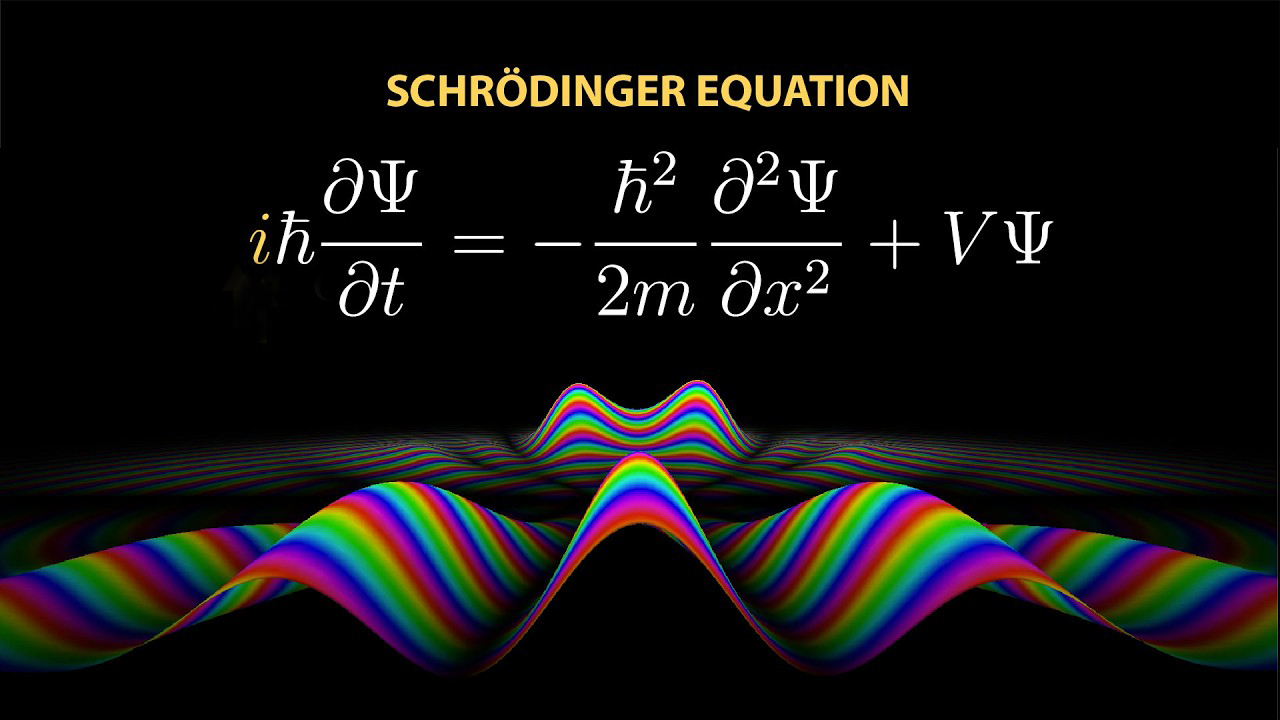
Beyond our daily life experiences, a fascinating world of tiny particles exists, governed by the laws other than classical physics to reveal the mysteries of nature at fundamental level. Almost a century ago, Austrian physicist Erwin Schrödinger, in 1926, formulated a differential equation, which recreates a novel language for nature at the bottommost dimension, named as wave mechanics and turns out to be a foundation for modern quantum mechanics. The differential wave equation, known as the Schrödinger wave equation, describes the motion of microscopic particles, and also variation in the motion of these particles in the presence of external influences.
The core of the Schrödinger wave equation is that it is the quantum counterpart to Newton’s second law defined in classical mechanics for macroscopic systems. The Schrödinger equation predicts evolution of the wave function corelated with quantum system similar to the trajectory prediction of a macroscopic system by Newton’s force equation as a function of time. Schrödinger established the correctness of the wave equation by applying it to the case of hydrogen atom by imposing certain boundary conditions and predicting many of its properties with precision. The wave mechanics thus paves the way to understand the motion or dynamics and the associated energy spectrum of atoms, molecules and any other quantum systems. The Schrödinger wave equation is now used extensively in chemistry and atomic, nuclear, solid-state and computational physics.
EMERGENCE OF QUANTUM NOTION
Classical mechanics, based on the laws of Newton and conservation of energy, was sufficient to explain all the observed phenomena of that time. Nevertheless, the evolution of the concept of wave mechanics is well connected with the experimental observations and consequently progression of different concepts/ theories to explain them. Continuous spectrum produced by a black body radiation is the foremost, which pronounces the thermal radiation and emission peak maxima depending on temperature. Further, attempts to calculate the emitted energy distribution from a blackbody using classical thoughts by Wilhelm Wien at long wavelengths and by Lord Rayleigh at short wavelengths were unsuccessful. Meanwhile, Rayleigh and Jeans were able to suggest proportionality relationship between the number of modes emitted and the square of frequency. In 1900, the German physicist Max Planck calculated agreeable formula for black body radiation in the entire range by proposing energy discreteness hypothesis that is the energy emitted in the form of quanta, which is the product of Planck’s constant and frequency of radiation. In 1905, Einstein extended Planck’s hypothesis to explain the photoelectric effect and this quantum explanation successfully accounted for the observed experimental results that earned Einstein the 1921 Nobel Prize in Physics. In 1913, Niels Bohr further proposed the quantum hypothesis that an electron can exist only in certain stationary, non-radiating states to explain detected hydrogen spectra. In these states, the angular momentum of the electron is a whole number multiple of a constant related to Planck’s constant, and the frequency of emission depends on the difference between the initial and final energy states. Nevertheless, Bohr atomic model falls short to predict fine structure in hydrogen atomic spectra.
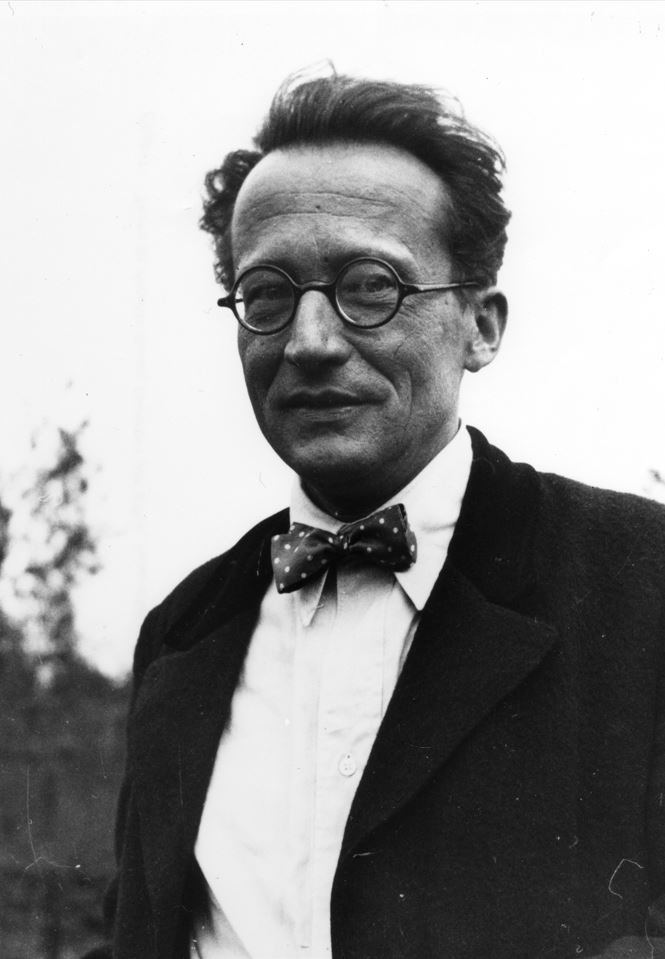
In 1924, De Broglie proposed a great unifying hypothesis of dual nature of matter displaying that particle can be realized as a wave depending upon its momentum. De Broglie’s hypothesis received experimental validation in 1927 conducted by Davisson and Germer. As wave motion of light can be swapped with the straight-line propagation when object dimension is larger than the wavelength, likewise, Schrödinger devised that at comparatively smaller wavelength a particle propagation can be given by wave equation. We will try to summarize some points from the Schrödinger’s historical papers, written one by one at different times, signifying budding of ideas leading to development of landmark theory and other closely related aspects in next sections. Although, Schrödinger wholeheartedly agreed with the remark that “When you began this work you had no idea that anything so clever would come out of it”.
SCHRÖDINGER’S SEMINAL WORK
In the first paper “Quantization as a Problem of Proper Value (eigen value)” Schrödinger considered the simple case of the non-relativistic unperturbed hydrogen atom. Schrödinger expanded the idea from the suggestive research work of M Louis de Broglie that particles of matter, e.g. electrons, also behave as waves, particularly, phase waves. Therefore, he proposed that an electron is continuous-vibrating wave instead of strictly localized particle orbiting around nucleus and defined a wave function which is real, single-valued and finite. Moreover, he applied the condition that wave function is continuously differentiable up to the second order and its integration in quadratic form over the whole coordinate space is stationary. Therefore, Bohr’s quantum conditions are replaced by variation problem and correlated with the wave function and total energy of the system. Thus, the obtained differential equation can lead to positive and negative values of energy, however, negative values of energy were excluded.
The second paper shows the general correspondence between the Hamilton- Jacobi differential equation of a mechanical problem and the wave equation. The paper clearly emphasizes on the denial of existence of phase of electronic motion inside the atom, secondly, non-occurrence of electron on any definite quantum path at definite time defined by quantum conditions, and thirdly, that quantum paths are manifold with reciprocity among them. The paper leads to conclude that classical mechanics approaches to wave mechanics in similar manner as geometric optics replaced by wave optics at smaller wavelengths. The connection between classical continuous waves and discrete quantum states was effectively explained with the help of broader mathematical theory and its applicability to Planck oscillators including degeneracy and the rotating rigid body.

Image Courtesy: CERN
In the next paper, Schrödinger developed the basic idea of transformation theory displaying mathematical equivalence between Heisenberg’s matrix formulation and wave formulation, which was used by Paul Dirac lately. Heisenberg provided systems of discrete matrices corresponding to the classical continuous variables representing transition probabilities and line intensities of spectra, which can be evaluated via wave formulation by writing differential equation and with boundary conditions. Therefore, the paper is in the line of establishing that wave mechanics and matrix mechanics are two different languages of realizing identical quantum phenomena.
In another paper of Schrödinger, approximation technique is successfully applied to the spectra of complex atomic systems and to perturbed systems in which splitting of spectral lines are observed by applying small electric field, known as Stark effect.
Schrödinger’s perception of defining wavefunction and writing differential wave equation by considering Hamiltonian of the system and imposing boundary conditions were proved to be revolutionary in shifting energy from classical to quantum. The wave function (initially assumed real but later accepted as a complex) squared value was well corelated with the probability of finding particle in space. It has also introduced how classical concepts of energy and momentum can be impeccably replaced by linear differential operators in wave mechanics. On applying wave function onto energy operator discrete eigen values can be obtained. Extremely simple example, which can be pictured easily, is a particle allowed to move freely inside a box. Classically that particle can have all the energies, however, its discreteness can be realized easily by writing a simple differential wave equation based on its total energy and then applying the boundary conditions determined by the dimension of the box. A very well familiar sinusoidal expression comes out to be its wave function with discrete eigen states. Therefore, particle can be in different energy states defined by its probability distribution. Moreover, Schrödinger has beautifully actualized that wave function is basically a group of waves that represents the particle and evolution of wave function over time is crucial for understanding particle transitions between stationary states, scattering, and dispersion.

Image Courtesy: Pixabay
In principle, Schrödinger’s wave mechanics has not only laid the foundation of quantum mechanics but also paved the way for the formulation of relativistic quantum mechanics and quantum field theory which ultimately leads to the framework what is known as the Standard Model in elementary particle physics. The Schrödinger equation is the basis of exotic science like semiconductor physics and nanotechnology. At nanoscale level, the notions of classical physics break down and materials behave as per the principles of quantum mechanics (or physics).
RELATIVISTIC QUANTUM PHYSICS AND BEYOND
One might be curious to ask a question that what happens when a particle moves with a nearly equal speed of light which is the maximum possible achievable as per the second postulate of special relativity proposed by Albert Einstein. In view of the incompatibleness of quantum mechanics with special relativity and to precisely describe the motion of a high energy particle moving at a speed comparable to the speed of light, the relativistic quantum mechanics was developed by combining both the principles of quantum theory and special relativity. Oskar Klein and Walter Gordon formulated the first relativistic wave equation independently in the year 1926 for spin zero particles popularly known as the Klein- Gordon equation, which can be considered as the beginning of the relativistic quantum mechanics. This equation adheres the presence of negative probability densities thus marking a conceptual issue. In view of the same, Paul A.M. Dirac in 1928 developed a relativistic invariant equation for spin half particles which further laid the foundations of relativistic quantum mechanics and consequently the quantum field theory. This equation also predicted the existence of antiparticles or antimatter in our universe. It also naturally predicted the existence of antiparticles, leading to the discovery of the positron in 1932, which is an antiparticle of an electron in the cosmic ray showers.
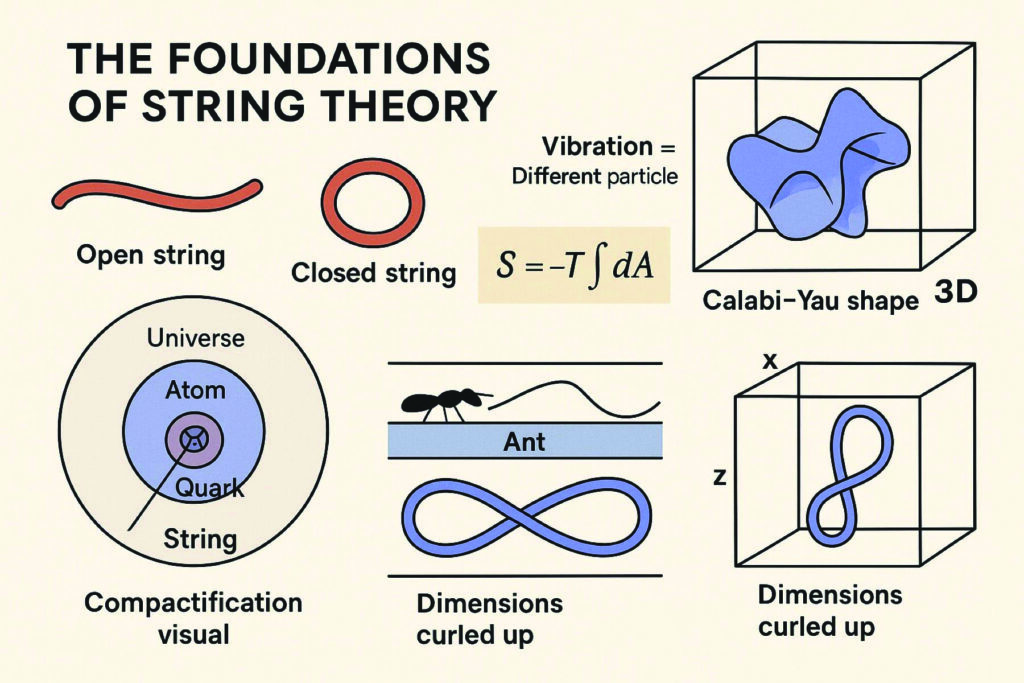
The relativistic quantum mechanics provides a bridge between non-relativistic quantum mechanics and quantum field theory and further it makes an elegant mathematical framework of standard model of particle physics which is indispensable to understand the behaviour of high energy particle interactions and their scattering process. The relativistic quantum mechanics also explains the behaviour of nucleons (i.e. protons and neutrons) under extreme conditions like in neutron stars. Further, within the framework of relativistic quantum mechanics and quantum field theory, the quantum electrodynamics (QED) and quantum chromodynamics (QCD) are formulated to understand the electromagnetic and strong interaction sectors of the standard model respectively. Here QED is a quantum field theory of electrons and photons, however, QCD is a quantum field theory of quarks and gluons. Moreover, in this line of developments, the string theory is another theoretical piece of mathematical elegance which is one of the leading candidates to unify all the four fundamental forces including gravity in nature within a unified quantum framework. In string theory, the fundamental particles i.e. quarks and leptons (electron-like particles) emerged as tiny one-dimensional strings (with roughly Planck-scale length), whose different vibrational modes manifest as the fundamental particles in our universe. However, the string theory lacks the direct experimental evidence to string theory since the characteristics energy scale for the same is inaccessible to the present-day machines like large hadron collider (LHC) at CERN Geneva.
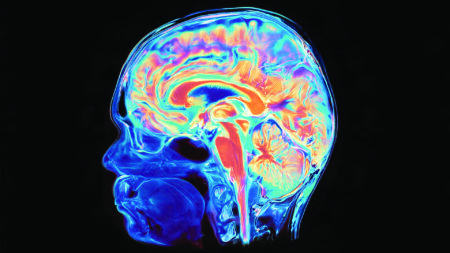
All these developments also underpin advanced fields viz., electron microscope, positron camera, particle accelerators, magnetic resonance imaging (MRI), positron emission tomography (PET) and various other emerging quantum technologies. The advanced electronic gadgets having semiconductor chips, memory cards etc., are unique signatures of semiconductor physics based on the principles of quantum mechanics.
QUANTUM LEGACY
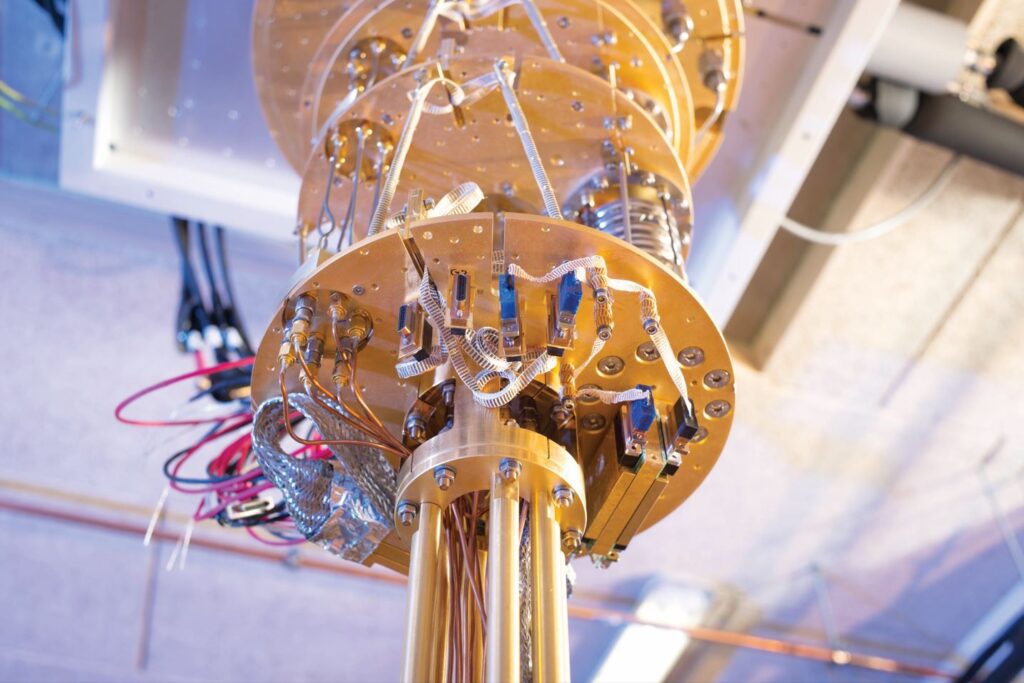
The Quantum mechanics not only unveils the fascinating behaviour of matter and energy at the microscopic scales in nature but also reveals a quite different world from our everyday experience. The fundamental principles of nature, governing the microscopic world, with the concepts like wave-particle duality, superposition of states and entanglement, have transformed our perception from the view point of scientific understanding and technological advancements. For instance, while exploring the nanoworld, one explores the universe at a length scale of billionth of a meter which is like penetrating deep inside an atom. With time, the technology based on quantum physics has also emerged in diverse contexts. The scientists involved in different areas of physics, chemistry, material and computer science, now are working together for newer technologies to make our lives even smoother. It has enabled remarkable innovations in laser-based communication, semiconductors, smartphones, Global Positioning System (GPS) and multimodal imaging. One might expect to have the most powerful technology one day that is a quantum computer and many more new frontiers in science and technology in coming days with transformative impact on modern world.
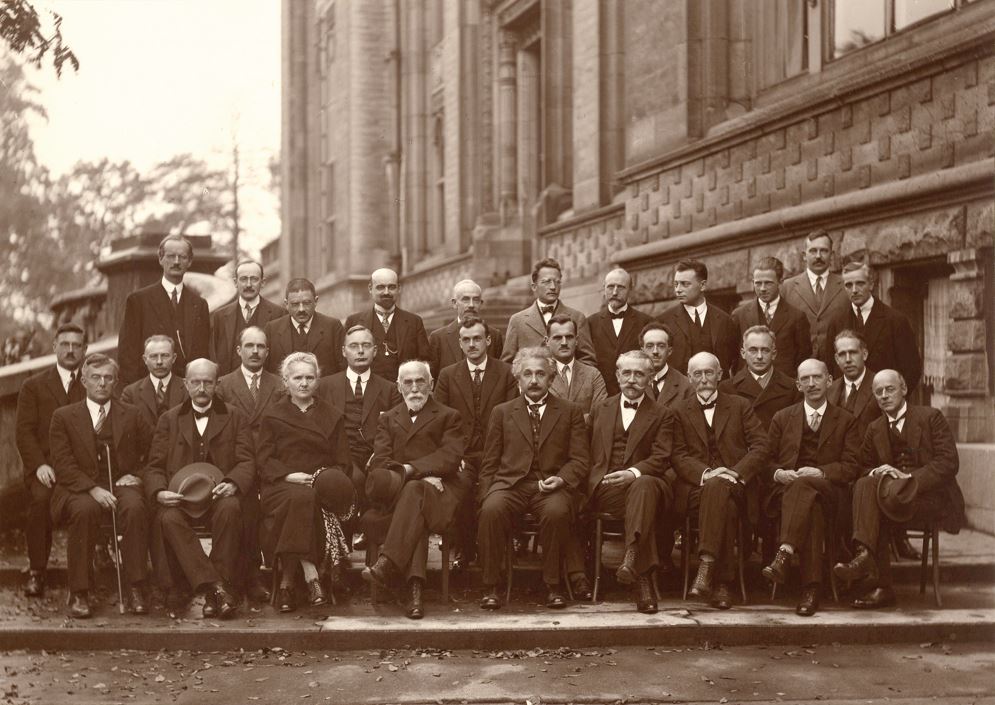
Image Courtesy: Wikimedia Commons
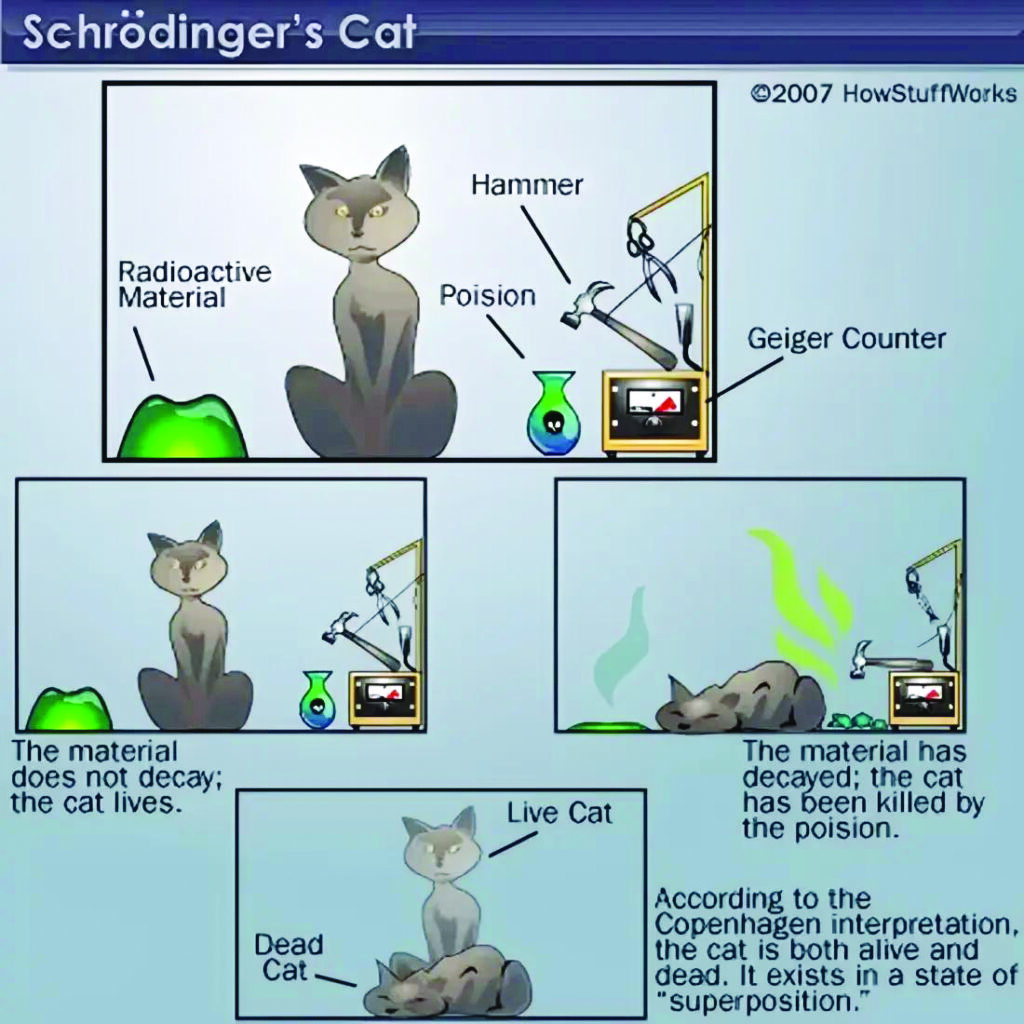
Generally, quantum mechanics provides optimism of co-existence of various outcomes of an event, with one of them can be the most probable, depending upon boundary conditions that one can impose. It also gives the prospect of presence of contradictory consequences at the same time frame, like qubit, as Erwin Schrödinger superbly articulated by visualizing a cat that was both dead and alive at the same time!
*Dr Shubhra Kala is an Associate Professor at the Department of Physics, HNBGU, Srinagar-Garhwal. She can be reached at shubkala@gmail.com. Dr Hemwati Nandan is a Professor of Physics and Director, Research & Development Cell, HNBGU, Srinagar-Garhwal, Uttarakhand. He can be reached at hnandan@associates.iucaa.in.
Acknowledgements towards Schrödinger’s translated papers and various other sources.